Artwork
The Miracle of the Loaves and Fishes
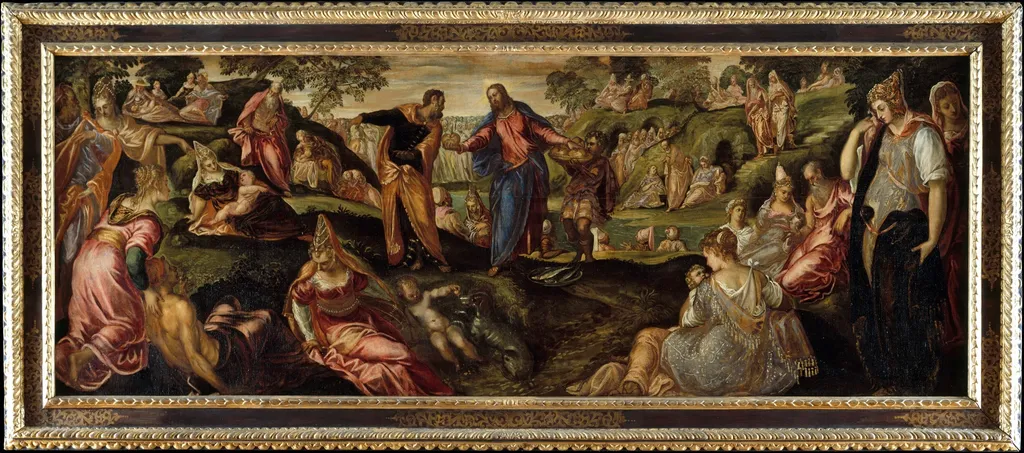
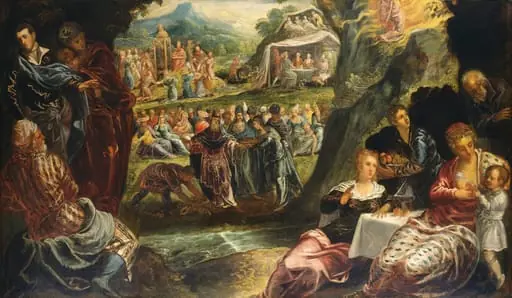
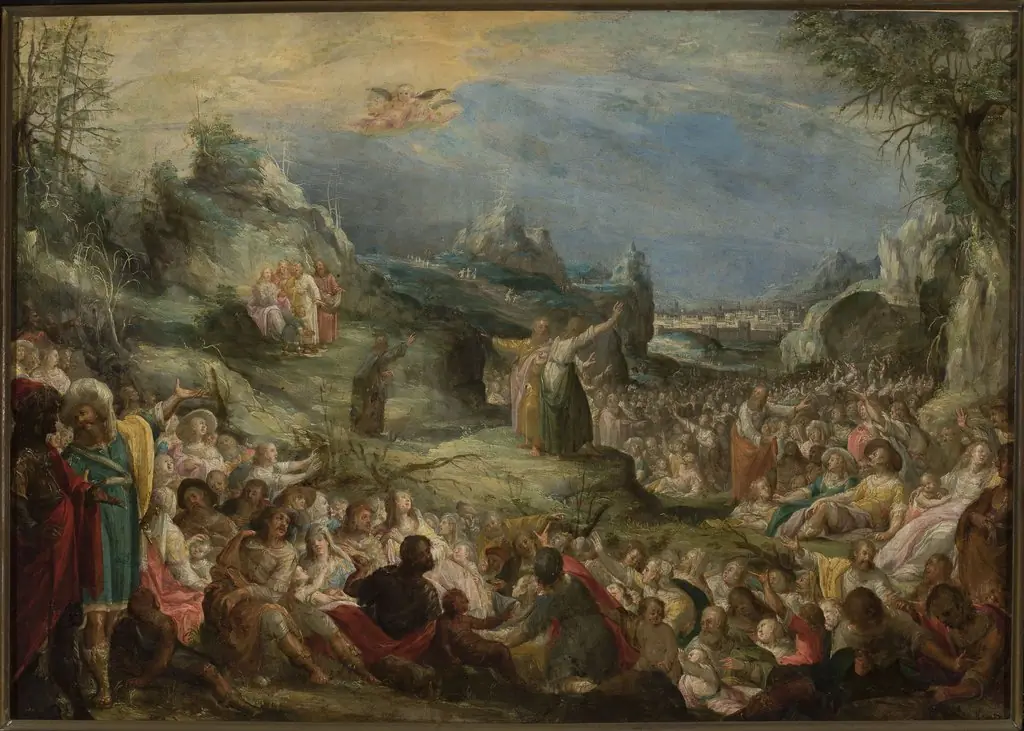
The Miracle of the Loaves and Fishes is an oil painting by the Mannerist artist Jacopo Tintoretto. It dates from 1545 and is held in the collection of the Metropolitan Museum of Art. This oil painting depicts a bustling gathering by a body of water, centered on a figure in a blue robe distributing bread.
About this work
Subject & Meaning
Set within a broad landscape, the work emphasizes the universality of Christ’s compassion and the transformative power of faith.
The painting illustrates the New Testament miracle in which Christ multiplies five loaves and two fish to feed a multitude. Christ stands centrally, holding or blessing the loaves, while surrounding figures, a man, a woman, and a dog, gather the bread and fish scattered across the landscape. The dog, often a symbol of loyalty, reinforces the faithful response to divine provision.
The abundant bread and fish allude to both the immediate miracle and the Eucharistic promise of spiritual nourishment. Set within a broad landscape, the work emphasizes the universality of Christ’s compassion and the transformative power of faith.
Technique & Style
Created in 1545, The Miracle of the Loaves and Fishes is executed in oil paint on a canvas support. The work measures approximately 154.9 centimeters in height and 407.7 centimeters in width, presenting a substantial horizontal format typical of the artist's narrative compositions. Classified within the landscape genre, the painting depicts a biblical scene populated by figures including Christ, men, women, and a dog, alongside elements such as bread and fish.
The medium of oil on canvas allows for the detailed rendering of the landscape setting and the numerous figures involved in the miracle. The physical dimensions and material choice reflect the grand scale characteristic of Tintoretto's mid-16th-century output, intended for significant visual impact within its original context.
History & Provenance
The Miracle of the Loaves and Fishes is an oil painting on canvas created by Jacopo Tintoretto (also known as Jacopo Robusti) in 1545, during the artist's early career. It measures approximately 154.9 cm in height by 407.7 cm in width and depicts the biblical scene of Christ multiplying the loaves and fishes, featuring Christ, bread, fish, and numerous figures within a landscape setting. The work is held in the collection of the Metropolitan Museum of Art.
While the sources confirm its current location within this major institution, they do not provide a specific inventory or accession number, nor any past or present exhibition history for the piece.
Overview
This oil painting depicts a bustling gathering by a body of water, centered on a figure in a blue robe distributing bread. Numerous individuals populate the scene, some seated on the ground, others standing or kneeling, with several holding fish. The composition is rich with warm hues and dramatic lighting, creating a dynamic visual narrative of the biblical event.
Artist & collection
Artist
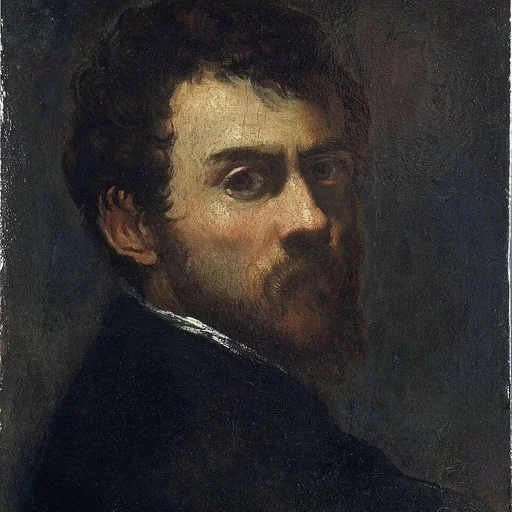
Jacopo Robusti (late September or early October 1518 – 31 May 1594), best known as Tintoretto ( TIN-tə-RET-oh; Italian:; Venetian: ), was an Italian Renaissance painter of the Venetian school.