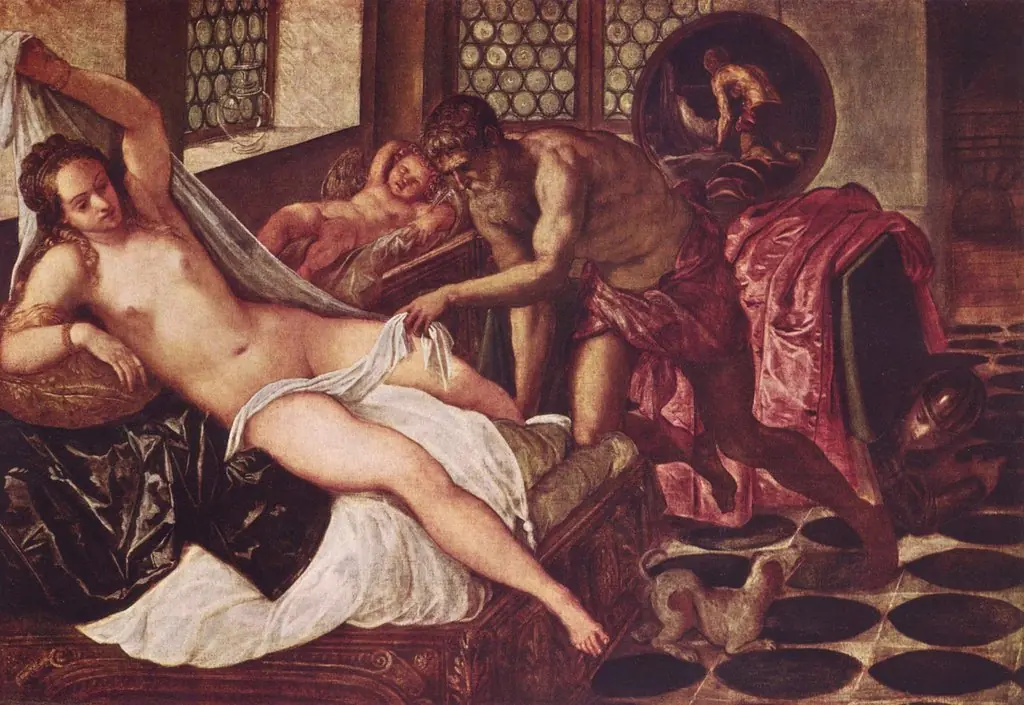
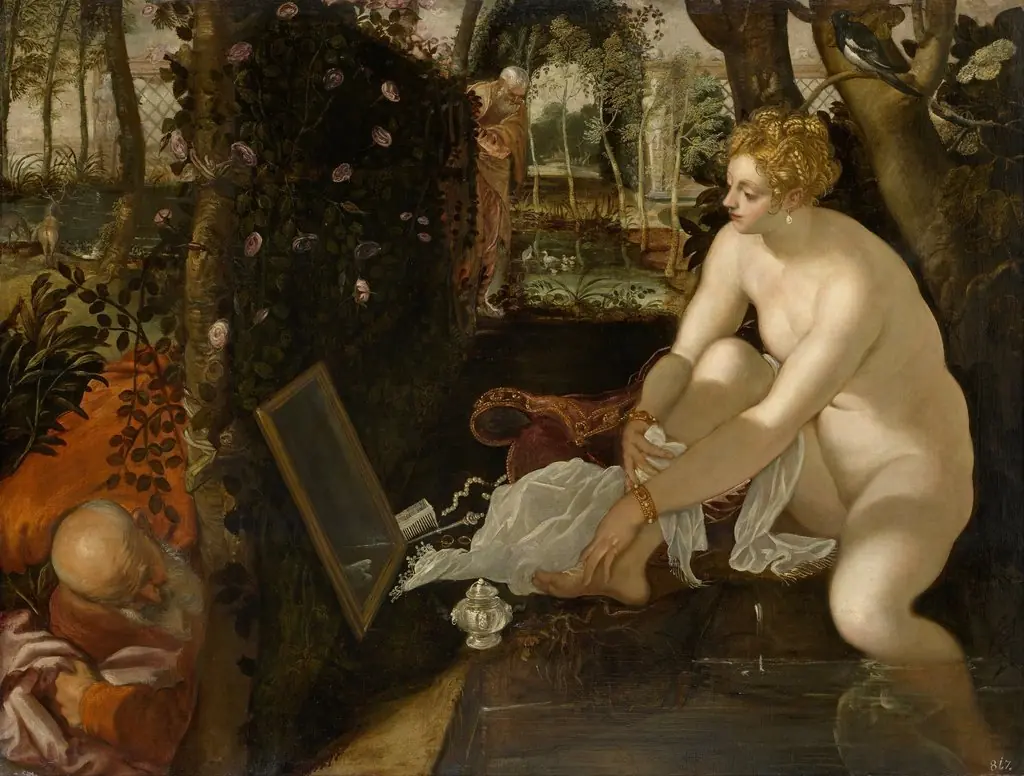
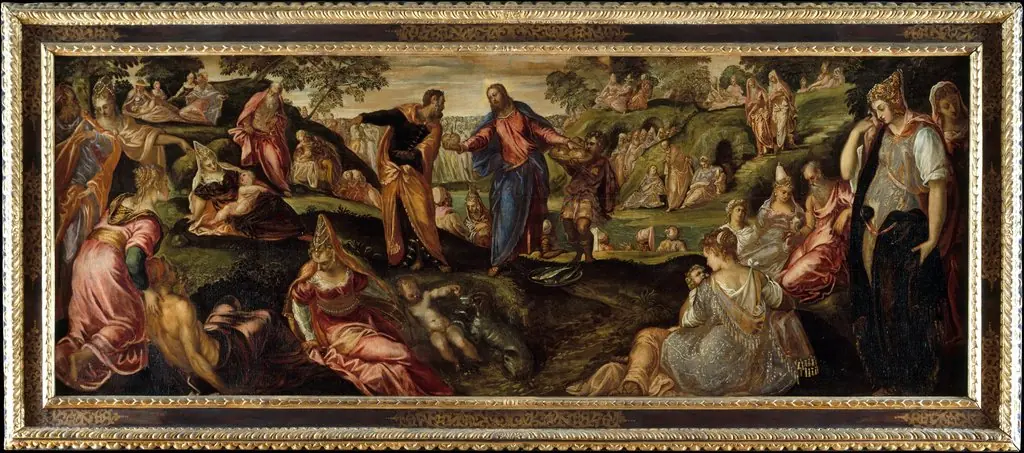
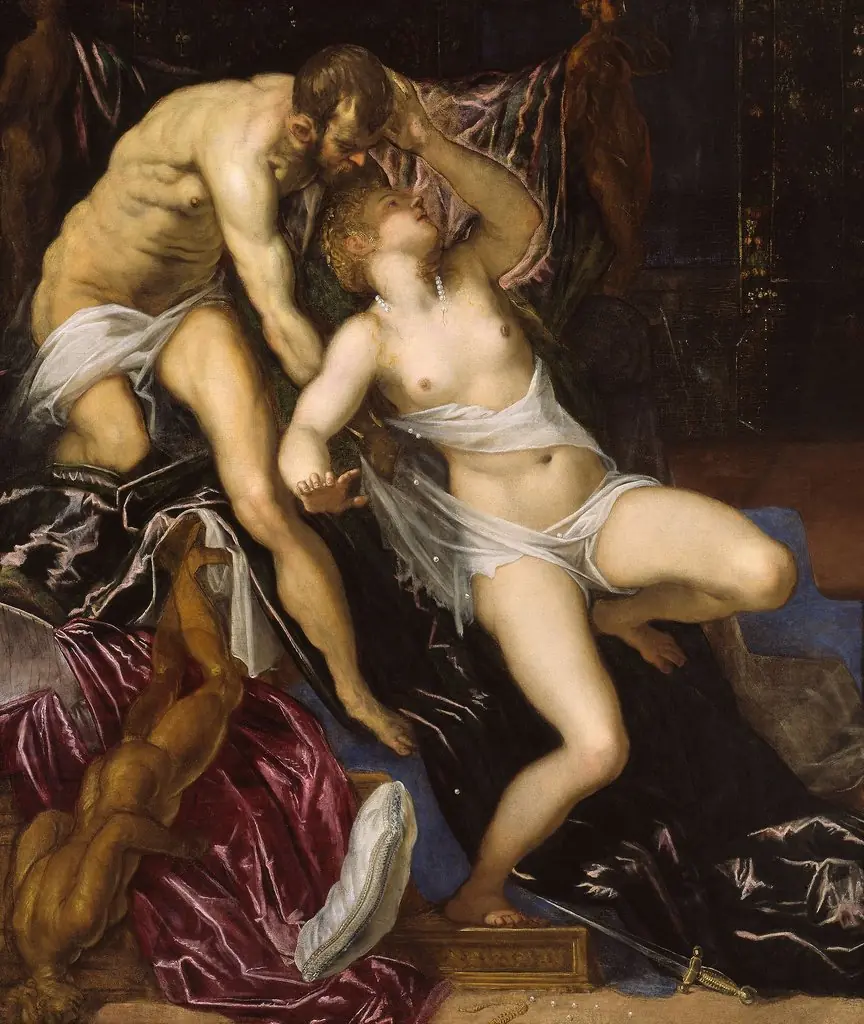
Artwork
Joseph and Potiphar's Wife
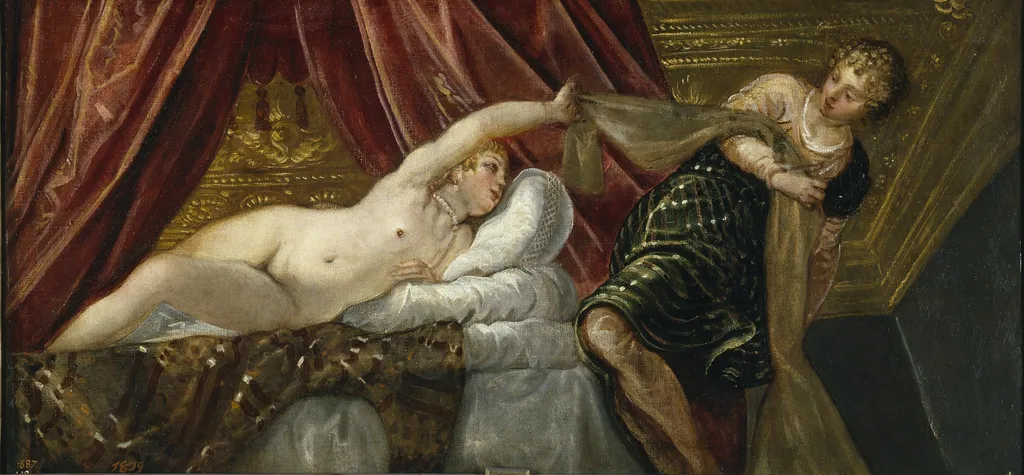
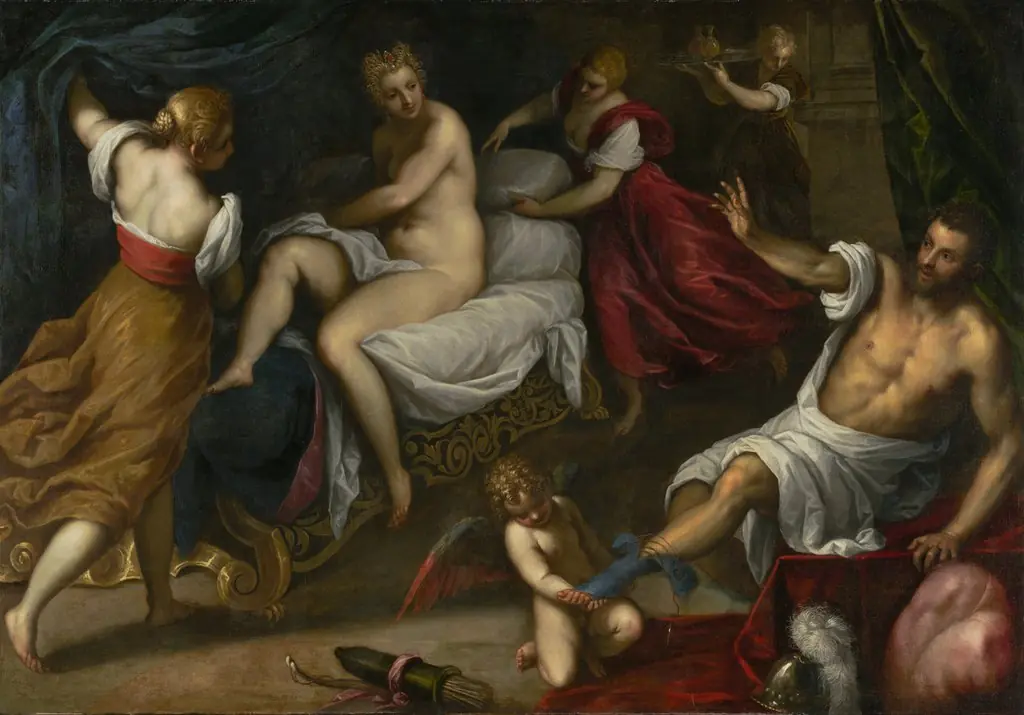
Joseph and Potiphar's Wife is an oil painting by the Mannerist artist Jacopo Tintoretto. It dates from 1555 and is held in the collection of the Museo del Prado.
About this work
Subject & Meaning
Executed around 1555, this oil painting illustrates the biblical narrative from Genesis 39:1–23 concerning Joseph and Potiphar's wife.
Executed around 1555, this oil painting illustrates the biblical narrative from Genesis 39:1–23 concerning Joseph and Potiphar's wife. The composition focuses on the moment of seduction within a lavish bedroom, where the wife, identified in some traditions as Zuleika, lies reclined on a canopy bed. She is depicted nude, extending an invitation to Joseph, who remains clothed and standing in rejection of her advances.
This visual contrast between the naked female figure and the dressed male underscores the moral conflict of the scene, representing the protagonist's refusal of temptation which subsequently led to his unjust imprisonment. The work draws upon both the Old Testament account and the broader tradition of Yusuf and Zulaikha, utilizing the intimate setting and specific gestures to convey the drama of the attempted seduction.
Technique & Style
The work is an oil on canvas composition measuring 54 cm in height by 117 cm in width, dating to circa 1555. It was painted by Jacopo Tintoretto using the oil medium on a canvas support, a technique typical of the Venetian school and aligned with Mannerist compositional dynamism. The narrative scene depicts Joseph resisting the advances of Potiphar’s wife, rendered with dramatic lighting, rich drapery and a sensual, partially nude figure that occupies the foreground.
The painting’s formal qualities include a balanced spatial arrangement, vigorous brushwork, and a palette that emphasizes warm tonal contrasts characteristic of Venetian art.
History & Provenance
Jacopo Tintoretto executed this oil-on-canvas painting, titled Joseph and Potiphar's Wife, circa 1555. The work was commissioned for the Spanish crown when Diego Velázquez acquired it during his second voyage to Venice on behalf of Philip IV. Velázquez purchased this piece alongside five other biblical subjects.
Following its acquisition, the painting entered the Spanish royal collection, passing through the ownership of Elisabeth Farnese, Charles III, and Ferdinand VII. Its original placement likely served a ceiling function, suggested by the specific viewpoint of the composition. Today, the artwork is housed in the Museo del Prado in Madrid, where it remains a significant example of Venetian Mannerism depicting the biblical narrative from Genesis.
The painting is housed in the Museo del Prado, Madrid, where it forms part of the museum’s permanent collection‑4). It entered the Spanish royal holdings when Diego Velázquez, on his second trip to Venice, purchased it for King Philip IV together with five other biblical canvases‑4). The consulted sources do not provide an inventory or accession number for the work.
Since its acquisition, the painting has remained in the Prado’s collection and is continuously displayed there; no further exhibition history is recorded in the material provided‑4).
Context
Joseph and Potiphar's Wife is a c. 1555 oil-on-canvas painting by Jacopo Tintoretto, exemplifying his work within the Mannerist movement and the Venetian school (2). Acquired by Diego Velázquez during his second Venetian trip for Philip IV of Spain, it entered the royal collection alongside five other biblical paintings (3). The painting’s elevated viewpoint has led scholars to suggest it may have been designed for a ceiling setting (3).
Today it resides in the Museo del Prado, Madrid, where it forms part of Tintoretto’s religious oeuvre and highlights the artist’s role in disseminating Venetian Mannerism to Spanish Habsburg patronage (2,3,4).
Legacy
The painting entered the Spanish royal collection when Diego Velázquez purchased it for Philip IV, a transaction recorded in contemporary accounts, which cemented its prestige and ensured its placement in the Museo del Prado where it remains on public view. Its significance is reflected in later scholarship, notably the 2005 reference work Los Grandes Genios del Arte (tome 28, Tintoretto), which discusses the work as a key example of Tintoretto’s late biblical series and highlights its influence on the historiography of the Joseph and Potiphar’s Wife theme. The acquisition and subsequent display illustrate the artwork’s lasting reputation within art‑historical discourse.
Overview
Jacopo Tintoretto's painting, Joseph and Potiphar's Wife, created around 1555, is an oil on canvas work housed in the Museo del Prado in Madrid. This piece illustrates a dramatic episode from the Old Testament, specifically the Book of Genesis. The composition features two figures engaged in a tense interaction, characteristic of the Venetian artist's approach to biblical narratives.

Artist & collection
Artist
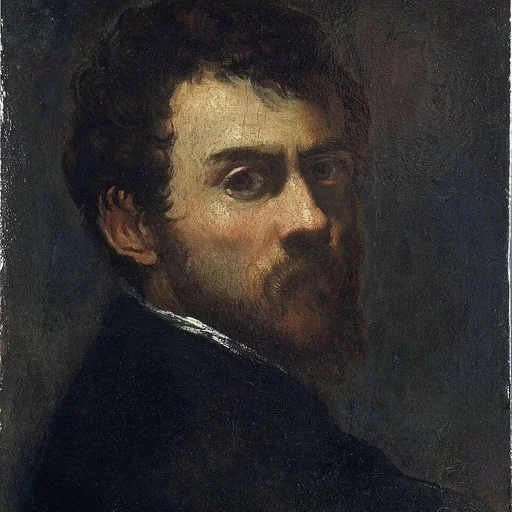
Jacopo Robusti (late September or early October 1518 – 31 May 1594), best known as Tintoretto ( TIN-tə-RET-oh; Italian:; Venetian: ), was an Italian Renaissance painter of the Venetian school.