Artwork
My Portrait in the Year 1960
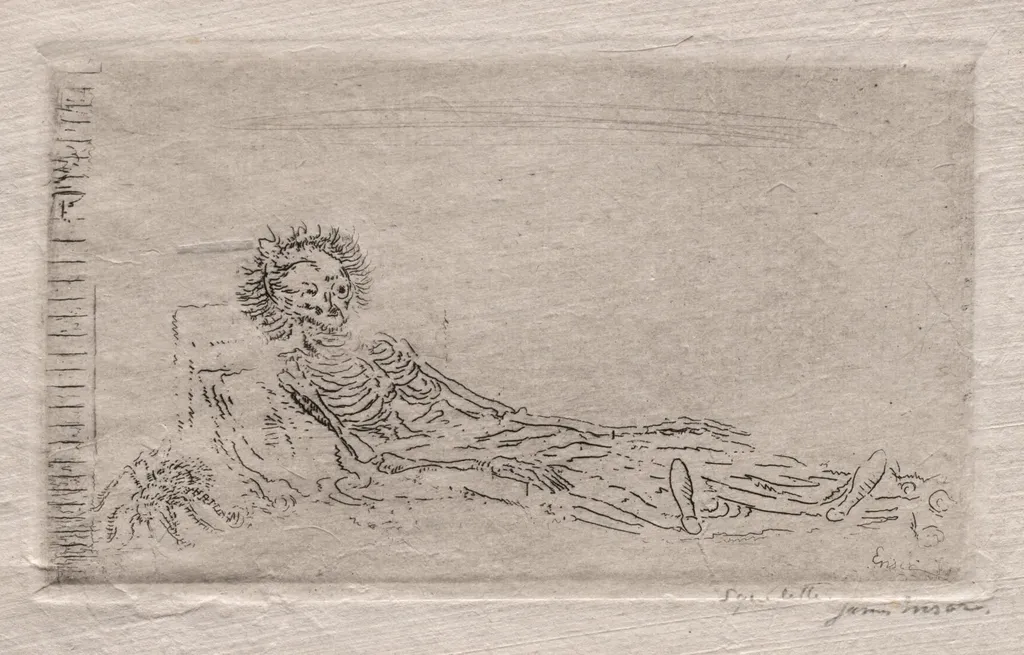
My Portrait in the Year 1960 is a print by the Impressionist artist James Ensor. It dates from 1888 and is held in the collection of the Cleveland Museum of Art.
- Accession no.
- 1981.27
- Credit line
- Dudley P. Allen Fund by exchange
About this work
Here’s the revised description: This painting shows the artist in a simple suit, holding a pipe.
Here’s the revised description:
This painting shows the artist in a simple suit, holding a pipe. His face looks serious. The background is just a plain wall.
Ensor often painted himself this way. He liked to mix dark tones with bright spots. Look at his left hand, it’s barely outlined.
It’s an early work by an artist who later painted masks and skeletons. Compare it to James Ensor (Belgian, 1860–1949).
Overview
Created in 1888, My Portrait in the Year 1960 is a self-portrait by Belgian artist James Ensor, depicting his imagined future self. Though titled with a distant year, the work reflects his present appearance and mindset. Executed as a print, it belongs to a series of introspective self-images he produced during his early career, before his more fantastical themes emerged. The piece is grounded in realism, contrasting with the symbolic works he later became known for.
Subject & Meaning
Ensor portrays himself as a middle-aged man in a plain suit, holding a pipe, with a composed, unsmiling expression. The absence of ornamentation or theatrical elements suggests a deliberate rejection of spectacle. The title’s futuristic framing implies a quiet contemplation of time and identity, not fantasy.
It reflects his self-awareness as an artist navigating societal expectations, long before his engagement with masks and grotesquerie.
Technique & Style
The print employs restrained tonal contrasts, with muted grays and browns dominating the composition. A single bright highlight on the pipe draws attention without disrupting the somber mood. The left hand is rendered with minimal outline, suggesting tentative form or deliberate underdevelopment.
Ensor’s use of line is precise yet unadorned, emphasizing structure over drama, characteristic of his early graphic work before his expressionist turn.
History & Provenance
Produced during Ensor’s formative years in Ostend, the work emerged from his association with the avant-garde group Les XX, which championed experimental art. Though not widely exhibited at the time, it remained in his personal collection. Later, it entered institutional holdings, recognized as an early indicator of his evolving artistic identity. Its survival reflects Ensor’s habit of preserving works that charted his personal development.
Context
In the late 1880s, Ensor was experimenting with self-representation while resisting academic conventions. Unlike contemporaries who embraced Impressionism or Symbolism, he turned inward, using portraiture to explore solitude and time. This work predates his fascination with masks and death imagery, situating it within a quieter phase of his career, when observation, not allegory, defined his vision.
Legacy
Though overshadowed by his later, more dramatic works, this portrait remains a key document of Ensor’s artistic evolution. It reveals the discipline and restraint underlying his eventual expressionist style. Scholars note its role in tracing how a conventional self-image gradually gave way to symbolic distortion, making it a quiet but essential precursor to his mature output.
Own this work as a print
Artist & collection
Artist
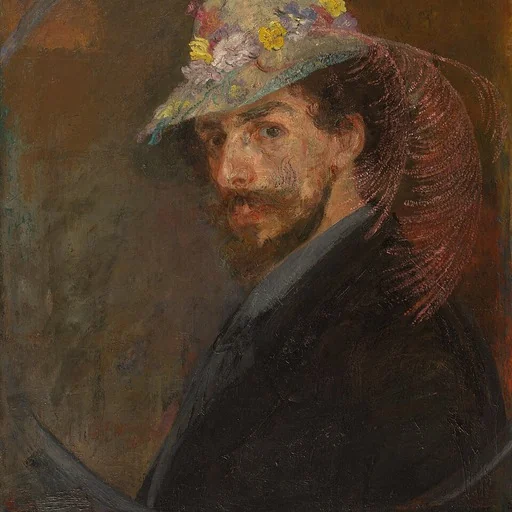
James Sidney Edouard, Baron Ensor (13 April 1860 – 19 November 1949) was a Belgian painter and printmaker, an important influence on expressionism and surrealism who lived in Ostend for most of his life.

- Statue of Cleopatra
 The death of the strong, wicked man
 Sketch of the Dead Christ Lying by the Sepulchre
 On the Lookout (Aux aguets)
 From "Bizzarie di varie Figure"
 The Siesta
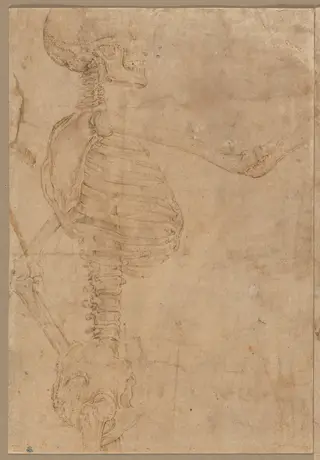 Half-Length Skeleton in Profile
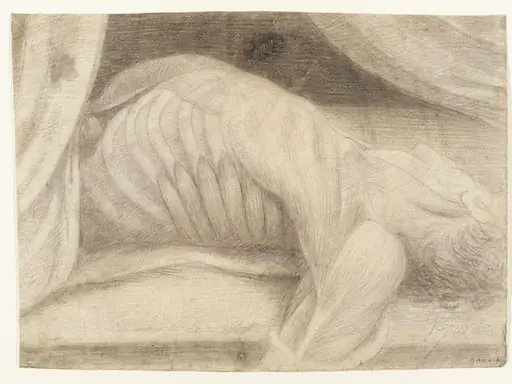 Half-length anatomical study of a man, drawn from a dissected corpse
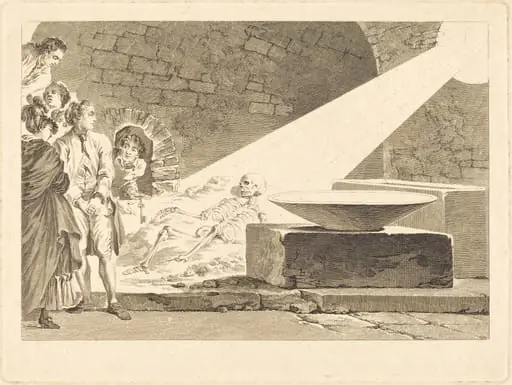 Fragonard and Bergeret with Their Wives Visiting a Tomb in Pompeii
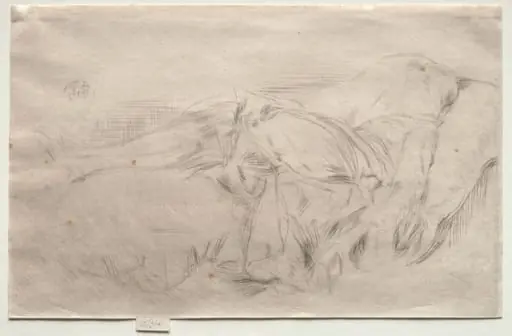 A Child on a Couch, No. 2
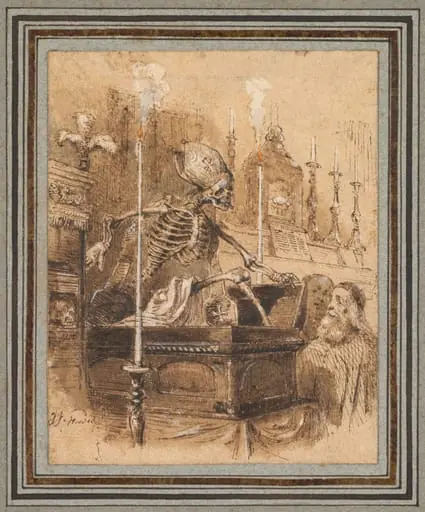 The Relics
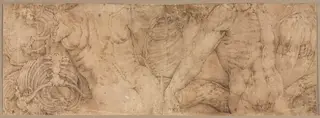 Torsos with Rib Cages