Artwork
Aaron Burr
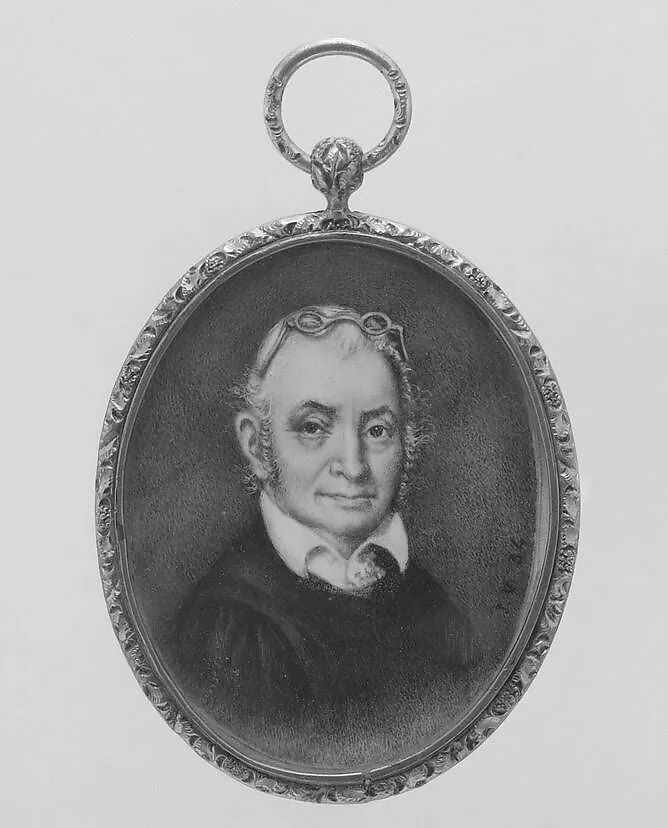
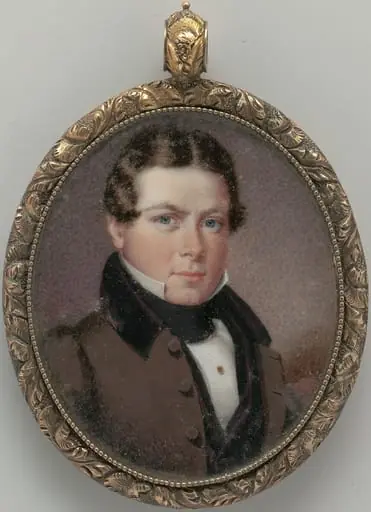
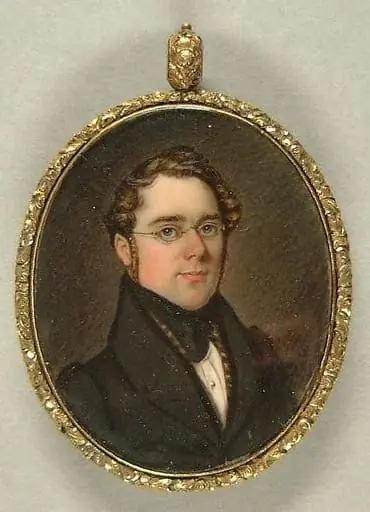
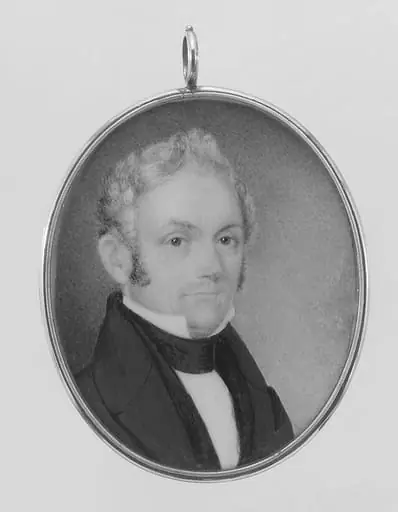
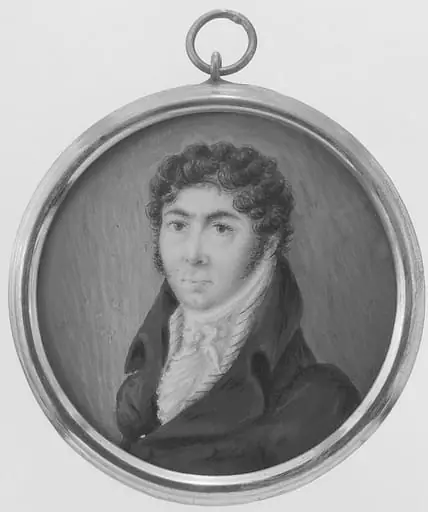
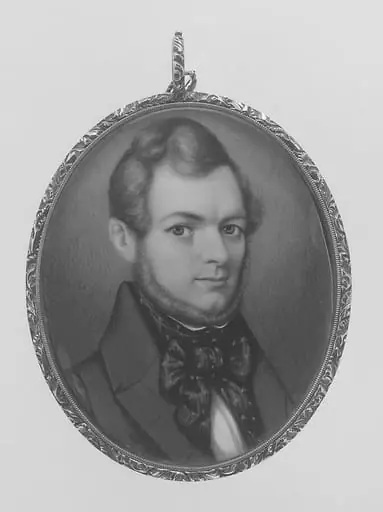
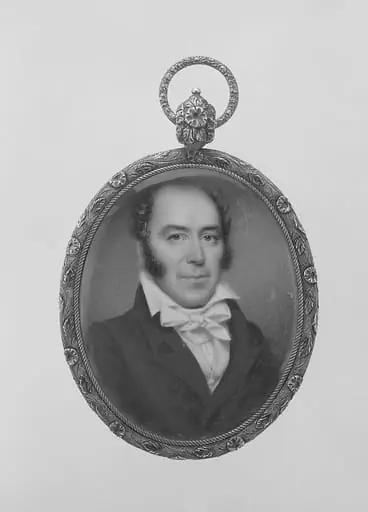
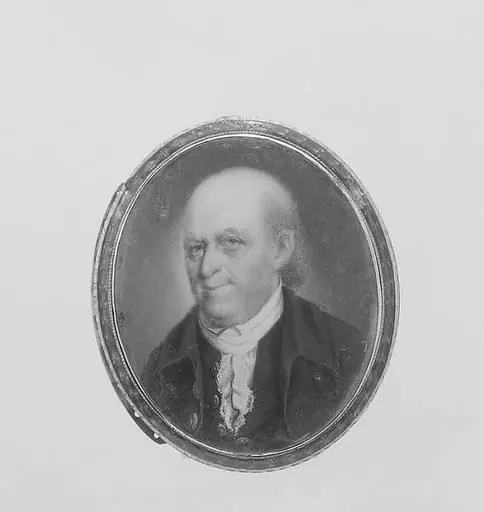
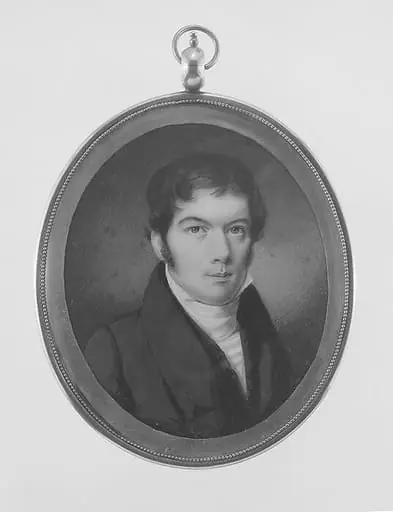
Aaron Burr is a watercolor painting by the American Impressionist artist James Van Dyck. It dates from 1834 and is held in the collection of the Metropolitan Museum of Art.
About this work
Technique & Style
The ivory support enhances fine detail, and the piece employs restrained coloration and fine line rendering to convey the sitter's dignified presence.
The portrait of Aaron Burr, painted in 1834, is executed in watercolor on an ivory support, a technique that creates a luminous, translucent surface characteristic of early American portrait miniatures. Measuring approximately 5.9 by 4.6 centimeters, the work belongs to The American Wing's portrait genre and reflects the delicate brushwork and subtle tonal modeling associated with the miniature format. The ivory support enhances fine detail, and the piece employs restrained coloration and fine line rendering to convey the sitter's dignified presence.
History & Provenance
The watercolor portrait titled Aaron Burr, attributed to James Van Dyck, was executed in 1834 on an ivory support. It measures approximately 5.9 by 4.6 centimeters and belongs to the portrait genre, depicting a male sitter. The work is part of the Metropolitan Museum of Art collection, housed in The American Wing.
No records indicate a specific commission or prior private ownership before the museum acquired it, and the available sources do not detail an accession number, a chronological provenance, or any exhibition history.
Overview
This watercolor portrait, titled Aaron Burr, was created by James Van Dyck in 1834. Rendered on a thin piece of ivory, the miniature depicts a man, likely Aaron Burr himself, presented in a dark coat with his features softly illuminated against a simple background. Its small scale suggests it was intended as a personal memento, designed for portability and private viewing.
Subject & Meaning
The artwork presents a likeness of Aaron Burr, captured with a subtle light that highlights his features. The subject appears as a small, pale figure, clad in a dark coat, set against an unadorned backdrop. Such intimate portraits served as personal keepsakes, often carried by individuals as a tangible reminder of an important person, reflecting a common practice of the era.
Context
Miniatures like Aaron Burr were popular during the 19th century, serving as cherished personal objects rather than public displays. Their compact size made them ideal for carrying in a pocket or locket, allowing the owner to keep a representation of a loved one or significant figure close at hand. This particular piece is classified within The American Wing, indicating its place among American artistic heritage.
Artist & collection

Artist
James Van Dyck was an American portrait painter active in New York from about 1825 into the 1840s.