Artwork
Garland of Flowers around an Allegory of Farming
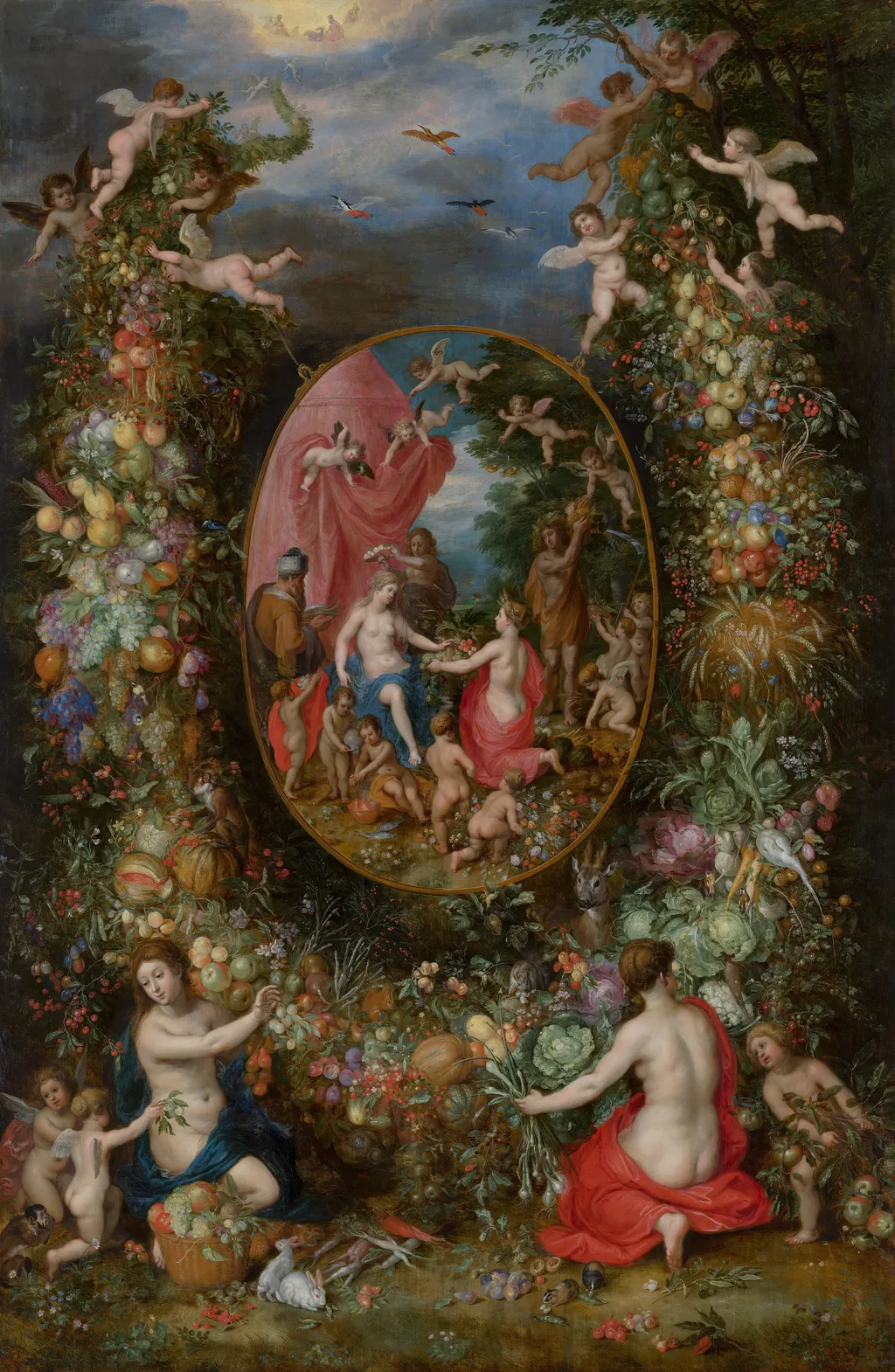
Garland of Flowers around an Allegory of Farming is an oil painting by the Flemish Baroque painting artist Jan Brueghel, the elder. It dates from 1615 and is held in the collection of the Mauritshuis.
About this work
Subject & Meaning
Together, the imagery celebrates farming as a virtuous, life‑giving activity that unites nature’s plenty with human endeavor.
The painting shows a lavish garland of blossoms and fruit encircling an allegorical scene of farming. At the centre a semi‑nude female figure, likely Ceres, embodies agriculture; her exposed breast, navel and dimples of Venus signal fertility, while surrounding putti or Erotes reinforce themes of love and abundance. Agricultural symbols, sheaves, vegetables, a wreath, a tree and a tent, appear alongside agricultural tools and a clothed male attendant, suggesting the labor that cultivates the earth.
The garland itself, composed of varied flowers and fruits, symbolizes the bounty and cyclical renewal of the harvest. Together, the imagery celebrates farming as a virtuous, life‑giving activity that unites nature’s plenty with human endeavor.
Technique & Style
Executed in oil on a wooden panel in 1616, the work is a collaborative garland painting in which Jan Brueghel the Elder painted the flower-and-fruit circlet and surrounding landscape, while Hendrick van Balen supplied the central allegorical figure and subsidiary motifs.
The composition is arranged concentrically around a central female allegory of agriculture, whose attributes, sheaves of wheat and a sickle, anchor the iconography. She is framed by a dense garland of blooms and fruits rendered with microscopic botanical fidelity, while putti and Erotes populate the upper register, enhancing the allegorical program. The handling balances meticulous detail in the still-life elements with looser, atmospheric handling in the sky and distance, typical of Brueghel’s garland pictures.
History & Provenance
The painting was created in 1615, as indicated by both the internal cataloguing and the Wikidata entry.
It entered the collection of the Mauritshuis in The Hague, where it remains today. The work is documented as a collaborative piece by Jan Brueghel the Elder and Hendrick van Balen the Elder, combining Brueghel’s floral garland with van Balen’s allegorical figures.
Overview
Jan Brueghel the Elder, a Flemish artist of the early 17th century, completed Garland of Flowers around an Allegory of Farming in 1615. This oil painting exemplifies his diverse artistic practice, which encompassed both detailed still lifes and complex allegorical compositions. The work presents a central narrative scene encircled by an elaborate floral wreath, showcasing a vibrant interplay between human activity and natural abundance. It is currently housed in the Mauritshuis collection.
Context
Jan Brueghel the Elder was renowned for his versatility, often working across distinct artistic genres such as allegorical scenes and intricate flower still lifes. His ability to integrate these diverse elements is a hallmark of his oeuvre. Brueghel frequently collaborated with other prominent artists of his time, including Peter Paul Rubens, a practice that allowed for specialized contributions to complex compositions, though this specific work appears to be solely by Brueghel.
Own this work as a print
Artist & collection
Artist
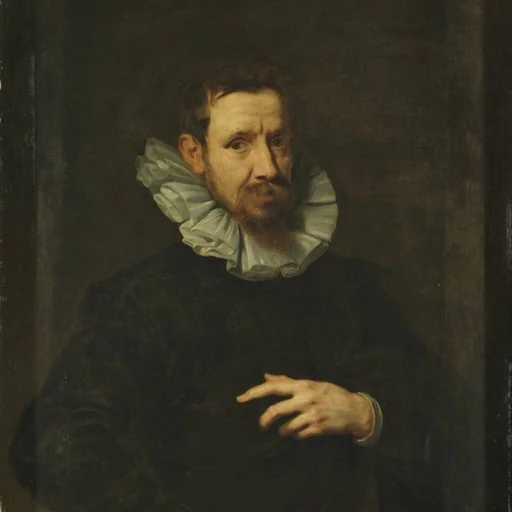
Jan Brueghel the Elder ( BROY-gəl, US also BROO-gəl; Dutch:; 1568 – 13 January 1625) was a Flemish painter and draughtsman.

- The Feast of the Gods
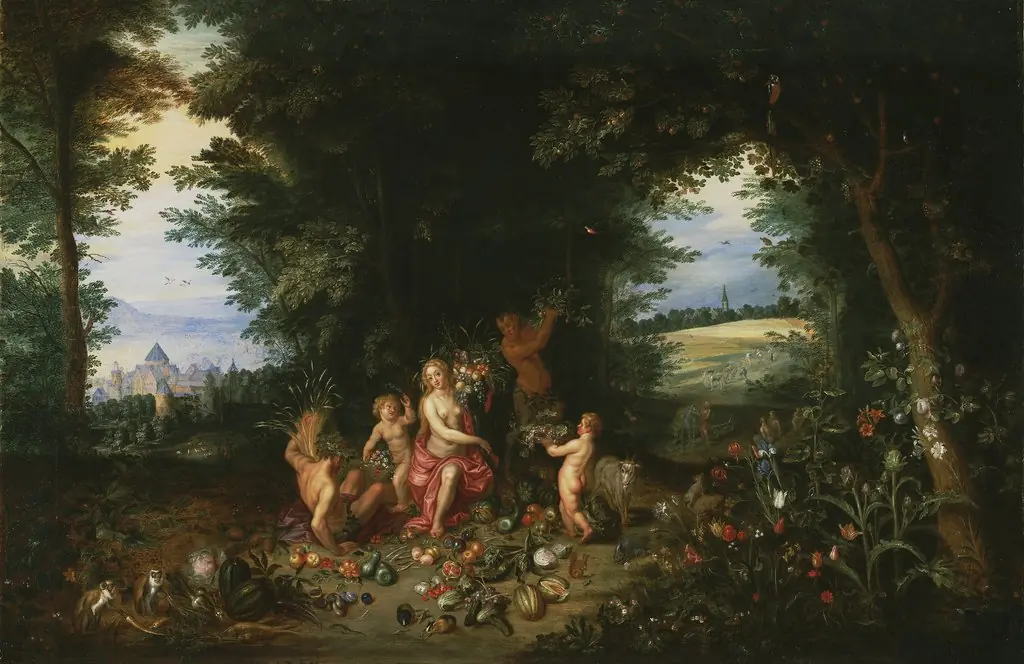 Landscape with Ceres (Allegory of Earth)
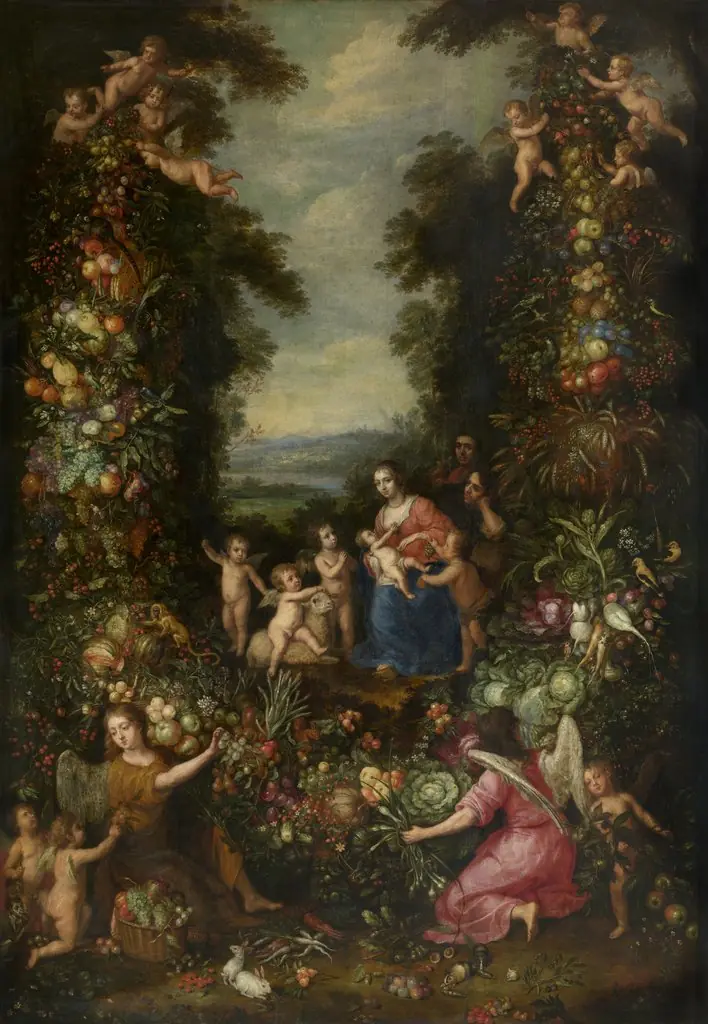 Holy Family in a Garland with Flowers, Vegetables, and Fruit
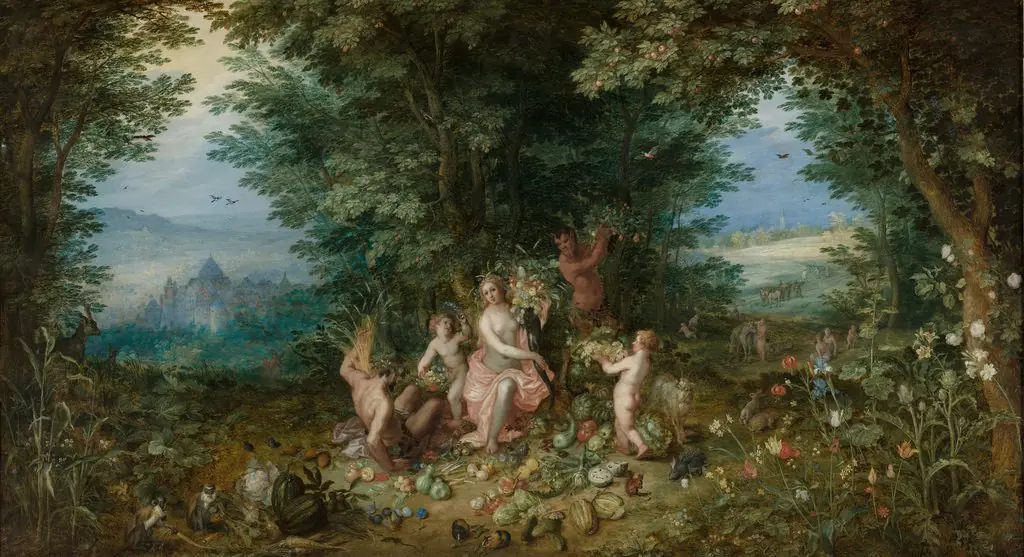 The Earth
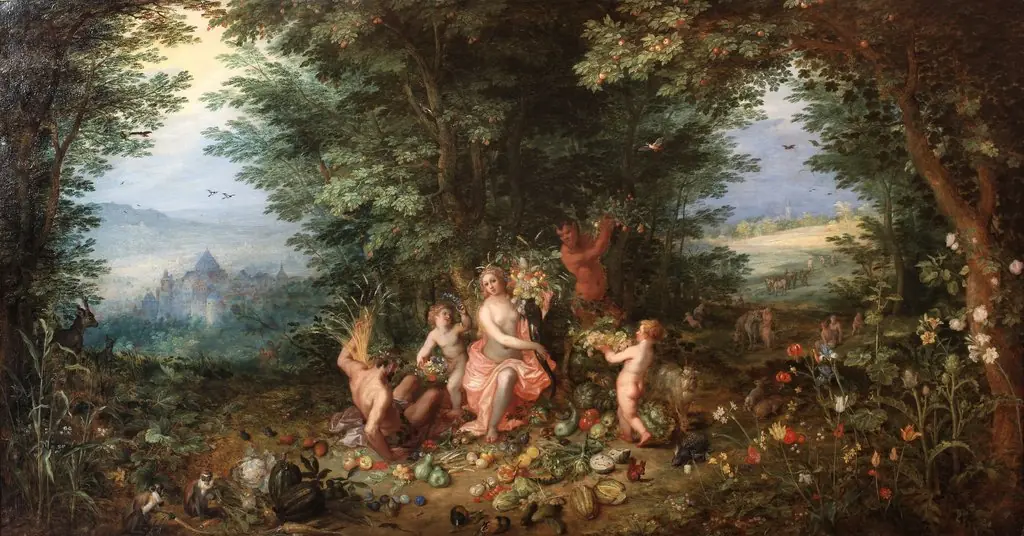 Earth
Earth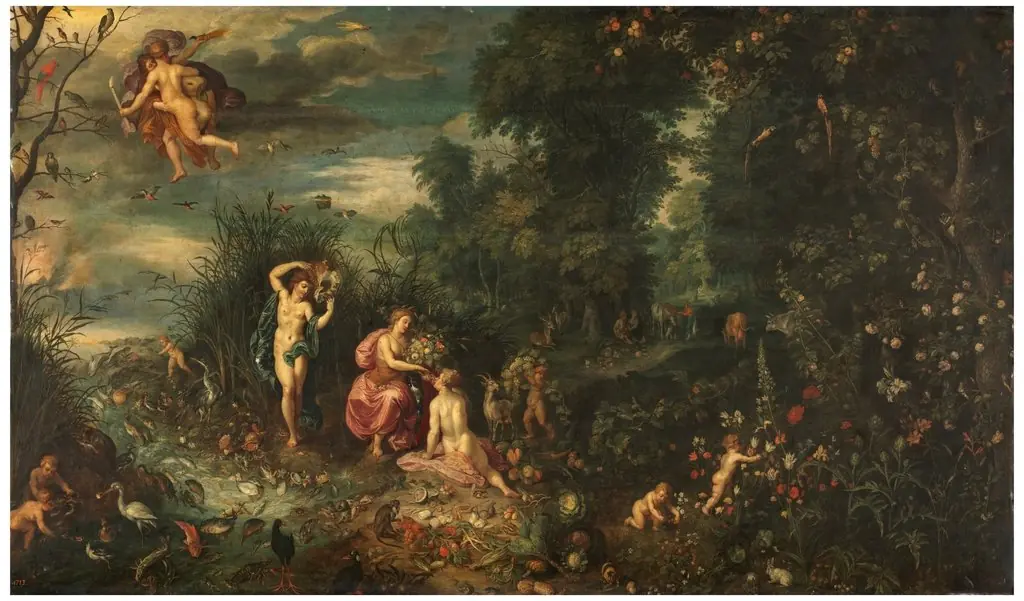 Abundance and the Four Elements
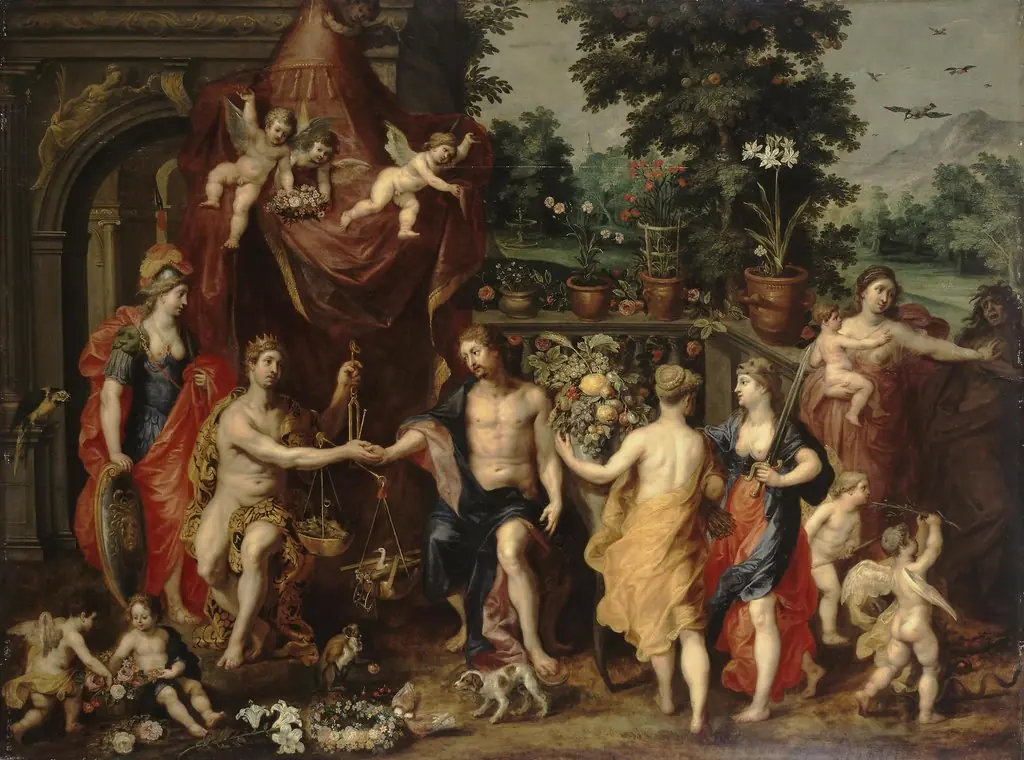 Allegory of the Virtuous Life
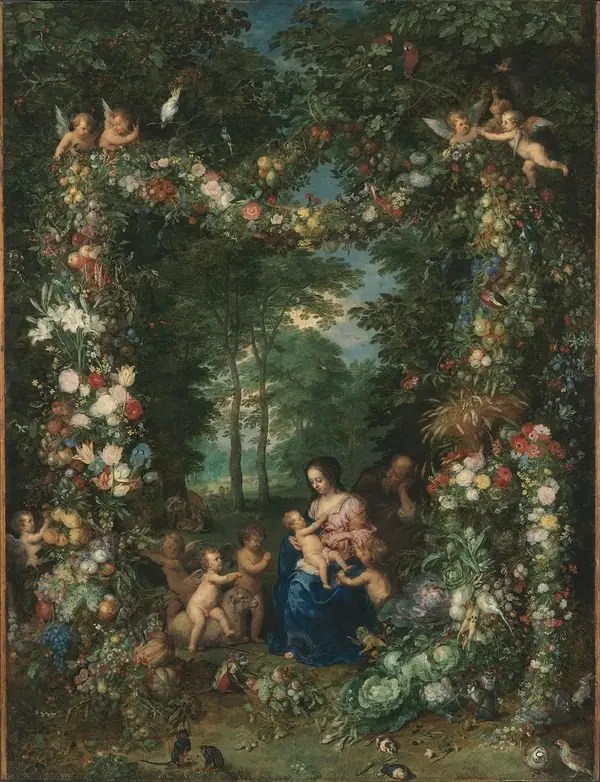 Holy family with a garland of flowers and fruits
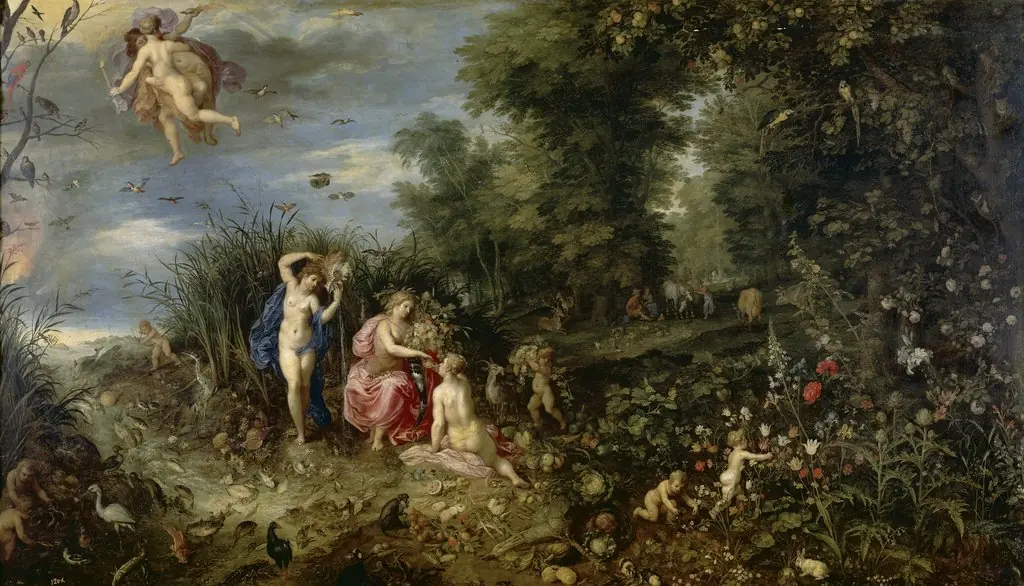 Abundance and the Four Elements
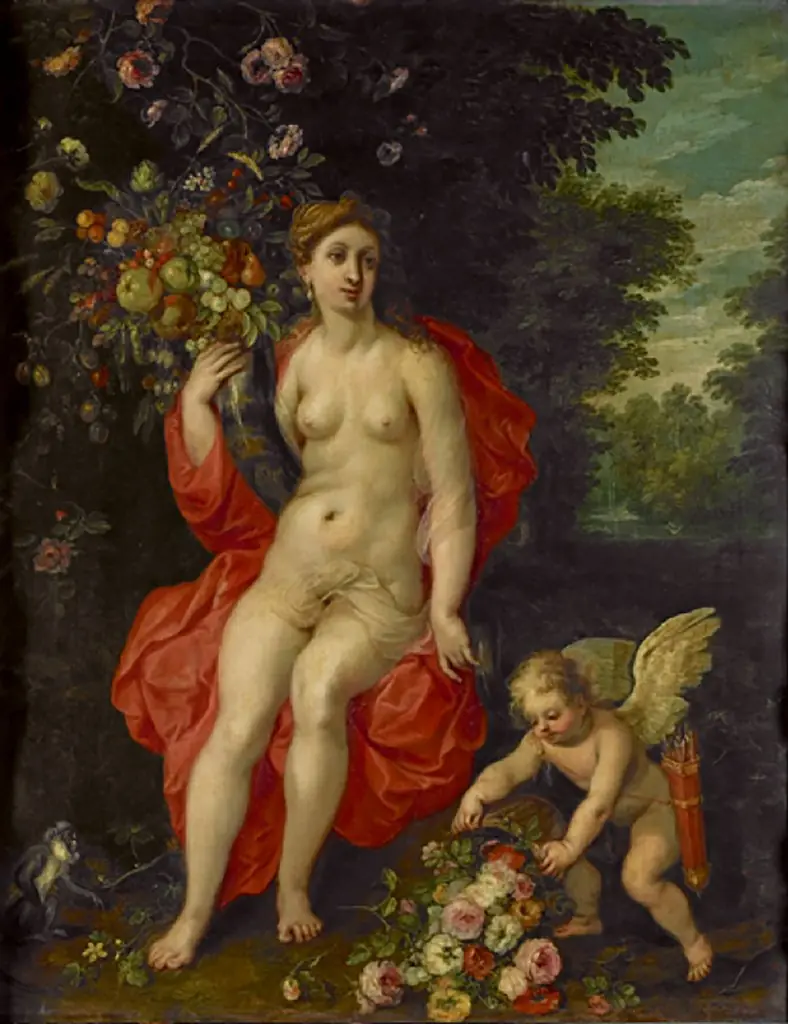 Venus and Amor as Allegory of Abundance
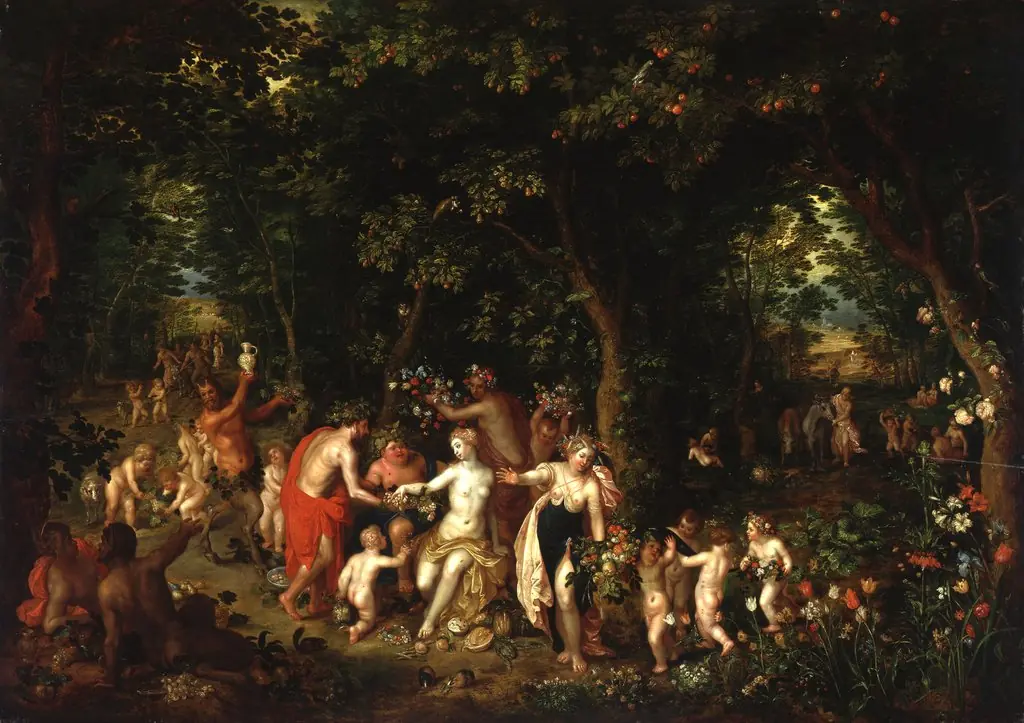 The Feast of Bacchus
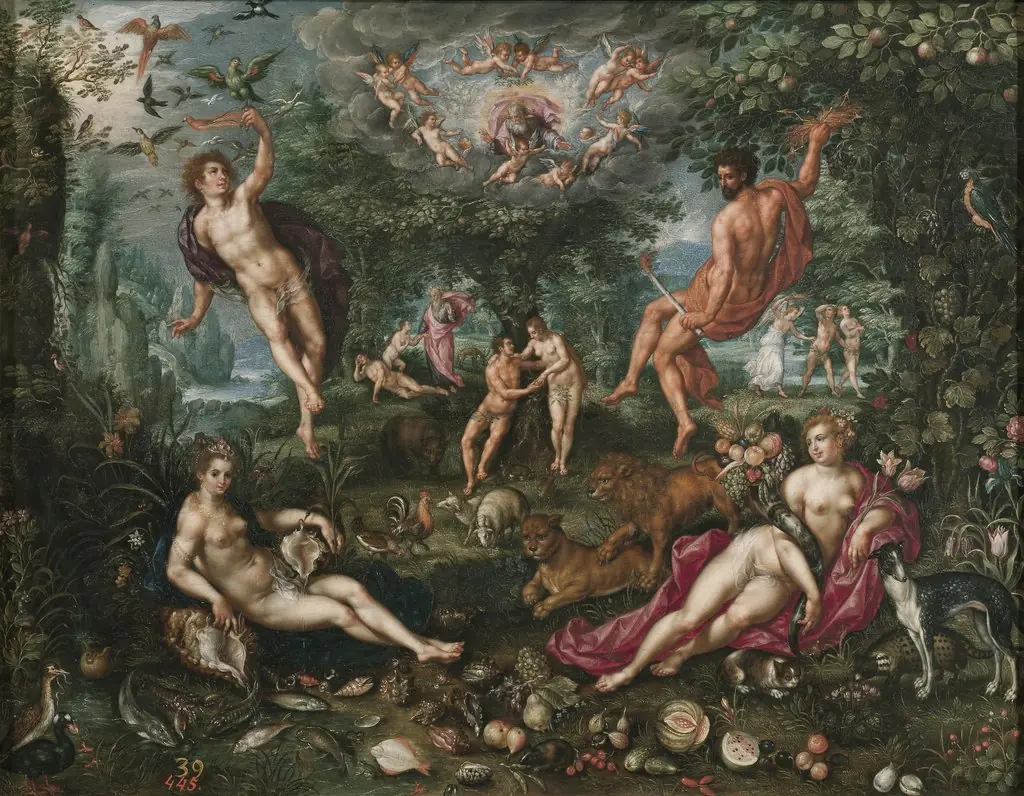 Paradise with the Four Elements