Artwork
Chalice and Host in a Niche, within a Cartouche of Roses and Fruit
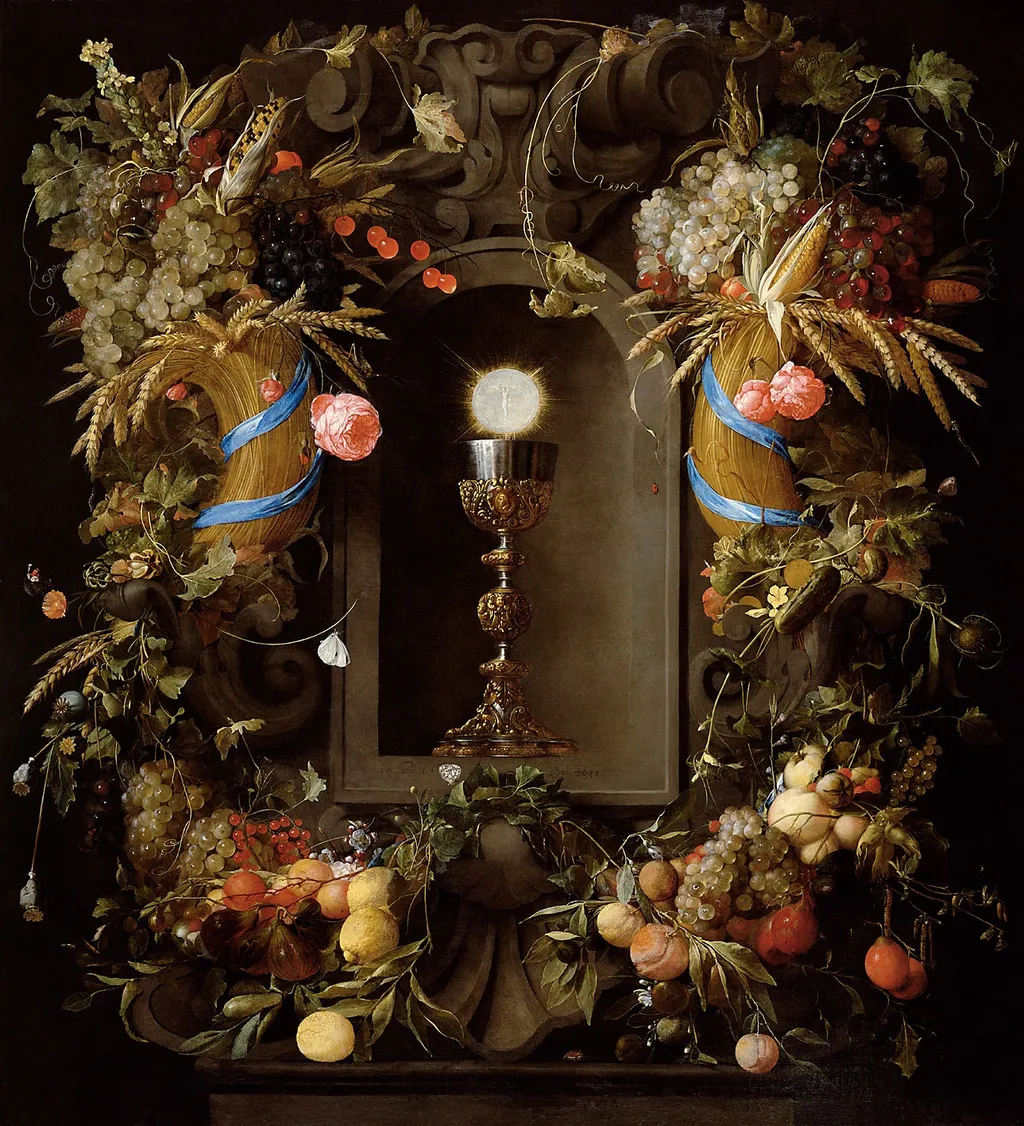
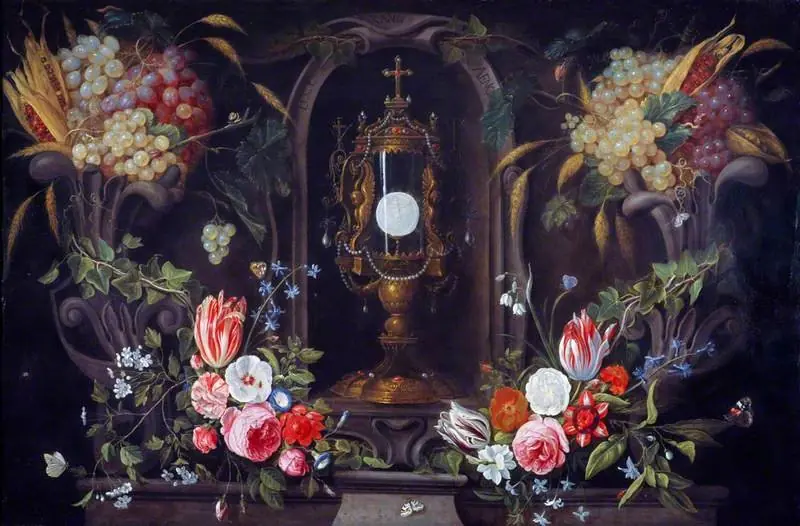
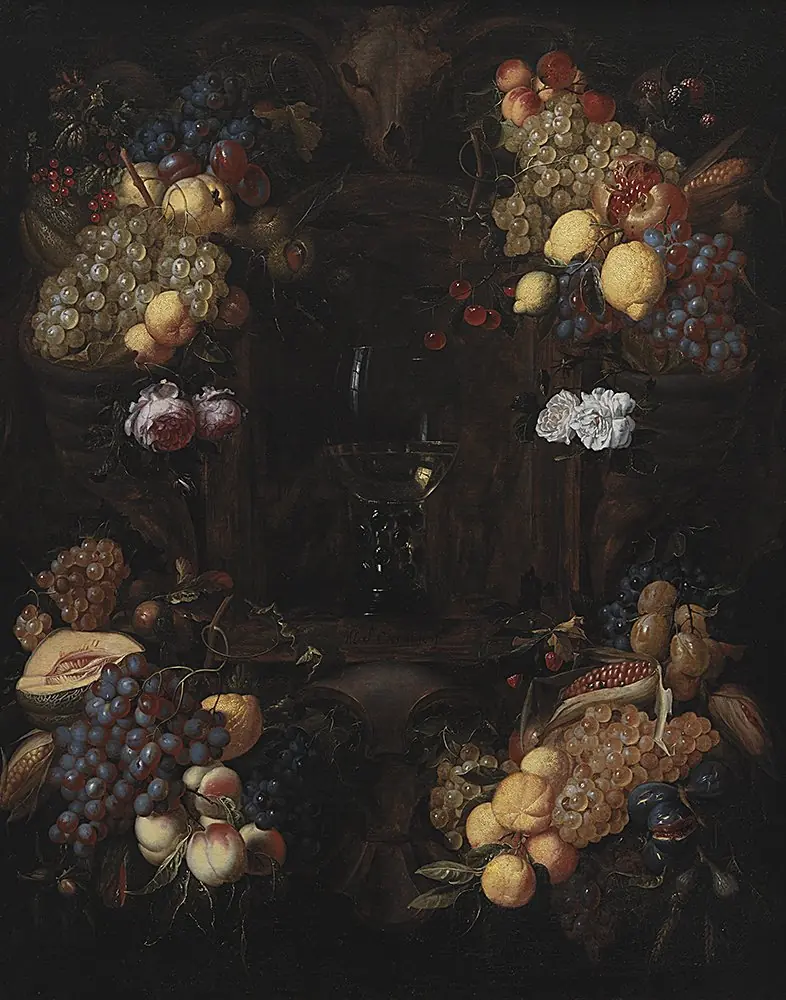
Chalice and Host in a Niche, within a Cartouche of Roses and Fruit is an oil painting by the Dutch Golden Age artist Jan Davidsz. de Heem. It dates from 1648 and is held in the collection of the Kunsthistorisches Museum. Jan Davidsz.
About this work
Subject & Meaning
The surrounding still-life elements include grapes, lemons, oranges, peaches, and a ribbon, which frame the holy vessels.
Created in 1648 by Jan Davidsz. de Heem and Thomas Willeboirts Bosschaert, this religious oil painting centers on Eucharistic iconography. The composition features a chalice and sacramental bread (the Host) situated within an architectural niche. These central sacred objects are encircled by an elaborate cartouche composed of roses, fruit, and wheat.
The surrounding still-life elements include grapes, lemons, oranges, peaches, and a ribbon, which frame the holy vessels. Owned originally by Archduke Leopold Wilhelm of Austria, the work combines floral and fruit motifs with liturgical items to represent themes of faith and divine provision.
Technique & Style
Jan Davidsz. de Heem’s Chalice and Host in a Niche, within a Cartouche of Roses and Fruit (1648) is executed in oil paint on canvas, a medium characteristic of Dutch still-life painting of the period. The support measures 138 by 125.5 centimeters, providing a substantial surface for the meticulous rendering of textures and details.
The technique demonstrates de Heem’s mastery of illusionistic realism, evident in the precise depiction of materials, such as the reflective surfaces of the chalice and the delicate translucency of grape skins. The composition’s formal qualities include a tightly controlled symmetry, with the sacred elements framed by an ornate cartouche of roses, fruit, and wheat. Stylistically, the work balances devotional symbolism with decorative opulence, employing rich chiaroscuro and fine brushwork to achieve depth and luminosity.
History & Provenance
The painting was completed in 1648 by Jan Davidsz. de Heem, as indicated by the artist’s date on the work and corroborated by its inclusion in museum records.
By the mid-seventeenth century, the painting entered the collection of Archduke Leopold Wilhelm of Austria, a noted patron and connoisseur whose holdings formed the nucleus of the Kunsthistorisches Museum in Vienna. The painting remains in the museum’s collection, where it is catalogued as a still-life with religious iconography.
The painting is held in the collection of the Kunsthistorisches Museum. Historical records indicate the work was originally owned by Archduke Leopold Wilhelm of Austria. The provided sources do not contain specific inventory numbers or details regarding the artwork's exhibition history.
Overview
Jan Davidsz. de Heem's 1648 oil painting, Chalice and Host in a Niche, within a Cartouche of Roses and Fruit, exemplifies the Dutch Golden Age still life. This work presents a central eucharistic chalice and host, framed by an abundant arrangement of fruit, flowers, and wheat. The composition blends sacred imagery with a lavish display of nature, characteristic of de Heem's detailed approach. It is currently held in the collection of the Kunsthistorisches Museum.
Context
Created in 1648, this painting belongs to the Dutch Golden Age, a period renowned for its sophisticated still-life genre and integration of symbolic meaning. Jan Davidsz. de Heem was a leading practitioner in this field, frequently combining religious iconography with opulent botanical and fruit arrangements. His works reflect the era's appreciation for both detailed natural observation and underlying spiritual narratives, often presented with a high degree of technical skill and visual richness.
Artist & collection
Artist
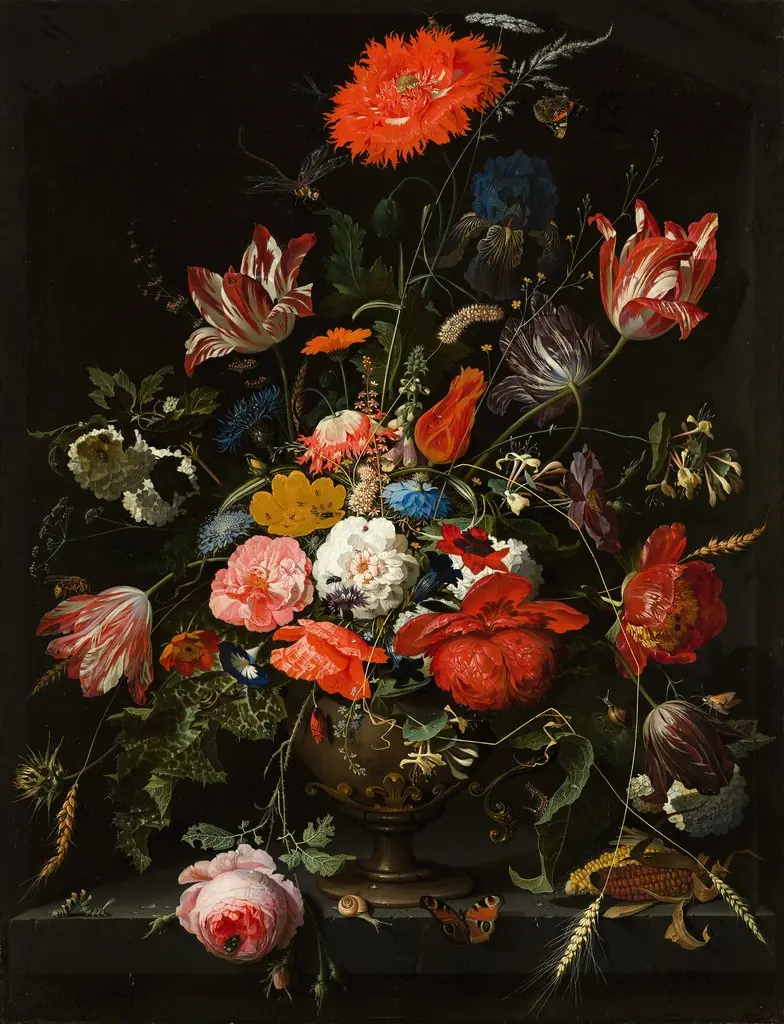
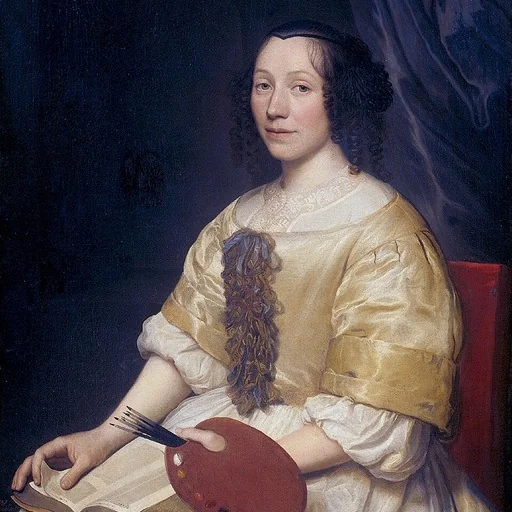
Maria van Oosterwijck (1630–1693), also spelled Oosterwyck, was a Dutch Golden Age painter, specialising in richly detailed flower paintings and other still lifes.