Artwork
Fruit and a Vase of Flowers
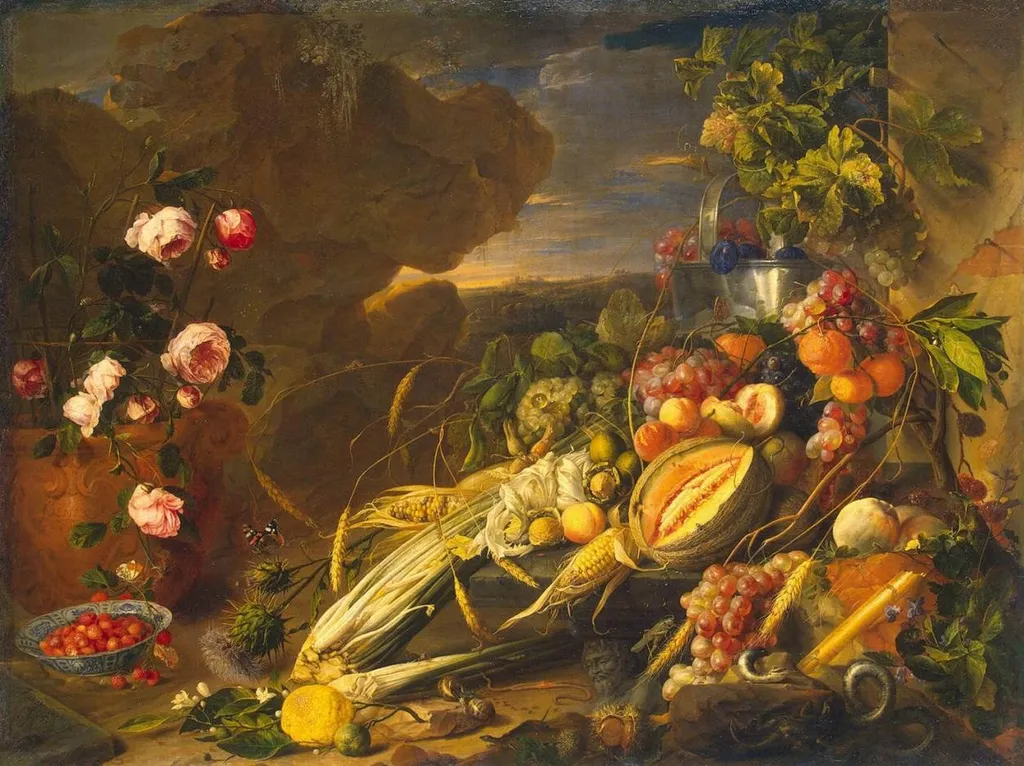
Fruit and a Vase of Flowers is an oil painting by the Dutch Golden Age artist Jan Davidsz. de Heem. It dates from 1655 and is held in the collection of the Hermitage Museum. Jan Davidsz.
About this work
Subject & Meaning
This type of sumptuous still life conveys abundance and the fleeting nature of earthly pleasures, a theme often called vanitas.
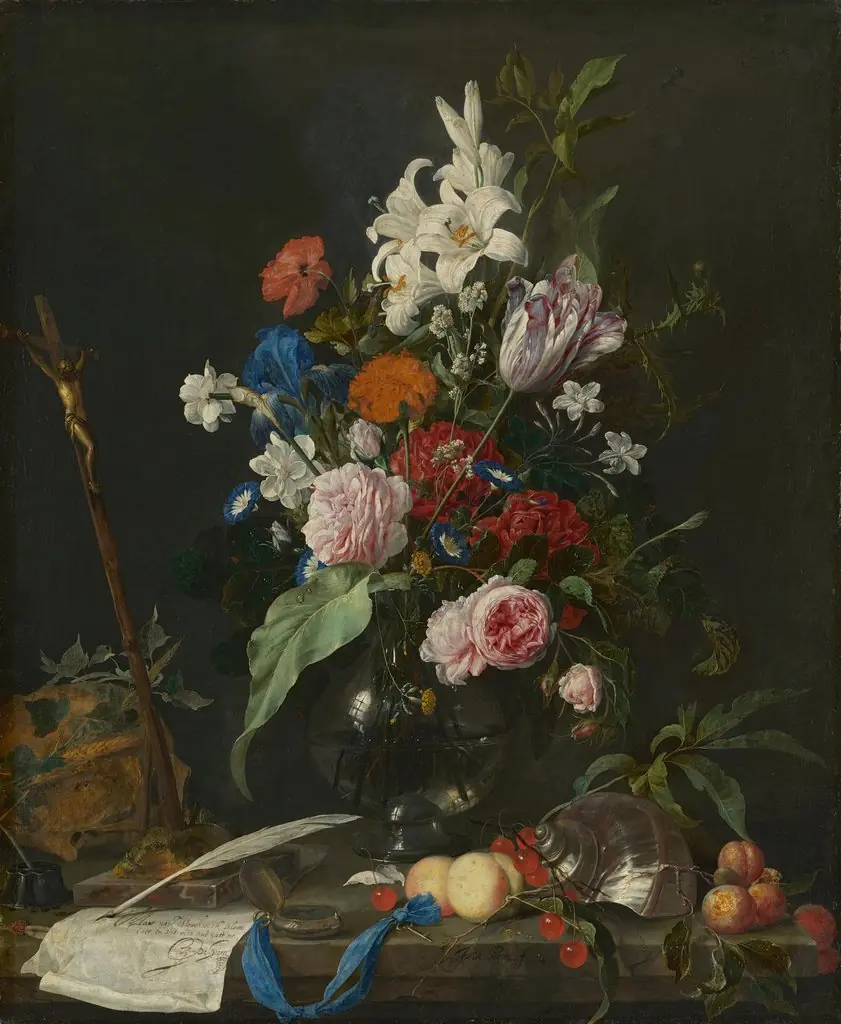
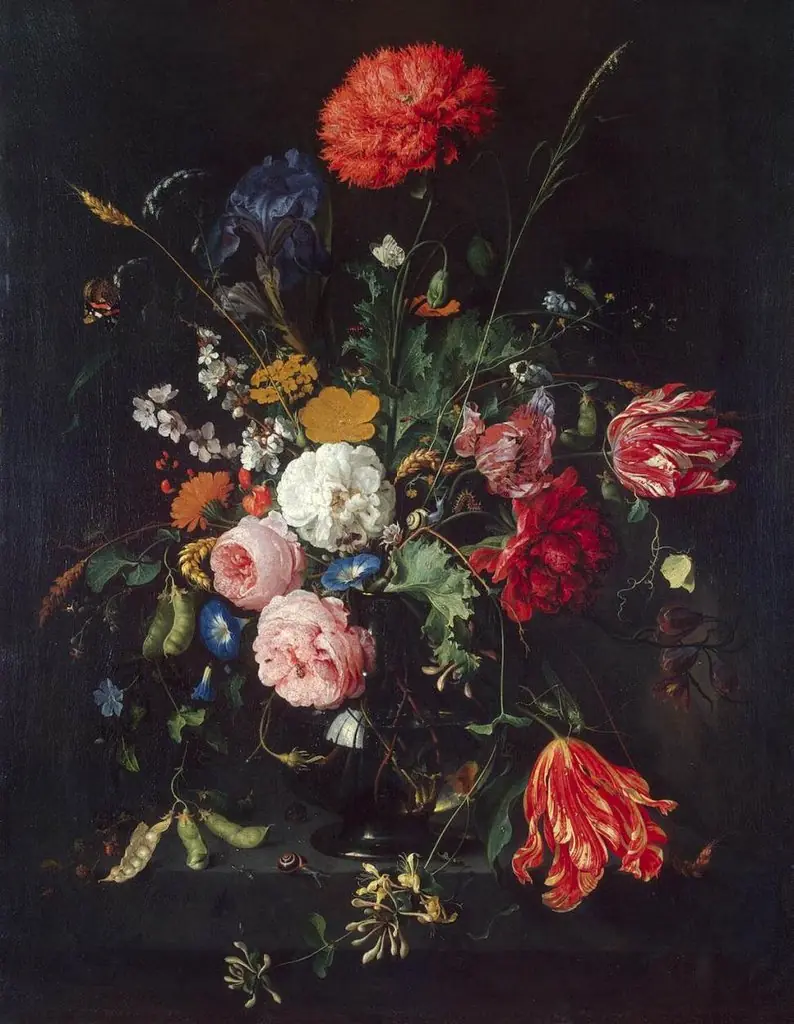
The painting centers on a lush still-life arrangement of fruit and flowers, rendered with meticulous realism. A cluster of grapes, a ripe peach, and a stalk of celery sit beside a tall vase of blooms that includes carnations and other garden flowers, while an ear of maize appears at the edge of the composition.
This type of sumptuous still life conveys abundance and the fleeting nature of earthly pleasures, a theme often called vanitas. The inclusion of cultivated fruits and grains alongside imported or exotic flora underscores prosperity and global trade in mid-seventeenth-century Dutch culture.
Technique & Style
The work is executed in oil paint on canvas, dated 1655, and measures 95 cm in height and 124.5 cm in width.
Handling is consistent with De Heem's mature still-life practice: dense, jewel-like color and sharply focused detail animate the composition, while a cool, even illumination models the fruit's surfaces and the translucent petals of the flowers. The handling emphasizes tactile realism, with highlights on grapes and peaches rendered to suggest freshness and ripeness.
Formal qualities include a symmetrical arrangement around a central vase of flowers, flanked by fruit and vegetables such as grapes, a peeled peach, celery, and maize. The background is subdued, directing attention to the luminous foreground, where the still life's opulent textures and varied surfaces achieve a high degree of illusionistic presence.
History & Provenance
Jan Davidsz. de Heem painted Fruit and a Vase of Flowers in 1655, in oil on canvas measuring 95 cm in height by 124.5 cm in width. The work is held in the collection of the Hermitage Museum in Saint Petersburg. Specific commission details and earlier ownership prior to its museum acquisition are not documented in the available sources, and no accession number or exhibition history has been recorded.
Overview
Jan Davidsz. de Heem's 1655 oil painting, "Fruit and a Vase of Flowers," exemplifies the refined artistic output of the Dutch Golden Age. This still life presents an abundant, seemingly spontaneous arrangement of various fruits and blossoms, rendered with meticulous detail. As a leading practitioner of the genre, de Heem significantly contributed to the popularity of still life painting during the 17th century, a period marked by its sophisticated artistic production.
Context
Created in 1655, this work belongs to the Dutch Golden Age, a period renowned for its flourishing arts and sciences. Still life painting, in particular, gained significant traction, with artists like Jan Davidsz. de Heem becoming highly sought after. His contributions helped establish the genre's prominence, catering to a burgeoning market for art that celebrated both domestic life and the natural world, often with underlying symbolic messages.
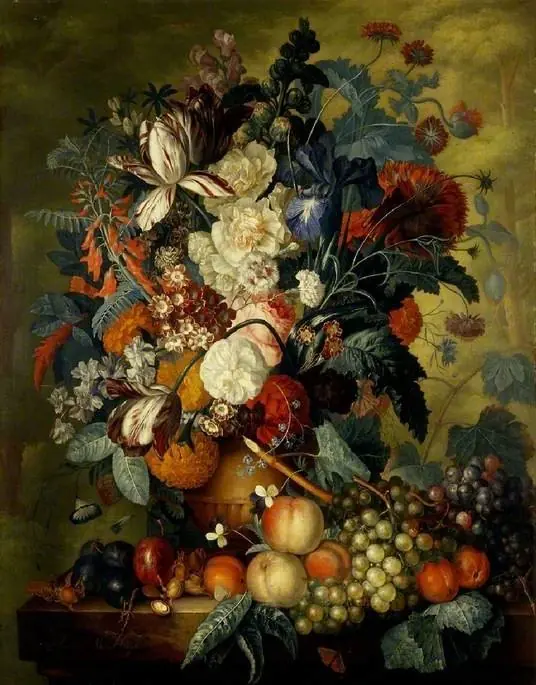
Artist & collection
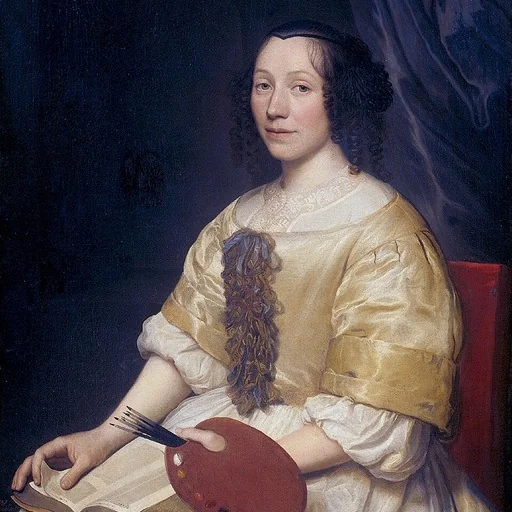
Artist
Maria van Oosterwijck (1630–1693), also spelled Oosterwyck, was a Dutch Golden Age painter, specialising in richly detailed flower paintings and other still lifes.

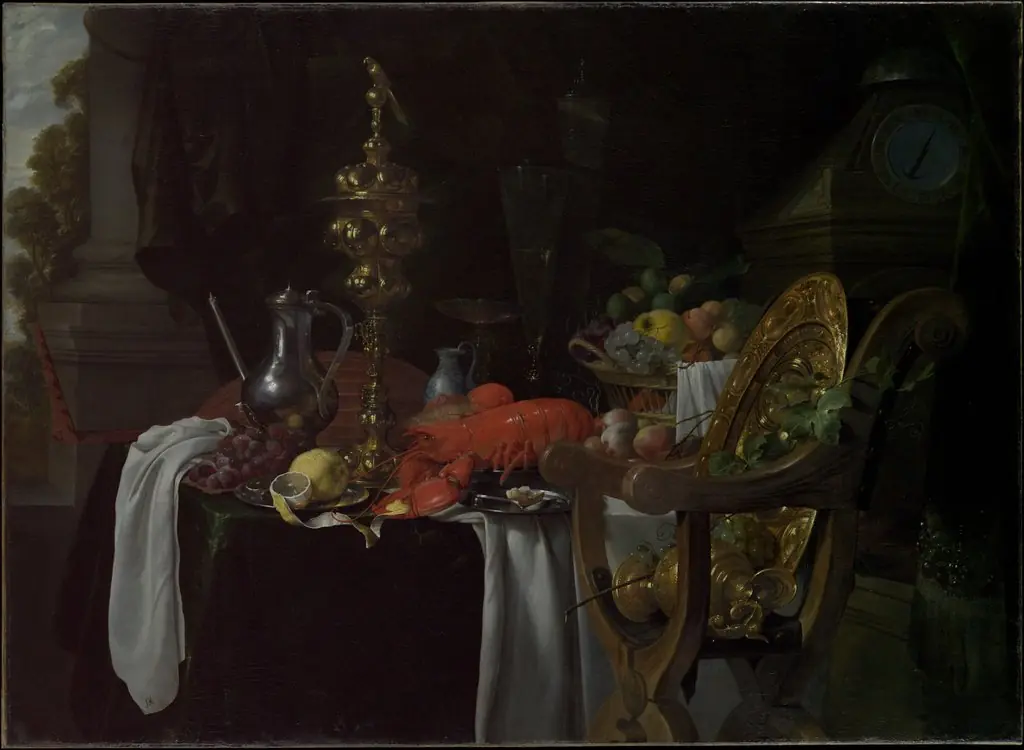
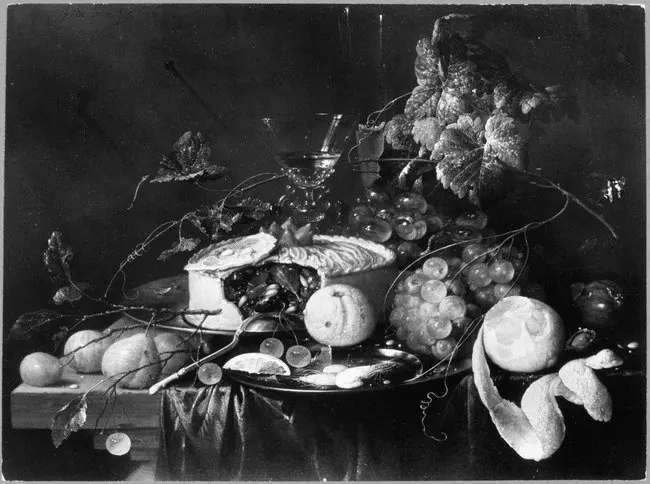
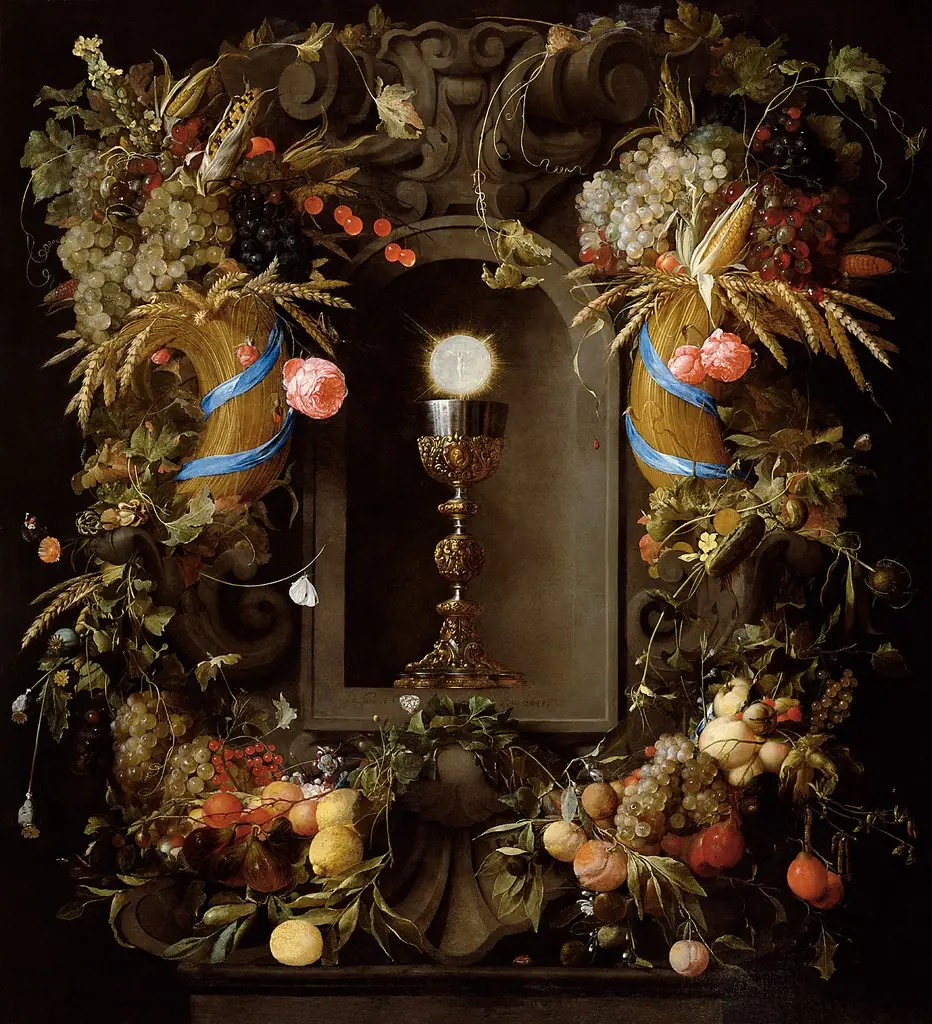
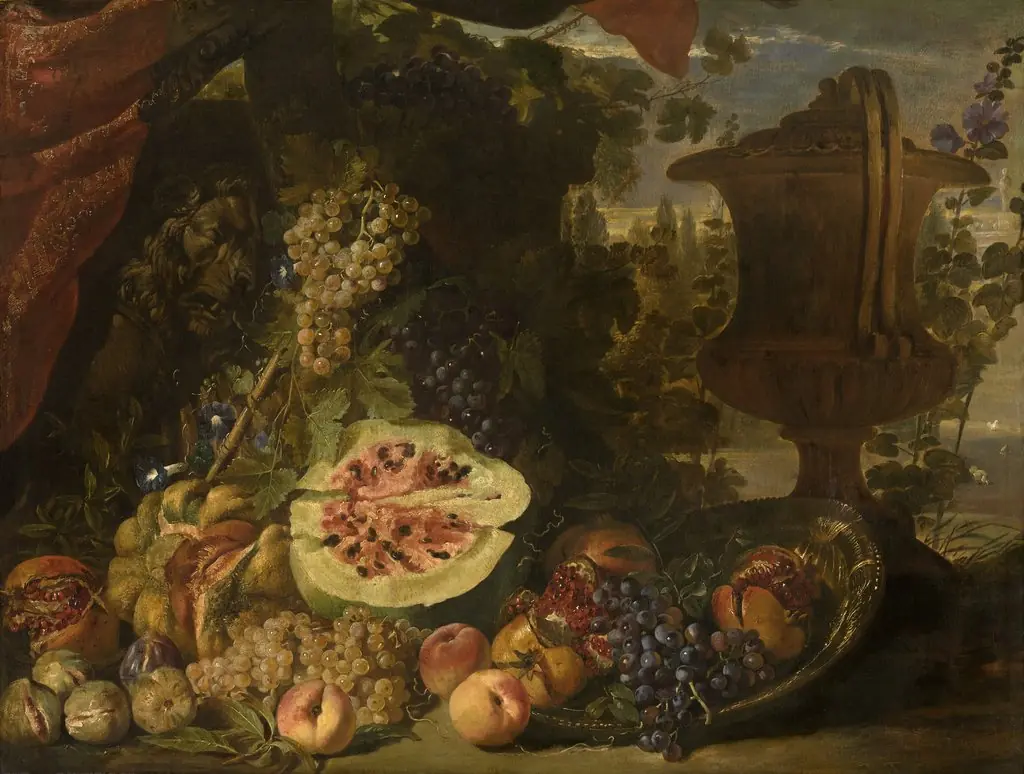 Fruit still life of pumpkin, melon, grapes, peaches and pomegranates; right a garden vase, left a sarcophagus
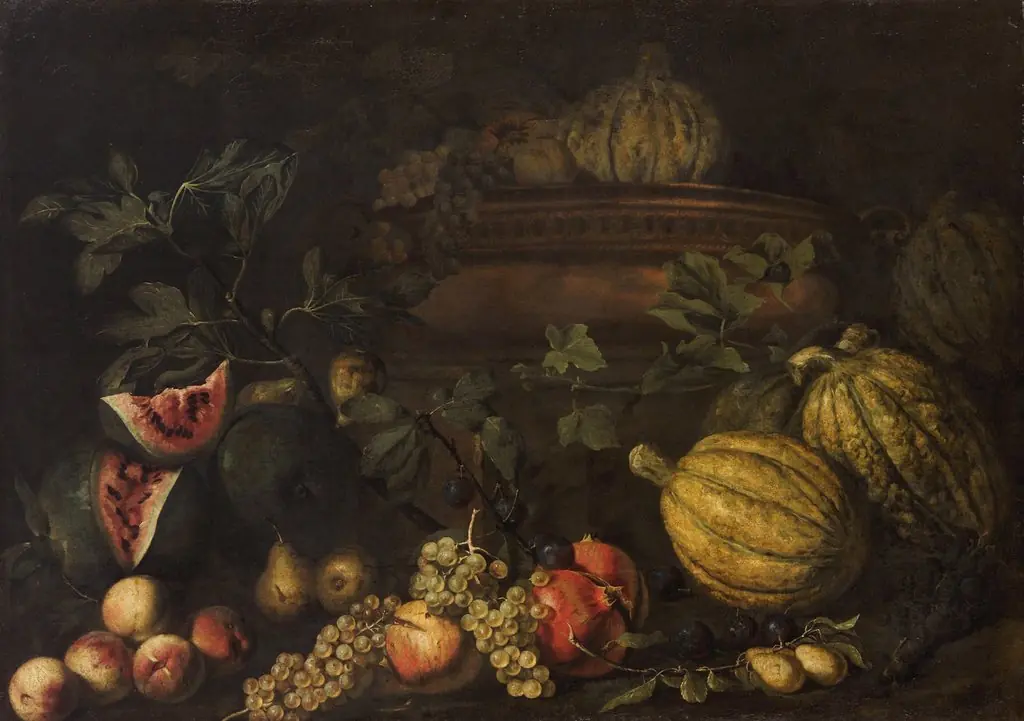 Früchtestilleben
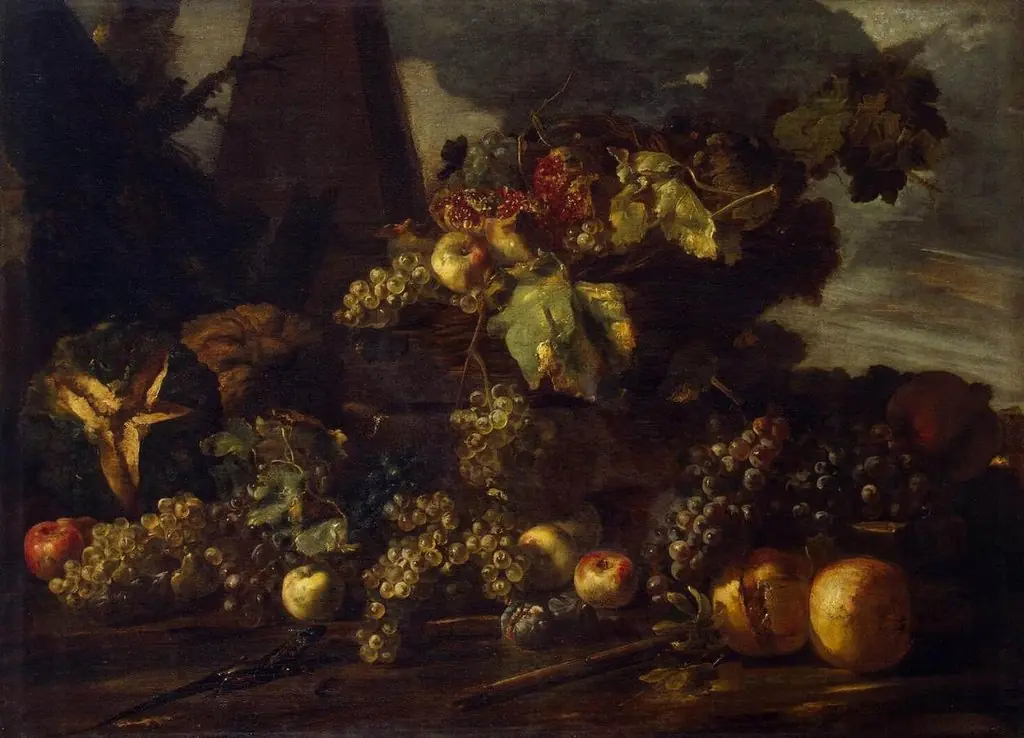 Still Life with Grapes
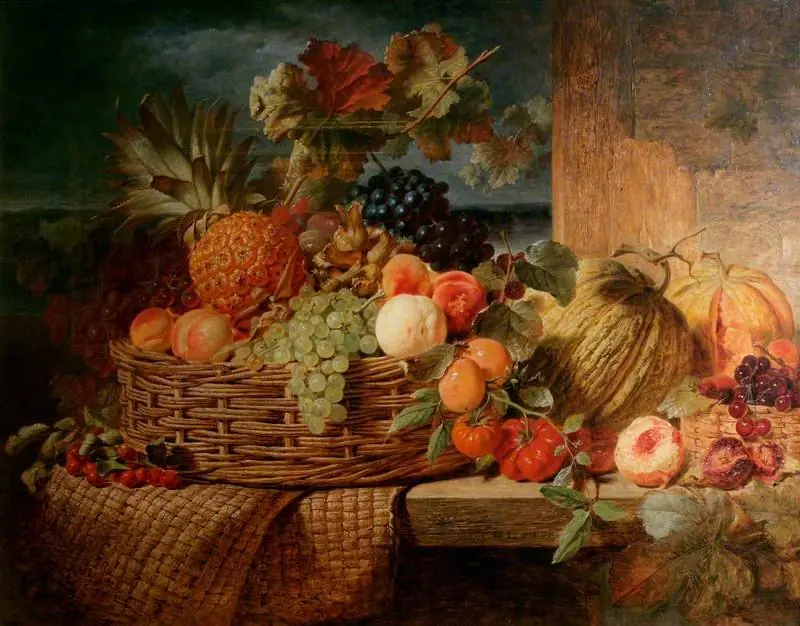 Fruit
Fruit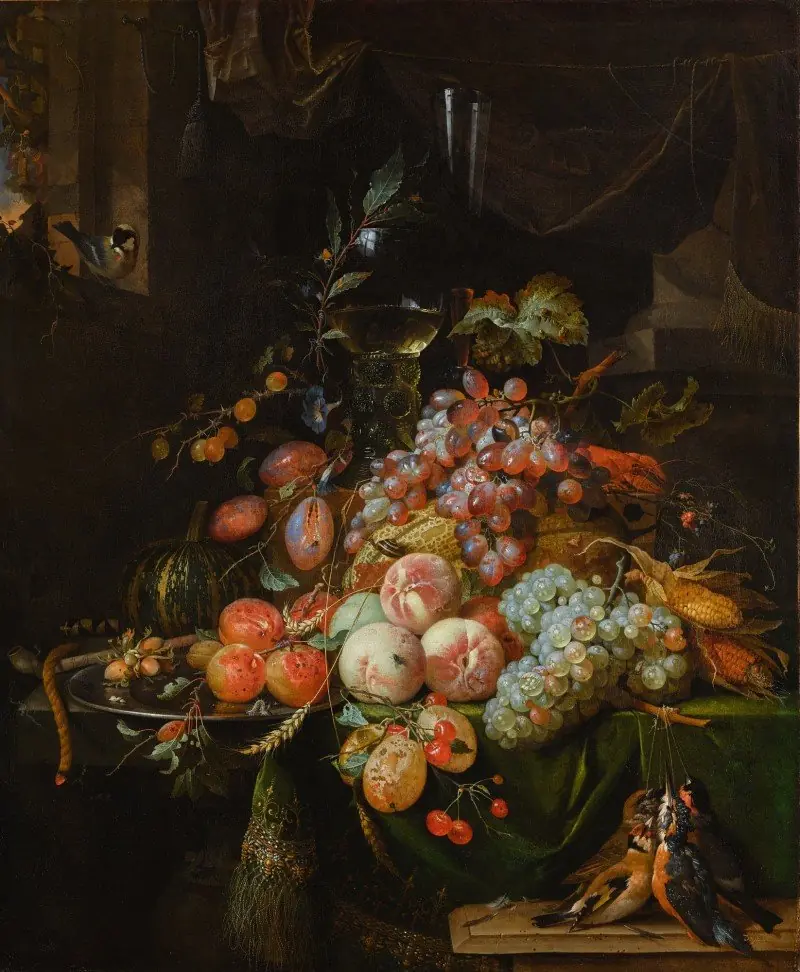 Still Life with Plums, Peaches, Apricots, Grapes and a Melon
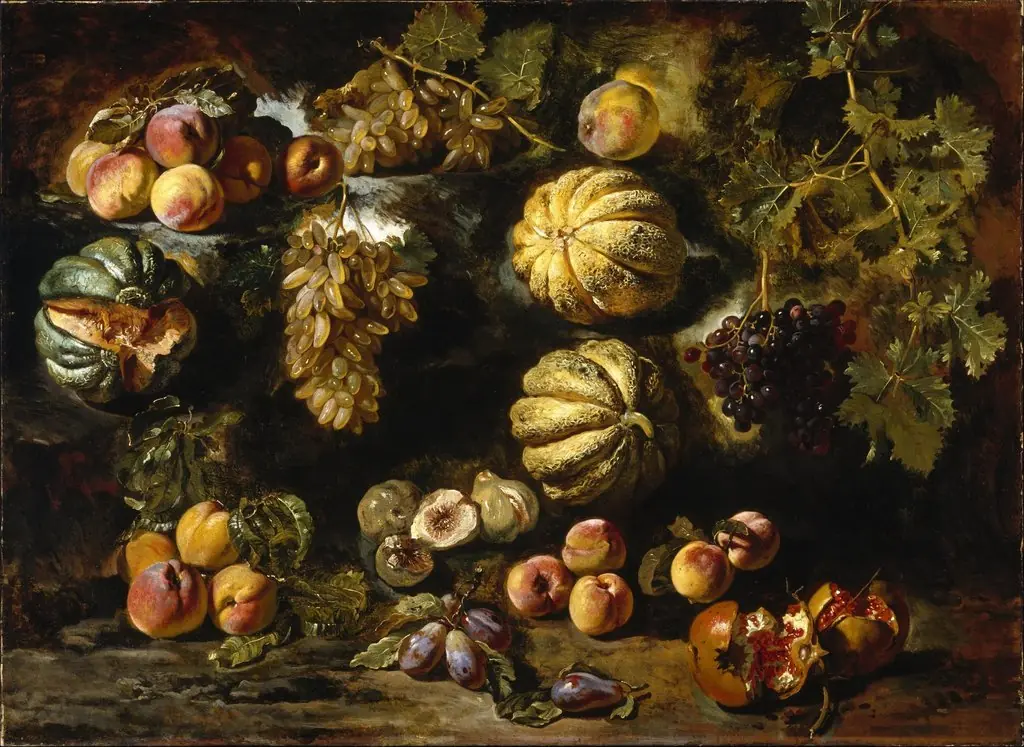 Still Life with Melons, Peaches, Figs, and Grapes
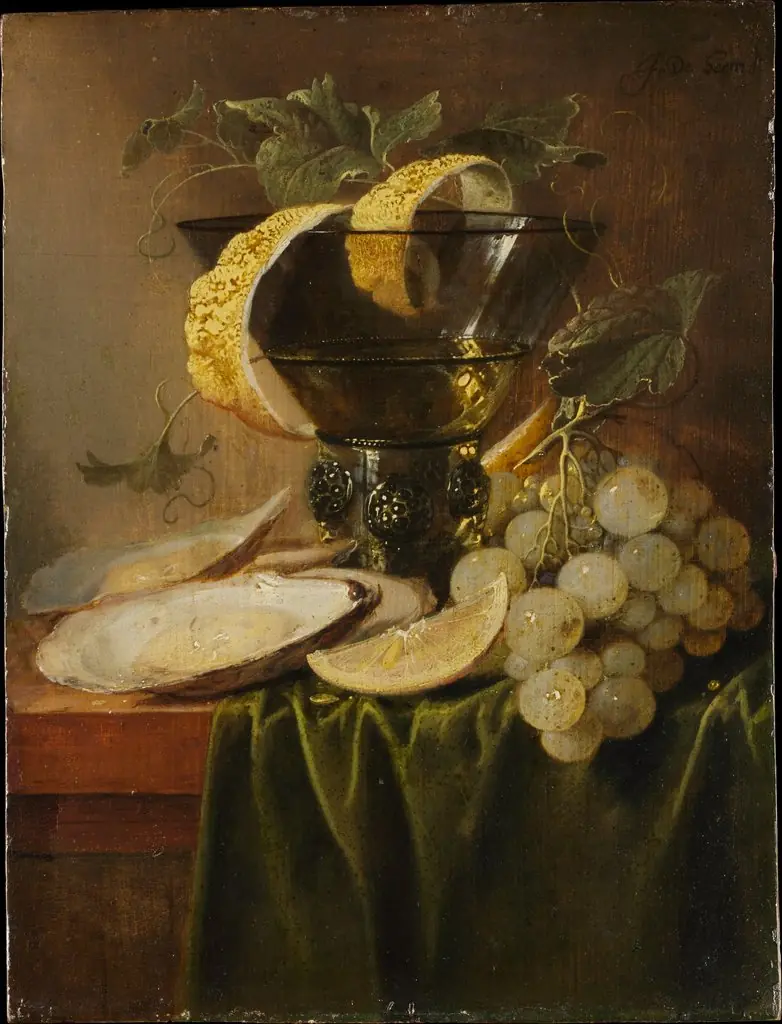
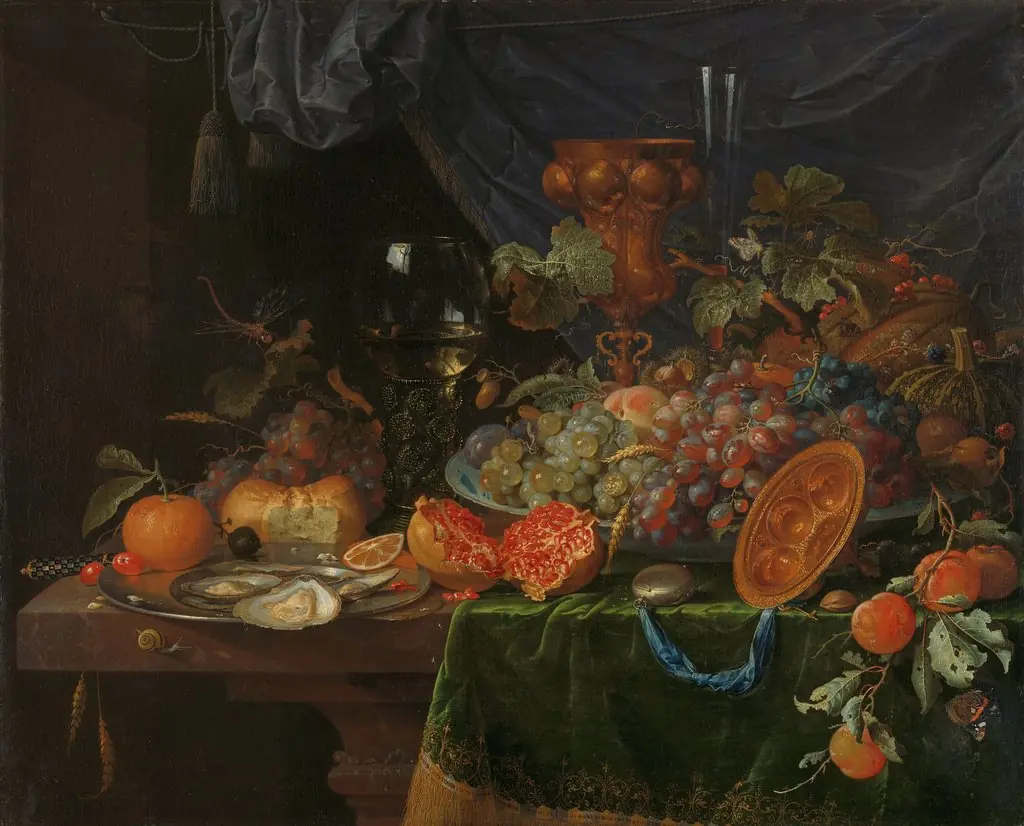 Still life with fruit and oysters
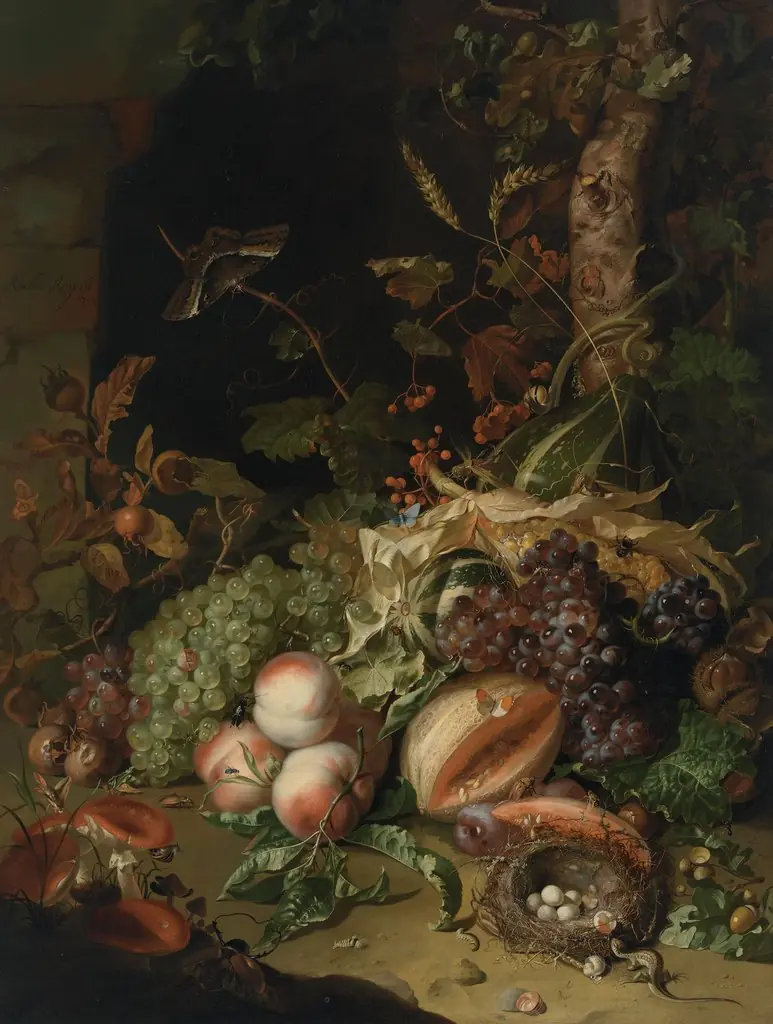 Fruit on a Forest Floor
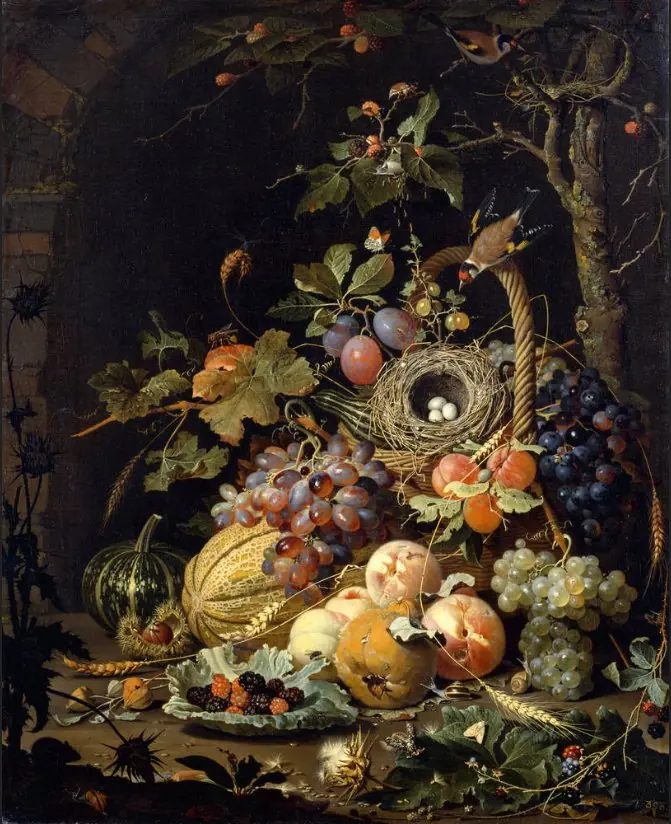 A bird's nest in a fruit basket
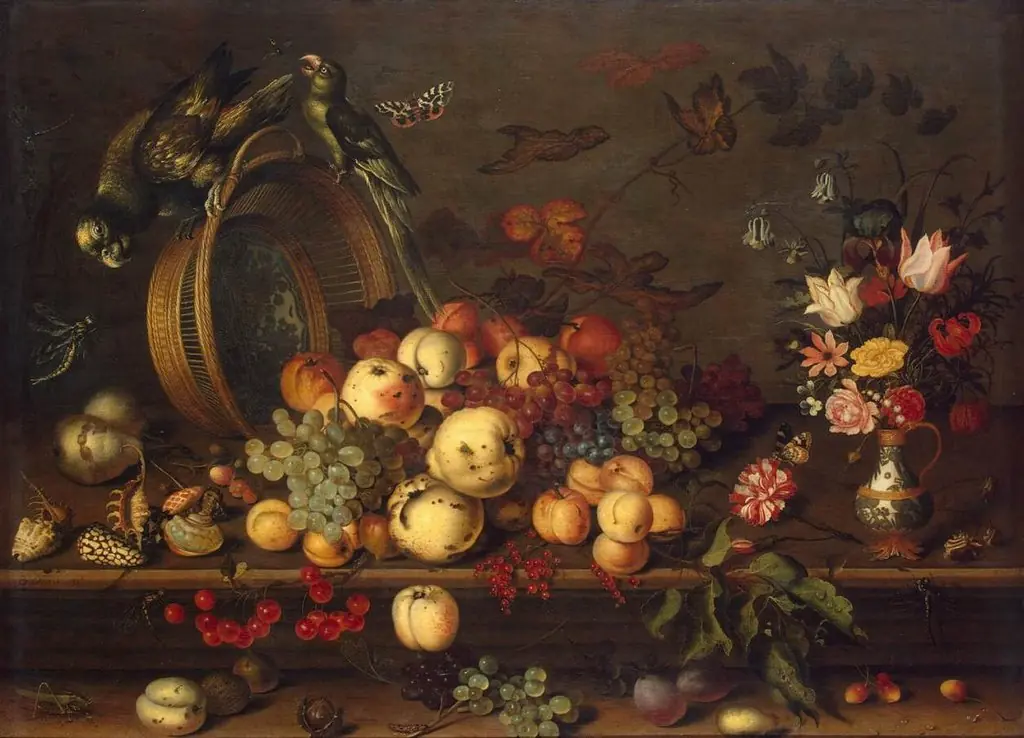 Still Life with Fruits, Shells and Insects
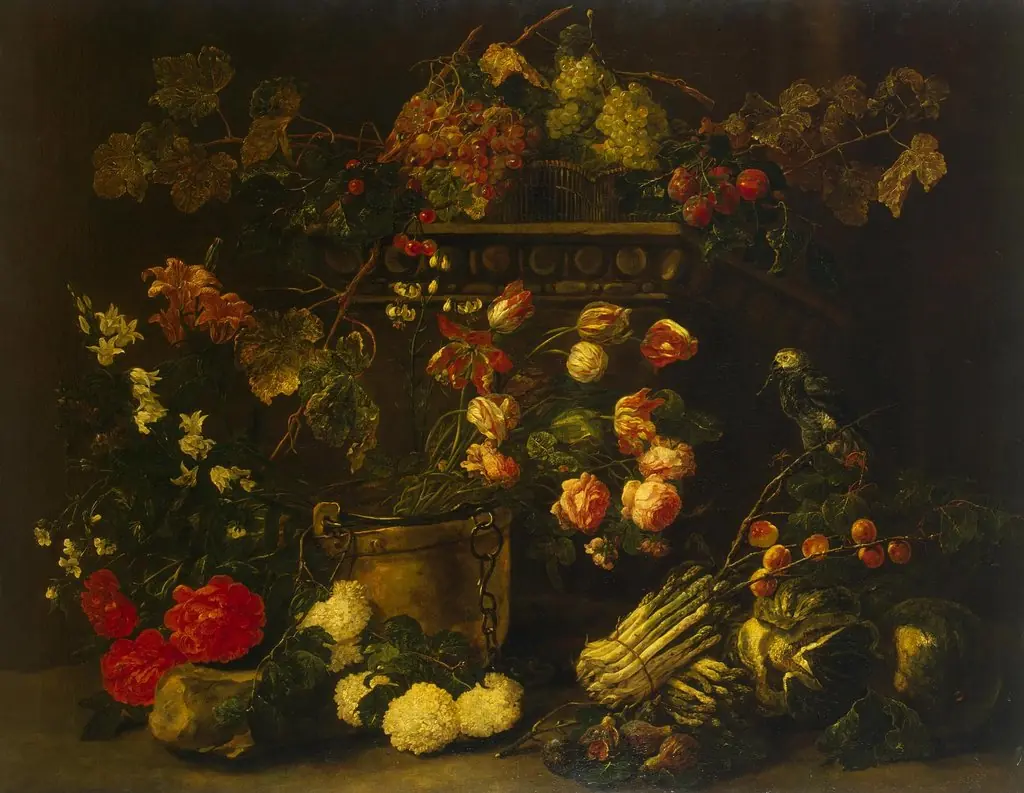 Still Life with Flowers, Fruit and Parrot
- A vase of flowers with fruit