Artwork
Still Life with Fruit and Lobster
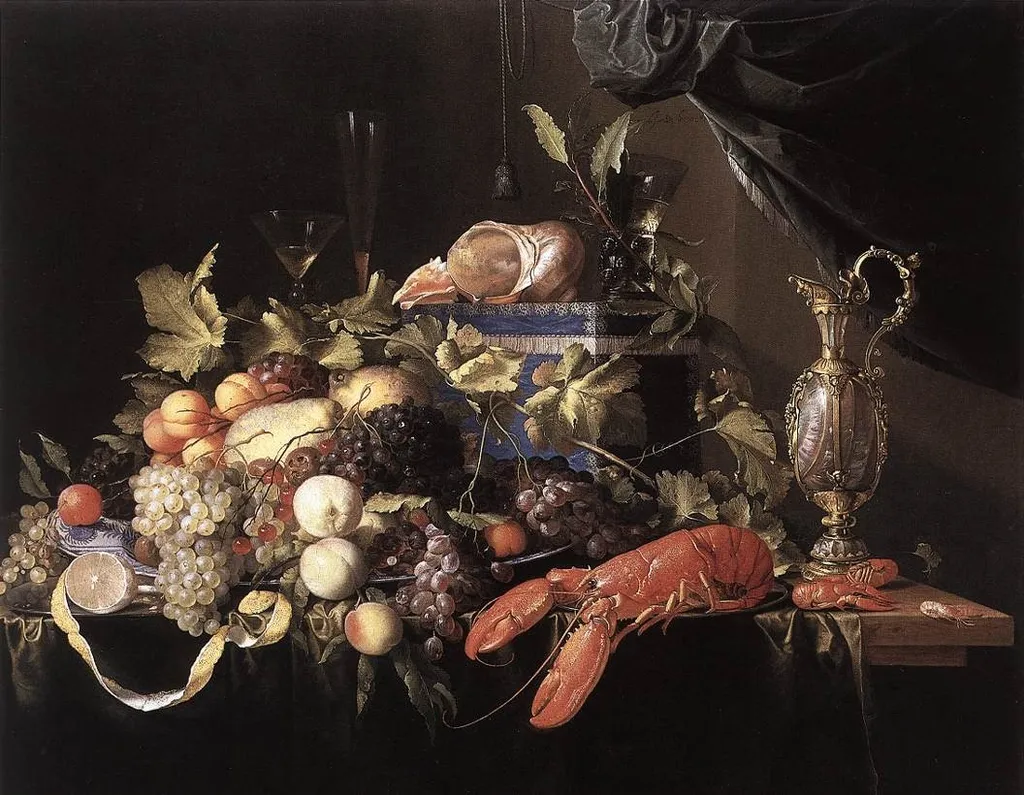
Still Life with Fruit and Lobster is an oil painting by the Dutch Golden Age artist Jan Davidsz. de Heem. It dates from 1648 and is held in the collection of the Gemäldegalerie Berlin. Jan Davidsz.
About this work
Technique & Style
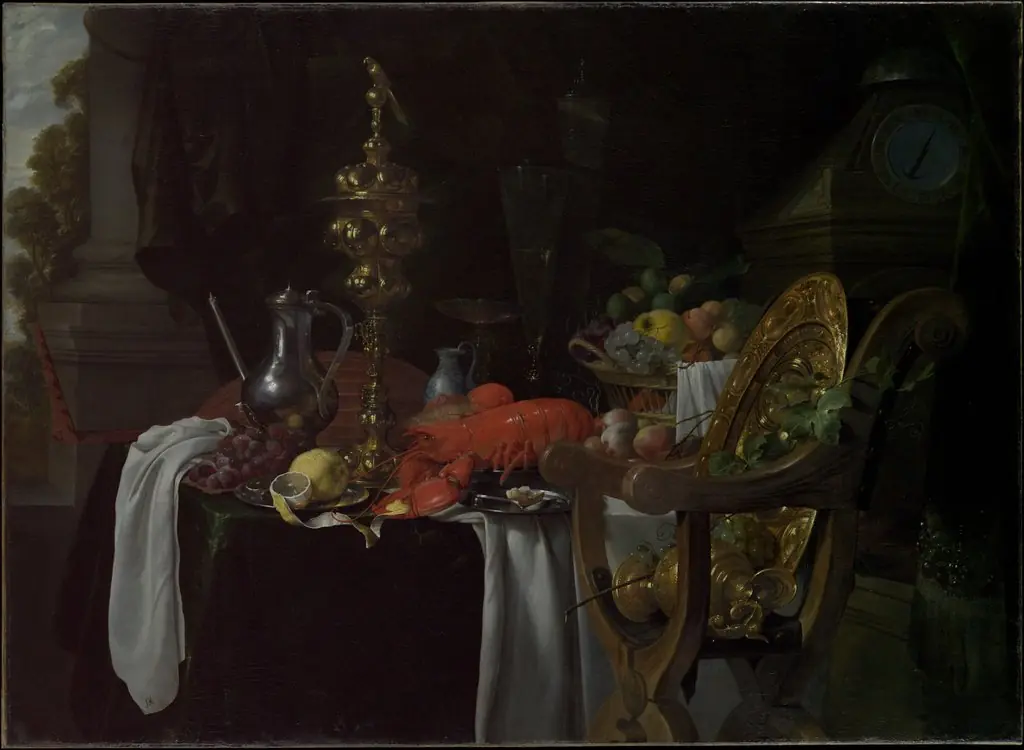
De Heem depicts a complex assembly of objects including a lobster, Kraak porcelain, a rummer, an ewer, and various fruits such as grapes, lemons, and peaches.
Executed in 1648, this work is an oil painting on canvas measuring 95 by 120 centimetres. The piece exemplifies the pronk still life genre, characterized by a lavish arrangement of luxury items. De Heem depicts a complex assembly of objects including a lobster, Kraak porcelain, a rummer, an ewer, and various fruits such as grapes, lemons, and peaches.
The composition demonstrates a high degree of realism in the rendering of diverse textures, from the hard surfaces of the ceramic and glassware to the organic forms of the seafood and fruit.
History & Provenance
Still Life with Fruit and Lobster is a 1648 oil painting on canvas by Jan Davidsz. de Heem, measuring 95 cm in height and 120 cm in width. It depicts a sumptuous pronk still-life arrangement of fruit, a lobster, Kraak porcelain, a rummer, an ewer, grapes, a lemon, and a peach. The work is held in the collection of the Gemäldegalerie in Berlin.
No records of a specific commission survive, and the available sources do not contain accession numbers or a documented exhibition history.
Overview
Jan Davidsz. de Heem's Still Life with Fruit and Lobster, painted in 1648, exemplifies the elaborate still-life tradition of the Dutch Golden Age. This painting showcases a lavish arrangement of foodstuffs and luxury items, reflecting the period's prosperity and interest in global commerce. It is recognized for its detailed execution and rich composition, characteristic of de Heem's work. The artwork is housed in the Gemäldegalerie Berlin.
Subject & Meaning
The painting presents a dark surface crowded with an array of delicacies and valuable objects. A vibrant red lobster, succulent grapes, peaches, and a lemon are arranged alongside a gleaming silver ewer and a piece of Kraak porcelain. This deliberate display of both local produce and exotic imports speaks to the Dutch Republic's economic power and its engagement with international trade during the 17th century, bringing a world of goods into the domestic sphere.
Context
During the Dutch Golden Age, still-life painting flourished as a genre that celebrated both the material world and artistic skill. Works like de Heem's Still Life with Fruit and Lobster not only displayed wealth and exoticism but also often carried underlying moral messages about the transience of life or the temptations of luxury. This particular piece, however, primarily emphasizes the prosperity and sophisticated tastes of the era, reflecting a society confident in its economic achievements.
Artist & collection
Artist
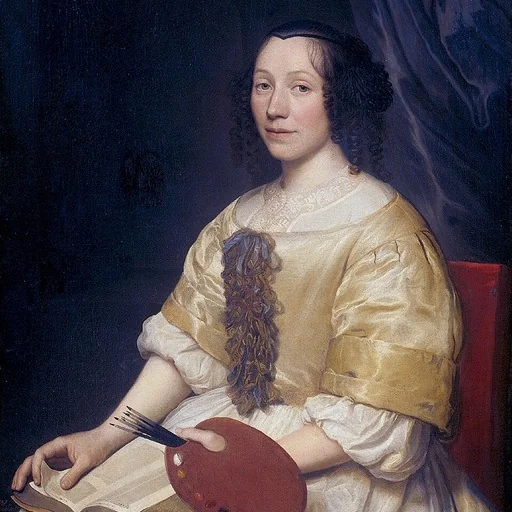
Maria van Oosterwijck (1630–1693), also spelled Oosterwyck, was a Dutch Golden Age painter, specialising in richly detailed flower paintings and other still lifes.

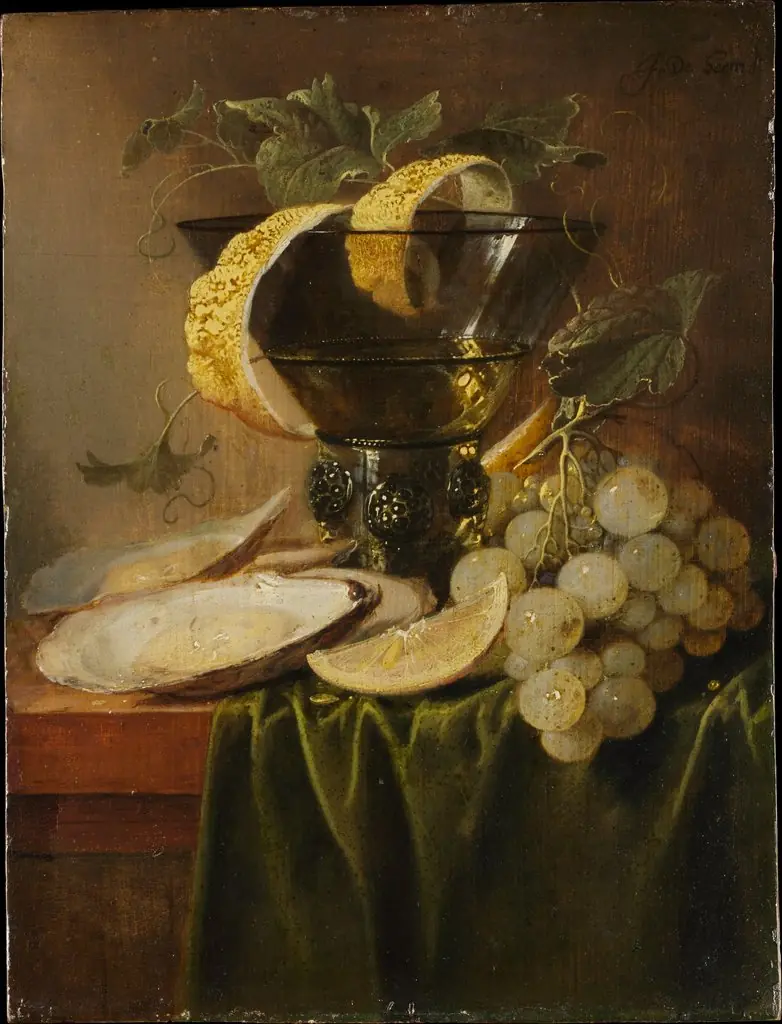
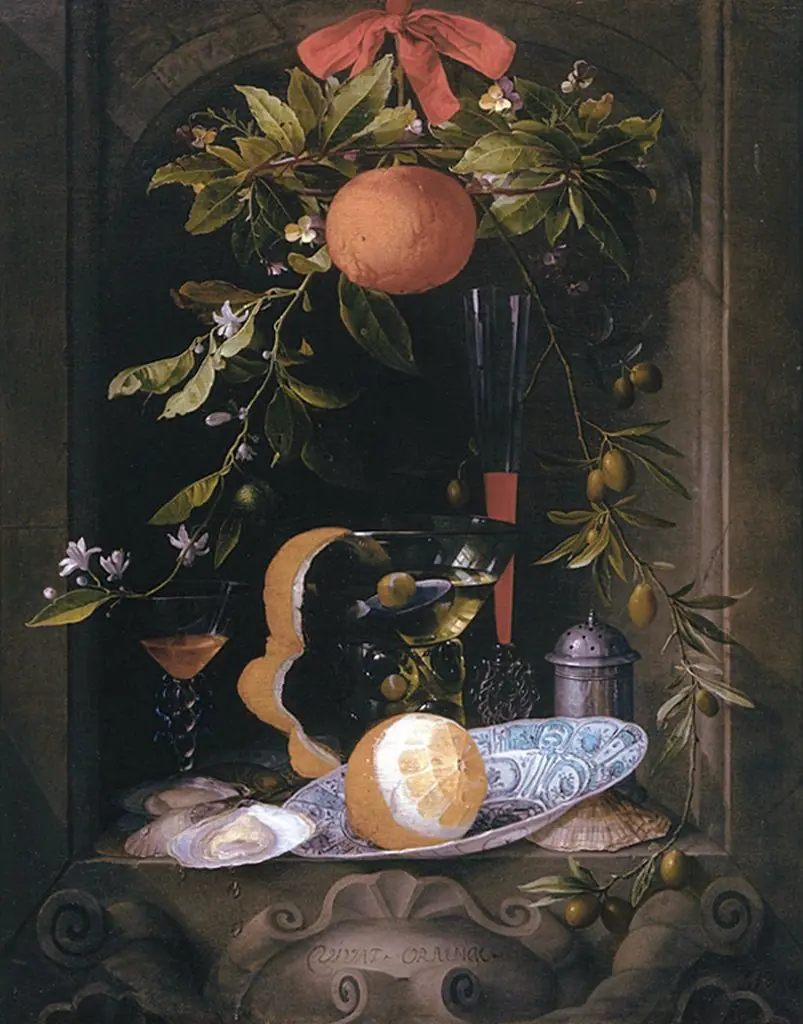
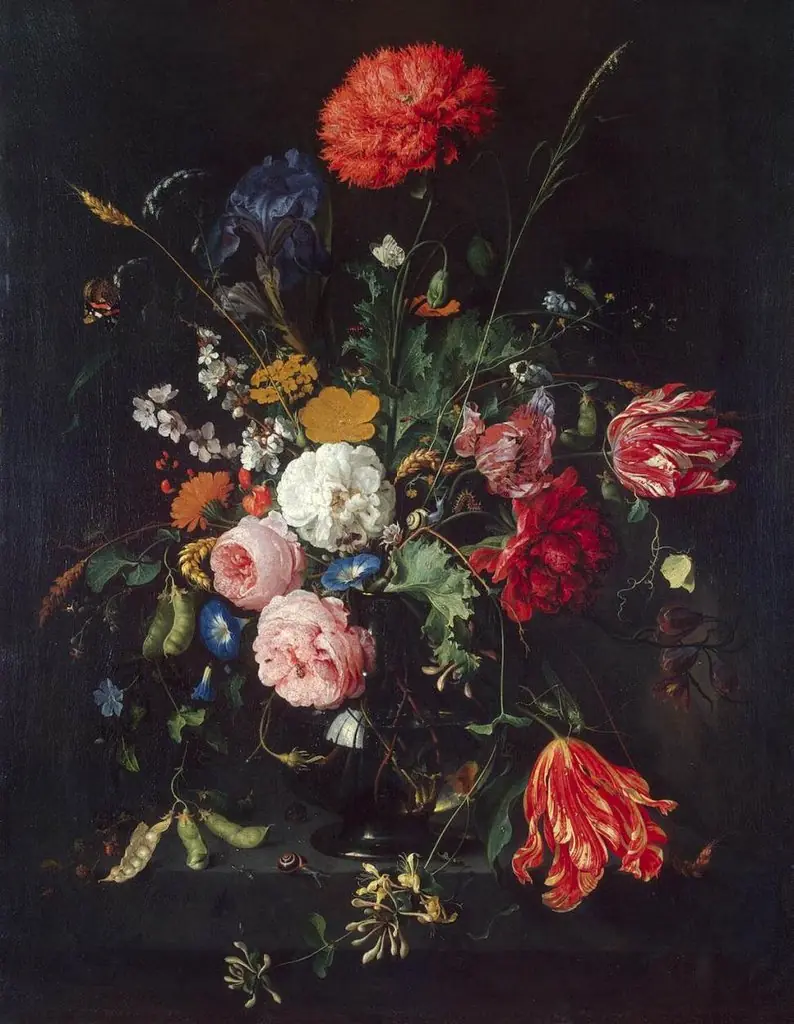
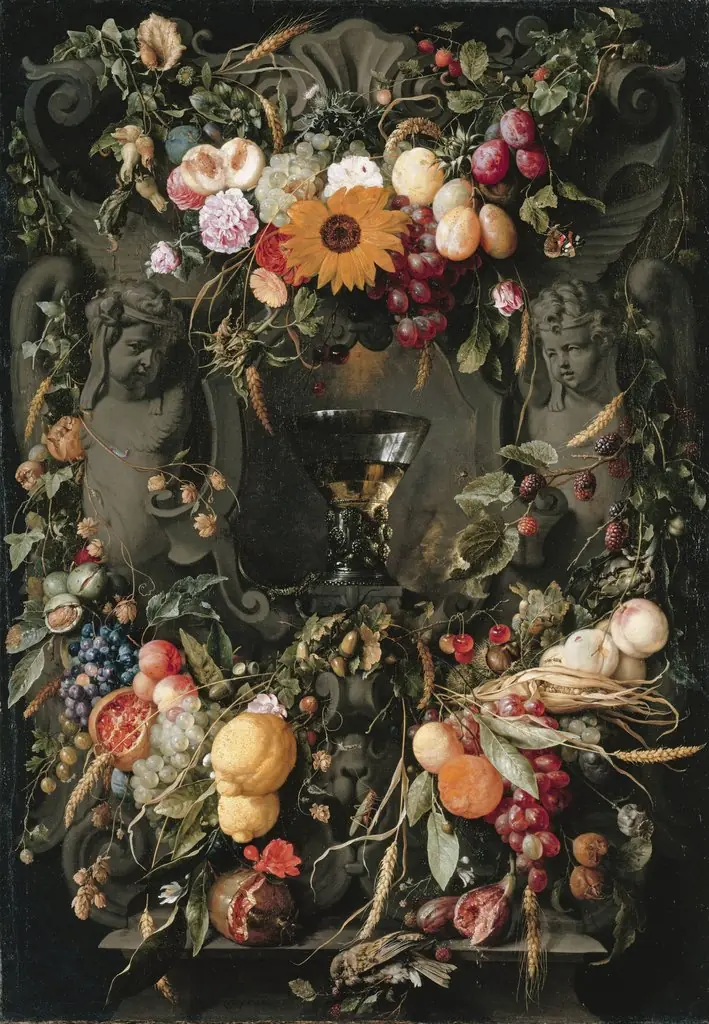
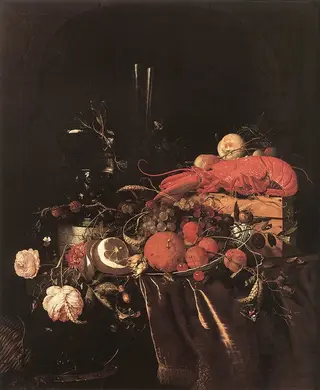
- Still-Life with Fruit, Flowers, Glasses and Lobster
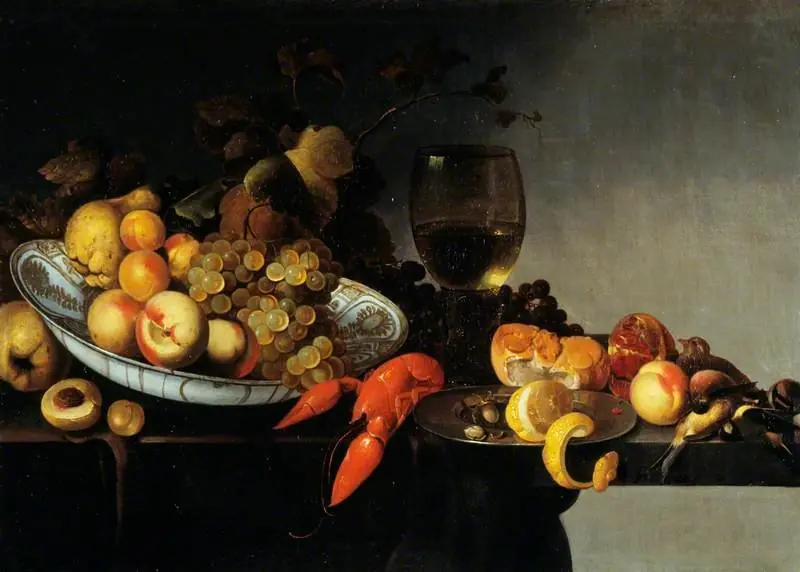 Still Life with Fruit, a Lobster and Dead Game
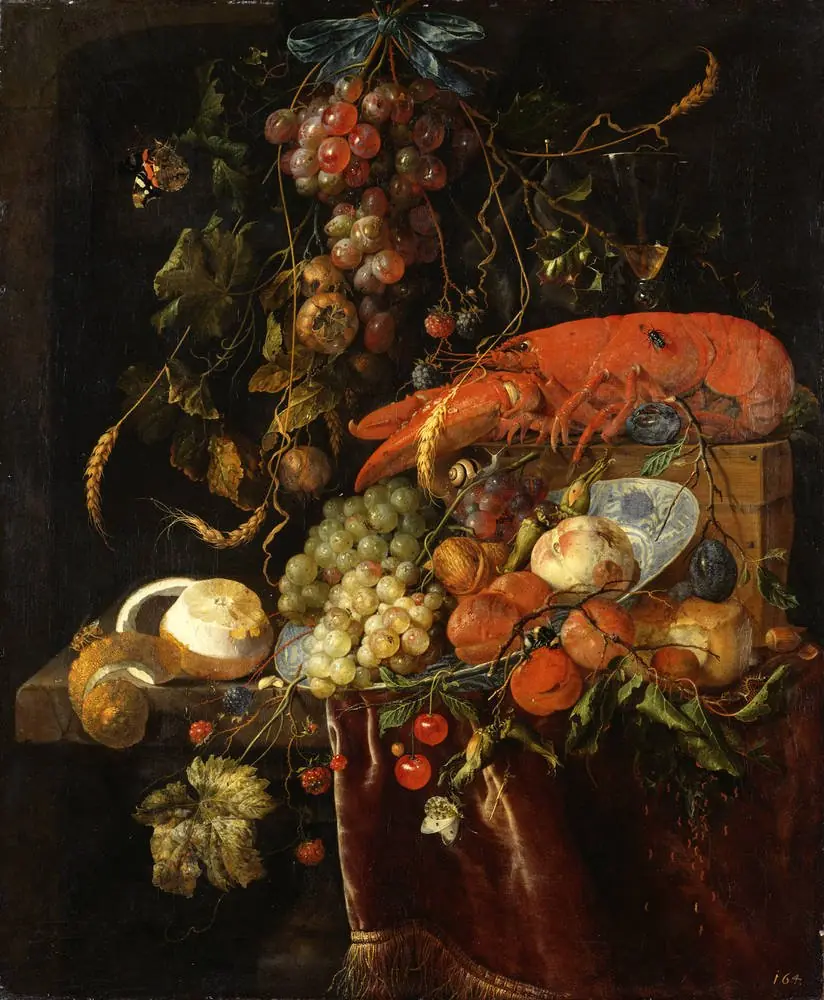 Still Life with a Lobster
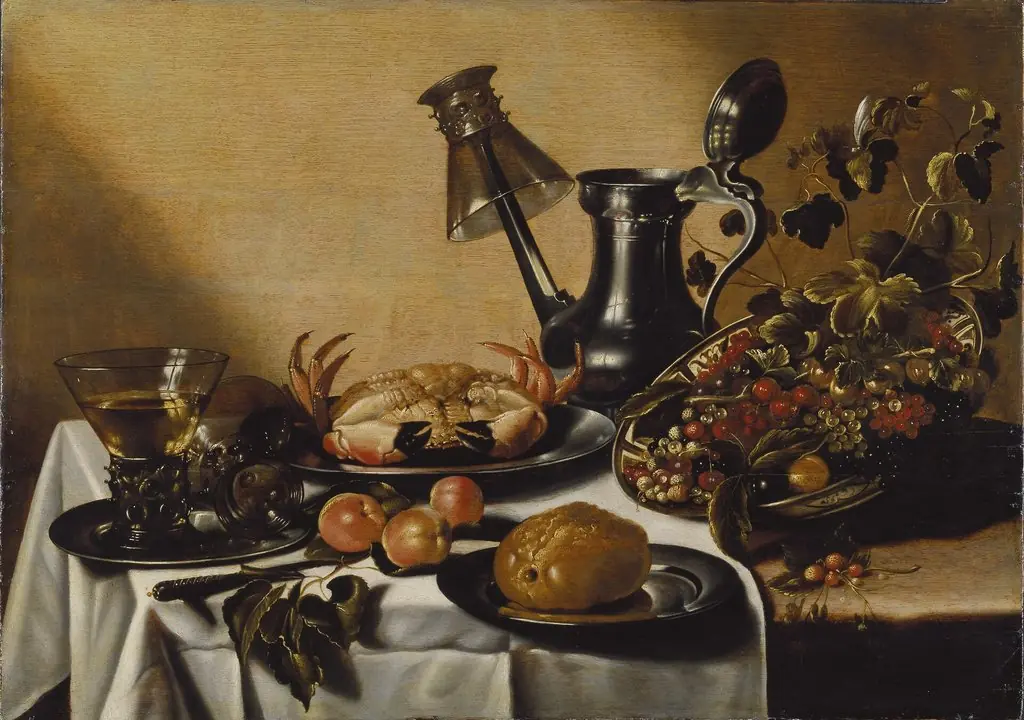 Still Life with Crab and Fruit
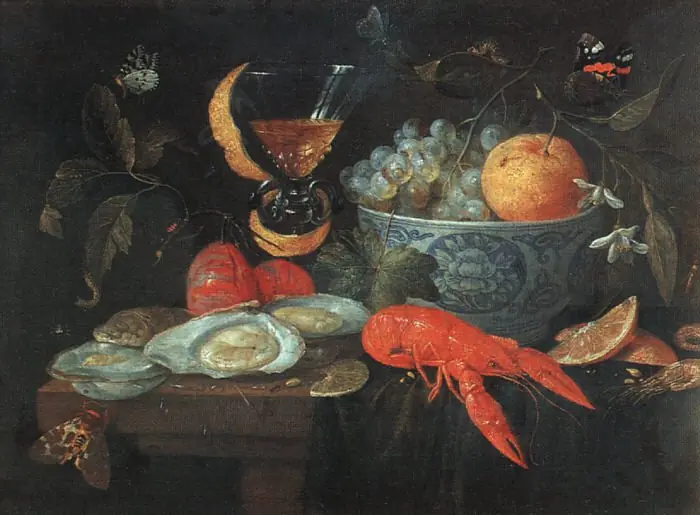 Still-Life with Fruit and Shellfish
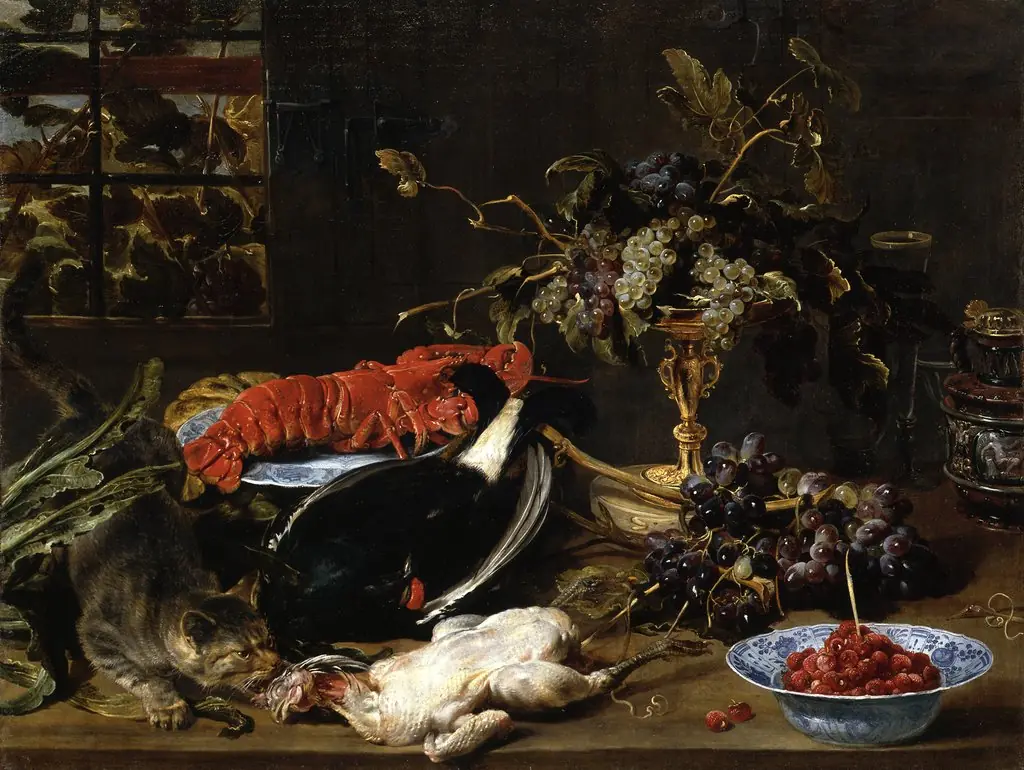 Still Life with Lobster and Fruits
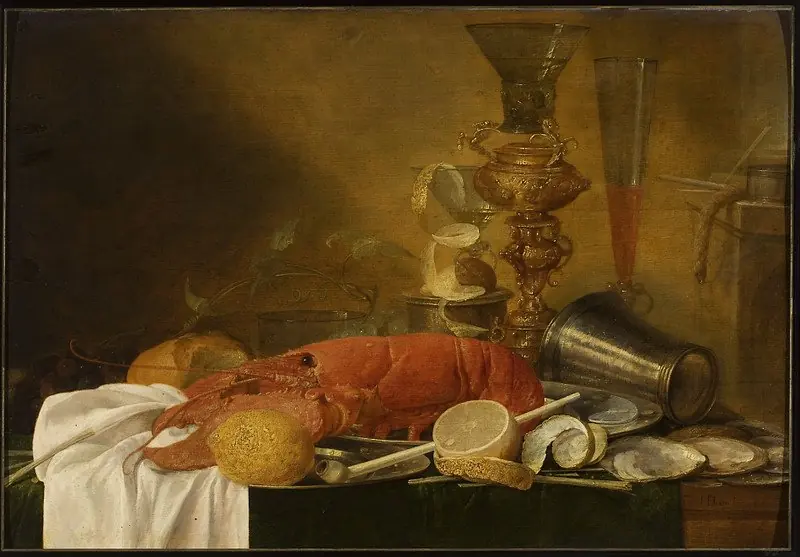 Still life with a lobster
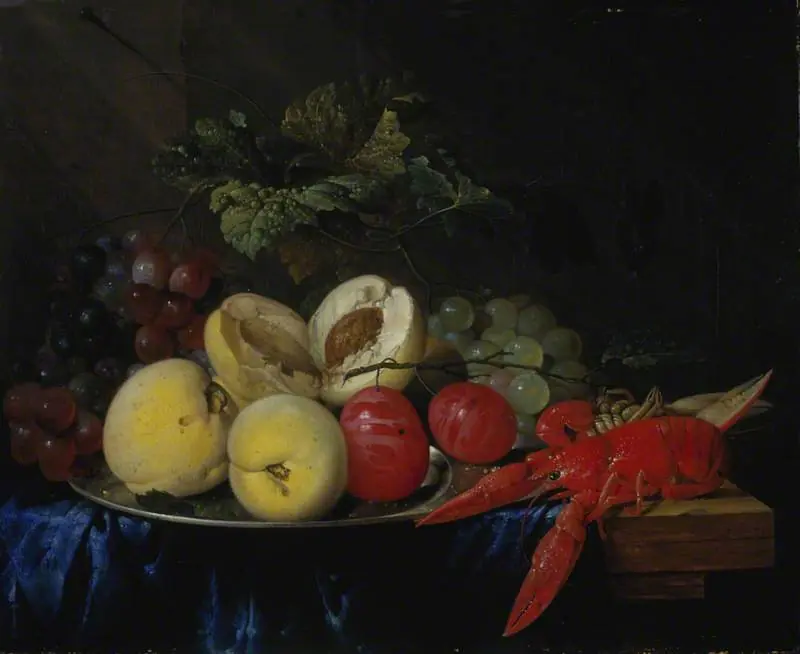 A Still-life with Fruit and Lobster
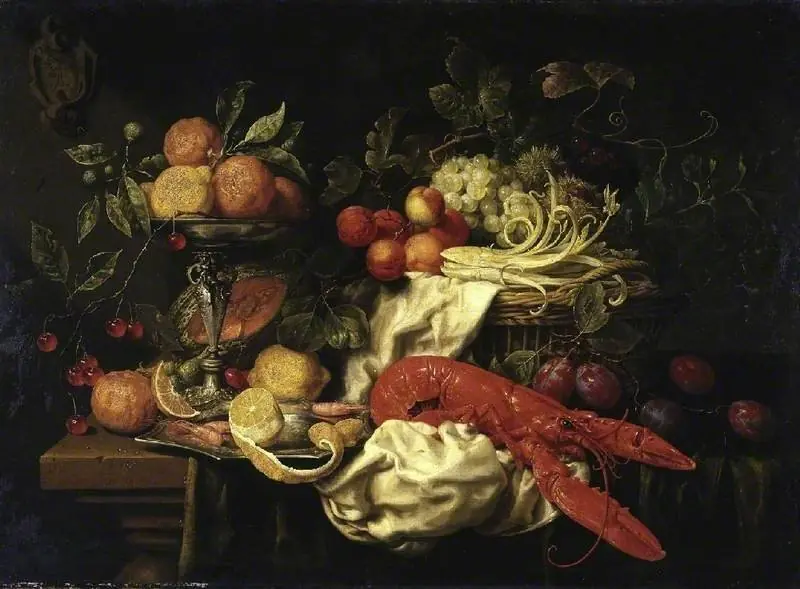 Still-life with a lobster