Artwork
Crowning of Charles V in Bologna
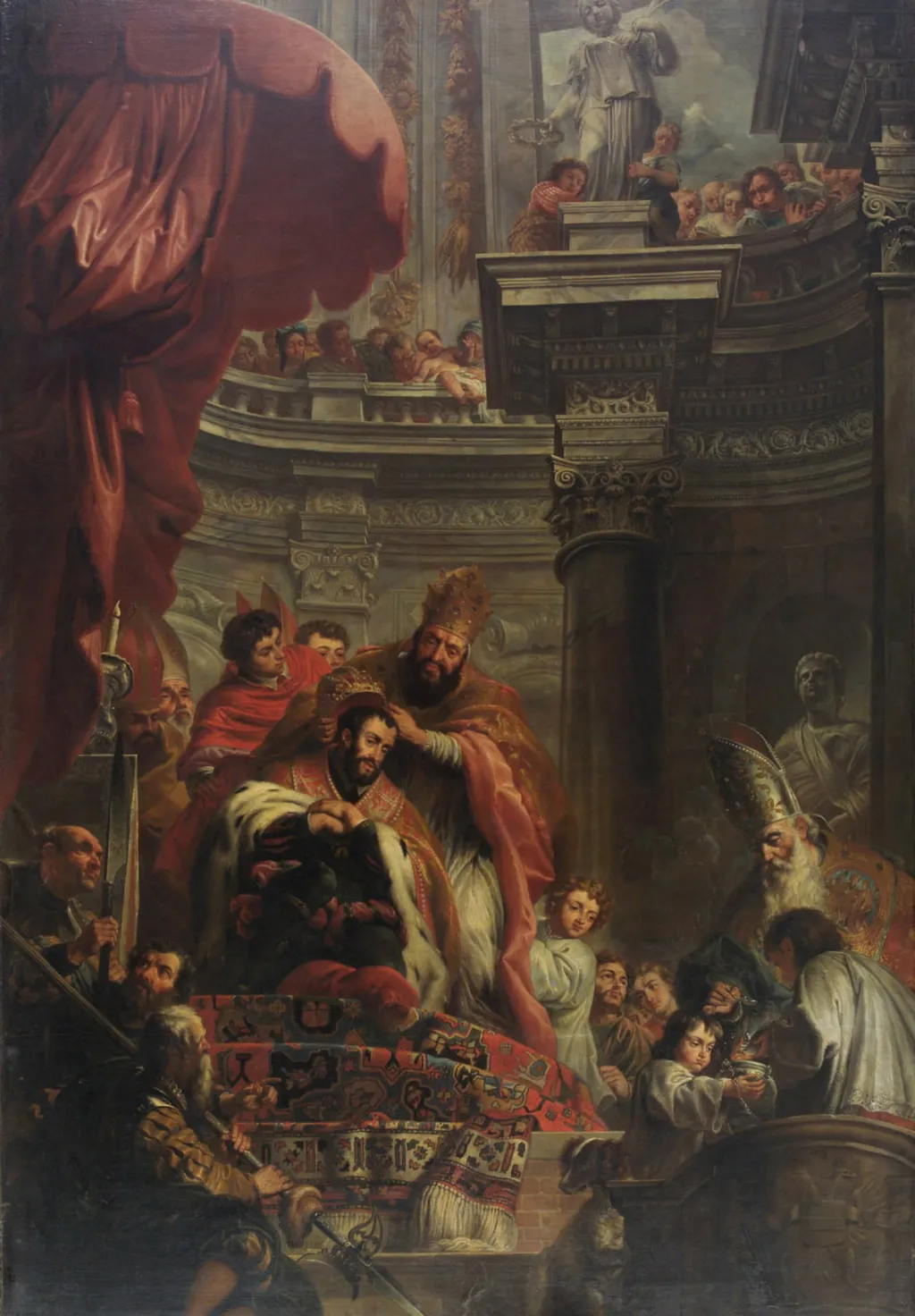
Crowning of Charles V in Bologna is an oil painting by the Barbizon school artist Jan Erasmus Quellinus. It dates from 1691 and is held in the collection of the Kunsthistorisches Museum.
About this work
Overview
The Crowning of Charles V in Bologna is a large oil on canvas painting by the Flemish artist Jan Erasmus Quellinus, executed around 1681.
The Crowning of Charles V in Bologna is a large oil on canvas painting by the Flemish artist Jan Erasmus Quellinus, executed around 1681. Measuring 413 by 285 centimeters, the work depicts the coronation of Holy Roman Emperor Charles V by Pope Clement VII in Bologna in 1530, the last imperial coronation performed by a pope. The painting is held in the collection of the Kunsthistorisches Museum in Vienna, where it is catalogued under inventory number GG 1766. It belongs to a major series of fifteen ceiling paintings on events in the life of Charles V that Quellinus completed for the Habsburg court, representing a significant commission in the artist's career and a notable example of Flemish history painting at the Viennese court.
Subject & Meaning
The painting depicts the coronation of Charles V as Holy Roman Emperor by Pope Clement VII, an event that took place in Bologna in 1530. In the composition, the standing pope in golden papal vestments and tall tiara leans forward to place the crown on the seated emperor, who wears fur-trimmed robes. The scene unfolds within an ornate church interior, with numerous secondary figures in clerical and noble dress surrounding the throne, some bearing candles, a sword, and liturgical objects. A massive swag of deep crimson drapery with a tassel dominates the upper left corner, while behind the central pair a curved balcony crowded with observers overlooks the ceremony. Above them, a statue of a robed figure holding a cross stands in a niche. The subject carried profound ideological weight for the Habsburg dynasty: Charles V was the last emperor to be crowned by a pope, and the image served to reinforce Habsburg claims to universal monarchy and legitimate imperial authority rooted in papal sanction. The dramatic lighting from the upper left illuminates the central figures and rich textures, emphasizing the sacred and political gravity of the moment.
Technique & Style
The work is executed in oil on canvas, a medium that allowed Quellinus to achieve both monumental scale and refined detail across the painting's considerable dimensions. The brushwork varies from smooth, polished surfaces on skin and drapery to more textured handling in the architectural elements and background shadows. The palette is dominated by crimson, gold, brown, and shadowy greens, with dramatic chiaroscuro directing attention to the coronation act. The architecture features Corinthian columns, carved entablatures, and coffered details, reflecting Quellinus's study of Palladian buildings during his Italian sojourn. A patterned carpet covers the steps of the platform, adding to the accumulation of luxurious surfaces. The composition's vertical format and grand architectural setting show the influence of Paolo Veronese, whose style Quellinus absorbed during his residence in Venice from approximately 1660 to 1661. The classicizing tendencies inherited from his father, Erasmus Quellinus the Younger, are evident in the balanced arrangement and idealized figures, while the incorporation of grand architectural elements represents the artist's distinctive development of Flemish Classicism.
History & Provenance
The painting was commissioned by Emperor Leopold I for the decoration of the Hofburg palace in Vienna, forming part of a series of fifteen ceiling paintings on the life of Charles V that constituted Quellinus's most important commission during his service as court painter to the Habsburg ruler around 1680. The work was painted circa 1681, during the artist's period of employment in Vienna. By 1730, the painting was already documented in the imperial gallery collection. It subsequently entered the holdings of the Kunsthistorisches Museum, where it remains today under inventory number GG 1766 in the Gemäldegalerie. The museum lists the provenance as having been painted on the order of Emperor Leopold I for the furnishing of the Hofburg, with documentary attestation in the gallery by 1730.
Context
Jan Erasmus Quellinus (1634-1715) was one of the last prominent representatives of the great Flemish school of history and portrait painting in the seventeenth century. Born into the distinguished Quellinus family of artists, he trained with his father Erasmus Quellinus the Younger from 1649 and later traveled to Italy, residing in Rome from 1657 to 1659 as a member of the Bentvueghels, where he acquired the nickname 'Seederboom,' and subsequently in Venice from about 1660 to 1661. His work for the Habsburg court around 1680 represented the culmination of his international career, bringing Flemish classicizing history painting to the service of imperial propaganda. The choice of Charles V's coronation as subject matter was particularly resonant for Leopold I, as it invoked the apex of Habsburg power and the ideal of universal monarchy that subsequent generations of the dynasty sought to maintain. The painting exemplifies how Quellinus synthesized his father's Classicism with the grandeur of Veronese and the architectural vocabulary of Palladio to create works suited to the ideological needs of his patrons.
Legacy
The Crowning of Charles V in Bologna remains a key work in the Kunsthistorisches Museum's collection, testament to the international reach of Flemish painting and its capacity to serve dynastic ideology across Europe. As part of Quellinus's series on the life of Charles V, the painting contributes to our understanding of how the Habsburg court constructed visual narratives of imperial legitimacy through historical precedent. The work also illustrates the late flowering of Flemish history painting in the hands of an artist who successfully translated Italianate influences into a northern idiom for court consumption. Quellinus's pupils, who included Anthoni Schoonjans, Simon de Marets, and numerous others, helped disseminate his approach, though his reputation has been somewhat overshadowed by the difficulty of distinguishing his work from that of his father. The painting's continued presence in Vienna underscores the enduring Habsburg investment in art as a medium of political memory, preserving the coronation that marked both the symbolic height and the historical terminus of papal-imperial collaboration in the Holy Roman Empire.
Own this work as a print
Artist & collection
Artist
Jan Erasmus Quellinus (1634 in Antwerp – 11 March 1715 in Mechelen) was a Flemish painter and draughtsman and a member of the famous Quellinus family of artists.

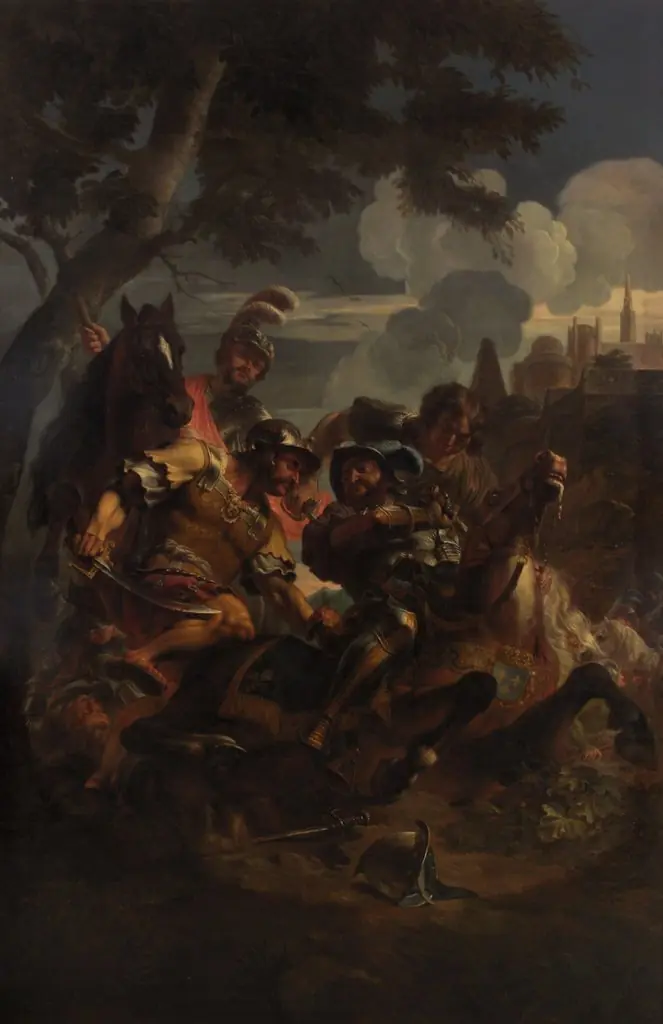
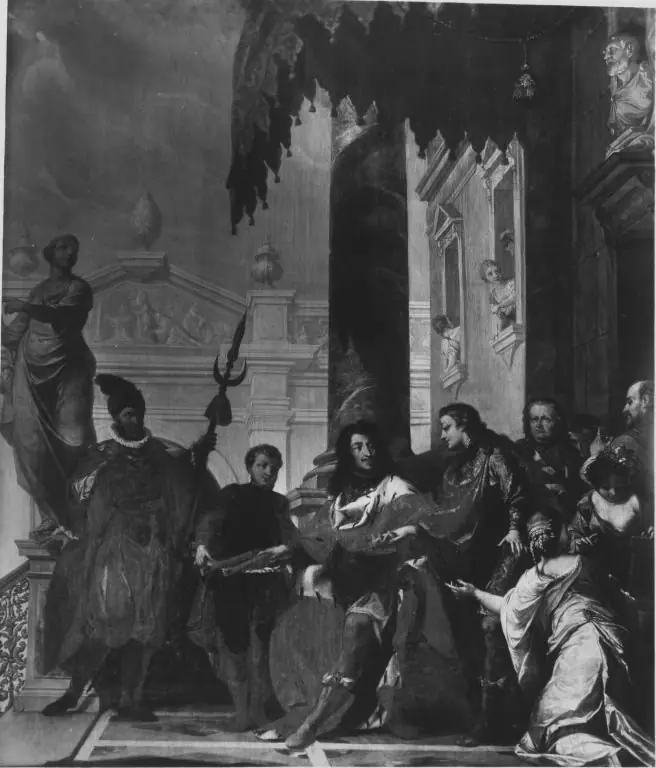 Kurfürst Johann Wilhelm übergibt den Kommandostab
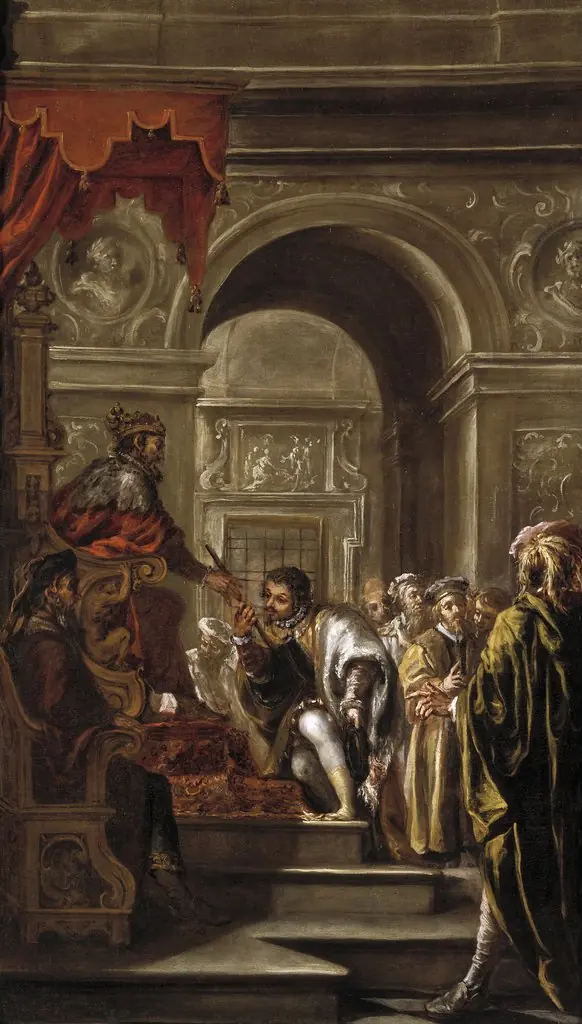 Saint Ambrose appointed Governor of Liguria and Emilia
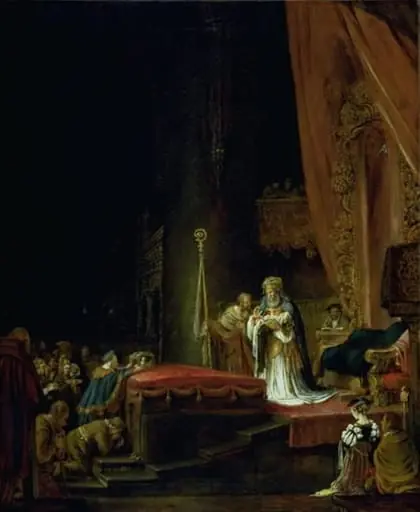 The Presentation in the Temple
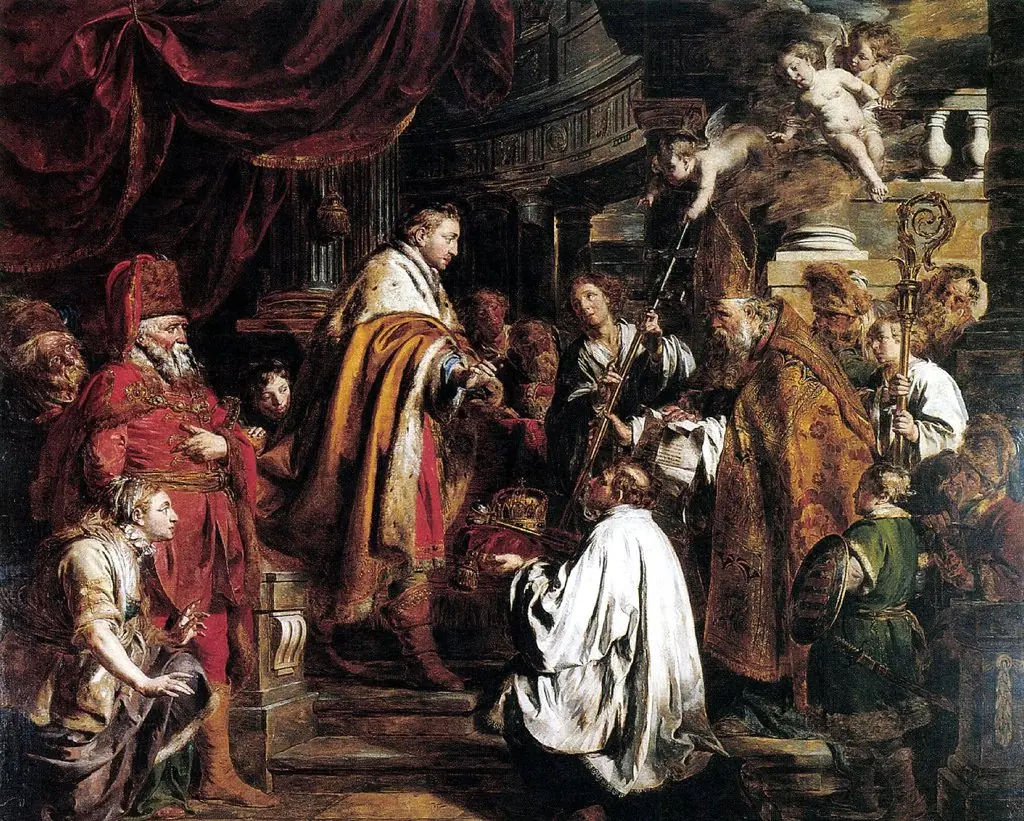 Saint Stephen, king of Hungary Receiving the Legate
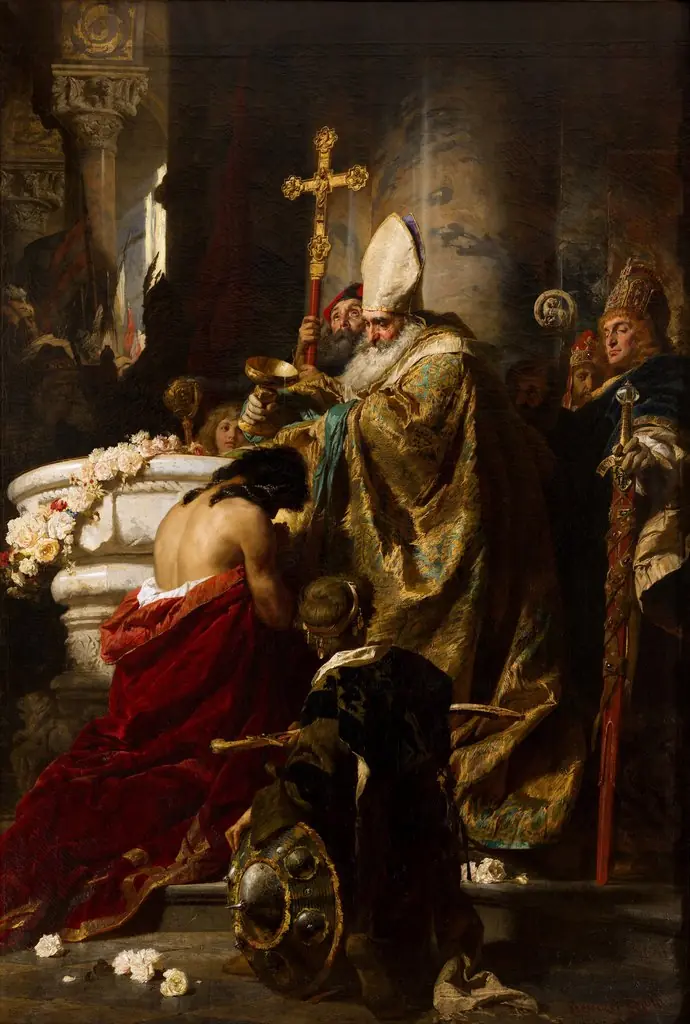 The Baptism of Vajk
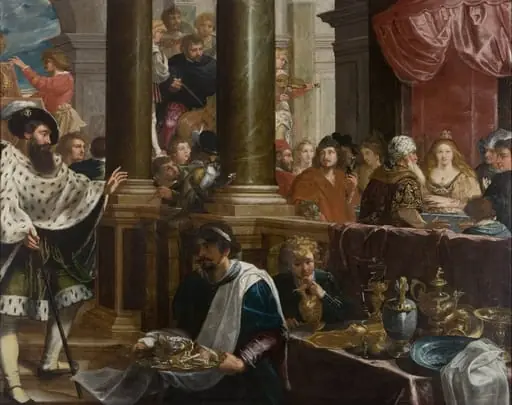 A Feast
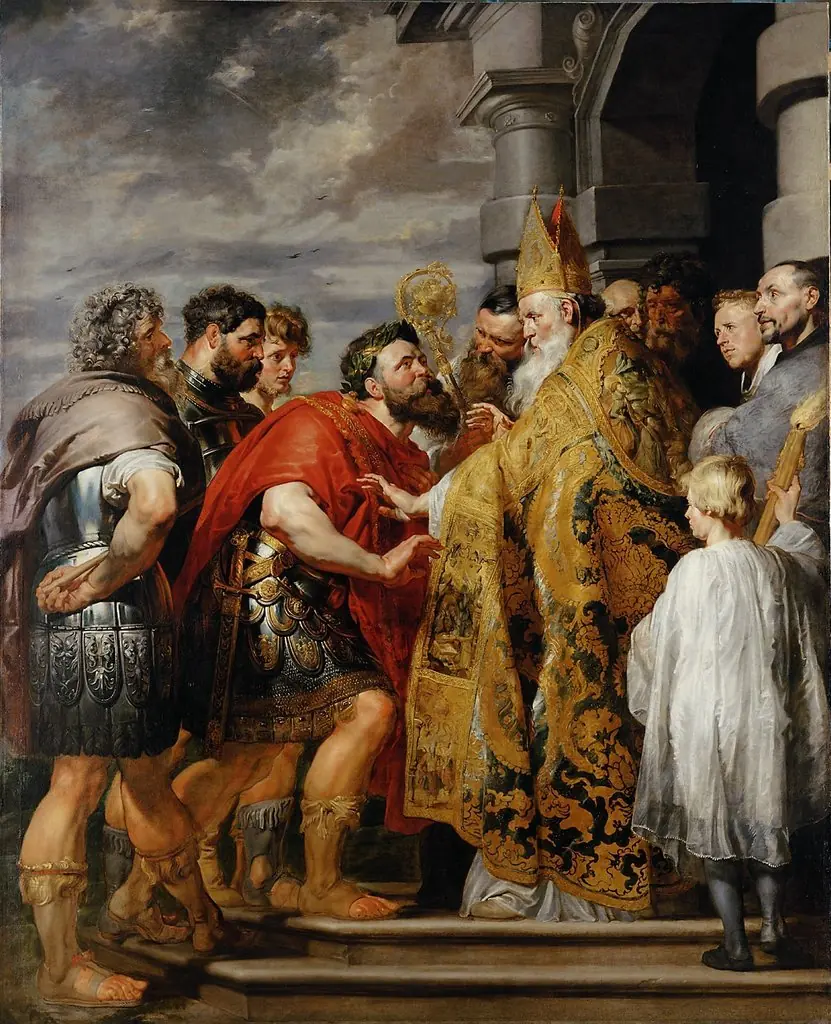 Theodosius and Saint Ambrose
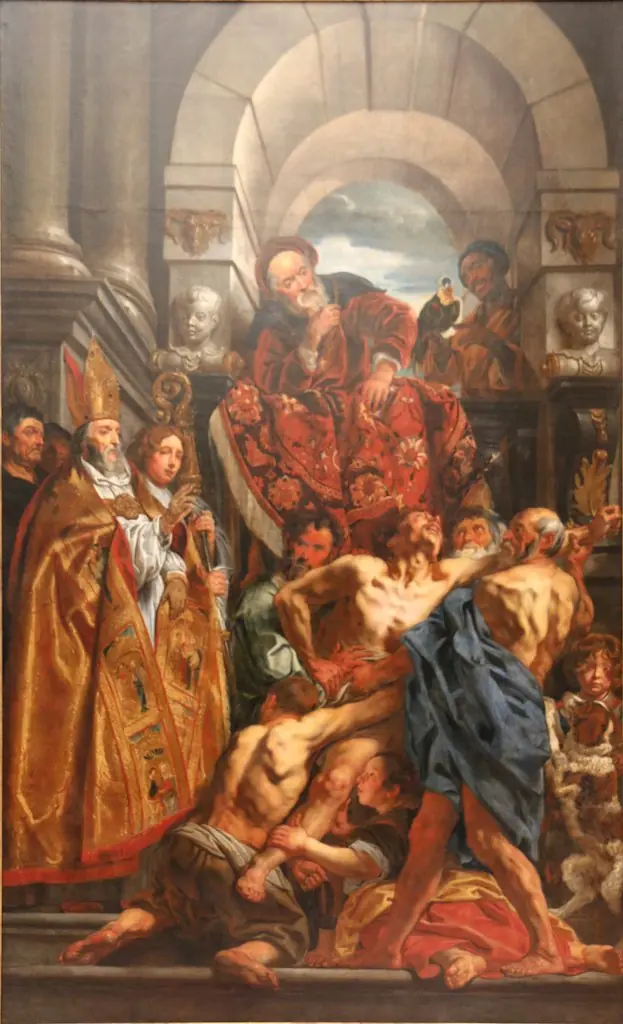 De heilige Martinus geneest een bezetene
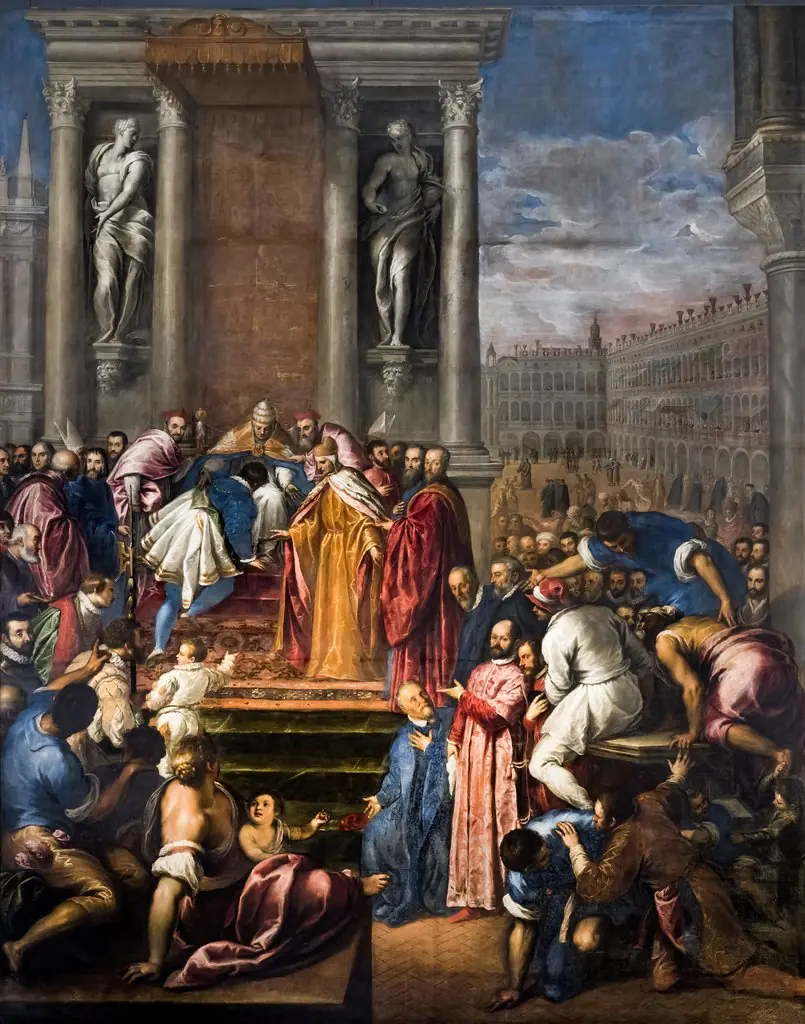 The Pope allows Otto to go to his father to negotiate peace
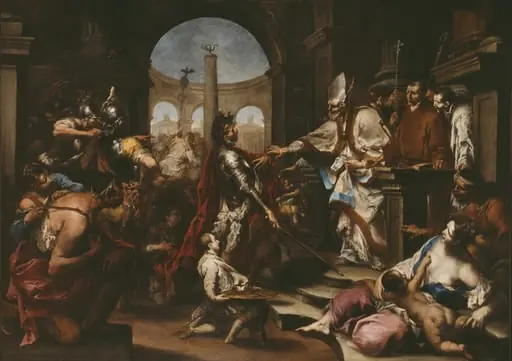 Theodosius Repulsed from the Church by Saint Ambrose
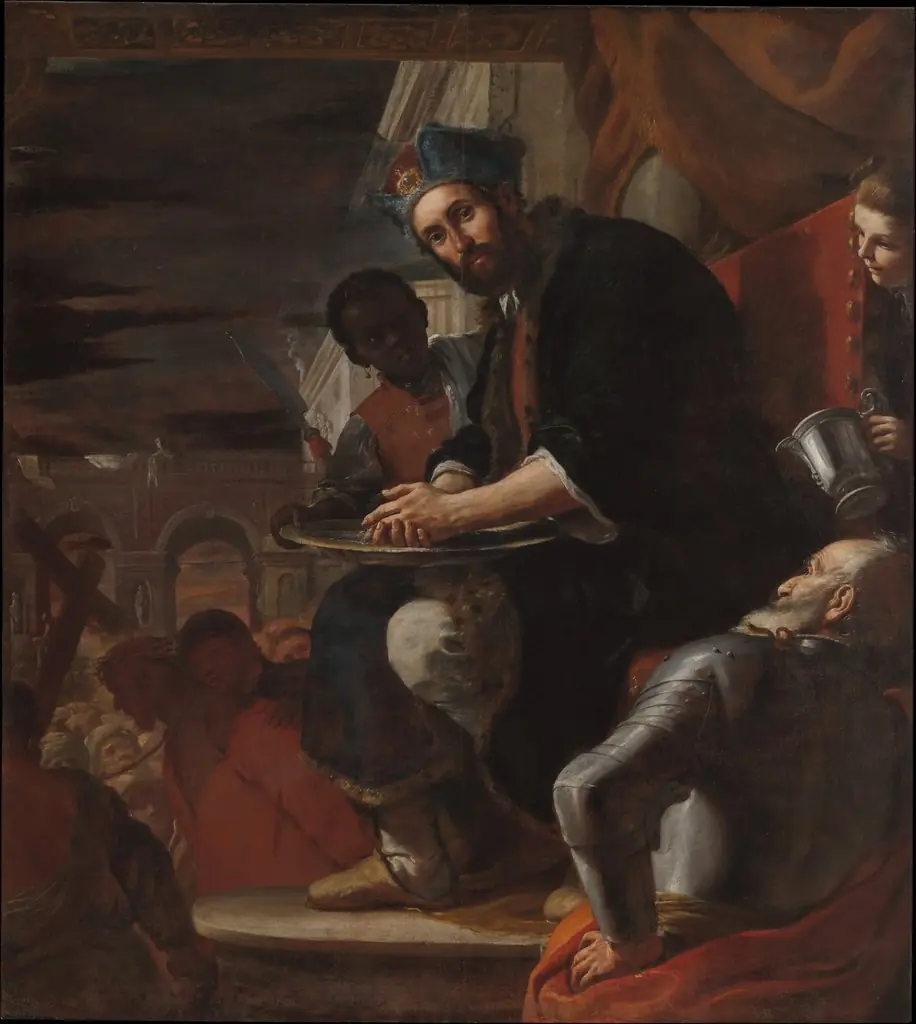 Pilate Washing His Hands