Artwork
Portrait of Antoni Lesznowski (1769–1820)
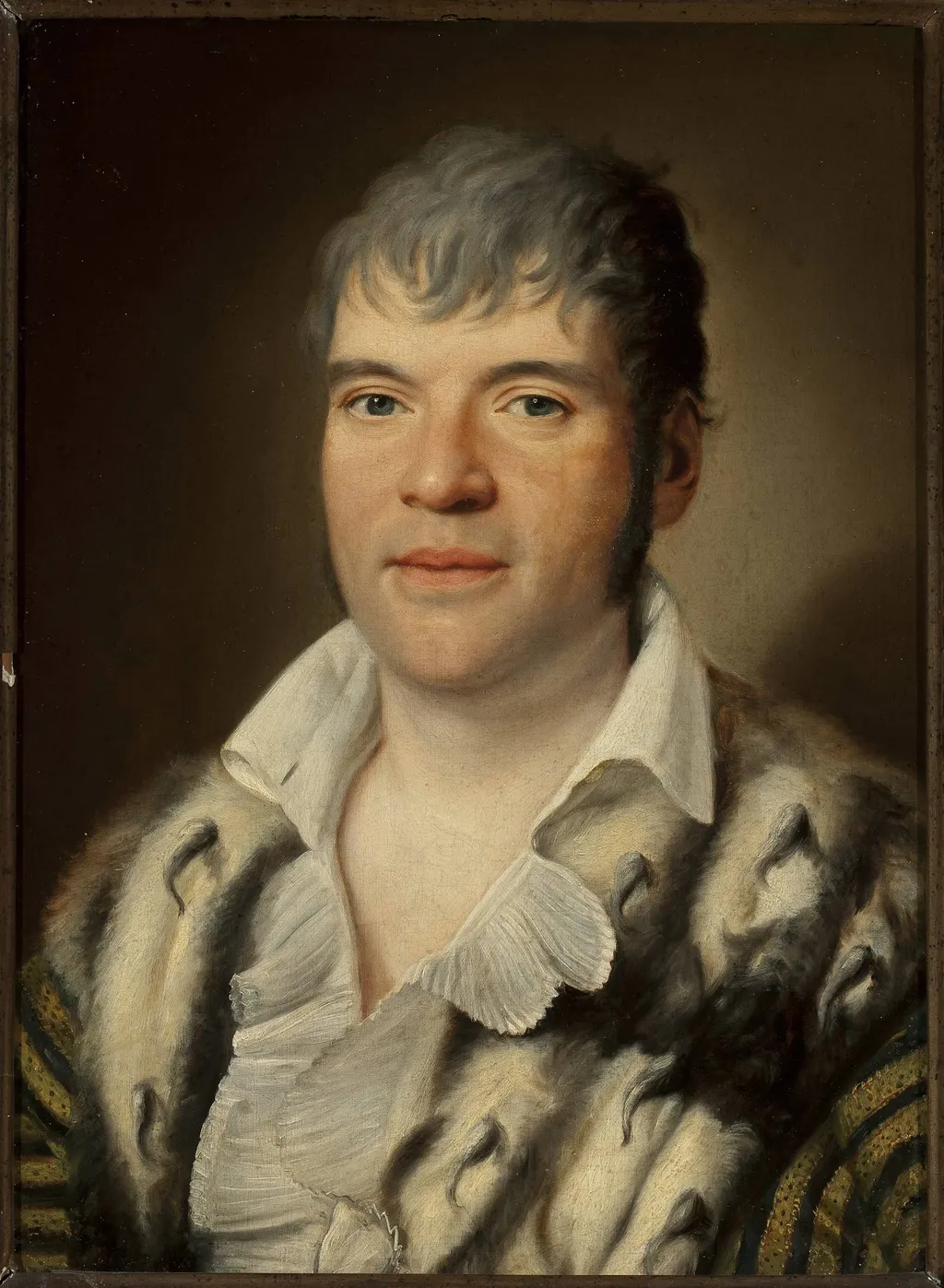
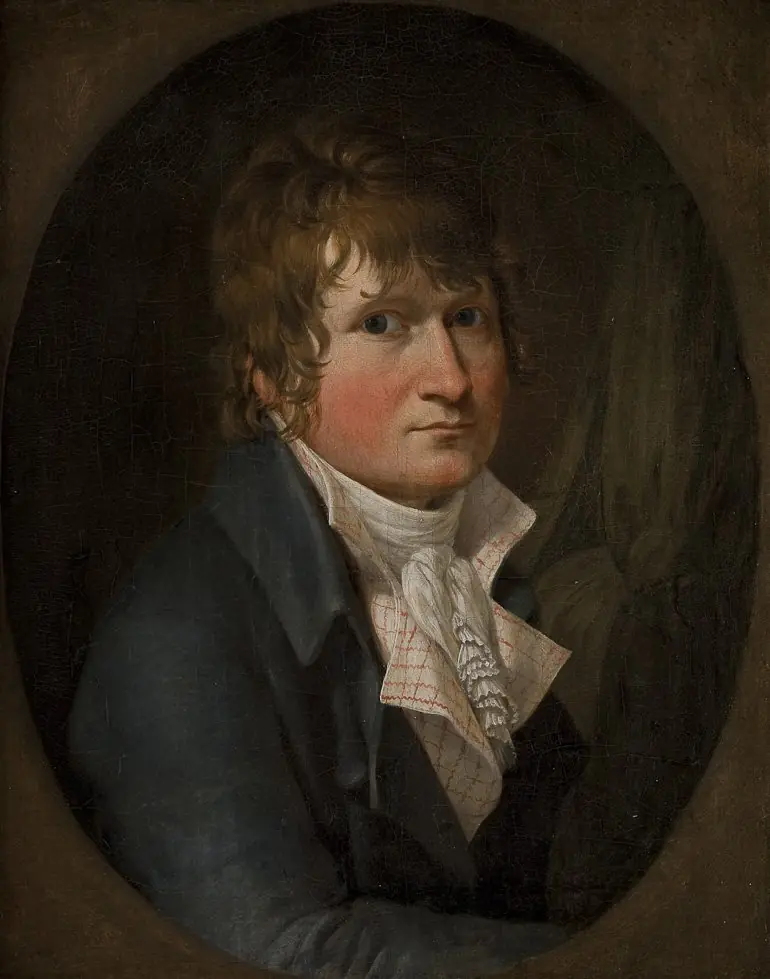
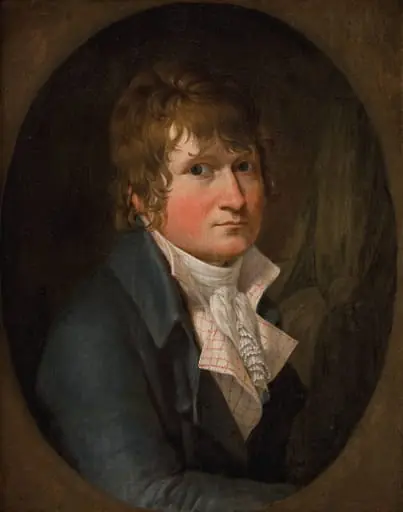
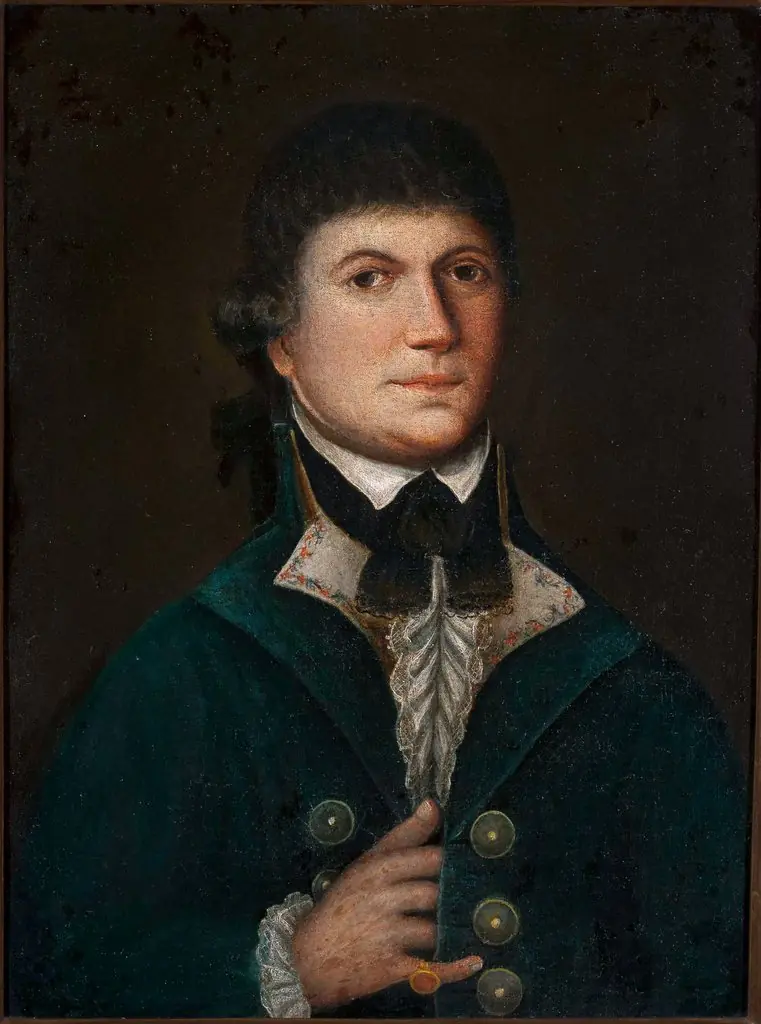
Portrait of Antoni Lesznowski (1769–1820) is an oil painting by the Biedermeier artist Jan Gładysz. It dates from 1811 and is held in the collection of the National Museum in Warsaw.
About this work
Overview
Portrait of Antoni Lesznowski (1769-1820) is an oil-on-canvas painting by the Polish artist Jan Gładysz, dated 1811.
Portrait of Antoni Lesznowski (1769-1820) is an oil-on-canvas painting by the Polish artist Jan Gładysz, dated 1811. The work measures 51 by 37.5 centimeters and depicts its subject in a bust-length format against a dark, neutral background. Now held in the collection of the National Museum in Warsaw, the painting represents a characteristic example of early nineteenth-century Polish portraiture, combining careful observation of individual likeness with the restrained elegance typical of the period's academic conventions.
Subject & Meaning
The portrait depicts Antoni Lesznowski, a figure whose biographical details remain sparse in the available sources, though his lifespan of 1769 to 1820 places him within the generation that lived through the final partitions of Poland and the Napoleonic era. The composition presents him frontally with his head turned slightly, his light brown or dirty blond hair cut short with curls across the forehead, and his light-colored eyes meeting the viewer with a calm expression and faint, closed-mouth smile. His attire carries social significance: a white shirt with wide, open collar and ruffled front, partially unbuttoned to expose the upper chest, beneath a heavy fur-lined coat with thick lapels in cream, gray, and brown tones, with dark green fabric showing a subtle gold pattern at the shoulders. This combination of refined linen and luxurious fur signals comfortable status without ostentation. No objects, symbols, or setting details accompany the figure, directing attention entirely to the sitter's presence and character.
Technique & Style
Gładysz executed the portrait in oil on canvas, working with a restrained palette of warm browns, creamy whites, and muted earth tones against the dark background. Light falls evenly from the left, illuminating the face and the texture of the fur with consistent clarity. The brushwork demonstrates deliberate variation: smooth and blended in the facial modeling, transitioning to thicker, more tactile handling in the fur and fabric. The background remains flat and atmospheric, darker at the edges and lighter near the head to create subtle depth without distracting from the sitter. This technical approach aligns with the academic standards of polished realism prevalent in Polish portraiture of the period, where the careful rendering of materials, skin, and textiles served as demonstrations of painterly skill. The absence of ornamental or environmental detail focuses the viewer's attention on the direct, unmediated encounter with the sitter.
History & Provenance
The painting is dated 1811, placing its creation in the period of the Duchy of Warsaw (1807-1815), a Napoleonic client state that briefly restored Polish statehood after the partitions. The circumstances of its commission remain unrecorded in the available sources. The work is now in the collection of the National Museum in Warsaw, though its accession history and prior ownership chain are not documented in the provided materials. The painting has entered commercial circulation as a museum art print, offered in various formats and frames, indicating its recognition as a representative work within the broader corpus of Polish nineteenth-century portraiture.
Context
Jan Gładysz (1762-1830) worked as a painter during a period of significant political and cultural transformation in Poland. The portrait of Lesznowski belongs to an era when Polish artists navigated between the legacy of the Polish-Lithuanian Commonwealth's court culture and the new aesthetic frameworks introduced through Napoleonic and post-Napoleonic Europe. The directness of the composition, its emphasis on individual character over allegorical or ceremonial embellishment, and its technical polish reflect broader tendencies in European portraiture of the early nineteenth century, while its particular restraint may also respond to the diminished circumstances of Polish cultural production under partition. Scholarly attention to this specific work appears limited in the accessible sources, suggesting it remains a relatively specialized object within Gładysz's oeuvre and within Polish museum collections more generally.
Legacy
The afterlife of Portrait of Antoni Lesznowski has been shaped primarily by its circulation as a reproducible image rather than by sustained scholarly or critical attention. Its presence in the National Museum in Warsaw secures its place within the institutional narrative of Polish art, while its availability as a commercial art print through various vendors indicates a degree of public recognition. The work's legacy thus resides less in documented influence on subsequent artists or movements than in its function as a representative example of early nineteenth-century Polish portraiture accessible to contemporary audiences. The painting continues to serve as a material witness to the cultural life of the Duchy of Warsaw period and to the conventions of personal representation among the Polish gentry and bourgeoisie of Gładysz's generation.
Own this work as a print
Artist & collection