Artwork
Neptune and Amphitrite
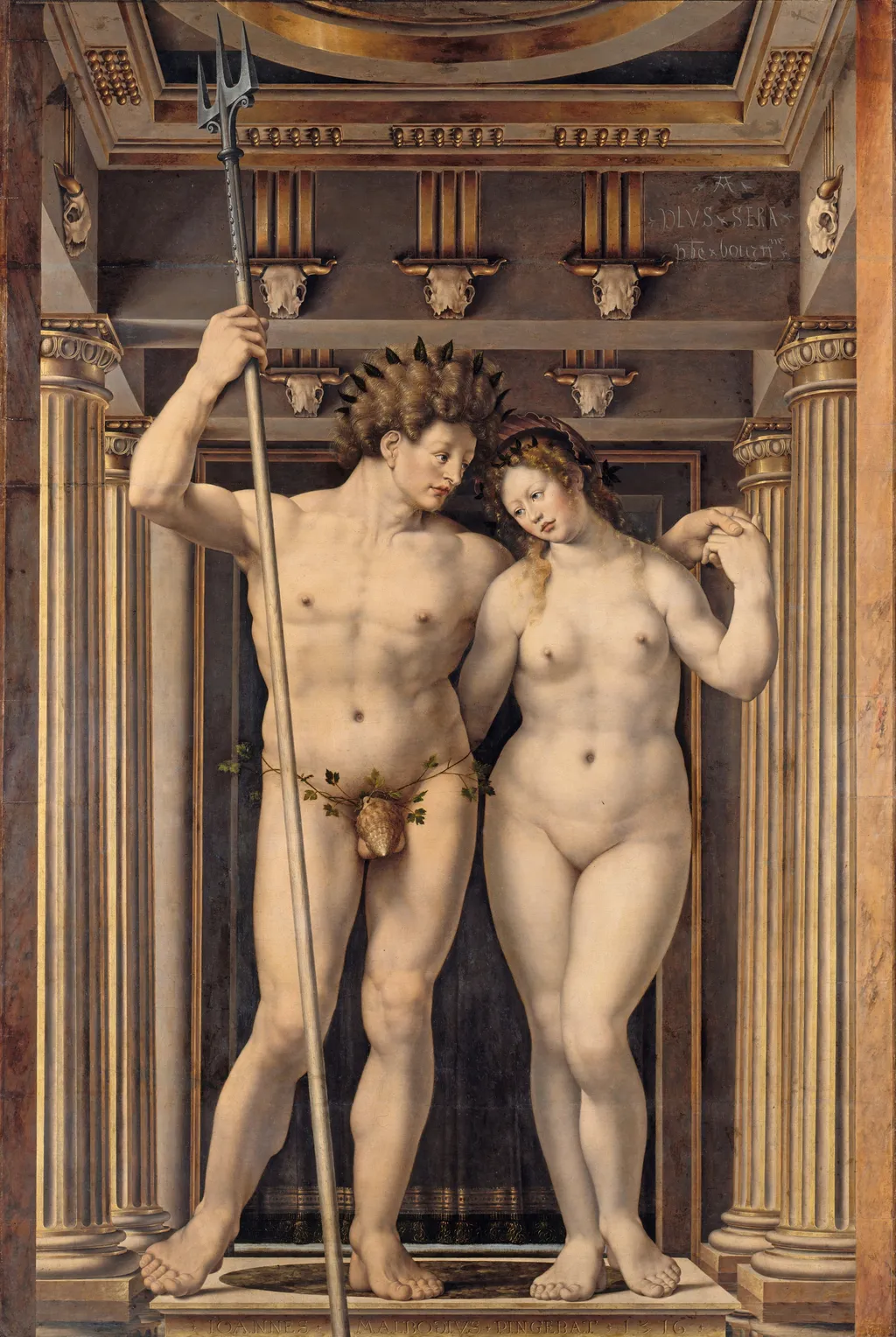
Neptune and Amphitrite is an oil painting by the Northern Renaissance artist Jan Gossaert. It dates from 1516 and is held in the collection of the Gemäldegalerie Berlin.
About this work
Subject & Meaning
The work is recognized as the first large‑scale mythological nude in Northern European art, marking a key moment in Northern Renaissance painting.
The painting shows the mythological couple Neptune and Amphitrite in a sensual embrace; Neptune is nude, holds a trident, wears a laurel wreath, and is marked by a seashell, while Amphitrite is also nude, her hair adorned with a shell and a conch covering her pubis. They stand on a low pedestal within an idealized classical interior framed by columns, an architrave decorated with triglyphs and bucrania, and a shallow water surface. The composition is read as an allegory for the province of Zeeland, with Amphitrite symbolising Zelandia and the protective arm of Neptune echoing the patron Filips of Burgundy’s admiralty, embodying the union of land and sea.
The work is recognized as the first large‑scale mythological nude in Northern European art, marking a key moment in Northern Renaissance painting.
Technique & Style
Executed in 1516, this monumental work utilizes oil paint applied to an oak panel, measuring 188 by 124 centimeters. The composition features Neptune and Amphitrite standing on a low pedestal surrounded by water within a shallow, classically inspired architectural space defined by Doric columns, fluting, triglyphs, and an entablature adorned with bucrania. The figures are rendered with sculptural symmetry and exhibit contrapposto poses, showcasing a detailed treatment of anatomy and nudity that marks a departure in Netherlandish painting.
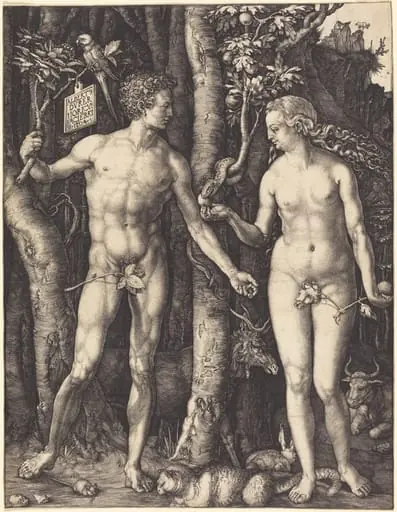
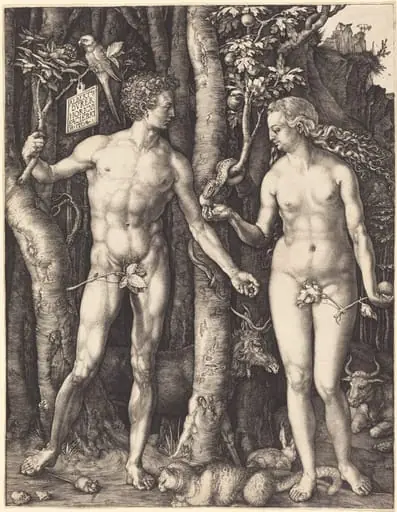
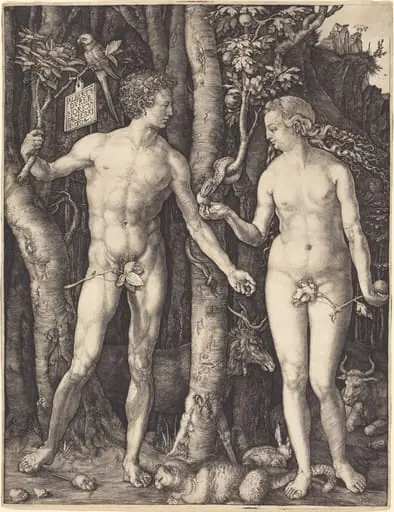
Neptune holds a trident and wears a laurel wreath, while a large sea shell conceals his groin; Amphitrite wears a smaller shell in her hair. The artist's signature and date are inscribed on the pedestal to simulate carving, while the patron's name appears in the upper right as a simulated blue chalk graffiti. The style reflects Italian Renaissance influences and specific inspirations from prints by Albrecht Dürer and Jacopo de' Barbari.
History & Provenance
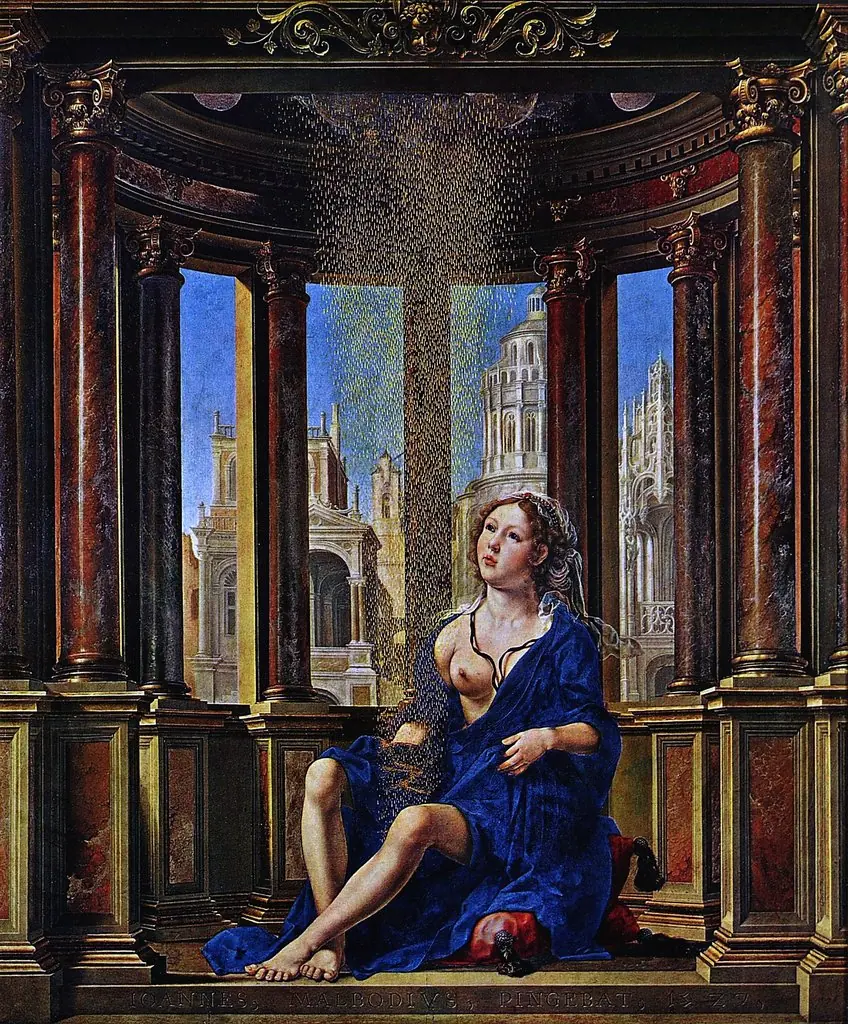
The painting Neptune and Amphitrite was commissioned by Philip of Burgundy, Admiral of the Netherlands, and executed by Jan Gossaert (Mabuse) in 1516, as confirmed by the inscribed signature and date on the pedestal: Ioannes Malbodius pingebat 1516. The commission is linked to Philip’s role as admiral, with the mythological subject reflecting his naval authority. The work was likely created for Kasteel Aldegonde in Zeeland, where Gossaert was involved in Renaissance renovations after accompanying Philip to Rome in 1508–1509.
The provenance traces to 1821, when the Prussian state acquired it from the collection of English merchant Edward Solly for the Gemäldegalerie, Berlin, where it has remained.
Jan Gossaert's Neptune and Amphitrite (1516) is held in the collection of the Gemäldegalerie, part of the Staatliche Museen zu Berlin, where it is displayed in Room VI. The museum acquired the painting in 1821 from the collection of the English merchant Edward Solly; prior to this purchase, the work's specific provenance remains uncertain, though it was likely created for the castle of Philip of Burgundy. While the painting is a permanent fixture of the Berlin gallery, major scholarly attention accompanied its inclusion in significant exhibitions such as Man, Myth, and Sensual Pleasures: Jan Gossart's Renaissance, organized by the Metropolitan Museum of Art in 2010, which highlighted its status as the first monumental classical nude in Netherlandish painting.
Context
Jan Gossaert painted Neptune and Amphitrite in 1516, a work recognized as the first large‑scale mythological nude in Northern Renaissance art;. Commissioned by Philip of Burgundy, Admiral of the Netherlands, the painting likely adorned his Zeeland estate, using the sea‑god couple to symbolize the union of land and water. Gossaert’s 1508 Italian journey introduced classical architecture and contrapposto, shaping the composition’s sculptural balance.
Scholars view the piece as a pivotal moment in his oeuvre, bridging late Gothic traditions with Renaissance humanism and marking it as his most important surviving work after a lost altarpiece. Modern criticism, including Marisa Bass’s 2011 study, re‑examines its iconography and patronage.
Legacy
Jan Gossaert's Neptune and Amphitrite (1516) is widely regarded as a landmark work, distinguished as the first monumental classical nude in Dutch painting and the inaugural mythological nude in Flemish art history. Its legacy rests on its unprecedented introduction of sensuous, life-sized pagan figures into Northern European art, breaking with local traditions of profane nudity. The composition synthesizes Italian Renaissance ideals, acquired during Gossaert's 1508 Roman trip, with the graphic influences of Albrecht Dürer and Jacopo de' Barbari.
Art historians view the work as a pivotal moment that established the viability of classical mythology as a subject for major panel painting in the Netherlands. The painting's enduring reputation is further cemented by its status as Gossaert's most significant surviving masterpiece after the lost Middelburg altarpiece, securing its place as a foundational text for the Northern Renaissance's engagement with antiquity.
Overview
The oil painting titled Neptune and Amphitrite presents a mythological scene featuring two prominent deities. Executed in oil paint, the artwork focuses on the interaction between the central figures, framed by an elaborate architectural setting. This piece showcases the artist's ability to combine figural representation with decorative elements, creating a composition that is both dynamic and richly detailed through the chosen medium.
Own this work as a print
Artist & collection
Artist
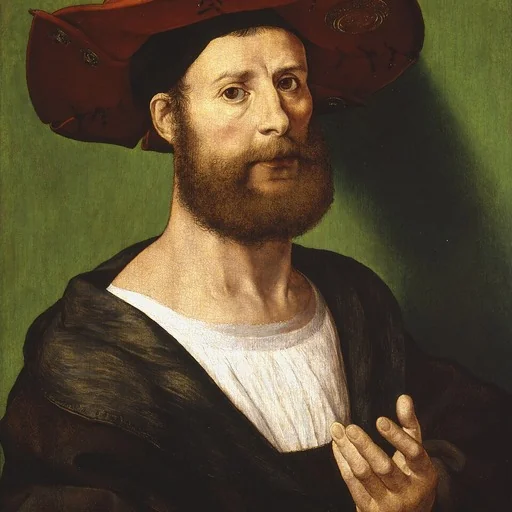
Jan Gossaert (c. 1478 – 1 October 1532) was a French-speaking painter from the Low Countries also known as Jan Mabuse (the name he adopted from his birthplace, Maubeuge) or Jennyn van Hennegouwe (Hainaut), as he called…


![Saint Jerome Penitent [right panel], by Jan Gossaert](https://artifactworldgallery.com/img/jan-gossaert--saint-jerome-penitent-right-panel--0d4ac14f44de87b1-w320.webp)
![Saint Jerome Penitent [left panel], by Jan Gossaert](https://artifactworldgallery.com/img/jan-gossaert--saint-jerome-penitent-left-panel--3d396afbb0f8e738-w320.webp)