Artwork
At the tax collector's office
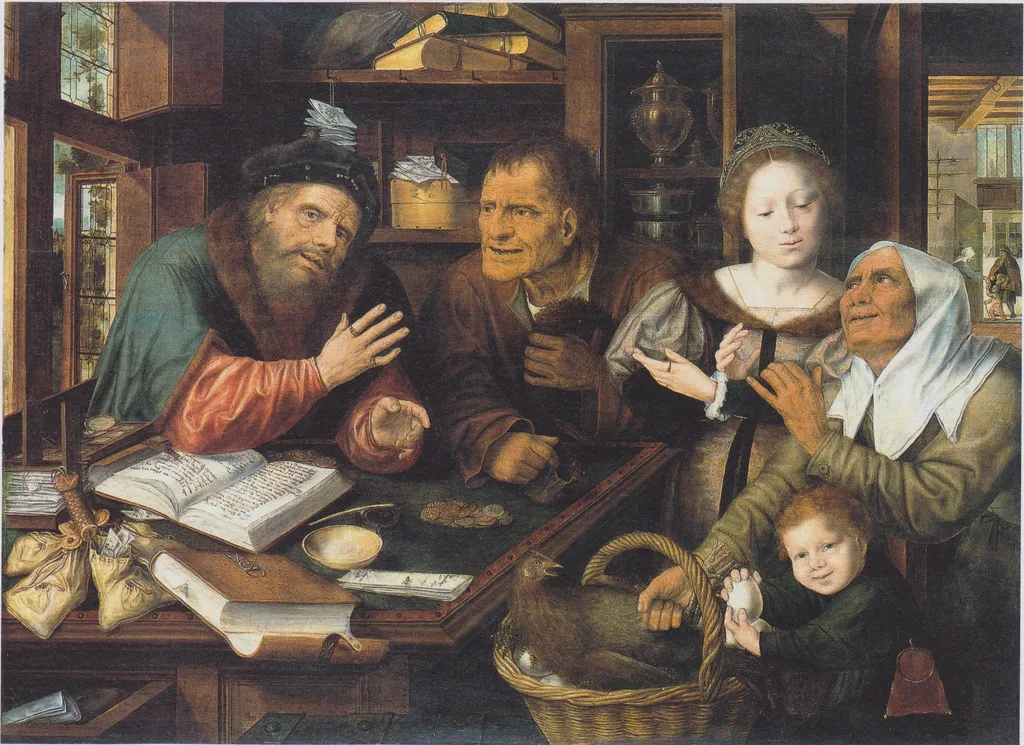
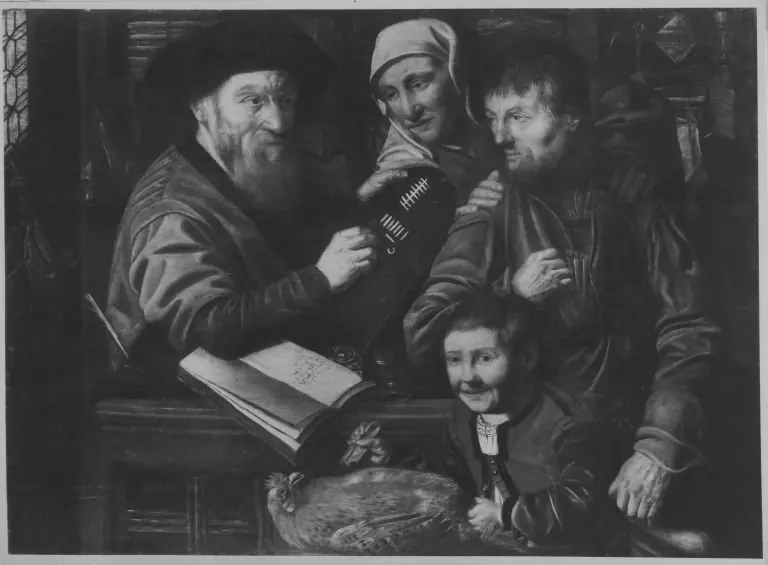
At the tax collector's office is an oil painting by the Northern Renaissance artist Jan Matsys. It dates from 1539 and is held in the collection of the Staatliche Kunstsammlungen Dresden.
About this work
Subject & Meaning
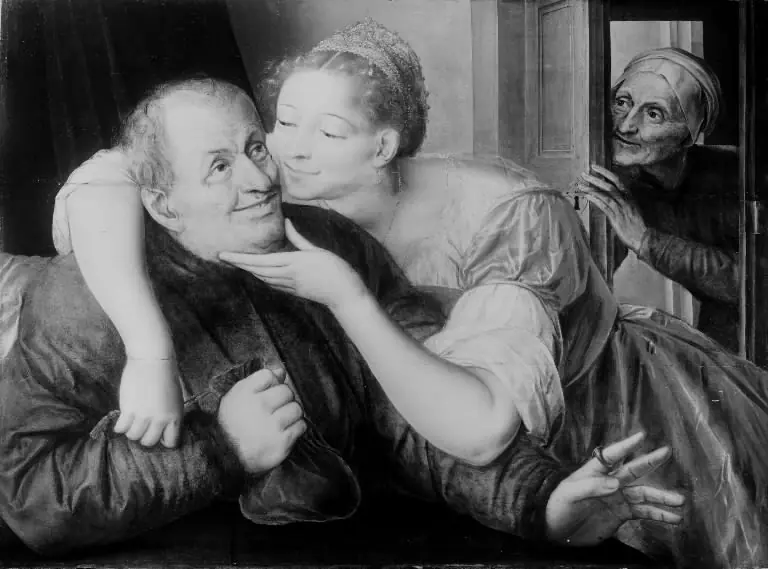
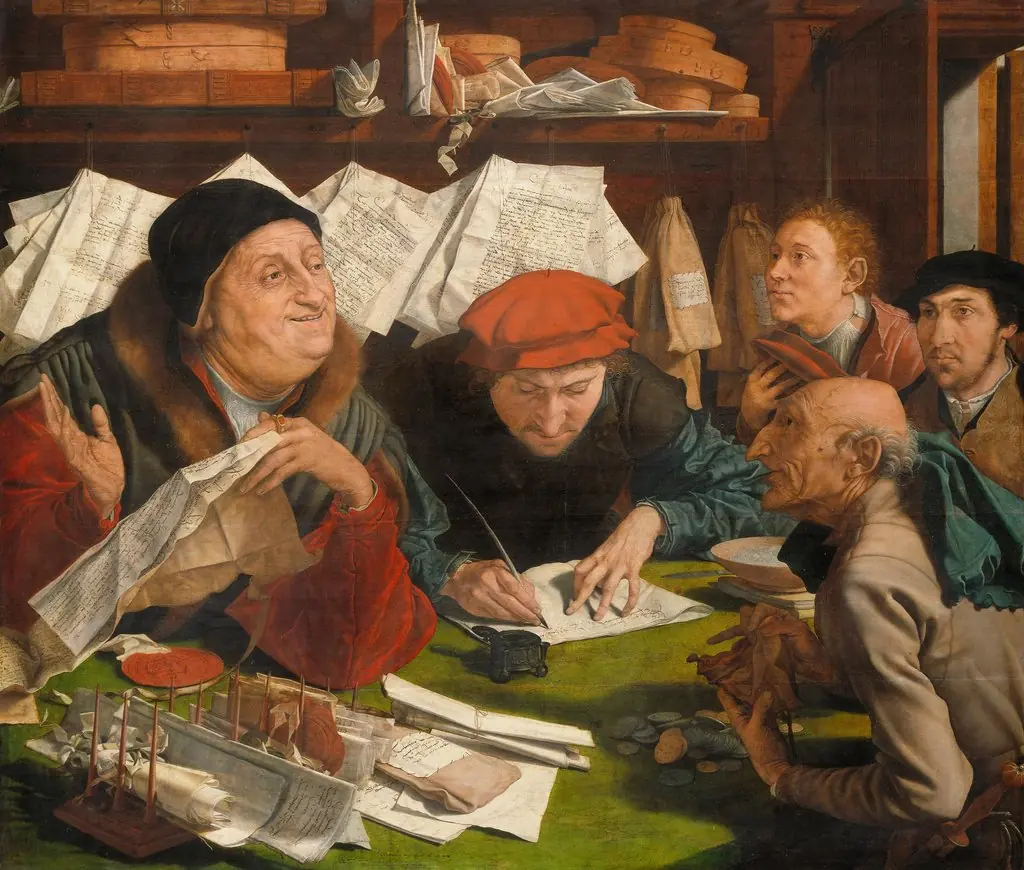
The painting shows a peasant family presenting a tax payment to a tax collector inside his office, where a ledger records a payment dated August 6, 1539.
The painting shows a peasant family presenting a tax payment to a tax collector inside his office, where a ledger records a payment dated August 6, 1539. The woman holds a basket of eggs and a chicken, attempting to settle their debt in kind, while a child offers an egg to the viewer. A wealthy citizen in the background gives alms to an organist through an open door, creating a moral contrast between the affluent citizen and the impoverished family.
This scene symbolizes the moral lesson that tax collectors should emulate the citizen's willingness to accept in-kind payments without resistance, reflecting themes of social hierarchy, fiscal obligation, and moral conduct in Renaissance art.
The composition draws on proverbs such as "choosing eggs over money," turning a literal exchange into a didactic narrative. The work belongs to the tradition of Jan Massys, influenced by his father Quinten Metsys and the family’s earlier genre scenes, and was later part of the collection of King August III of Poland before entering the Staatliche Kunstsammlungen Dresden.
The moral theme underscores the tension between the well‑off citizen and the struggling family, using visual symbols like the egg and chicken to comment on economic exchange and social responsibility.
Technique & Style
The painting is executed in oil on oak panel, a common support for 16th-century panel paintings in the Low Countries. The work measures 85 cm in height by 115 cm in width, reflecting the modest scale typical of genre scenes intended for private or civic display. The composition centers on a tax collector seated at a desk, surrounded by a peasant family presenting eggs and a chicken as part of a tax payment, with a ledger and currency pouch emphasizing the fiscal theme.
The formal arrangement combines narrative clarity with a restrained use of light, highlighting the textures of fabric, wood, and poultry to underscore the moral contrast between the collector’s prosperity and the family’s humble circumstances.
History & Provenance
Jan Matsys created the oil-on-oak painting At the tax collector's office in 1539. The work is dated to this year based on a ledger entry visible within the depicted scene, which records a payment dated August 6, 1539. The painting likely entered the collection of King August III of Poland during the 18th century.
It subsequently passed through his descendants before reaching its current home at the Gemäldegalerie Alte Meister in Dresden, part of the Staatliche Kunstsammlungen. The work is cataloged as a genre scene depicting a peasant family attempting to pay taxes in kind with a chicken and eggs.
The painting is held in the Gemäldegalerie Alte Meister, part of the Staatliche Kunstsammlungen Dresden. Its history traces back to the 18th century, when it belonged to the collection of King Augustus III of Poland. The work eventually passed to the Dresden state collections through the king's descendants.
While specific inventory numbers are not detailed in the available records, the piece is consistently identified within the museum's holdings as a work by Jan Matsys dated to 1539. The painting has been associated with the title "At the tax collector's office" or "De handel met de kip" in Dutch scholarship.
Context
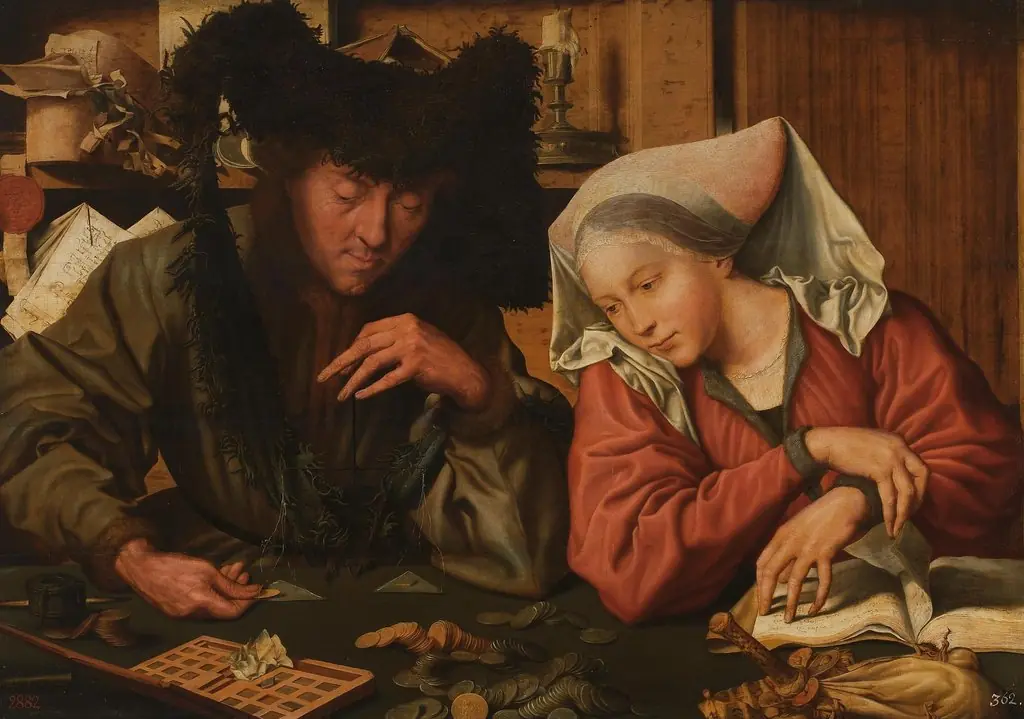
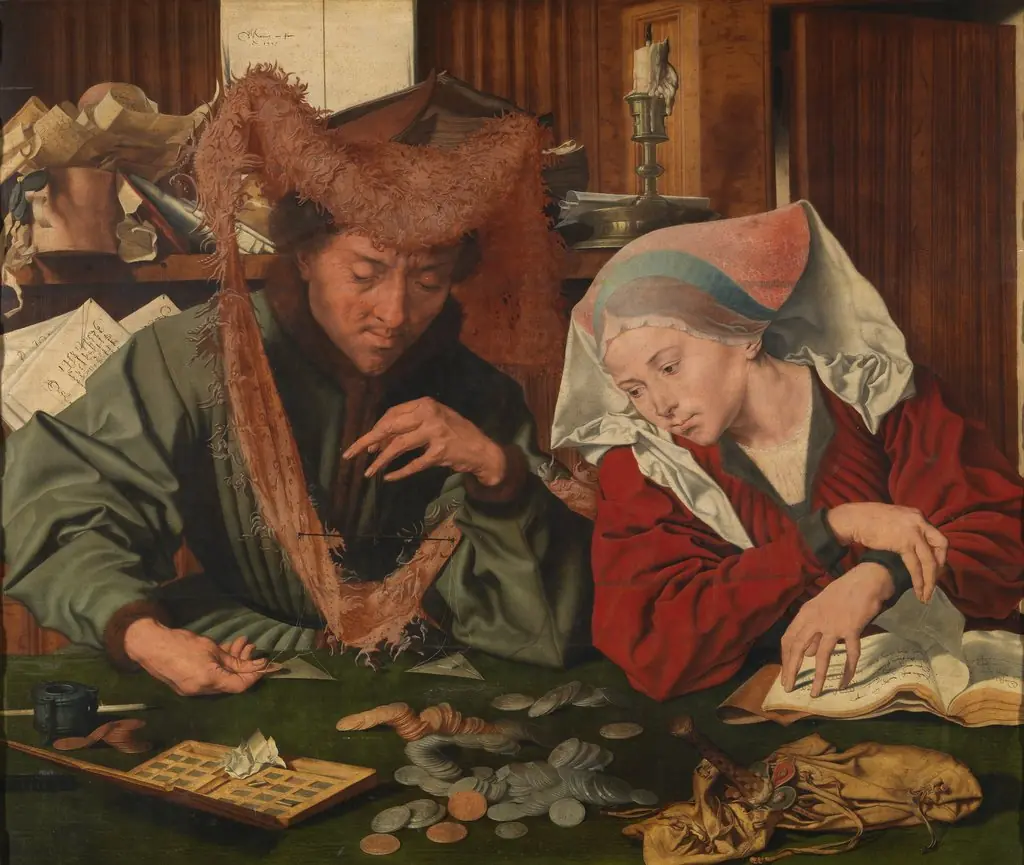
The painting At the tax collector's office (1539) by Jan Matsys was praised for its vivid portrayal of social hierarchy and moral commentary, reflecting Renaissance genre painting traditions. Scholars note its detailed narrative elements, such as the child holding an egg symbolizing economic exchange, and its connection to earlier works like Quinten Matsys' Money-changer and his Wife (1514), situating it within Antwerp’s artistic lineage. Its provenance includes ownership by King August III of Poland before entering the Staatliche Kunstsammlungen Dresden collection, underscoring its historical significance.
Overview
At the tax collector's office is a 1539 oil painting by Jan Matsys, a Flemish Renaissance artist. The work captures a quotidian scene within a tax office, populated by four individuals and various everyday objects.
Legacy
As a representative of Northern Renaissance art, 'At the tax collector's office' contributes to the movement's legacy of valuing detailed realism and the beauty in ordinary life, though its specific impact or influence on later art is not prominently highlighted in available information.
Own this work as a print
Artist & collection
Artist
Jan Matsys or Jan Massijs (c.1510 – 8 October 1575) was a Flemish Renaissance painter known for his history paintings, genre scenes and landscapes.