Artwork
The Moneychanger and His Wife
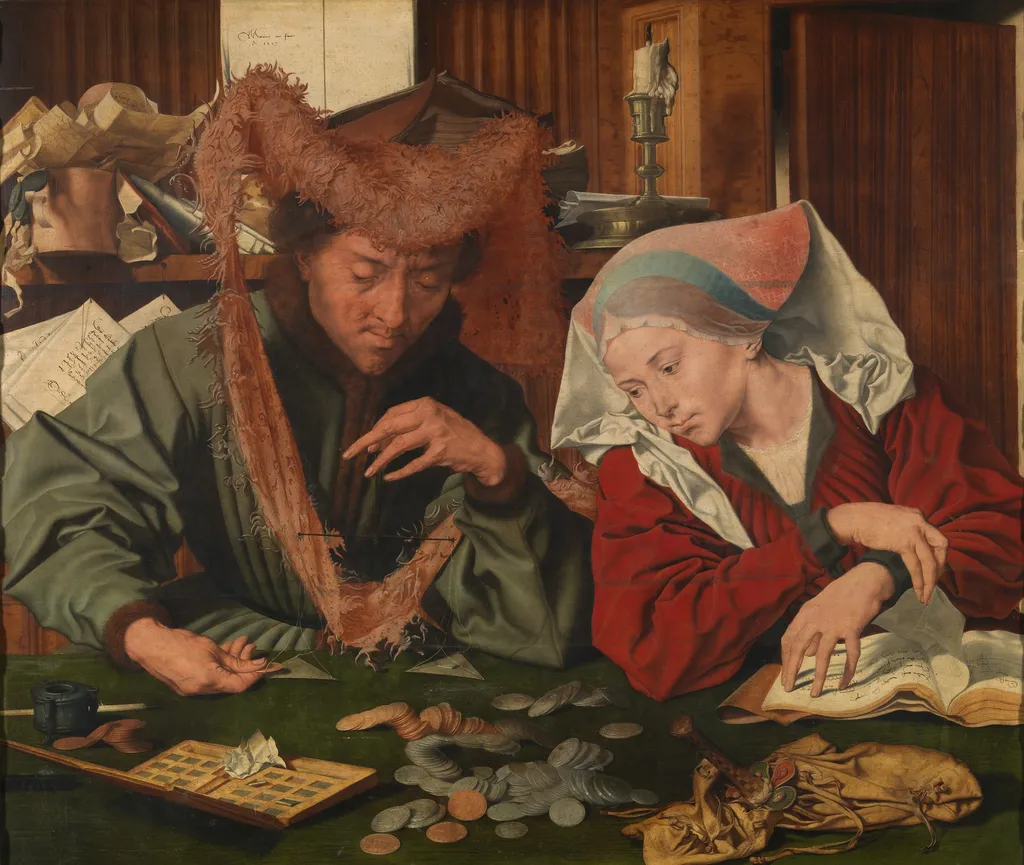
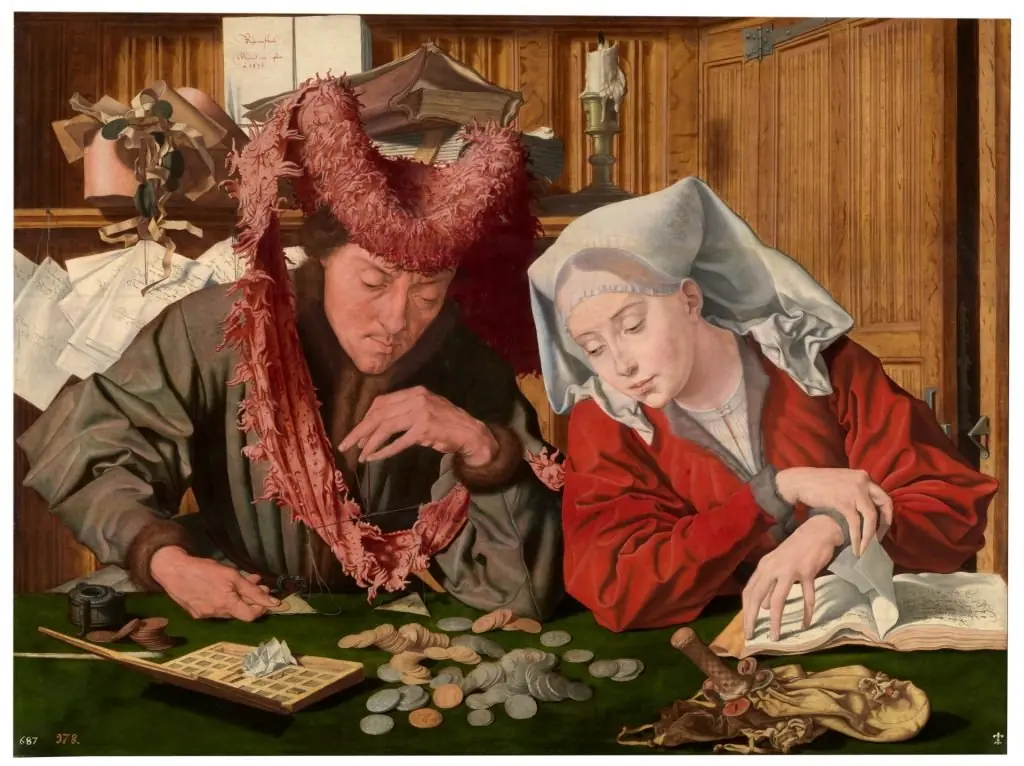
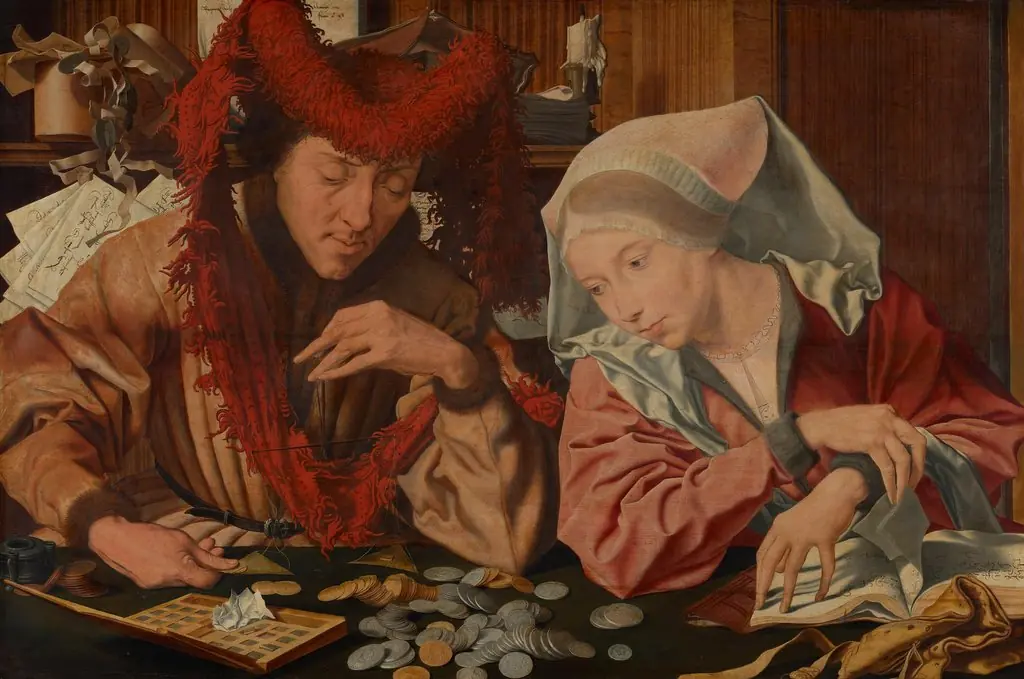
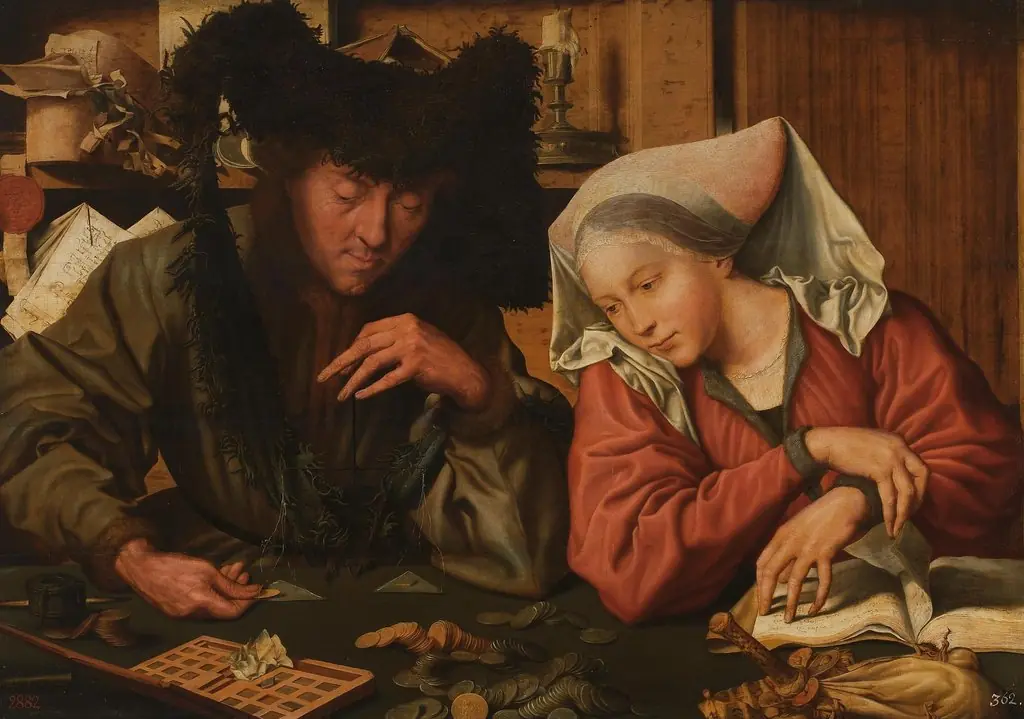
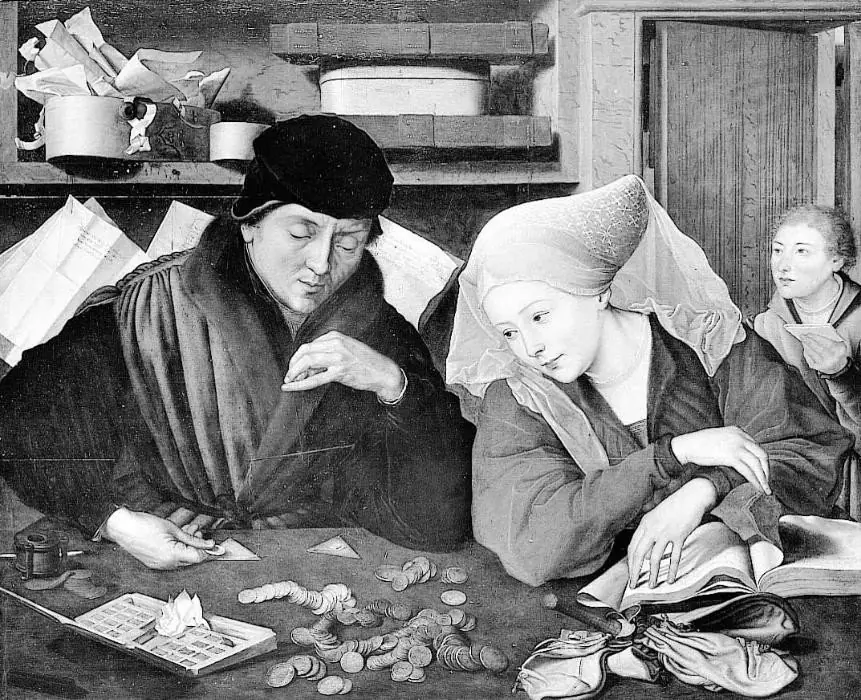
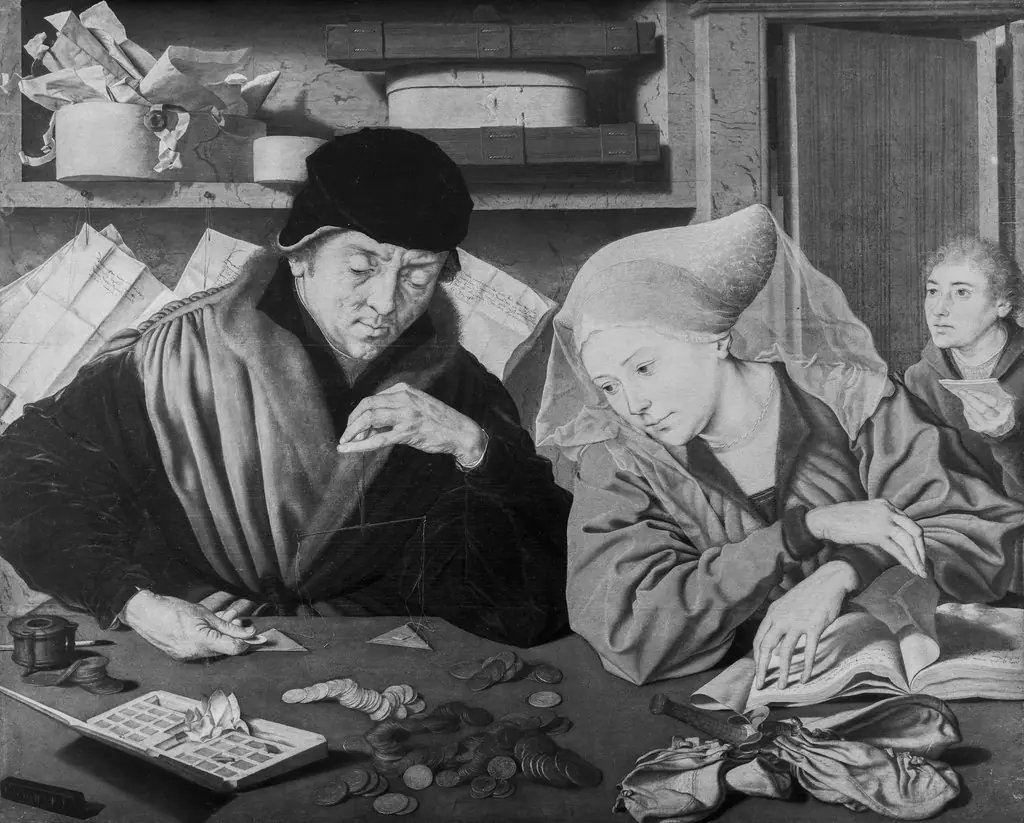
The Moneychanger and His Wife is an oil painting by the Northern Renaissance artist Marinus van Reymerswaele. It dates from 1539 and is held in the collection of the Museo del Prado.
About this work
Subject & Meaning
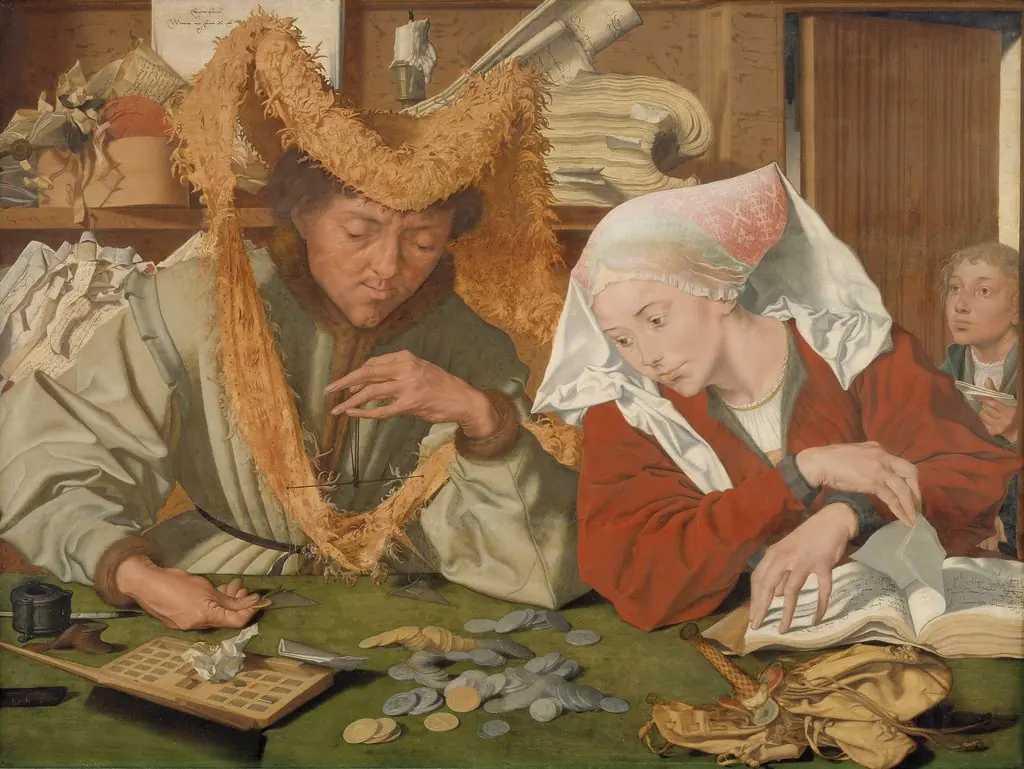
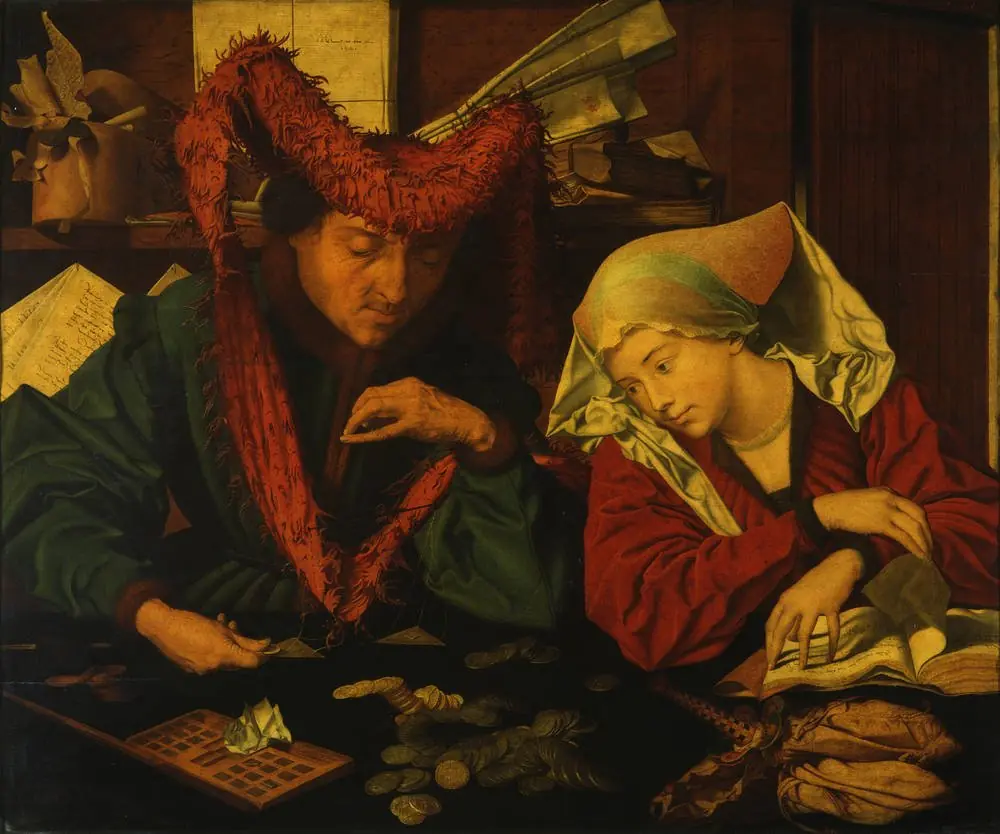
The painting depicts a moneychanger and his wife engaged in weighing coins, surrounded by objects such as money, books, pens, and inkwells.
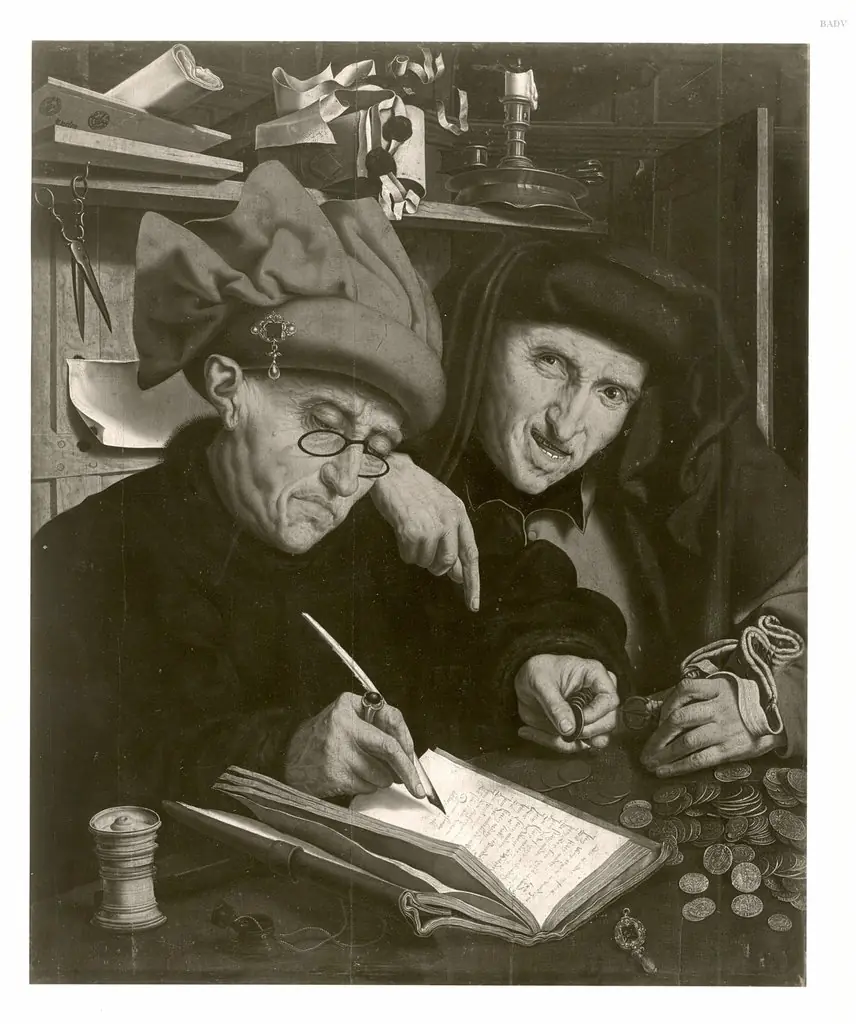
The painting depicts a moneychanger and his wife engaged in weighing coins, surrounded by objects such as money, books, pens, and inkwells. While earlier interpretations, drawing parallels to Quentin Metsys's 1514 work, viewed the scene as a satire criticizing usury through the couple's avaricious expressions and the room's disorder, modern scholarship has revised this view. The work is now often understood as an early homage to merchants and their economic activities, reflecting the rising social importance of banking in the 16th century.
The meticulous rendering of details, including the artist's signature on a background paper and the bold perspective of a pencil case, underscores the significance of the subjects. The composition ultimately testifies to the economic vitality of the era rather than solely serving as a moral warning.
Technique & Style
Marinus van Reymerswaele executed this 1539 painting using oil paint on a wooden panel measuring 83 by 97 cm. His technique is characterized by a meticulous, detailed approach that meticulously renders every element, even incorporating his signature on a sheet of paper depicted in the background. Stylistically, the work demonstrates a clear interest in exploring the laws of perspective, notably evident in the bold foreshortening of an open pencil case resting on the table. The composition features deliberately rich clothing for the figures and an incomprehensible disorder of objects, including money, a book, a pen, and an inkwell, which combine to emphasize the avaricious expressions of the couple weighing coins.
History & Provenance
The Moneychanger and His Wife was painted in 1539 by Marinus van Reymerswaele. It was first documented in the collection of Pedro Dávila y Zúñiga, 1st Marquis of Las Navas, and later passed to María de los Ángeles Medina y Garvey, Duchess of Tarifa, before entering the Museo del Prado in 1932 by testament. The work is held today in the Prado’s collection and was acquired from the estate of the Duchess of Tarifa.
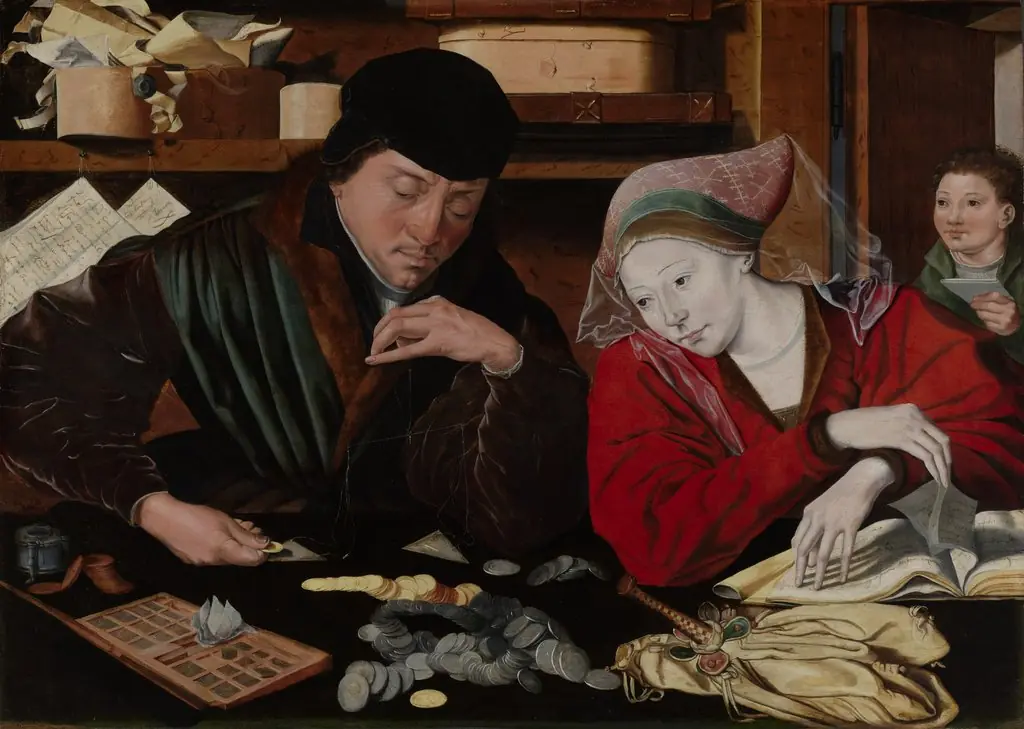
A related composition by Quentin Metsys from 1514, housed in the Louvre, served as a precedent for this painting, which the artist rendered with meticulous detail and innovative perspective, particularly in the depiction of a writing desk.
The work is held at the Museo del Prado in Madrid. It entered the museum's collection in 1932 as part of the bequest of María de los Ángeles Medina y Garvey, Duchess of Tarifa, following her death in 1567. The painting is cataloged with the inventory number P02567.
It has been exhibited at the Museo del Prado as part of its permanent collection displays, including a 2019 presentation of Flemish Renaissance works highlighted in the museum's revised guide. Reproductions of the work appear in the collections of the State Hermitage Museum in Saint Petersburg and the Alte Pinakothek in Munich.
Context
Scholars have long interpreted Marinus van Reymerswaele’s painting as a moralizing critique of avarice, aligning it with Quentin Metsys’s earlier depiction of money-lending. This view emphasized the cluttered room, the couple’s ostentatious dress, and the wife’s distracted gaze as signs of greed. Recent reassessment, however, suggests the work instead celebrates the merchant class and the expanding role of banking in sixteenth‑century Flanders, reflecting the patrons who commissioned such images.
The composition’s meticulous rendering, down to the artist’s inscribed signature on a slip of paper, demonstrates Reymerswaele’s engagement with contemporary Netherlandish concerns for material culture and economic life. His studied use of perspective on the open writing box underscores a technical ambition that situates the panel within the broader Northern Renaissance preoccupation with spatial illusionism.
Overview
Marinus van Reymerswaele, a Dutch painter of the Northern Renaissance, completed The Moneychanger and His Wife in 1539. Executed in oil on panel, the work portrays a domestic interior where a couple is engaged in financial calculation. The composition is now part of the Museo del Prado’s collection in Madrid, representing the artist’s interest in genre scenes that blend everyday activity with moral overtones.
Own this work as a print
Artist & collection
Artist
Marinus van Reymerswaele or Marinus van Reymerswale (c. 1490 – c. 1546) was a Dutch Renaissance painter mainly known for his genre scenes and religious compositions. After studying in Leuven and training and working as…