Artwork
A Village Wedding
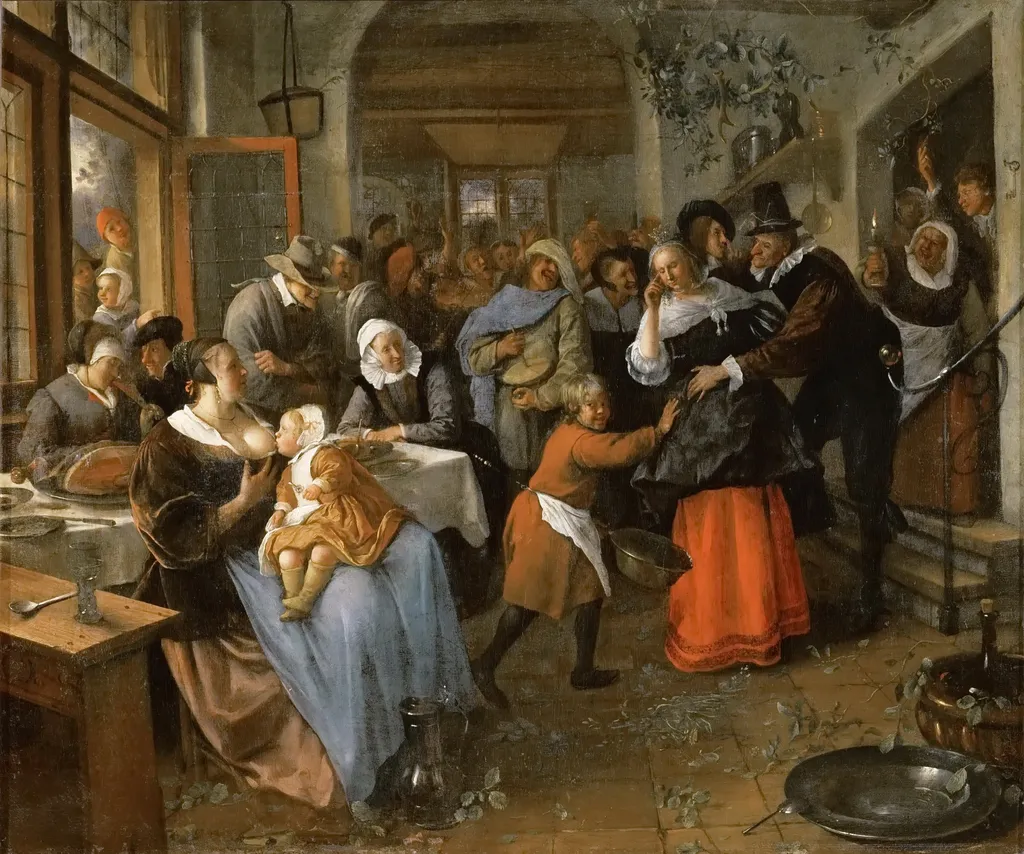
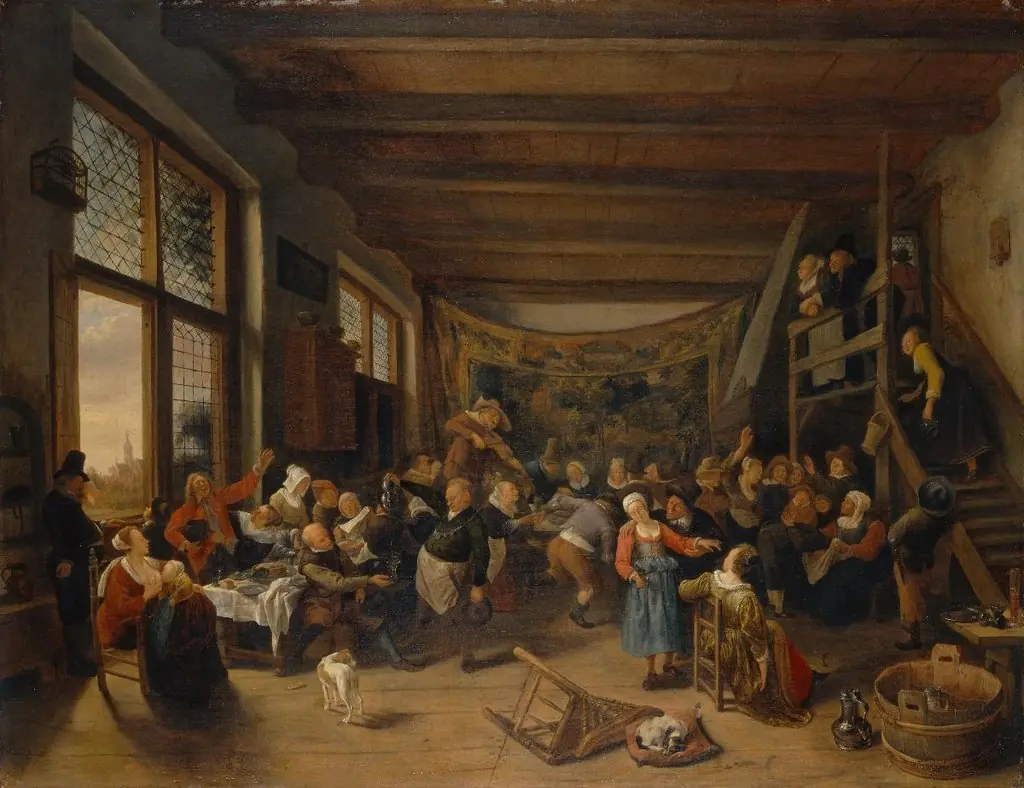
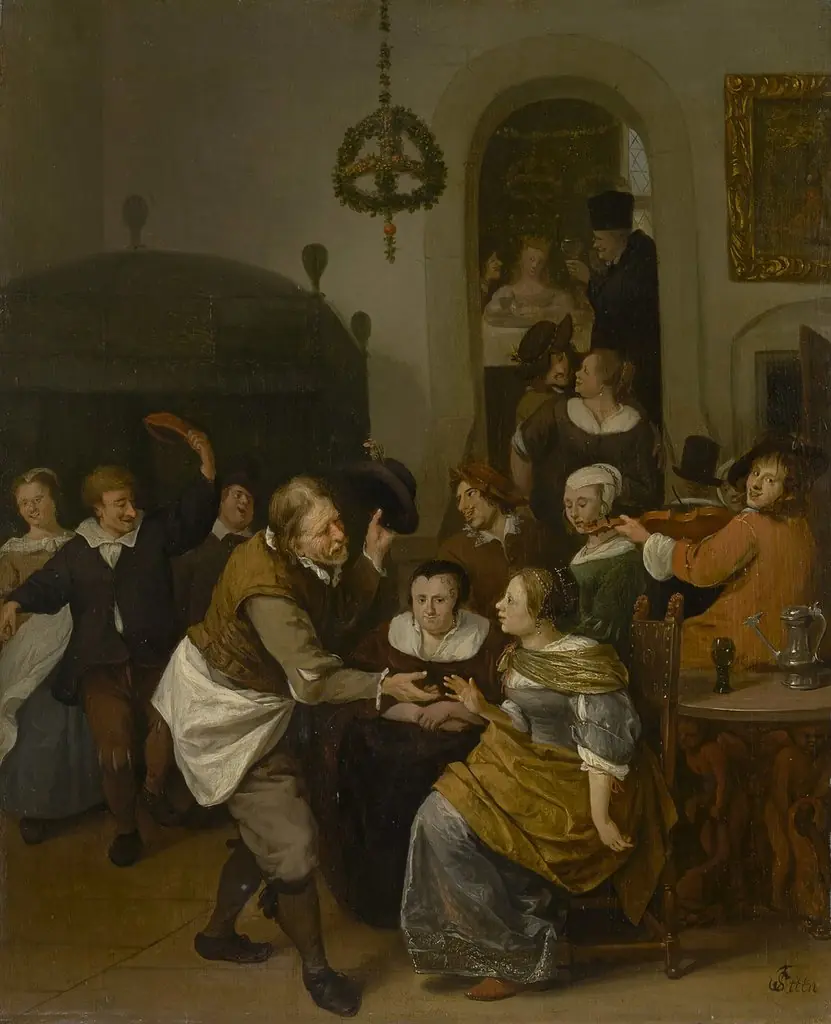
A Village Wedding is an oil painting by the Dutch Golden Age artist Jan Steen. It dates from 1670 and is held in the collection of the Kunsthistorisches Museum.
About this work
Subject & Meaning
The composition presents the couple within the context of their community, reflecting Steen's characteristic interest in everyday life and social interactions.
Jan Steen's A Village Wedding, painted in 1670, is a genre scene depicting a bride and bridegroom. As a work of genre art, the painting focuses on a specific moment of rural celebration, capturing the figures central to the matrimonial event. The composition presents the couple within the context of their community, reflecting Steen's characteristic interest in everyday life and social interactions.
While the work documents a specific ceremony, it also serves as a broader representation of 17th-century Dutch domestic customs and the social dynamics of village festivities.
Technique & Style
A Village Wedding is an oil painting on canvas, measuring 57 cm high by 68 cm wide. It is classified as a genre scene, depicting a bride and groom amid a lively gathering of guests. The oil medium is applied to a canvas support, providing a surface suitable for the detailed depiction of the wedding festivities.
This work exemplifies Jan Steen’s contribution to Dutch genre art. The painting is housed in the Kunsthistorisches Museum in Vienna.
History & Provenance
A Village Wedding was painted by Jan Steen in 1670, executed in oil on canvas. The work entered the collection of Archduke Leopold Wilhelm of Austria, an early owner whose holdings formed a key nucleus of later imperial Habsburg art collections. It subsequently became part of the holdings of the Kunsthistorisches Museum, where it remains located. The painting measures 57 cm in height by 68 cm in width.
No details regarding the circumstances of its commission, the identity of any patron, or intermediate owners between Archduke Leopold Wilhelm and the museum's acquisition are documented in the available sources.
The painting is held in the Kunsthistorisches Museum, Vienna. It is inventoried as GG_1013 (inventory number assigned by the museum).
Its exhibition history includes the 1873 Vienna World’s Fair (no. 101 in the catalogue) and the 1908 exhibition “Altniederländische Kunst” in Vienna (no. 138).
Context
Jan Steen's 1670 painting A Village Wedding exemplifies Dutch Golden Age genre scenes through its depiction of a bustling village marriage ceremony. The work, housed in the Kunsthistorisches Museum, reflects contemporary fascination with bourgeois domestic life and festive traditions. Scholars analyze its composition as a narrative device conveying moral lessons about marital customs, situating it within Steen's broader oeuvre of domestic genre painting that often juxtaposed revelry with social commentary. Its provenance traces to Archduke Leopold Wilhelm of Austria, underscoring its historical significance beyond private collections.
Steen's genre scenes like A Village Wedding contributed to 17th-century visual discourse on social rituals, influencing later interpretations of Dutch societal norms through accessible, story-driven imagery.
This synthesis draws exclusively on documented provenance, stylistic classification, and scholarly contextualization of the work within Dutch Golden Age art history.
Legacy
A Village Wedding has been recognized for shaping the narrative of Dutch genre painting through its vivid portrayal of domestic celebration. The composition, showing a bride and bridegroom amid festive activity, informed later artists' treatment of wedding scenes in the 18th and 19th centuries. Its presence in the Kunsthistorisches Museum collection and provenance with Archduke Leopold Wilhelm contributed to its scholarly visibility.
The work is frequently cited in studies of Jan Steen's influence on later Dutch painters and in discussions of genre scenes as cultural documents.
Overview
Jan Steen's 'A Village Wedding' (1670) is an oil painting depicting a lively, crowded wedding scene in a rustic setting, characterized by its detailed, realistic portrayal of everyday life.
Own this work as a print
Artist & collection
Artist
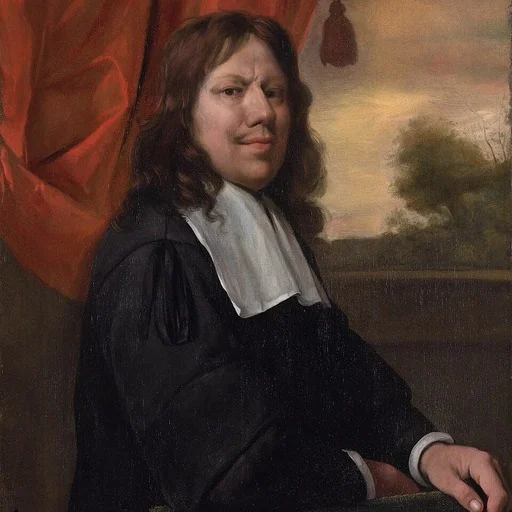
Jan Havickszoon Steen was a Dutch Golden Age painter, one of the leading genre painters of the 17th century.

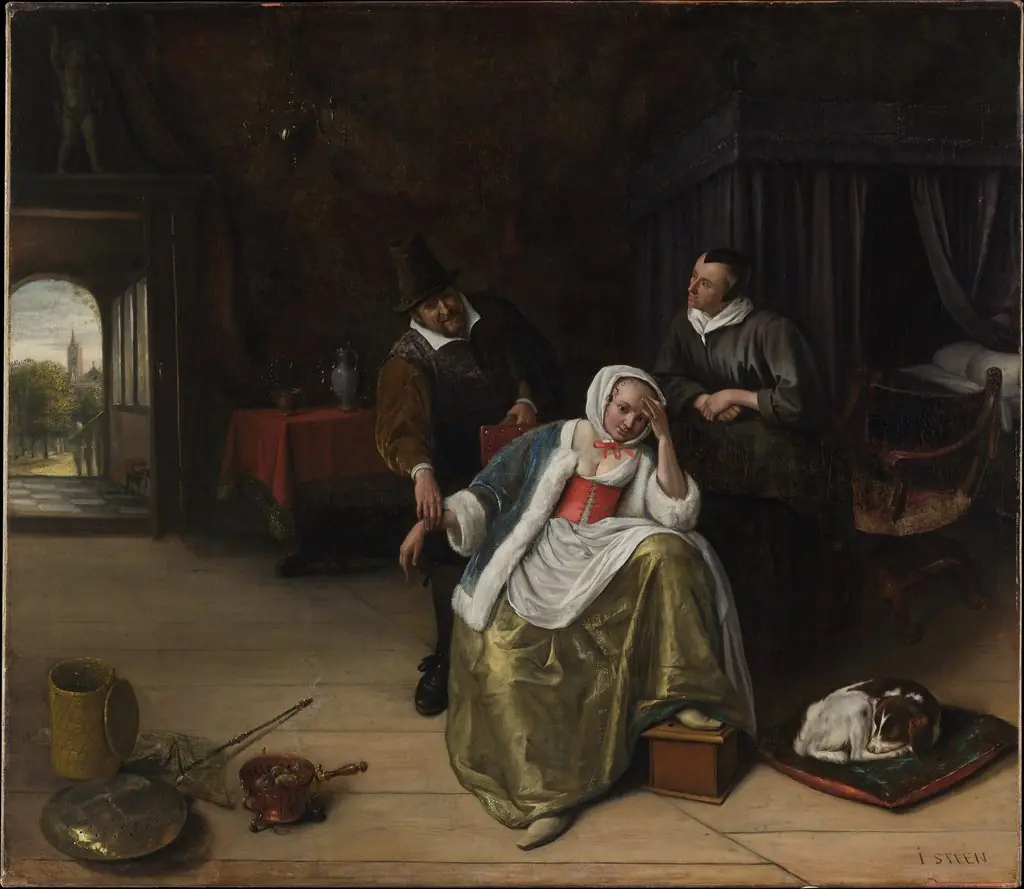 Paintings of physicians by Jan Steen
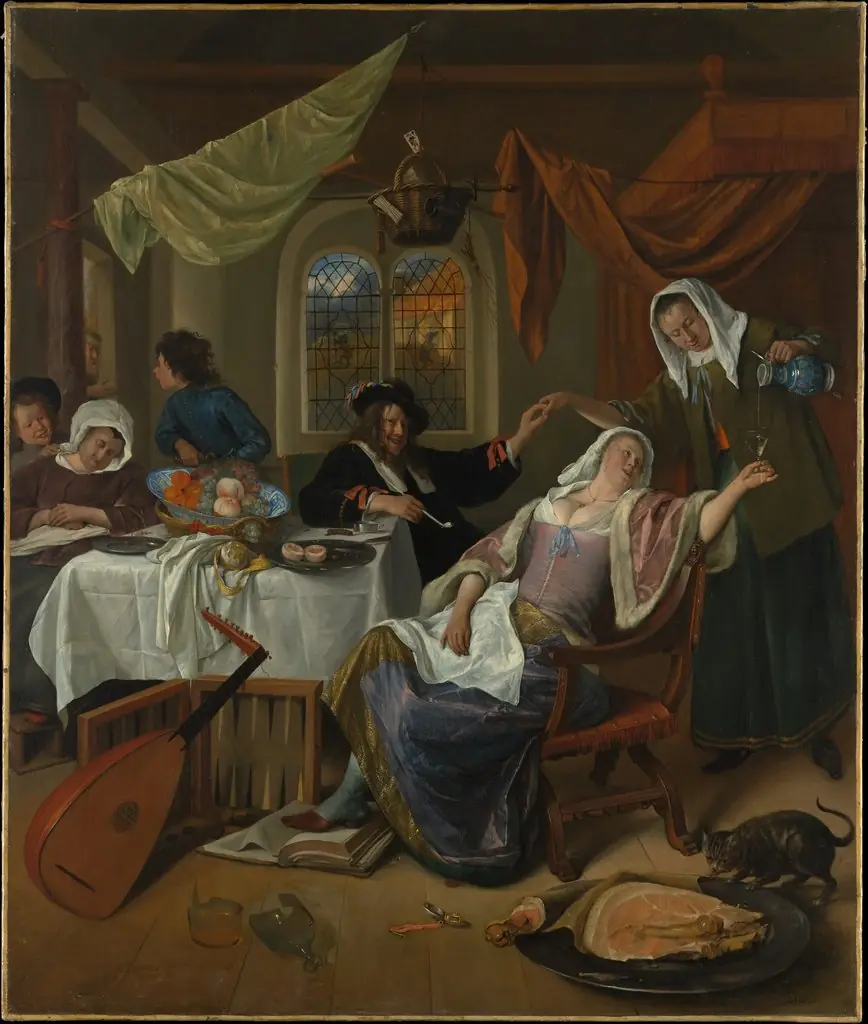 The Dissolute Household
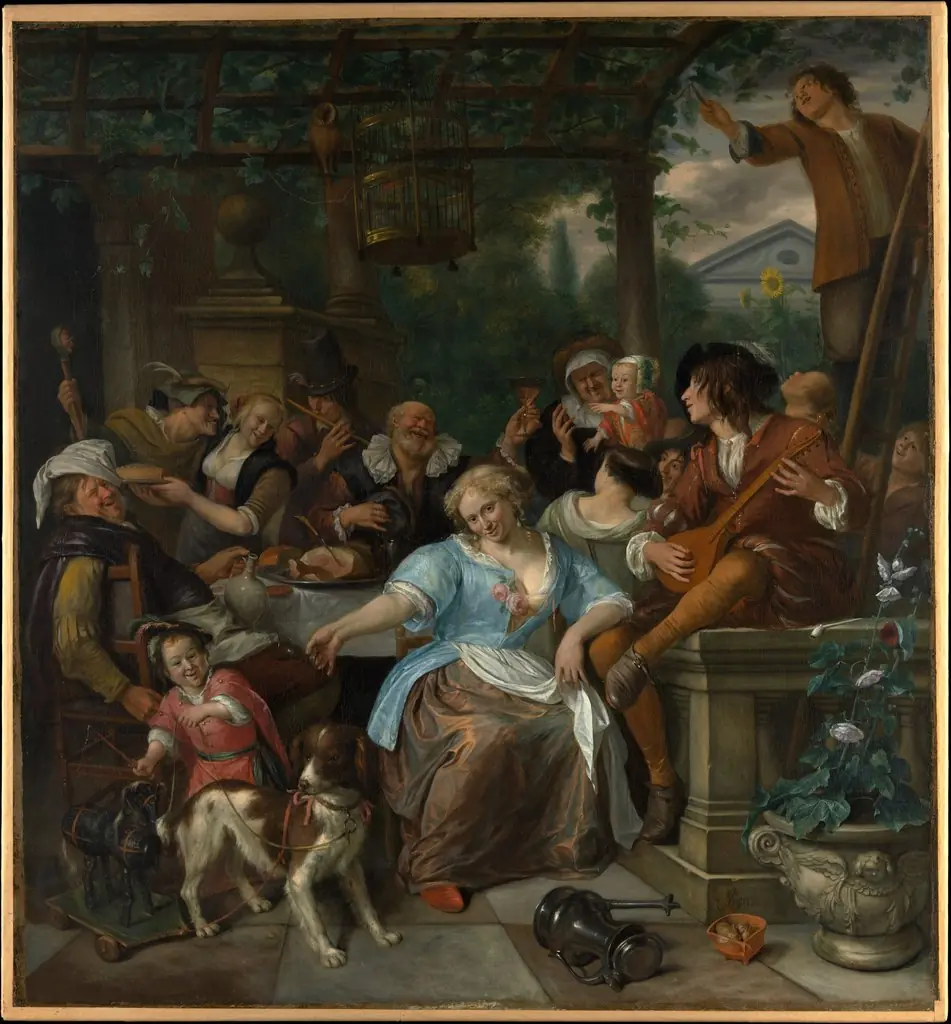 Merry Company on a Terrace
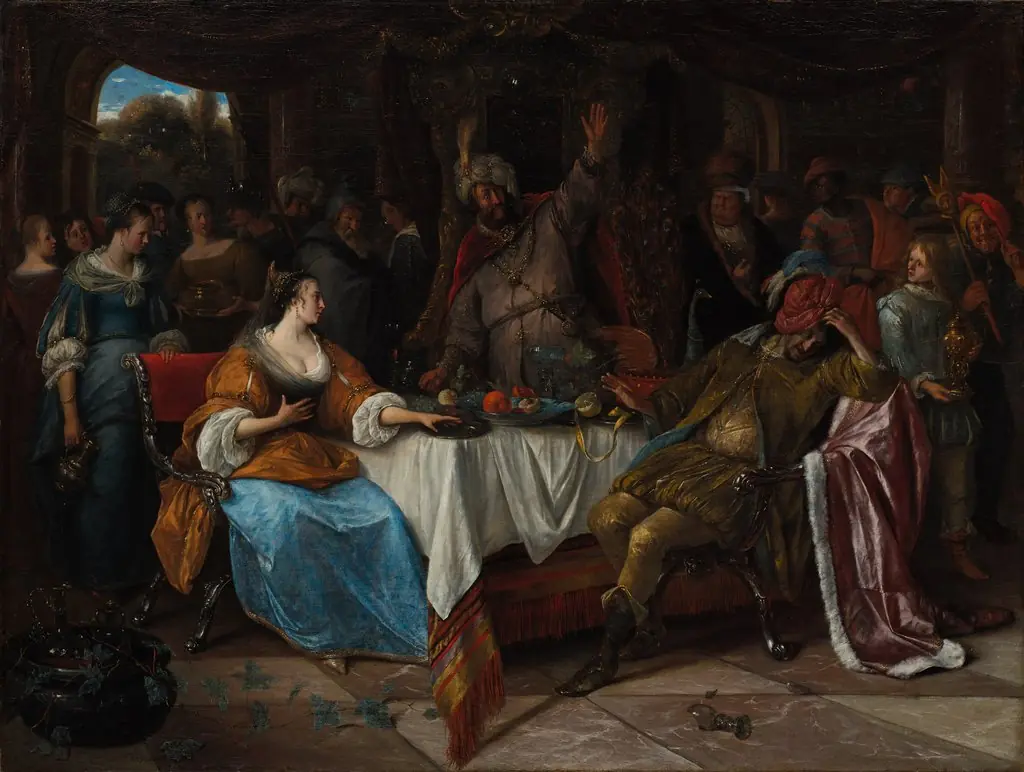 Esther, Ahasuerus, and Haman
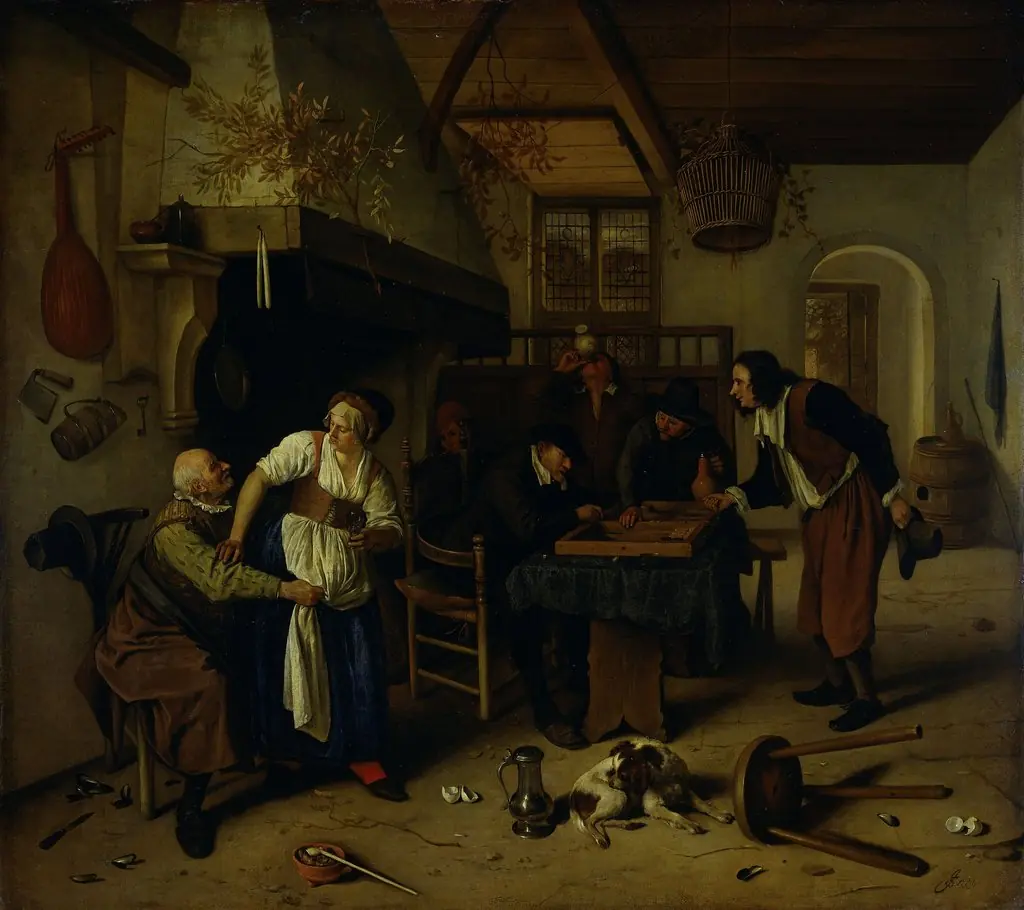 Interior of an inn with an old man amusing himself with the landlady and two men playing backgammon, known as 'Two kinds of games'
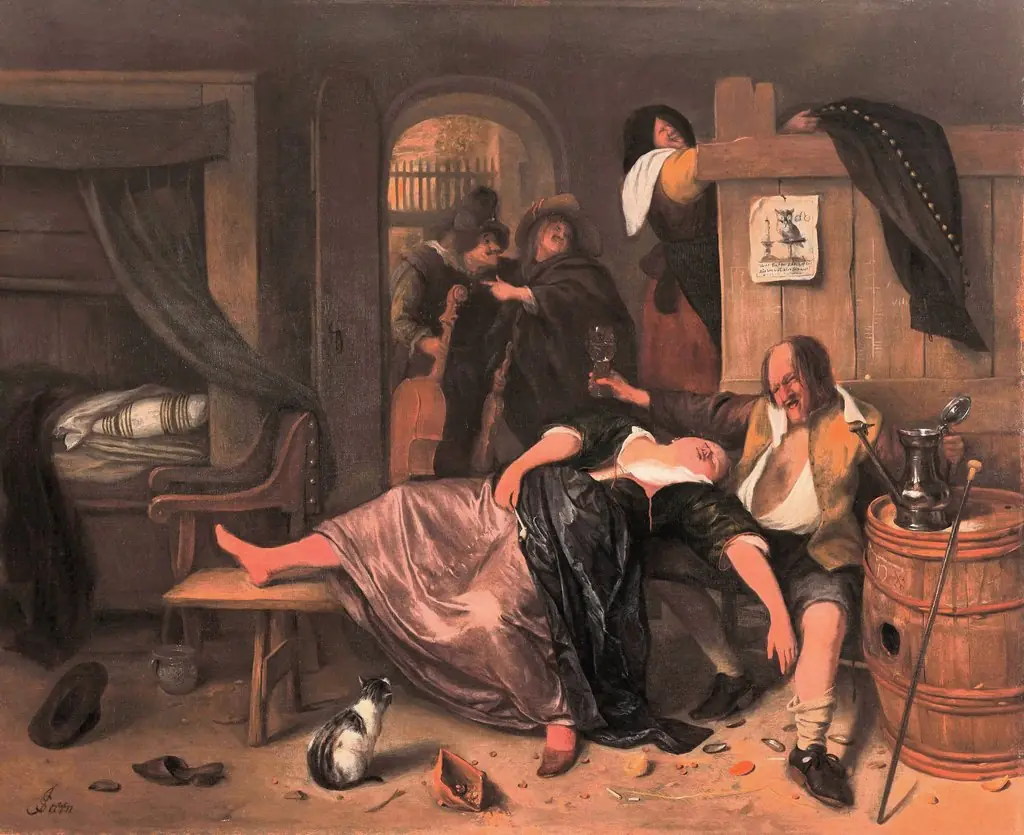 The Drunken Couple
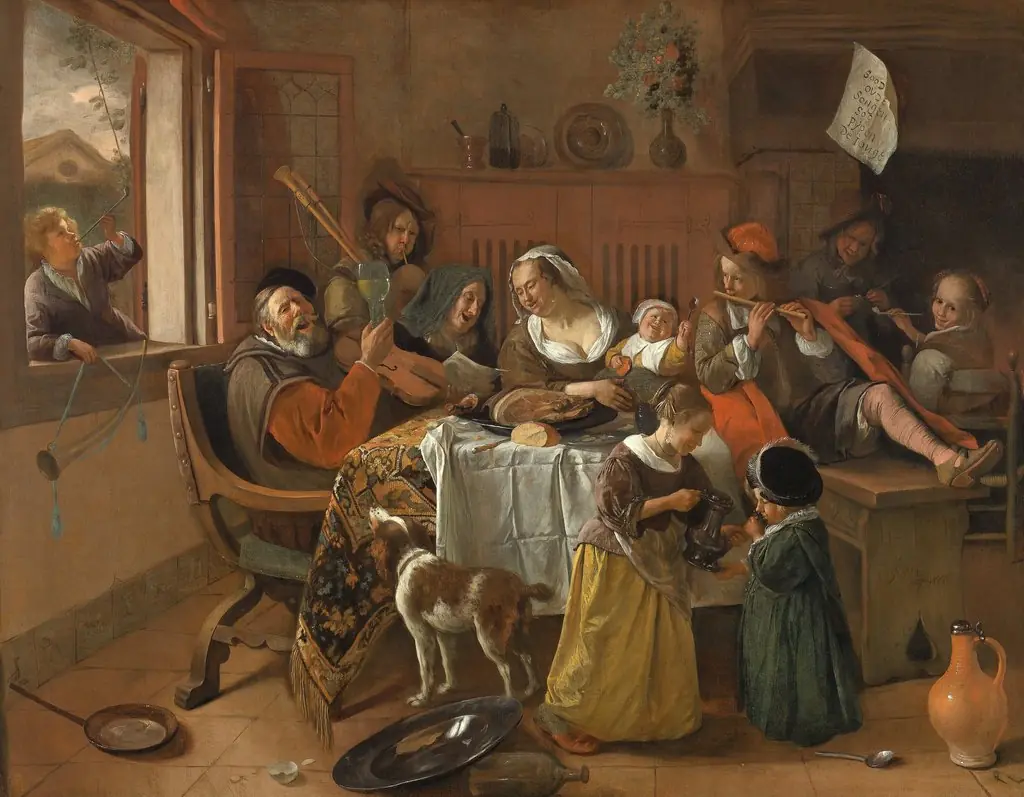 The Happy Family
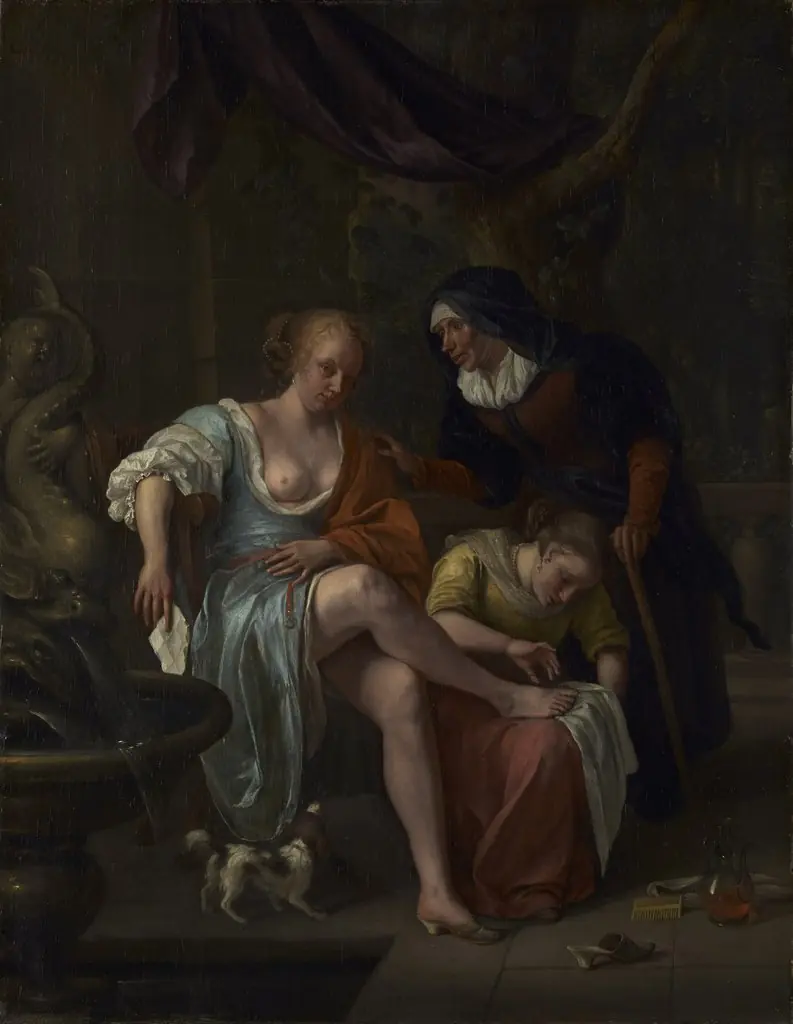 Bathsheba after the Bath