Artwork
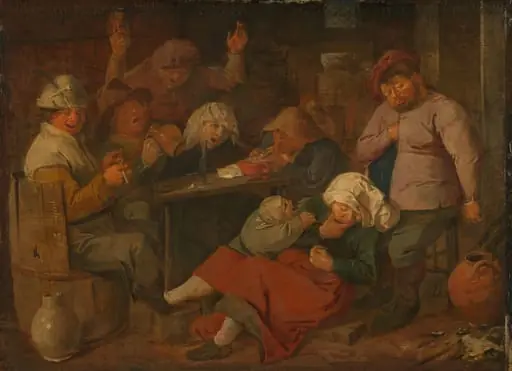
The Drunken Couple
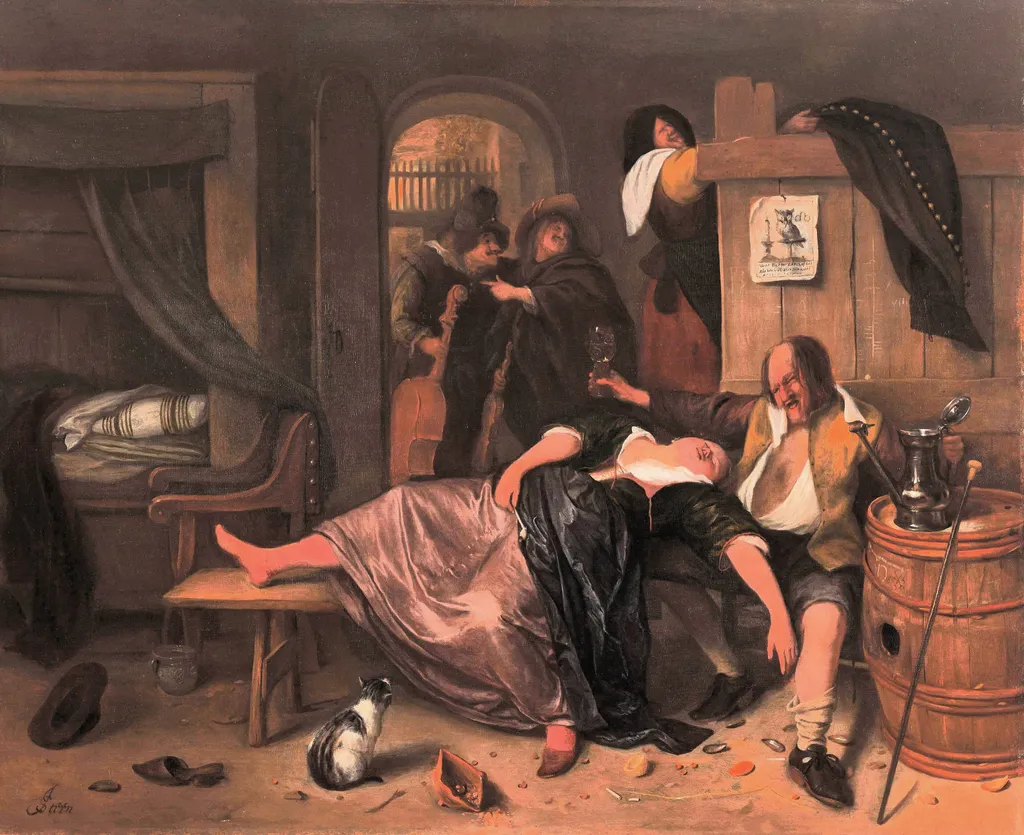
The Drunken Couple is an oil painting by the Dutch Golden Age artist Jan Steen. It dates from 1660 and is held in the collection of the collection Adriaan van der Hoop.
About this work
Technique & Style
The Drunken Couple is an oil painting executed on oak panel, a support typical of Dutch seventeenth-century cabinet pictures.
The Drunken Couple is an oil painting executed on oak panel, a support typical of Dutch seventeenth-century cabinet pictures. The work measures 52.5 by 64 cm, a modest horizontal format suited to its intimate domestic interior. Jan Steen renders the scene with a moralizing intent, combining apparently comic genre imagery with pointed symbolism: a print of an owl pinned to a wooden partition in the background carries the Dutch inscription "Wat Baeter kaers of Bril / Als den vÿl niet sien en wil," reinforcing the painting's critique of drunkenness and folly.
Stylistically, Steen populates the shallow space with carefully observed props, a Gouda clay pipe, a roemer glass raised by the man, a wine jug on a barrel bearing the Leiden coat of arms, a box-bed, and a cat seated on the floor, each contributing to the narrative of disorder and theft unfolding behind the oblivious couple. The painterly handling and dense anecdotal detail are characteristic of his Leiden-period genre production.
History & Provenance
The Drunken Couple was painted by Jan Steen in 1660, executed in oil on panel. It entered the collection of the Dutch banker and collector Adriaan van der Hoop, through whom its early ownership history is traced.
Following van der Hoop's death in 1854, the painting was bequeathed along with the rest of his collection to the city of Amsterdam. From 1855 to 1885 it was housed in the Museum Van der Hoop. On 30 June 1885 the work was transferred on loan to the Rijksmuseum in Amsterdam, where it remains.
The Drunken Couple is held by the Rijksmuseum in Amsterdam. It entered the museum's holdings through the collection of the Dutch collector Adriaan van der Hoop, who bequeathed it, along with the rest of his collection, to the city of Amsterdam in 1854. The painting was initially housed at the Museum Van der Hoop from 1855 to 1885, before being transferred on 30 June 1885 to the Rijksmuseum, where it remains today.
The work has been included in several exhibitions, including "Arm in de Gouden Eeuw" at the Amsterdams Historisch Museum (23 October 1965 – 17 January 1966); "Tot lering en vermaak. Betekenissen van Hollandse genrevoorstellingen uit de zeventiende eeuw" at the Rijksmuseum (16 September – 5 December 1976); "Bier! Geschiedenis van een volksdrank in Holland" at the Amsterdams Historisch Museum (10 June – 4 September 1994); "Liefde te koop.
Vier eeuwen prostitutie in Amsterdam" at the Amsterdams Historisch Museum (9 March – 1 September 2002); "Van der Hoop" at the Rijksmuseum (15 October 2004 – 23 January 2005); and "The Milkmaid by Vermeer and Dutch Genre Painting" at the National Art Center, Tokyo (26 September – 17 December 2007).
Context
The Drunken Couple exemplifies Jan Steen’s mastery of Dutch Golden Age genre painting, where comedic surface details convey a sharp moral critique. The work functions as a didactic warning against alcohol abuse and foolishness, utilizing the period metaphor of the owl, a creature believed unable to see even with candles or glasses during the day, to label the inebriated subjects as stupid and blind to their surroundings. This visual pun is reinforced by a print depicted within the scene, reflecting a broader 17th-century cultural association between owls and idiocy.
Steen’s composition, featuring thieves and amused onlookers amidst the couple’s disarray, aligns with his wider artistic context of exposing human vice through lively, narrative-driven scenes that balance humor with ethical instruction.
Overview
Jan Steen's painting, The Drunken Couple, rendered in oil on an oak panel, dates from approximately 1655 to 1665. This work is currently housed in the Rijksmuseum in Amsterdam. It presents a domestic scene characterized by disarray and a lack of awareness, typical of Steen's narrative approach to genre painting. The artwork serves as a commentary on human folly through its depiction of everyday life.
Subject & Meaning
The painting captures a scene of profound inebriation, where the central figures are so overcome by drink that they remain oblivious to the figures lurking in the background. This lack of perception is underscored by the presence of an owl depicted in a print above the couple. In the seventeenth century, the owl commonly served as a symbolic representation of foolishness and impaired vision, often associated with an inability to discern clearly, particularly in daylight.
Own this work as a print
Artist & collection
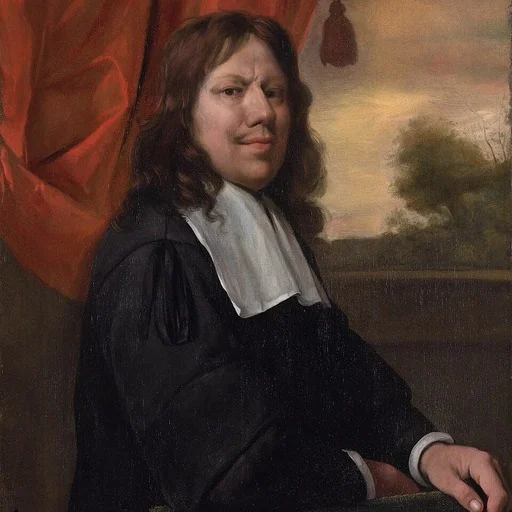
Artist
Jan Havickszoon Steen was a Dutch Golden Age painter, one of the leading genre painters of the 17th century.

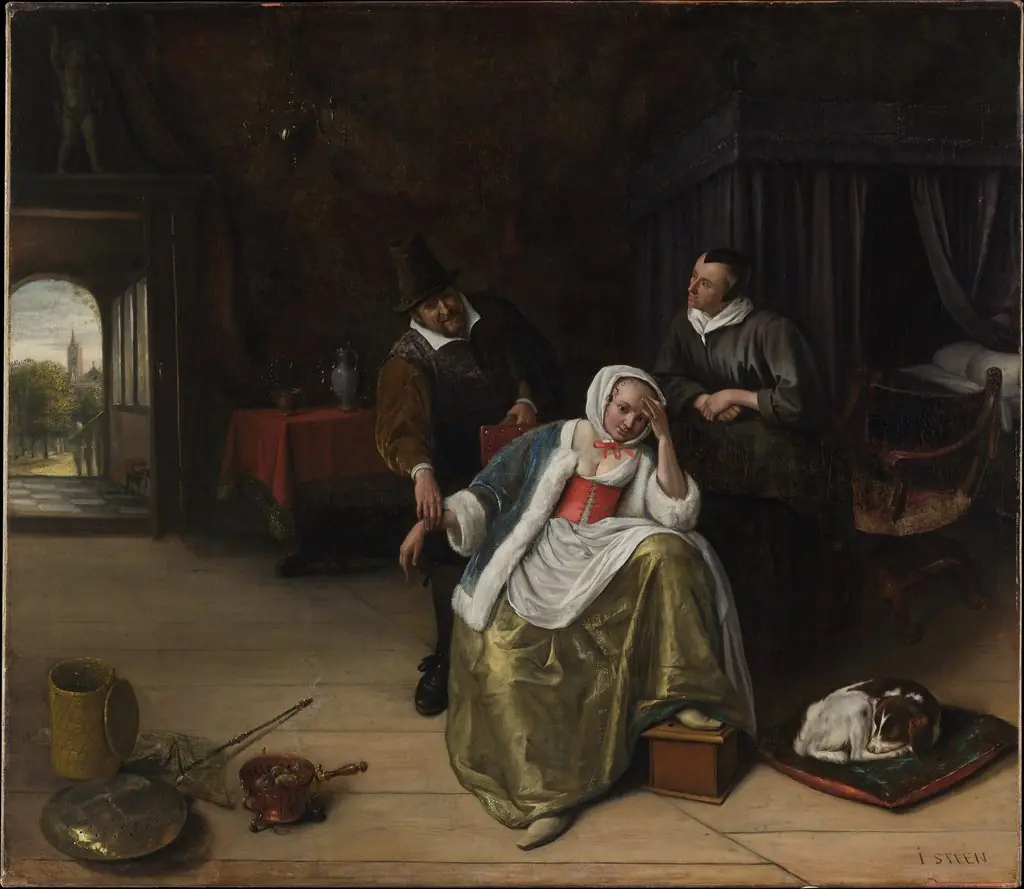 Paintings of physicians by Jan Steen
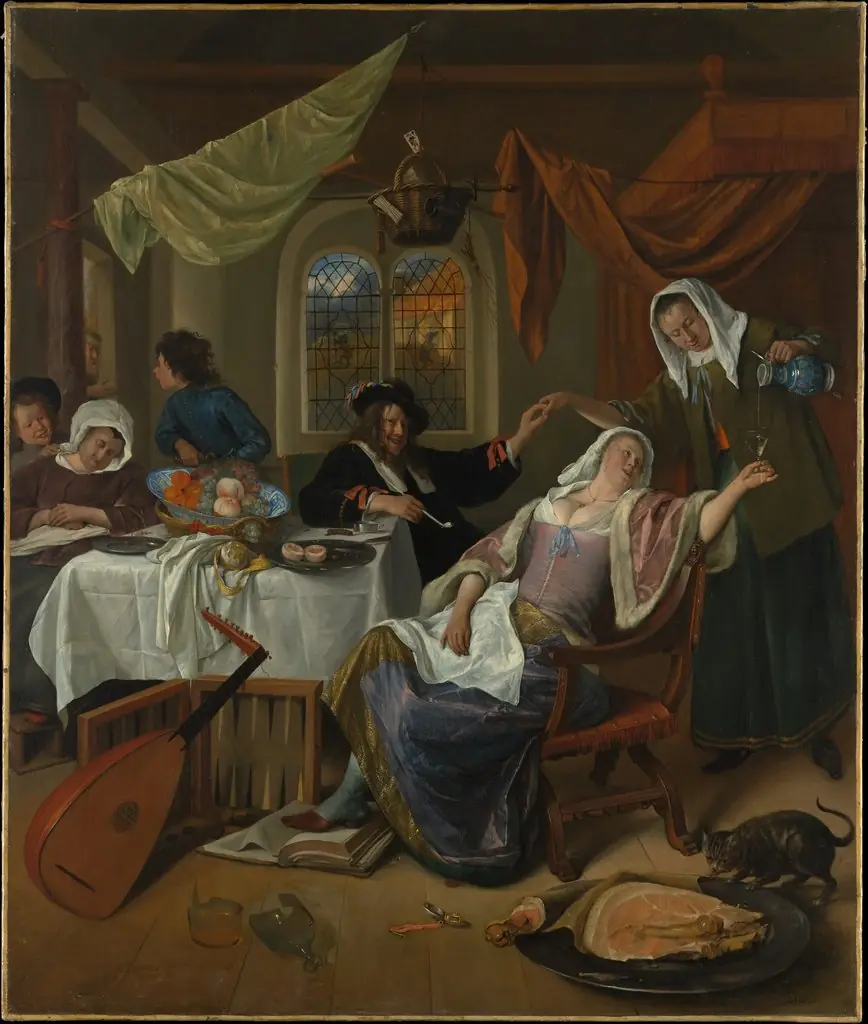 The Dissolute Household
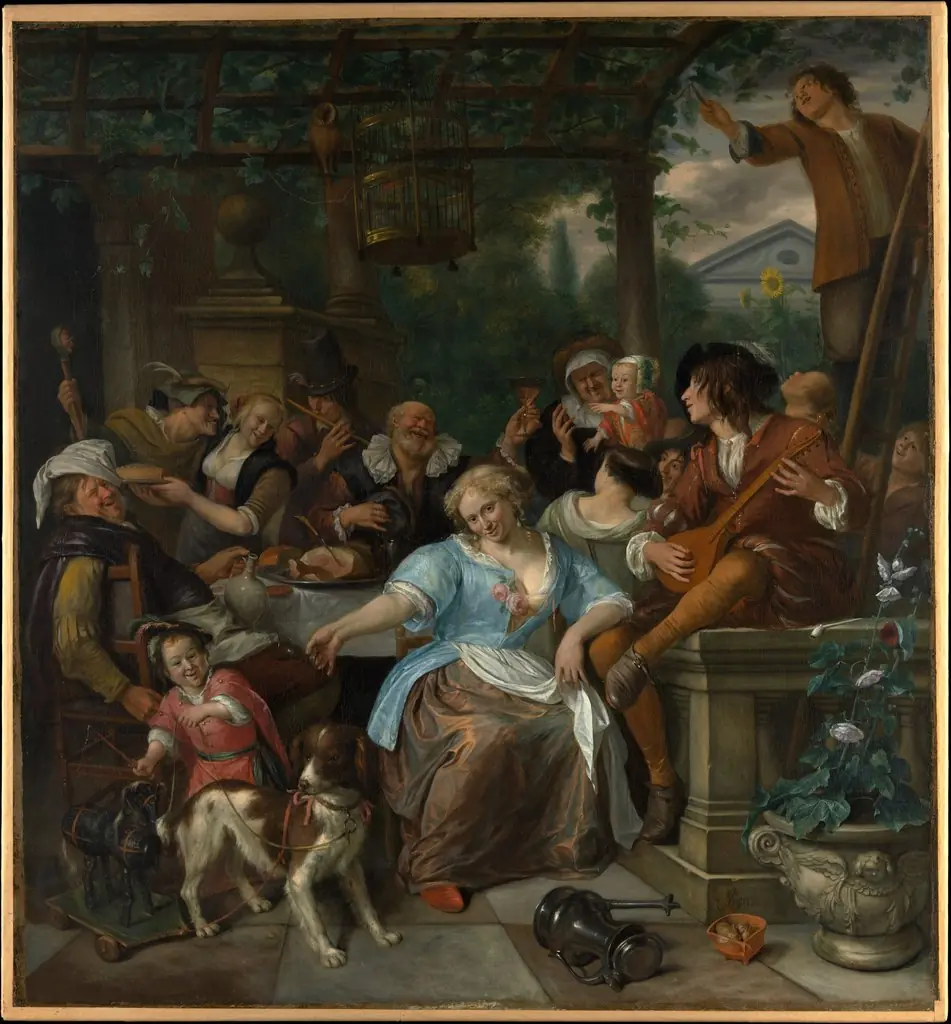 Merry Company on a Terrace
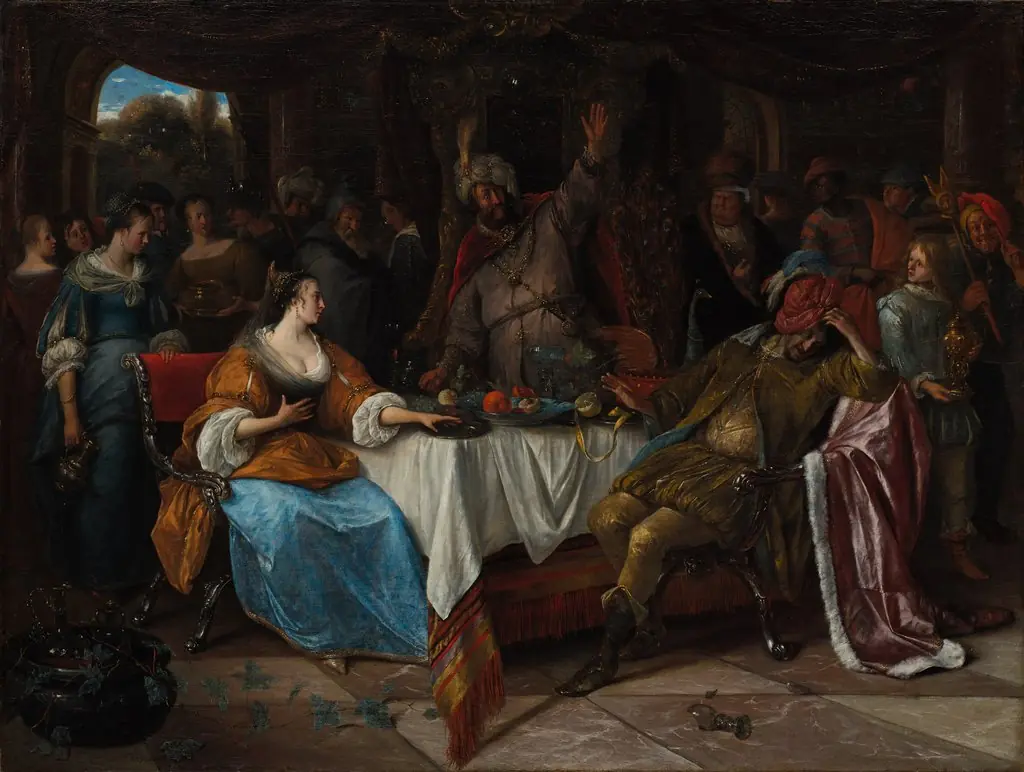 Esther, Ahasuerus, and Haman
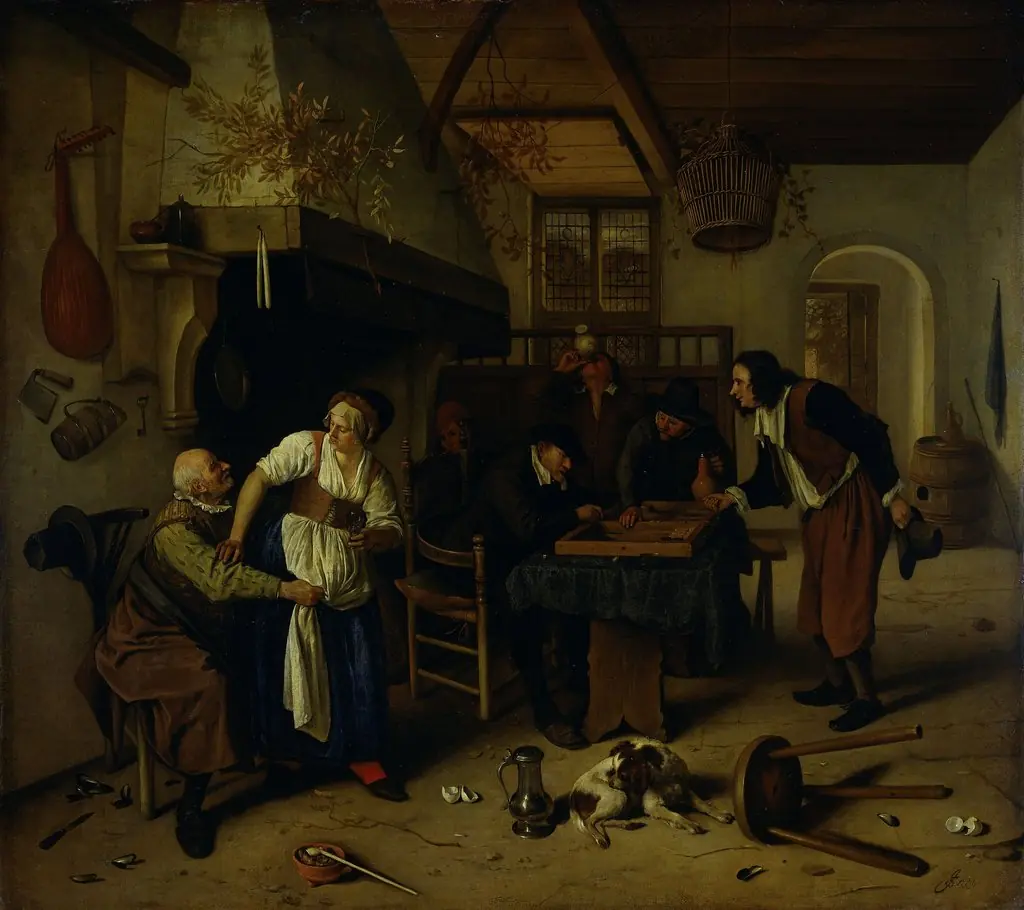 Interior of an inn with an old man amusing himself with the landlady and two men playing backgammon, known as 'Two kinds of games'
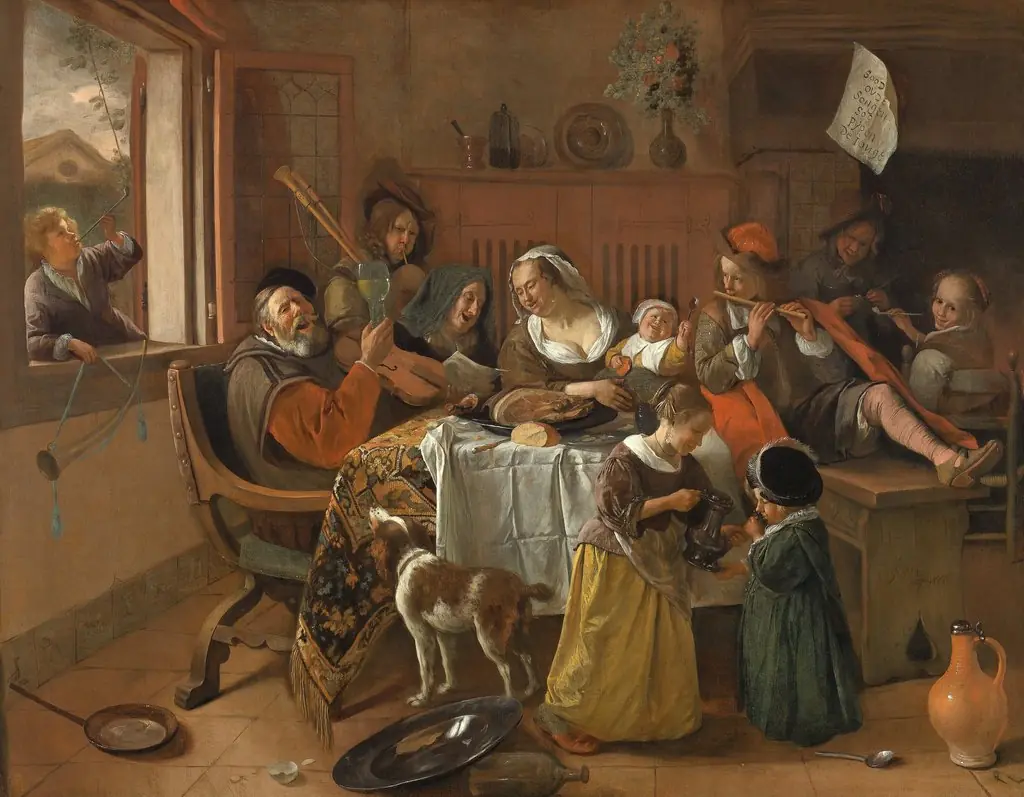 The Happy Family
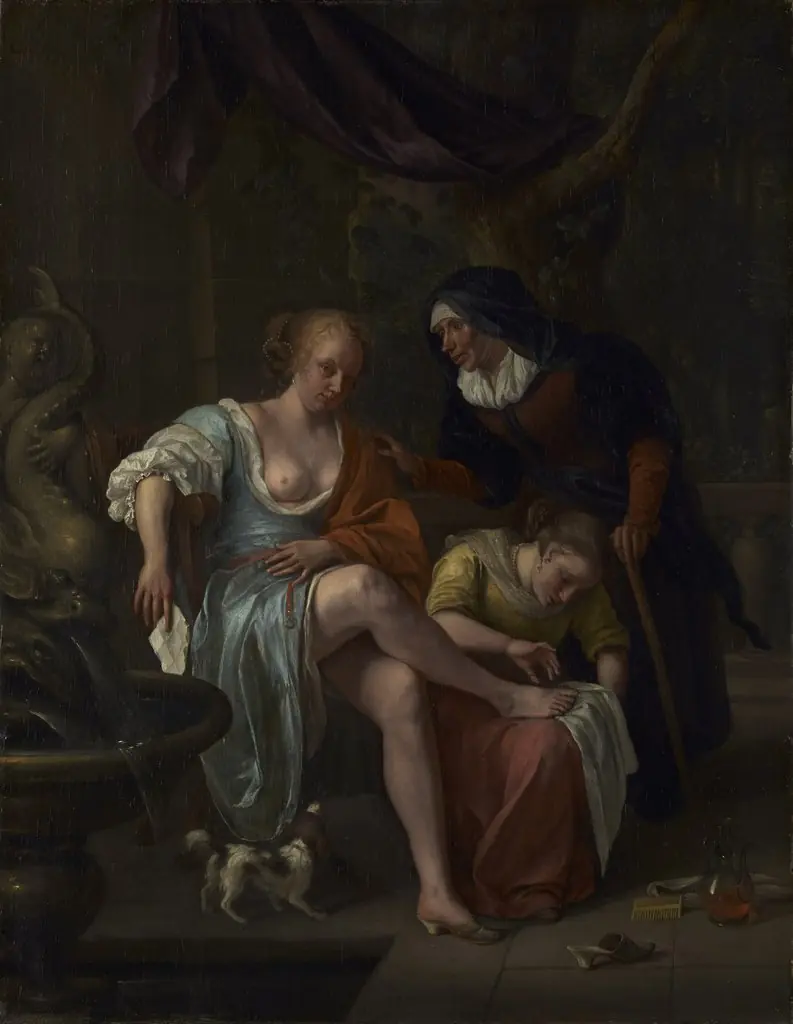 Bathsheba after the Bath
 Woman at her Toilet