Artwork
Twelfth-Night Feast
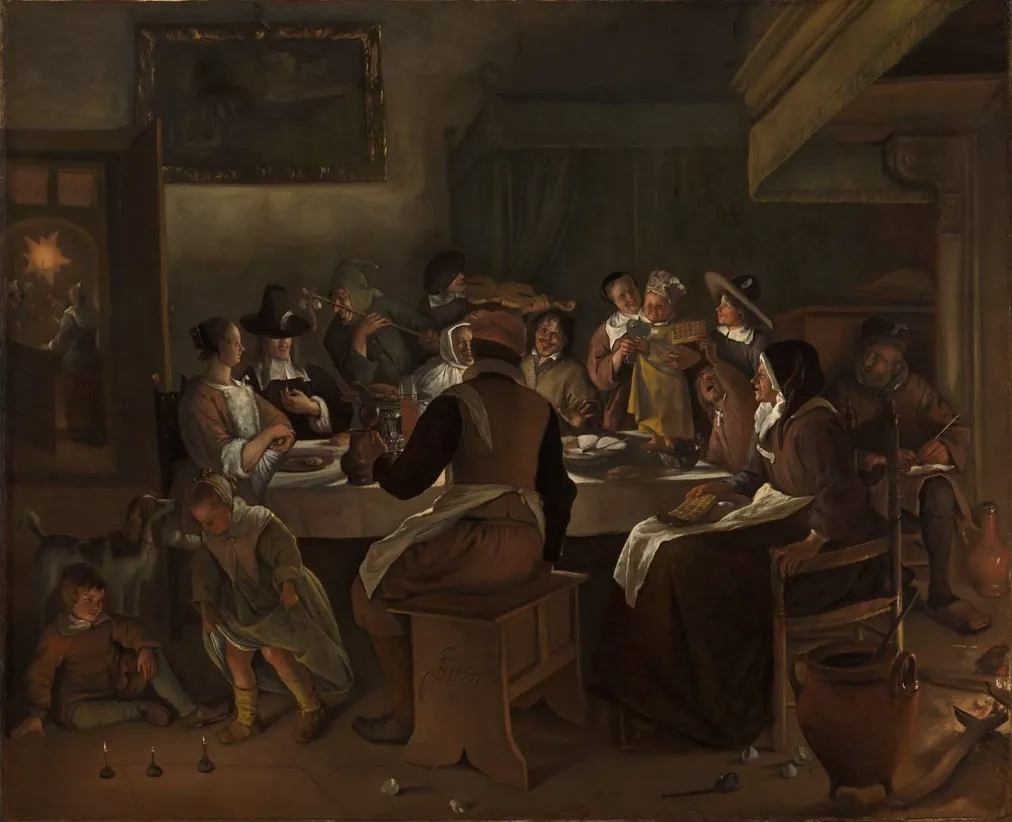
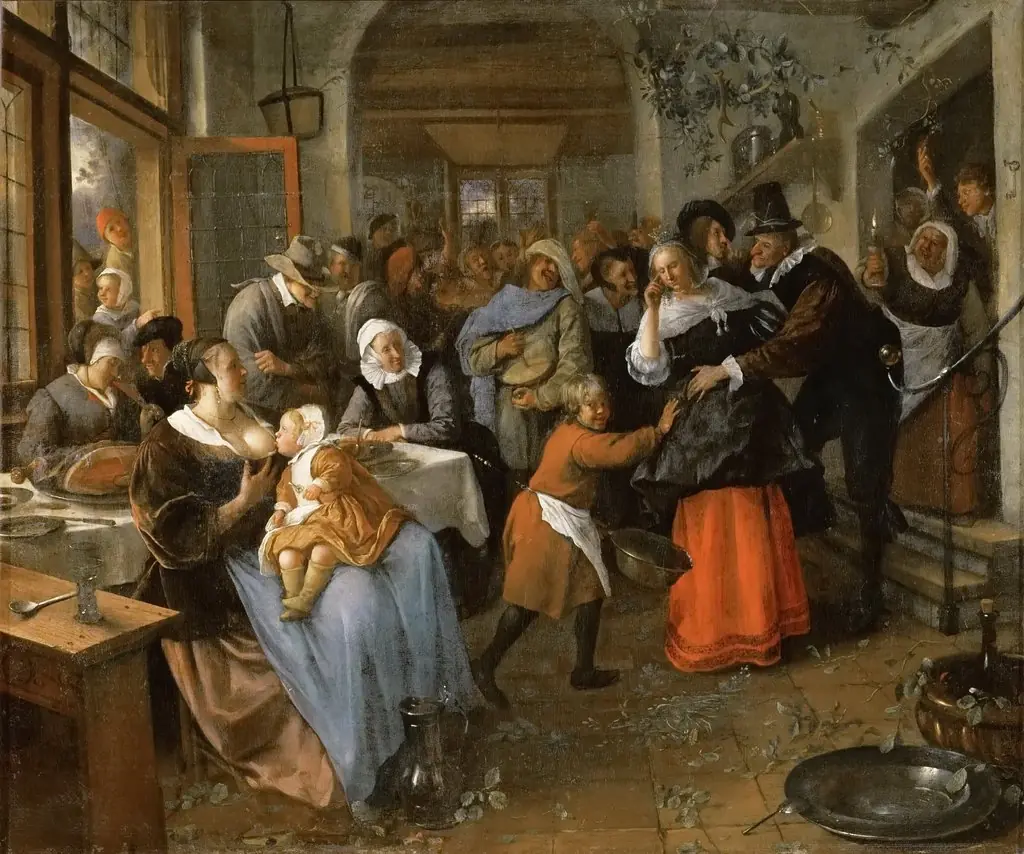
Twelfth-Night Feast is an oil painting by the Dutch Golden Age artist Jan Steen. It dates from 1662 and is held in the collection of the Museum of Fine Arts Boston.
About this work
Subject & Meaning
The scene illustrates a Dutch household where a young child is crowned the evening's "king" by lot, seated on a table to take the ceremonial first drink.
Jan Steen’s 1662 painting depicts the Twelfth Night Feast, a celebration marking the end of Christmas and the arrival of the Three Kings on Epiphany. The scene illustrates a Dutch household where a young child is crowned the evening's "king" by lot, seated on a table to take the ceremonial first drink. Symbolism is woven throughout the domestic chaos: a girl in the foreground jumps over three burning candles, representing the Magi, while a jester mocks a stiff couple with a phallic staff. The composition also features star singers at the door, musicians who traditionally paraded the biblical star guiding the kings. The work captures the tradition where masters and servants dined together, blending religious commemoration with the boisterous, often disorderly revelry characteristic of Steen's genre scenes.
Technique & Style
The painting is executed in oil on canvas, a medium typical of Dutch genre scenes in the 1660s. The surface shows a richly detailed interior with figures arranged around a table, and Steen employs his characteristic vigor in brushwork to render textures of clothing, food, and festive decorations. The composition emphasizes narrative movement: children play on the floor, a boy offers a waffle to a child crowned as king, and a violinist provides musical accompaniment, all under three illuminated candles symbolizing the Magi. The handling of light highlights the festive atmosphere, while the stylized gestures and exaggerated expressions contribute to the humorous tone of the scene.
History & Provenance
Twelfth-Night Feast has been in the collection of the Museum of Fine Arts, Boston since 1954, when Schaeffer Galleries of New York sold it to the museum for $45,000. Before that, the work had passed through several hands: it was bought at Christie's in London on 11 May 1934 by H. van Praagh of The Hague, was shown in August 1934 as the property of the D. Katz art dealership in Dieren, and was owned by Elisabeth Hijmans (1871-1958) by 1938. A member of the Van den Bergh family sold it to Schaeffer Galleries in February 1953. The painting's documented exhibition history includes a 1934 showing at the Koninklijke Kunstzaal Kleykamp in The Hague (cat. no. 59) and a December 1934, January 1935 display at Museum Boymans in Rotterdam (cat. no. 18). It appeared again at Museum Boymans in the 1938 exhibition "Meesterwerken uit vier eeuwen 1400-1800" (cat. no. 146), at the 1939 New York World's Fair in "European Paintings and Sculpture from 1300-1800" (cat. no. 362), and at the Musée des beaux-arts de Montréal in 1944 in "Five Centuries of Dutch Art" (cat. no. 70).
Artist & collection
Artist
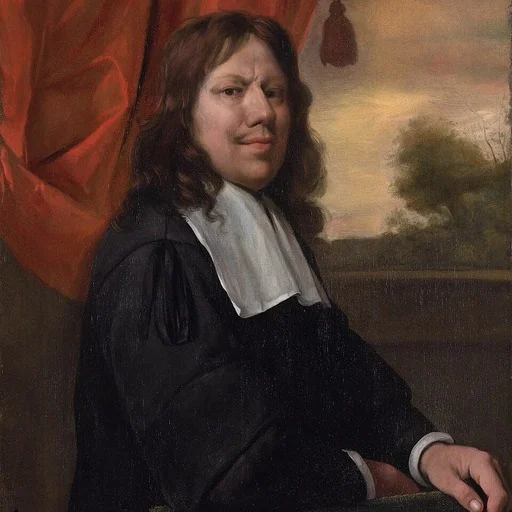
Jan Havickszoon Steen was a Dutch Golden Age painter, one of the leading genre painters of the 17th century.

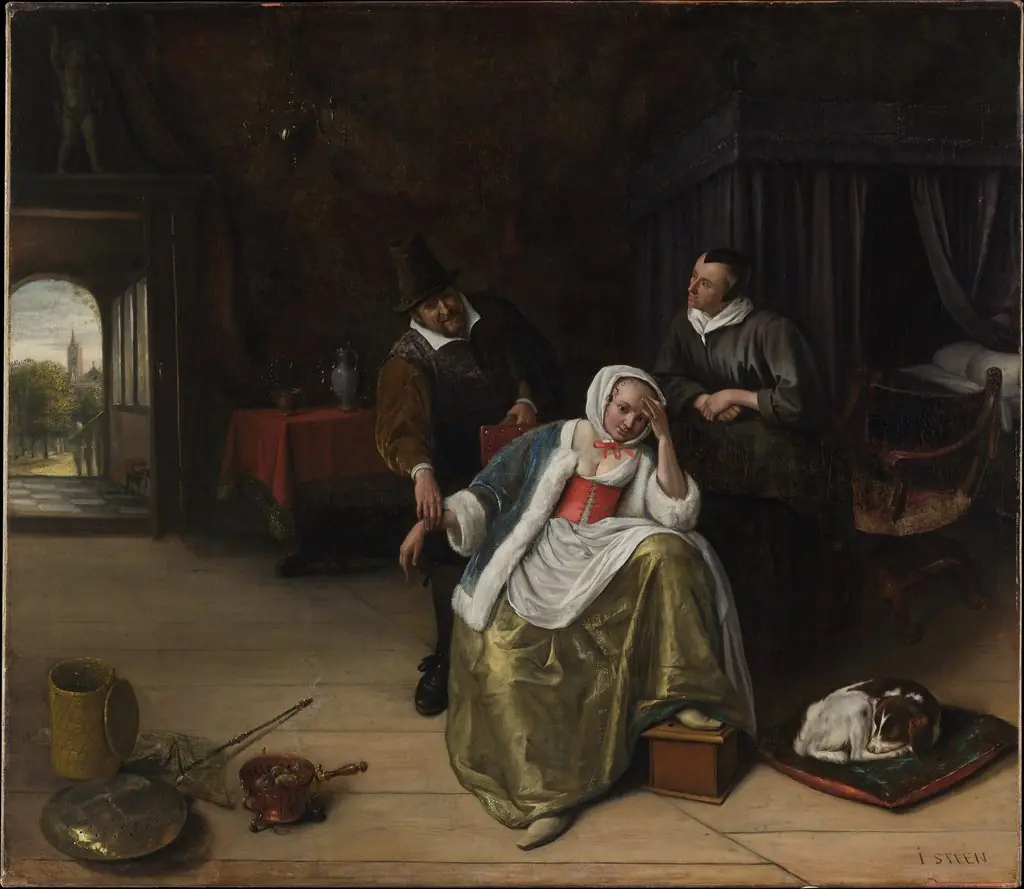 Paintings of physicians by Jan Steen
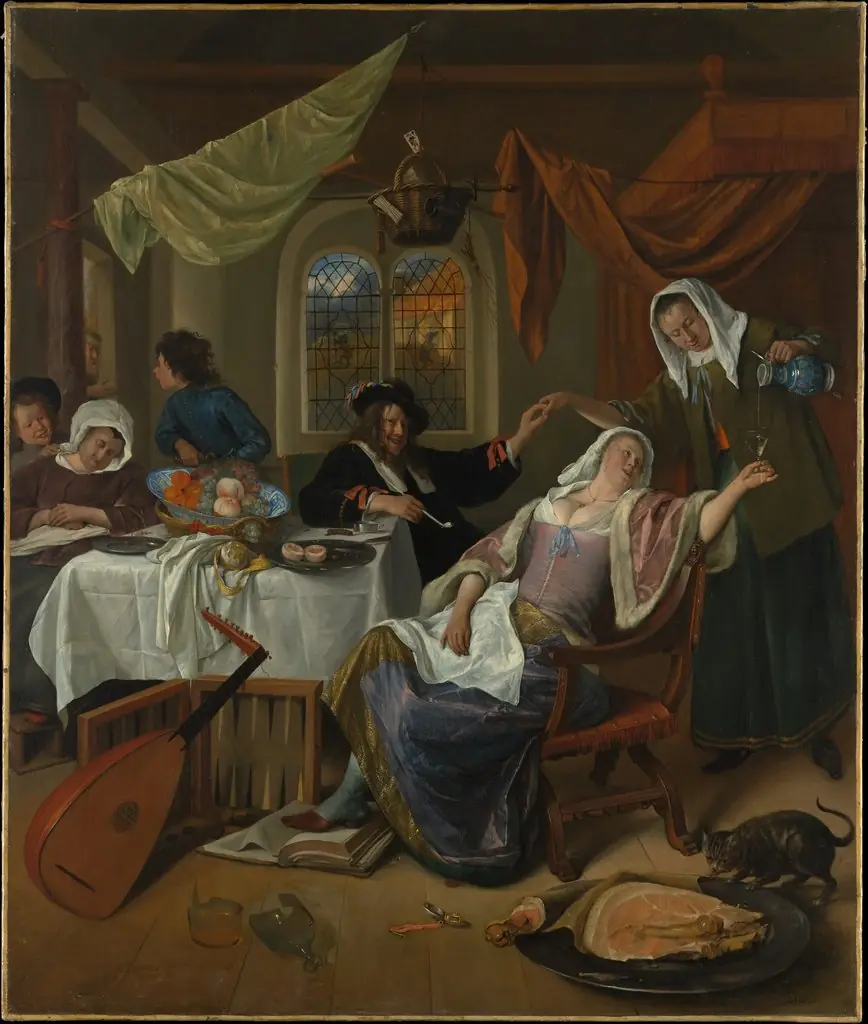 The Dissolute Household
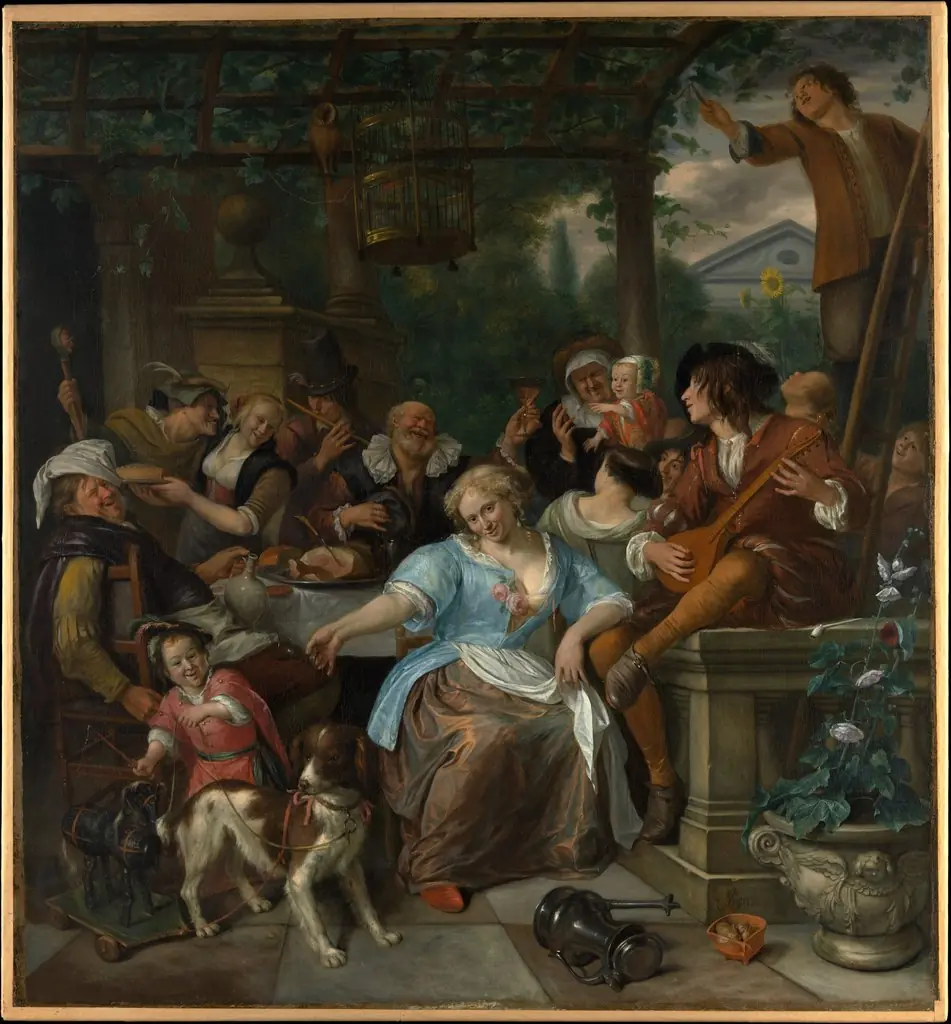 Merry Company on a Terrace
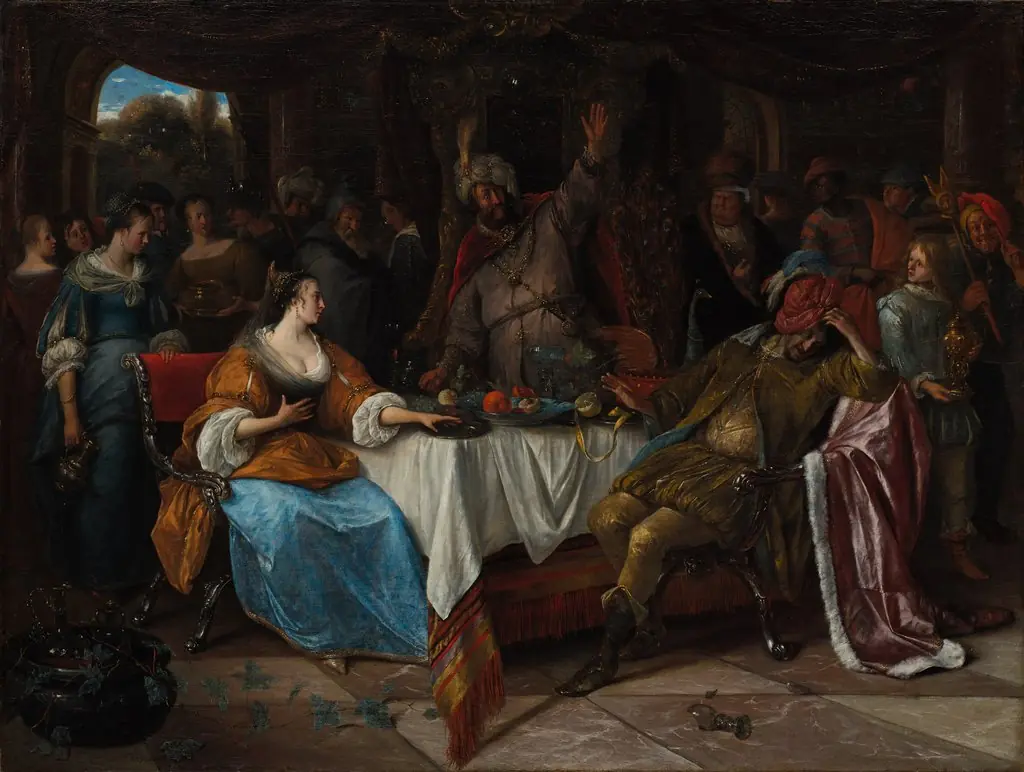 Esther, Ahasuerus, and Haman
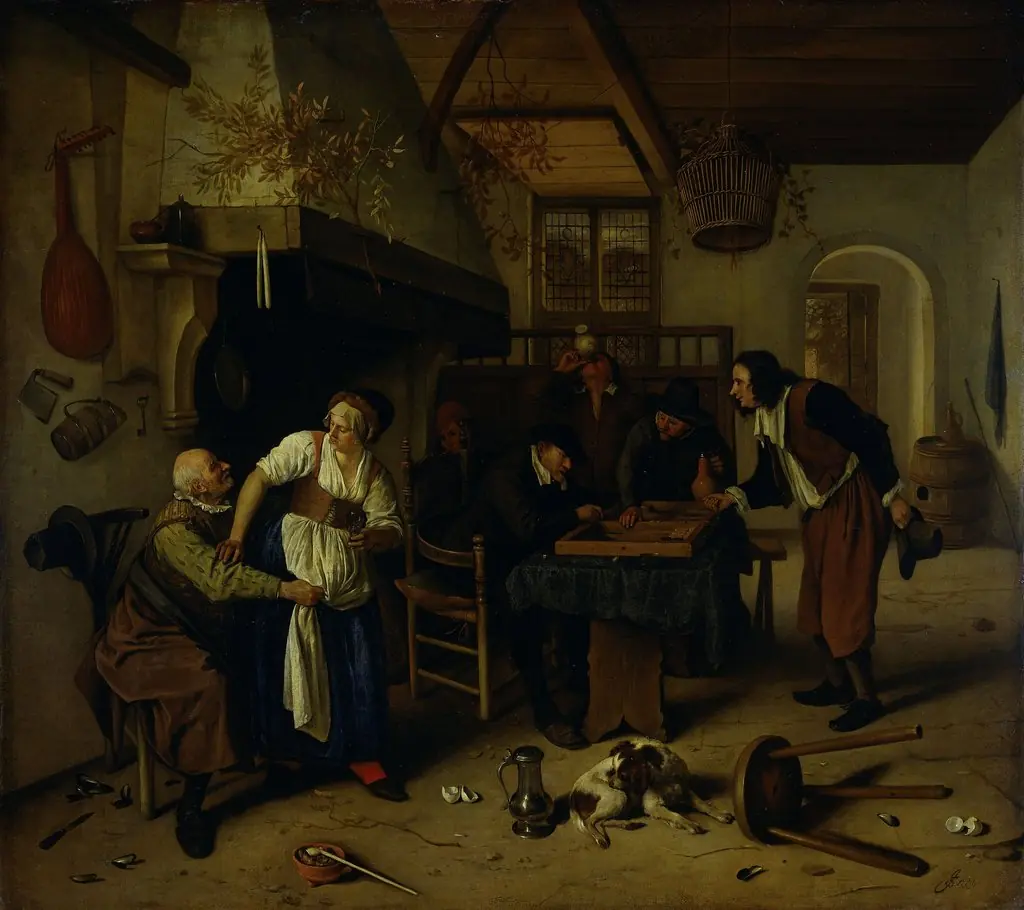 Interior of an inn with an old man amusing himself with the landlady and two men playing backgammon, known as 'Two kinds of games'
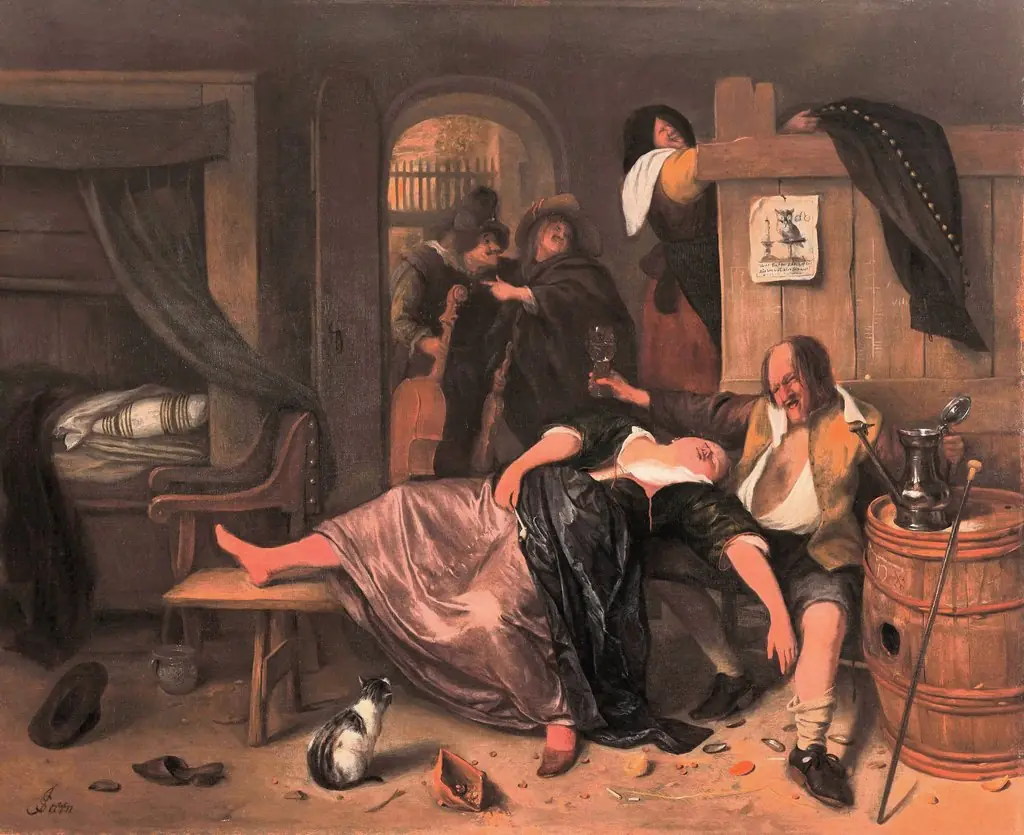 The Drunken Couple
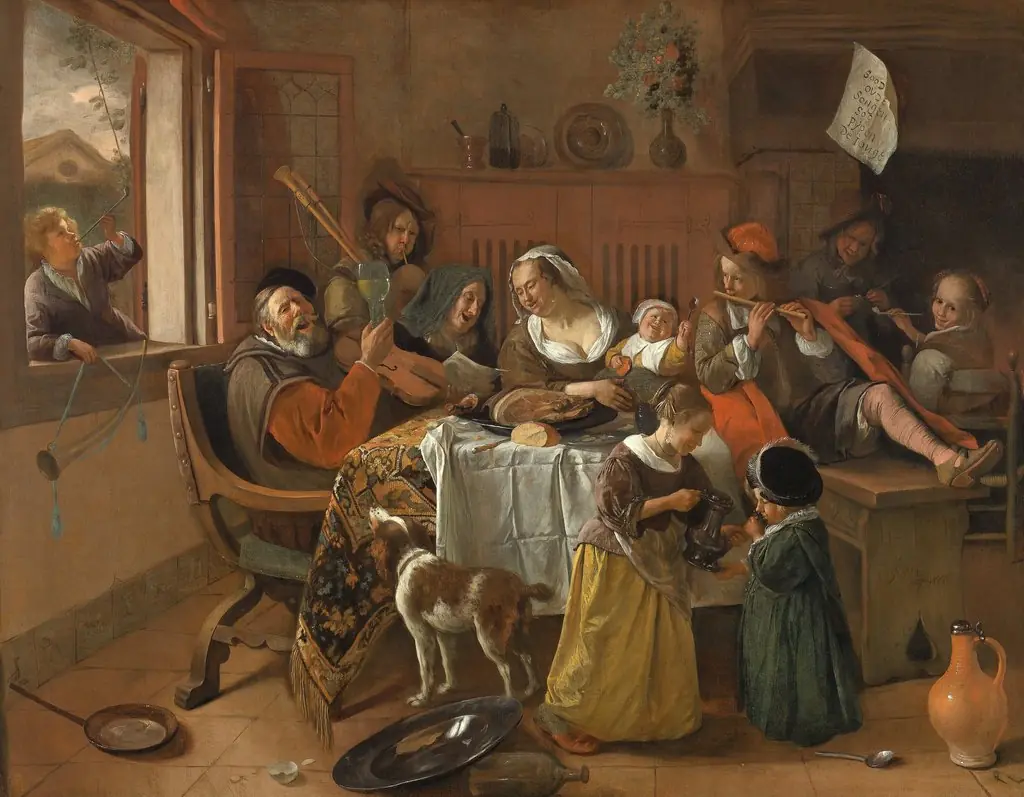 The Happy Family
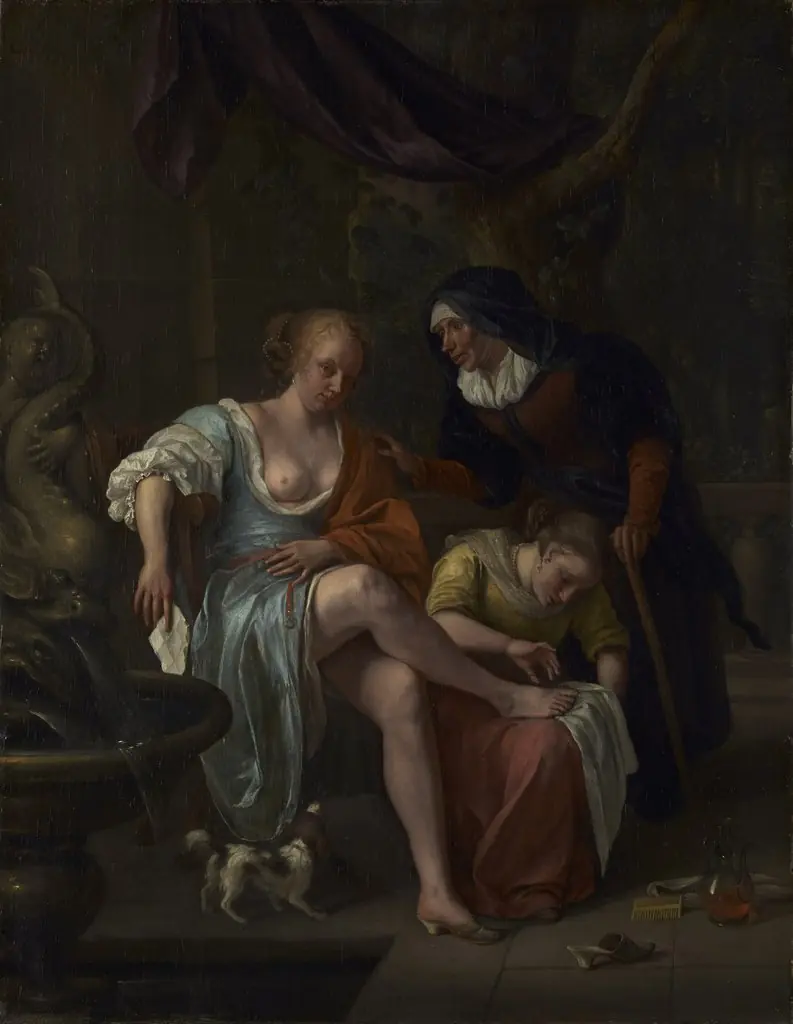 Bathsheba after the Bath