Artwork
Bathsheba after the Bath
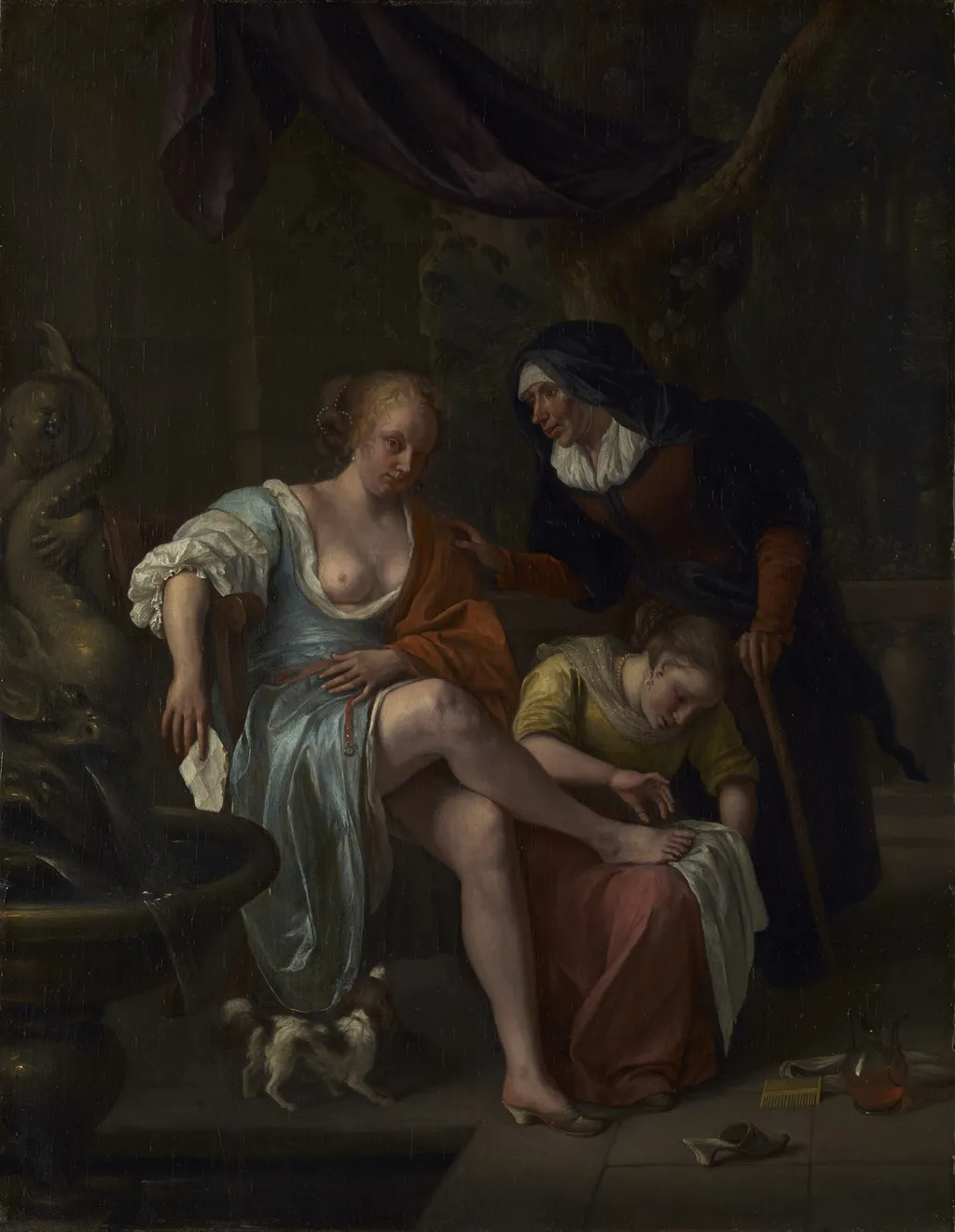
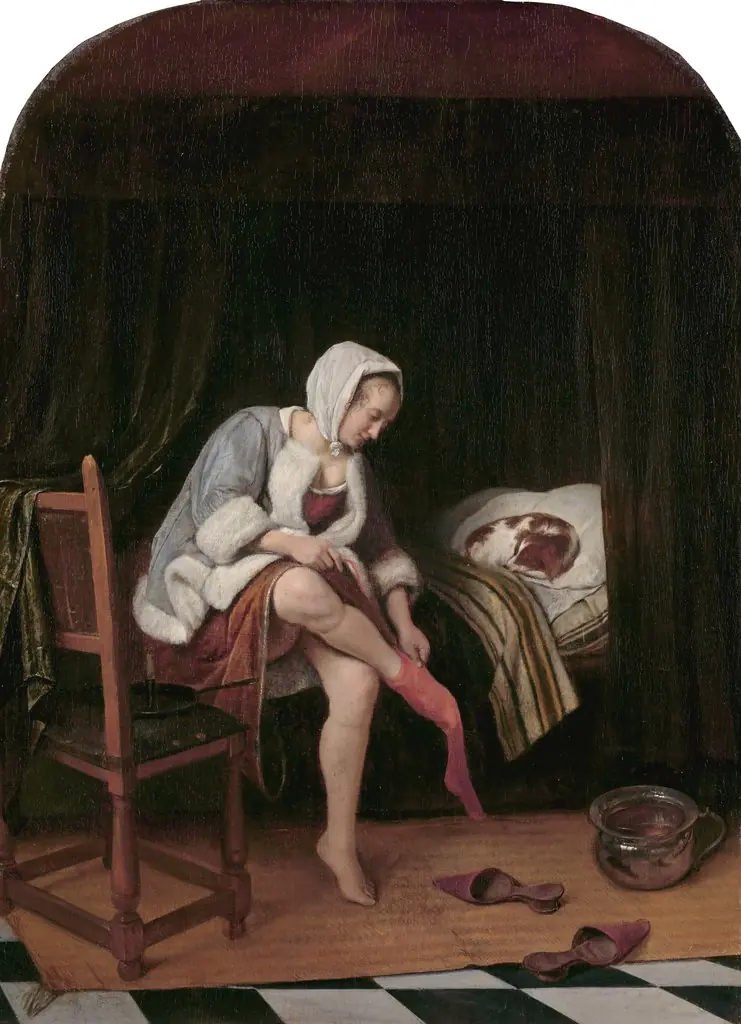
Bathsheba after the Bath is an oil painting by the Dutch Golden Age artist Jan Steen. It dates from 1670 and is held in the collection of the J. Paul Getty Museum.
About this work
Subject & Meaning
Jan Steen's 1670 painting depicts the biblical figure Bathsheba immediately following her ritual bath.
Jan Steen's 1670 painting depicts the biblical figure Bathsheba immediately following her ritual bath. The composition presents a nude woman seated with exposed breasts while an attendant performs a pedicure, surrounded by domestic elements such as a fountain, a dog, and drapery. A letter held by the figure serves as a critical narrative device, alluding to the correspondence from King David that precipitates the subsequent biblical events.
The inclusion of elderly figures and a walking stick within the scene contrasts youth and age, while the setting blends genre art conventions with religious subject matter to illustrate this specific moment of vulnerability and impending moral consequence.
Technique & Style
The painting titled Bathsheba after the Bath, created by Jan Steen in 1670, is executed in oil paint on a wooden panel. Its medium is oil, and the support consists of panel, as recorded in the material specification. The composition depicts Bathsheba washing, accompanied by a dog, a fountain, drapery, a standing elderly figure, and other elements, reflecting its classification as a nude genre painting within the broader genre art tradition. The work is housed in the J. Paul Getty Museum at the Getty Center.
History & Provenance
Jan Steen painted Bathsheba after the Bath in 1670 using oil on panel; the work measures 58 cm by 45 cm and is categorized as a nude genre painting. The composition shows the biblical figure Bathsheba seated, washing, with a dog and a fountain in the background. The painting remained in private hands until it entered the collection of the J. Paul Getty Museum, which now displays it at the Getty Center; its provenance thus traces from the artist’s workshop to the museum’s acquisition, with no documented earlier ownership recorded.
Bathsheba after the Bath, painted by Jan Steen in 1670, is held by the J. Paul Getty Museum and is located at the Getty Center. The work is catalogued as part of the museum's collection.
No specific exhibition history is recorded in the available sources, and no accession or inventory number has been documented.
Overview
Jan Steen's 'Bathsheba after the Bath' (1670) depicts the biblical figure Bathsheba in an intimate, domestic interior following her immersion. The composition centers on three figures within a dimly lit room, rendered in Steen's characteristic warm palette and loose brushwork. Bathsheba, seated on the left, wears a blue dress with a red wrap, her posture relaxed as she exposes one leg.
Behind her, a maid in a blue headscarf leans against the wall, observing the scene, while a younger girl kneels on the floor, attending to the bath with a cloth and a small wooden box. Scattered footwear and personal items on the floor ground the scene in everyday reality, a hallmark of Steen's approach to biblical subjects. Painted late in the artist's career, this work exemplifies his ability to merge religious narrative with genre painting, focusing on human interaction and domestic detail rather than grandeur.
The painting reflects the Dutch Golden Age interest in moral ambiguity and the portrayal of women in private spaces, distinguishing Steen's treatment of the Bathsheba story from the more idealized versions by contemporaries like Rembrandt.
Own this work as a print
Artist & collection
Artist
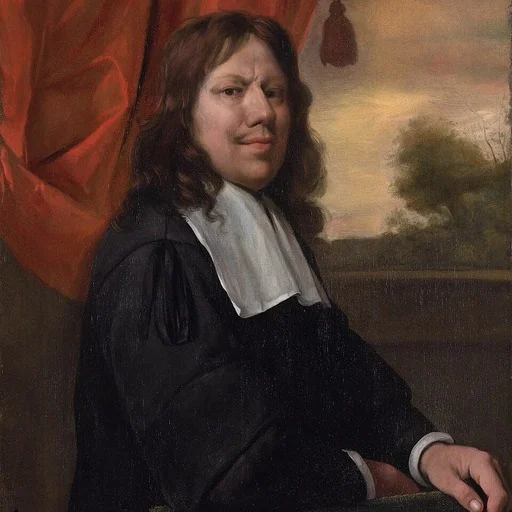
Jan Havickszoon Steen was a Dutch Golden Age painter, one of the leading genre painters of the 17th century.