Artwork
Tric-Trac Players
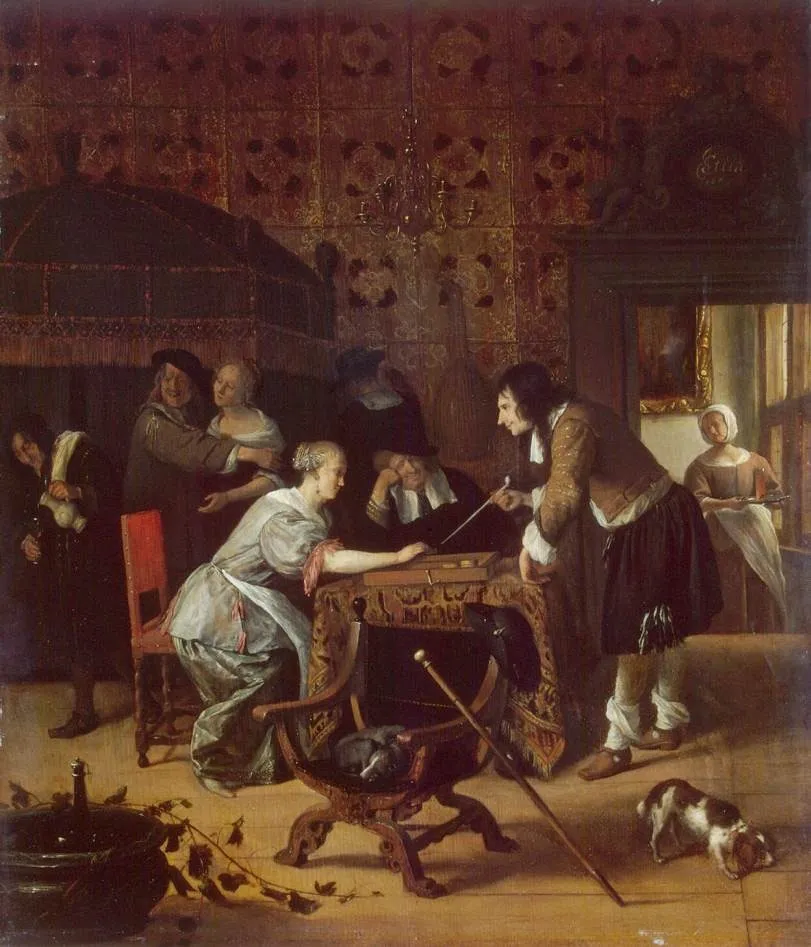
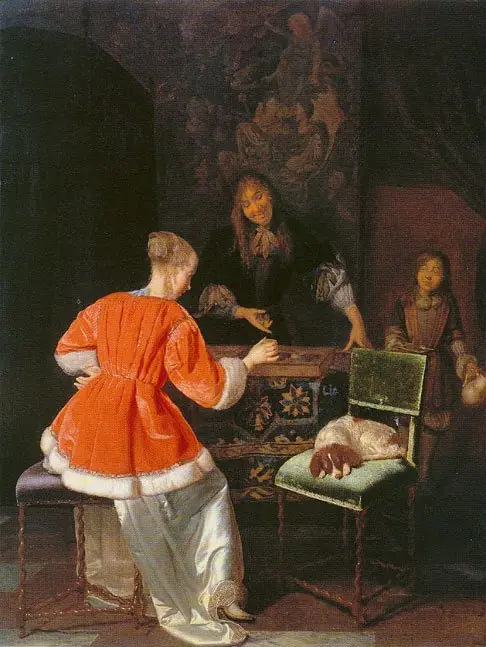
Tric-Trac Players is an oil painting by the Dutch Golden Age artist Jan Steen. It dates from 1667 and is held in the collection of the Hermitage Museum.
About this work
Subject & Meaning
The work operates as a genre scene that captures bourgeois recreation while subtly warning against worldly indulgence, a recurring theme in Steen's oeuvre.
The painting portrays a lively scene of upper-class leisure centered on the Dutch card game Tric-Trac. A woman and a man are engaged in play, surrounded by onlookers that include a young girl and an older gentleman, reflecting contemporary social customs and moral commentary on extravagance. The work operates as a genre scene that captures bourgeois recreation while subtly warning against worldly indulgence, a recurring theme in Steen's oeuvre.
Its iconography, emphasizing conviviality and potential excess, serves as visual allegory for 17th-century attitudes toward recreation and status. The composition reinforces social hierarchy through dress and posture, aligning with Dutch Golden Age moralizing traditions.
Technique & Style
Tric-Trac Players is executed in oil paint on panel, a support choice typical of Dutch cabinet pictures intended for close-up viewing. The composition measures 45.5 by 39 centimeters, a modest format suited to the intimate genre subject of two figures absorbed in a board game.
Stylistically, the work belongs to the Dutch genre tradition, depicting a woman and a man engaged in Tric-Trac. Jan Steen's handling of the scene reflects the narrative, anecdotal character associated with his genre painting, focusing on the players' interaction rather than on monumental scale.
History & Provenance
Painted circa 1667 in the Netherlands, this oil work shows a lively scene of the Dutch card game tric-trac with a woman and a man. Originally owned by Willem Lormier and Henrica Cunera Lormier-van Olden, it entered the collection of Catherine II of Russia before being acquired by the Hermitage Museum, where it remains on display as part of the Dutch masters exhibition.
The canvas measures 45.5 cm in height and 39 cm in width, reflecting the typical panel dimensions of mid‑17th‑century Dutch genre paintings.
Tric-Trac Players has been in the Hermitage Museum collection since the eighteenth century. Its chain of ownership passed through Willem Lormier, Henrica Cunera Lormier-van Olden, Catherine II of Russia, and François Tronchin before entering the museum's holdings.
The painting has been exhibited as part of "Dutch masters from the Hermitage," a presentation drawn from the museum's collection of Netherlandish painting.
Legacy
Tric-Trac Players has been recognized for its lively genre scene and role in Dutch Golden Age painting, influencing later interpretations of leisure activities in art. Its inclusion in the Hermitage Museum's collection and exhibitions such as Dutch Masters from the Hermitage has reinforced its reputation as a significant work by Jan Steen. The painting's provenance, including ownership by Catherine II of Russia, highlights its historical journey and cultural impact.
Overview
Jan Steen’s oil painting from 1667, titled Tric‑Trac Players, presents a lively interior where six figures gather around a modest game board. The work exemplifies the Dutch genre tradition, focusing on everyday amusement rather than grand historical narratives, and is currently part of the State Hermitage Museum’s collection.
Context
During the Dutch Golden Age, board games like tric‑trac were popular pastimes that symbolized both social cohesion and the unpredictability of fortune. Steen, known for his humorous and moralizing scenes, often used such settings to comment subtly on human behavior, employing familiar domestic environments to engage viewers.
Artist & collection
Artist
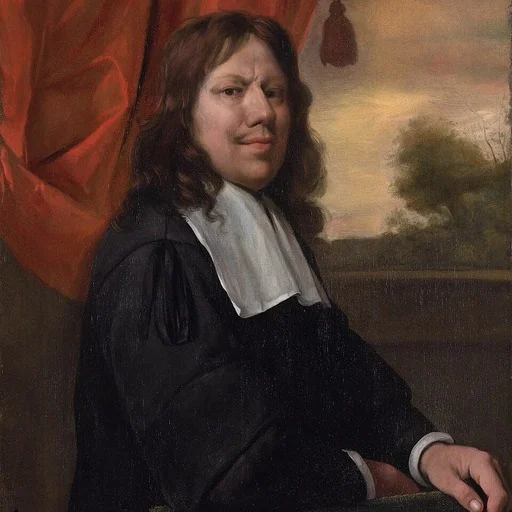
Jan Havickszoon Steen was a Dutch Golden Age painter, one of the leading genre painters of the 17th century.

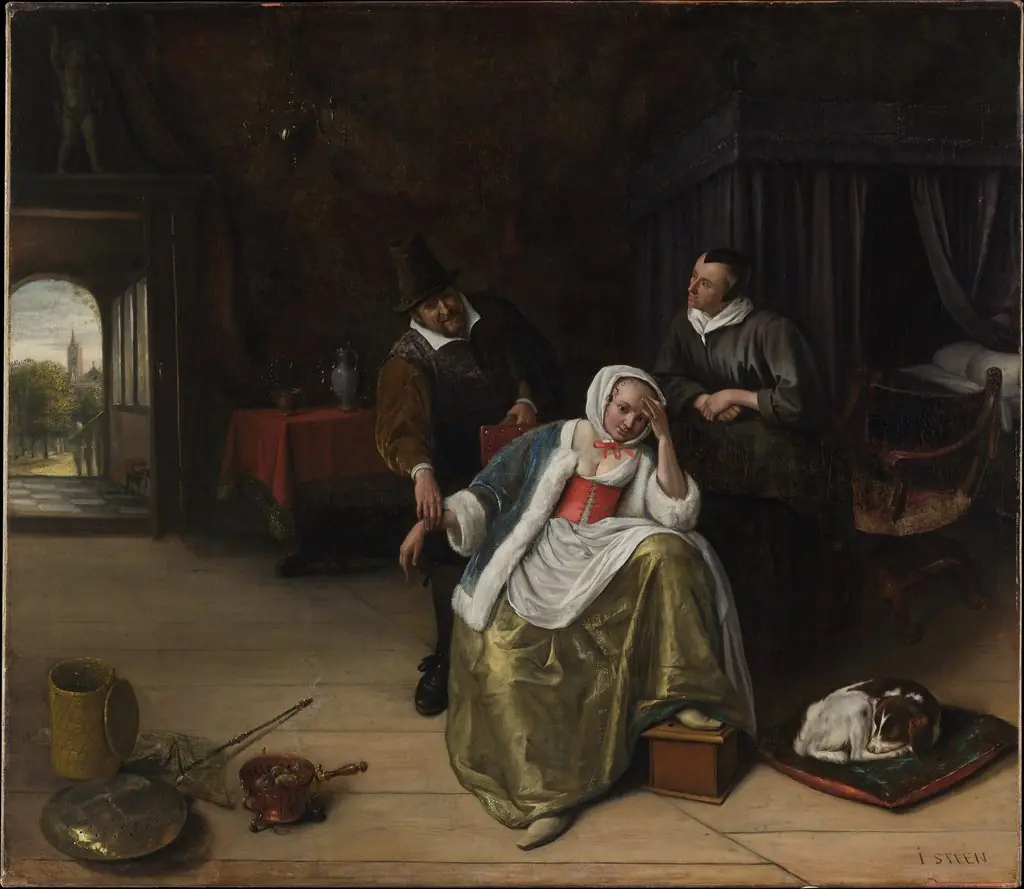 Paintings of physicians by Jan Steen
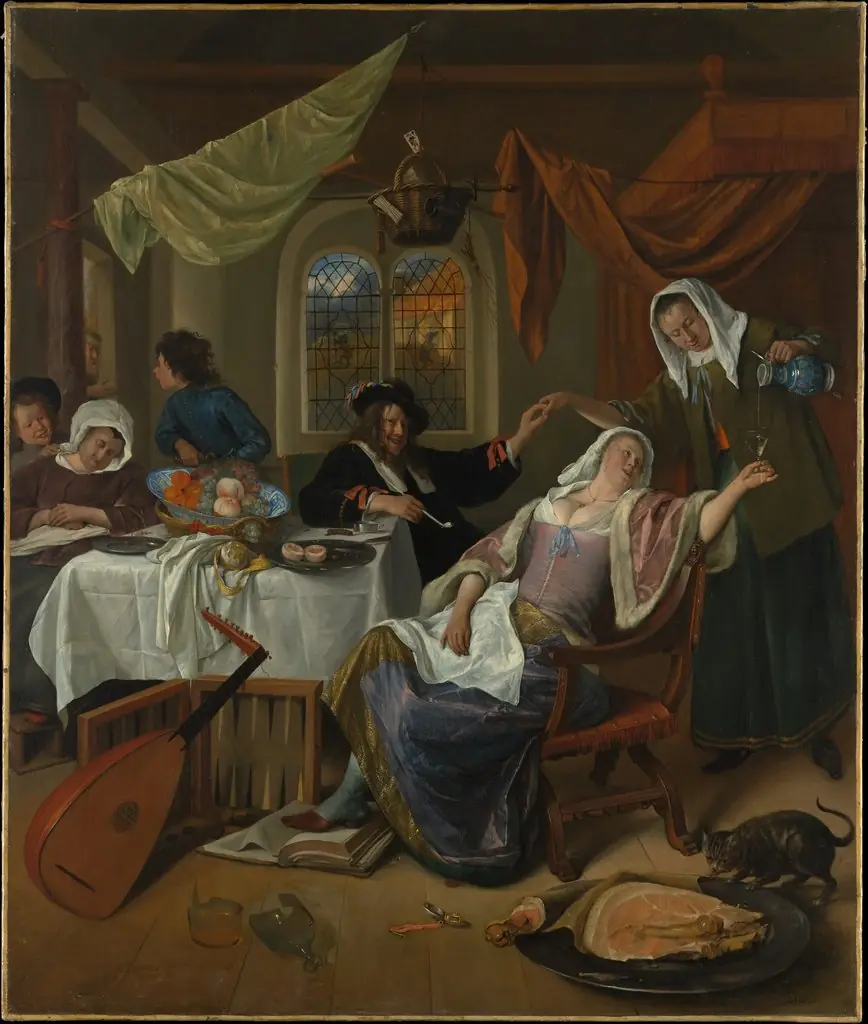 The Dissolute Household
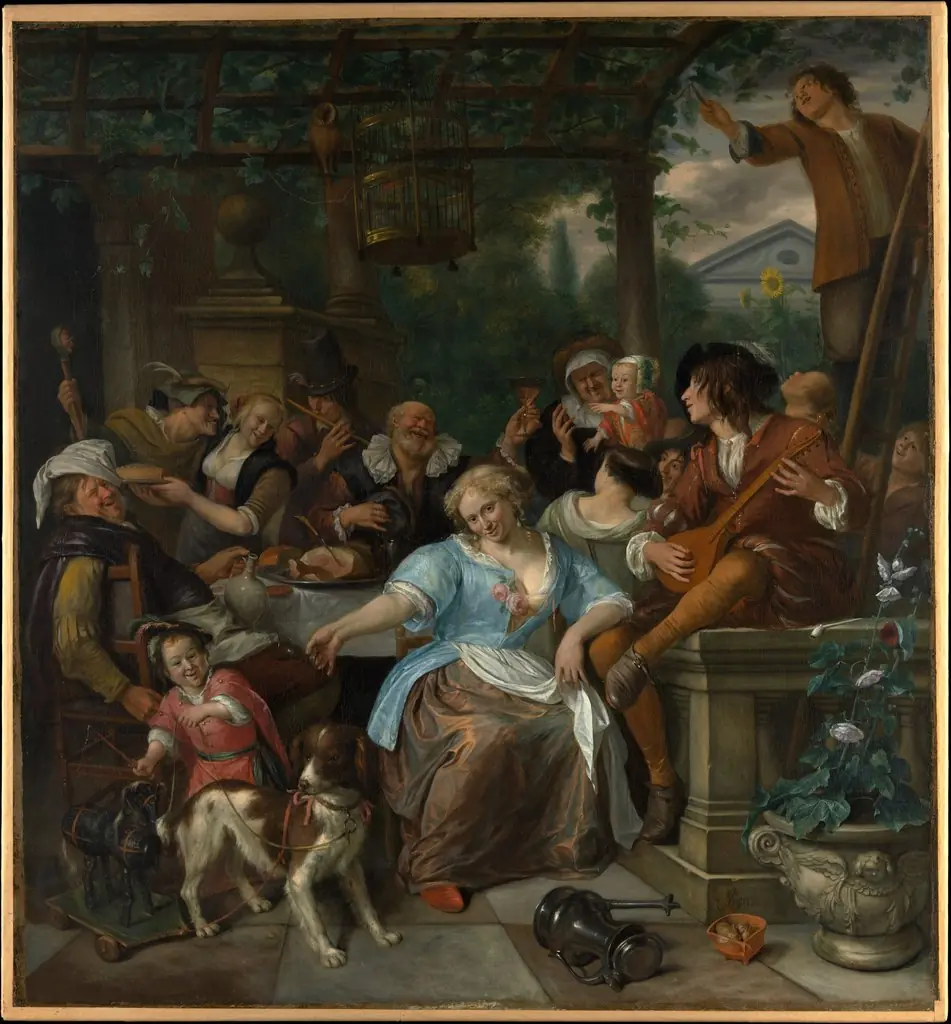 Merry Company on a Terrace
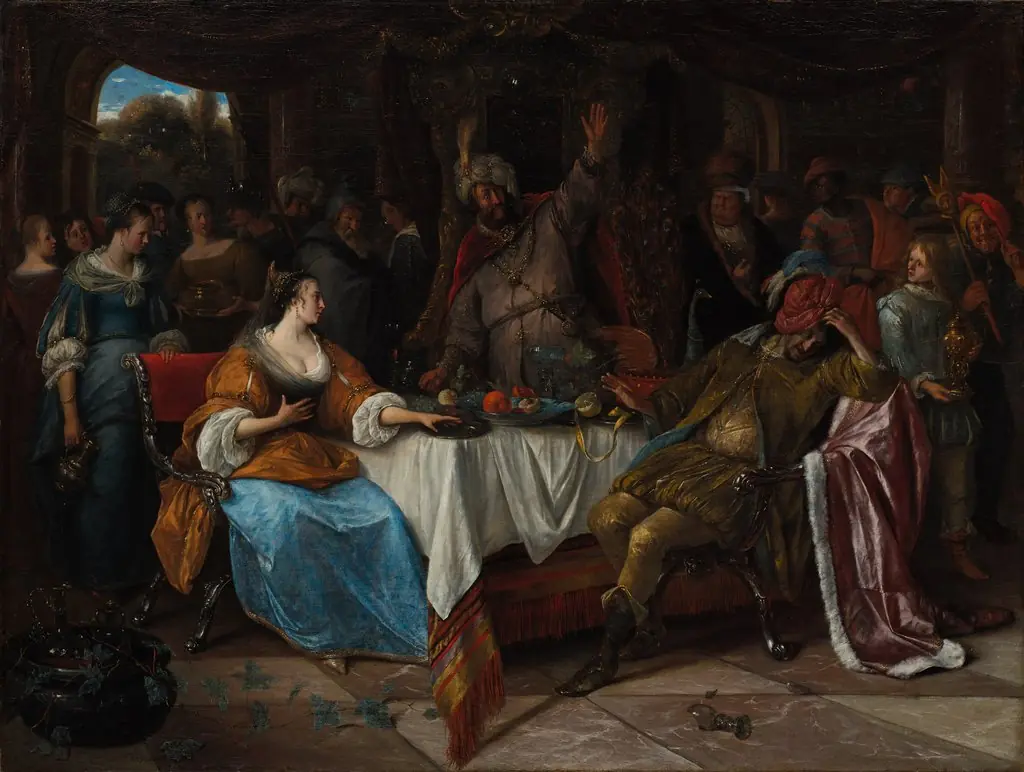 Esther, Ahasuerus, and Haman
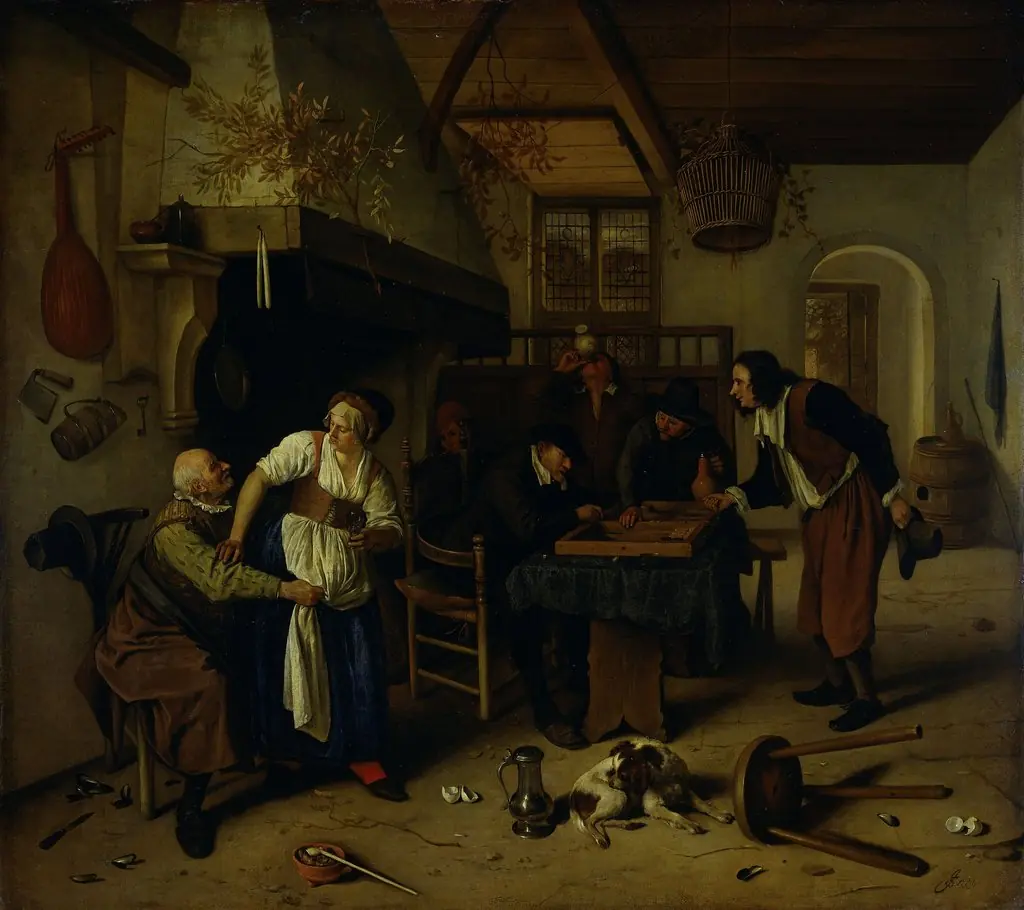 Interior of an inn with an old man amusing himself with the landlady and two men playing backgammon, known as 'Two kinds of games'
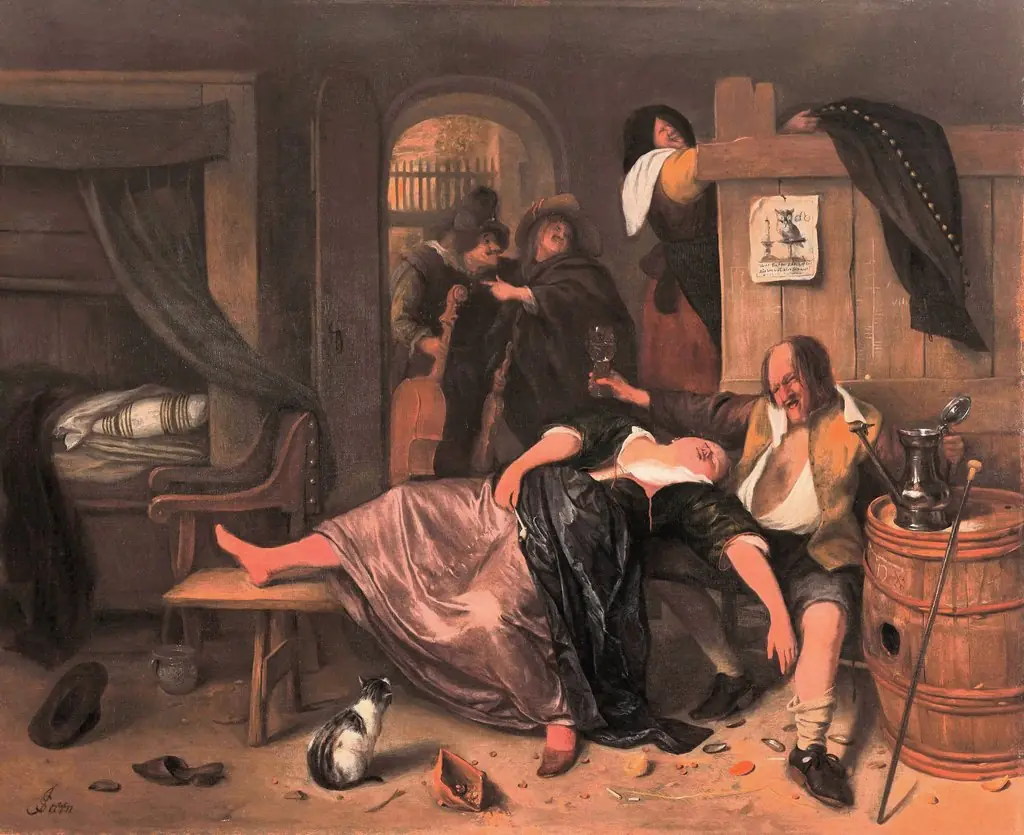 The Drunken Couple
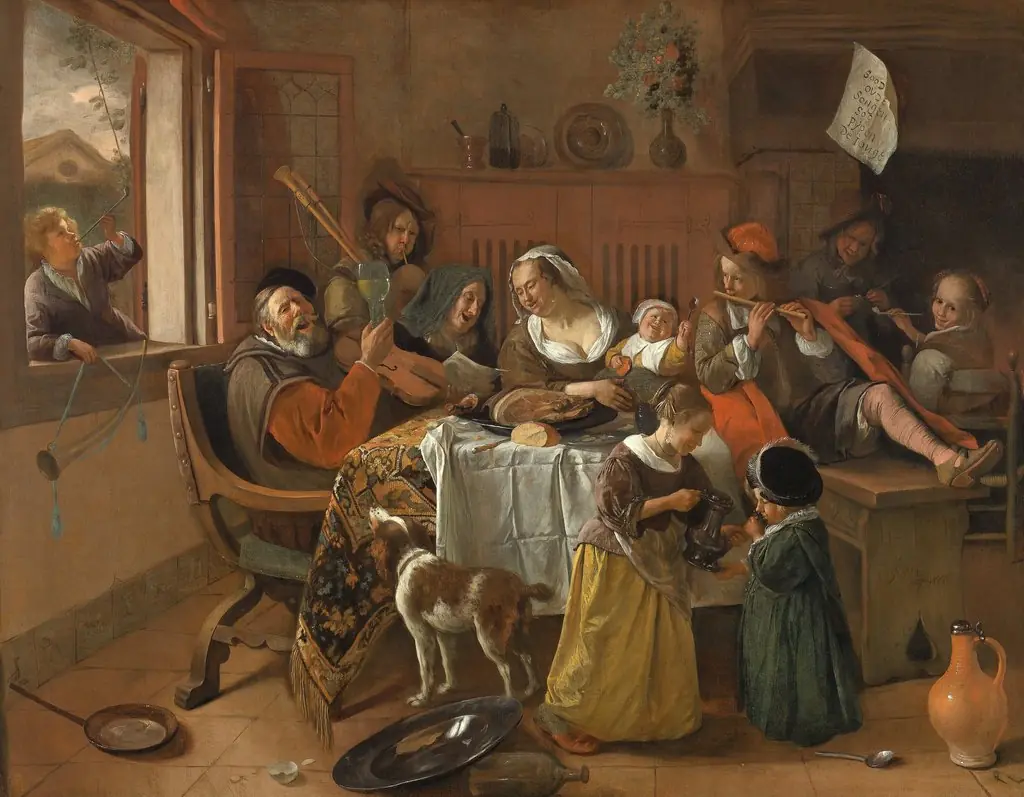 The Happy Family
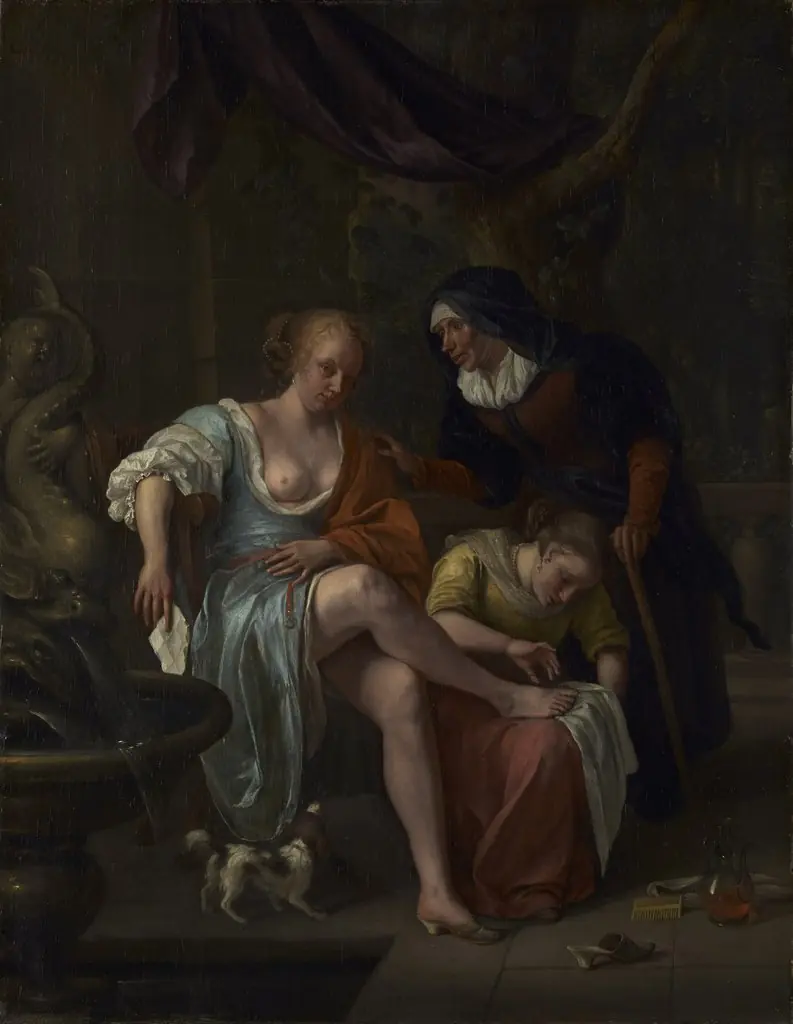 Bathsheba after the Bath