Artwork
Jacob and Esau are reconciled
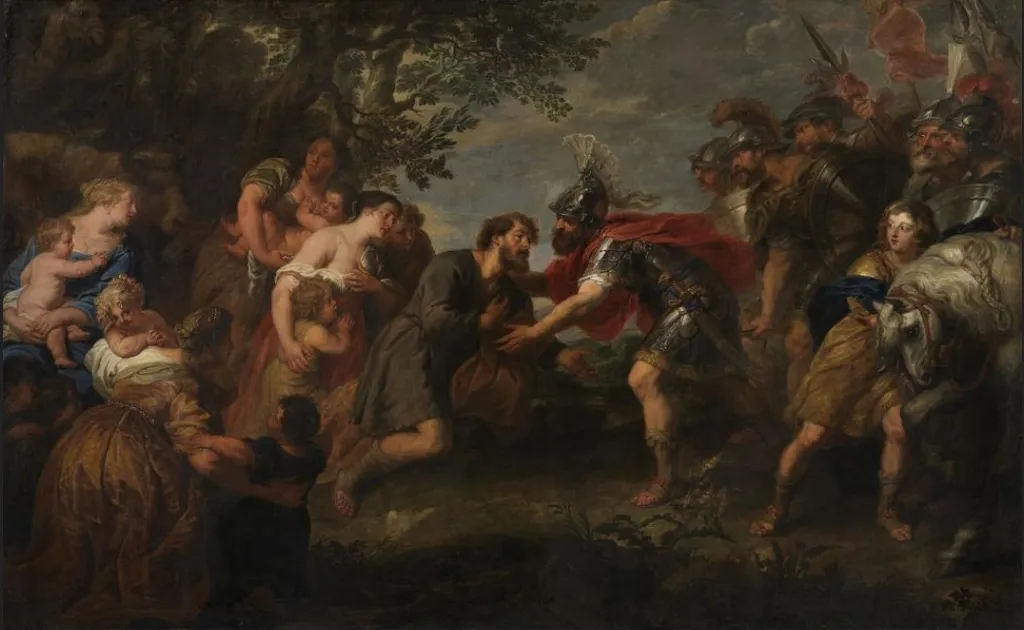
Jacob and Esau are reconciled is an oil painting by the Flemish Baroque painting artist Jan van den Hoecke. It dates from 1635 and is held in the collection of the Groeningemuseum.
About this work
Subject & Meaning
The cloud above the figures carries traditional iconographic weight, signaling divine presence and the reconciliation ordained by God.
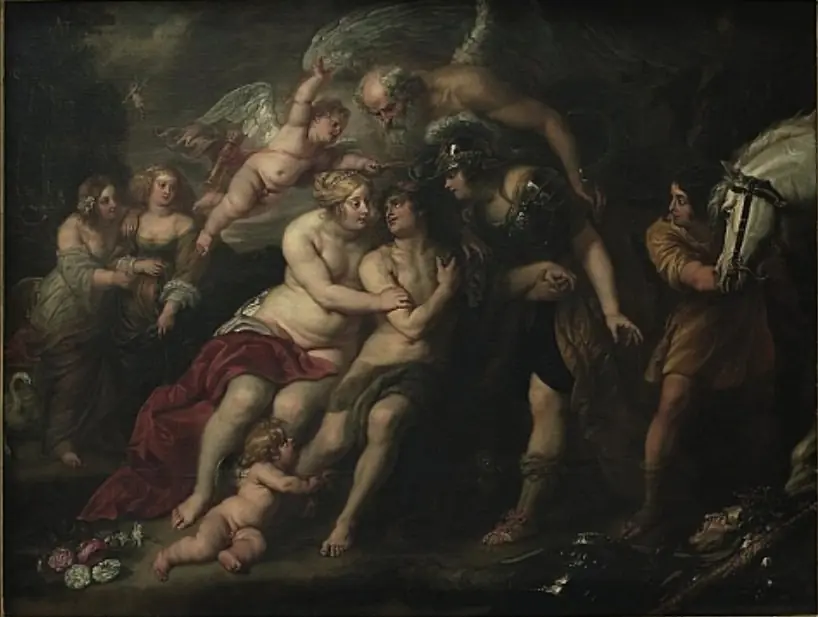
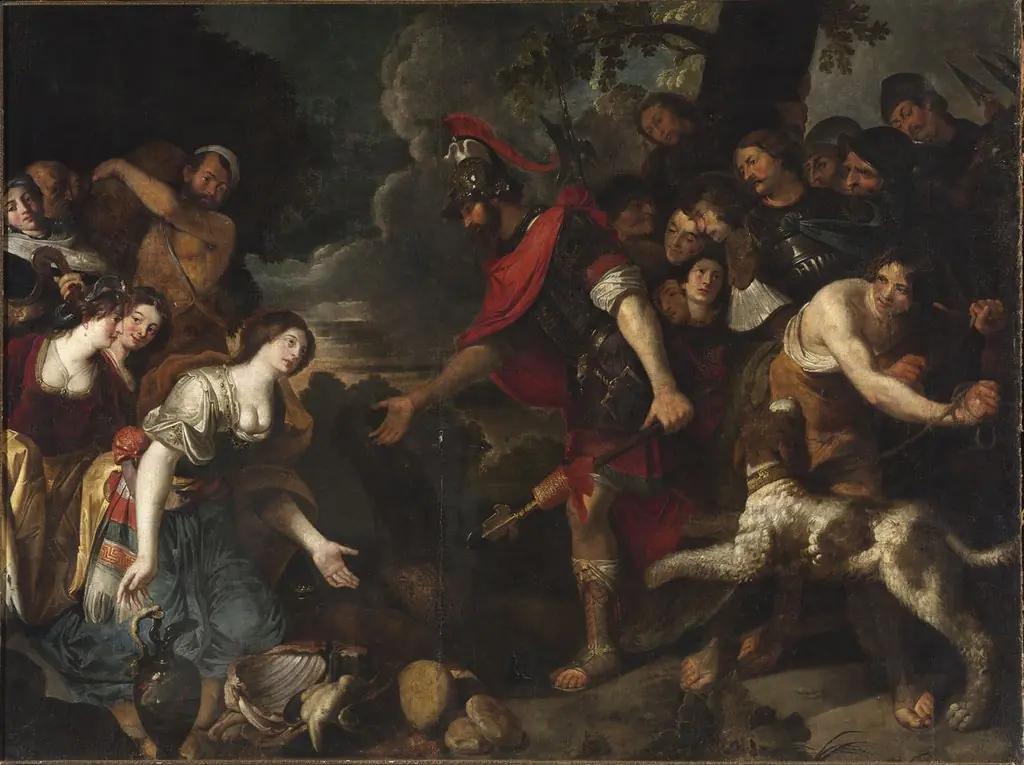
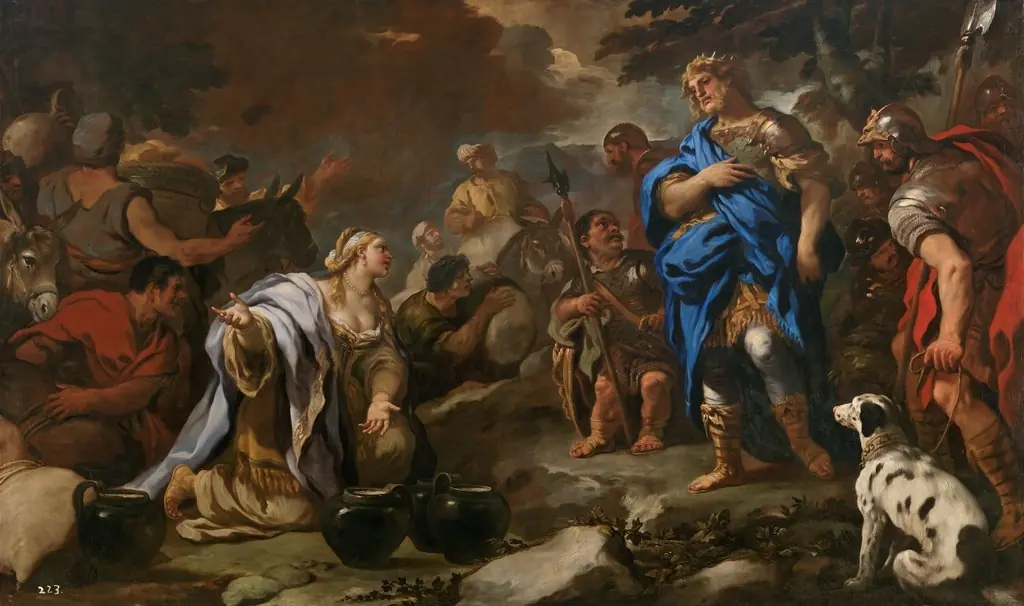
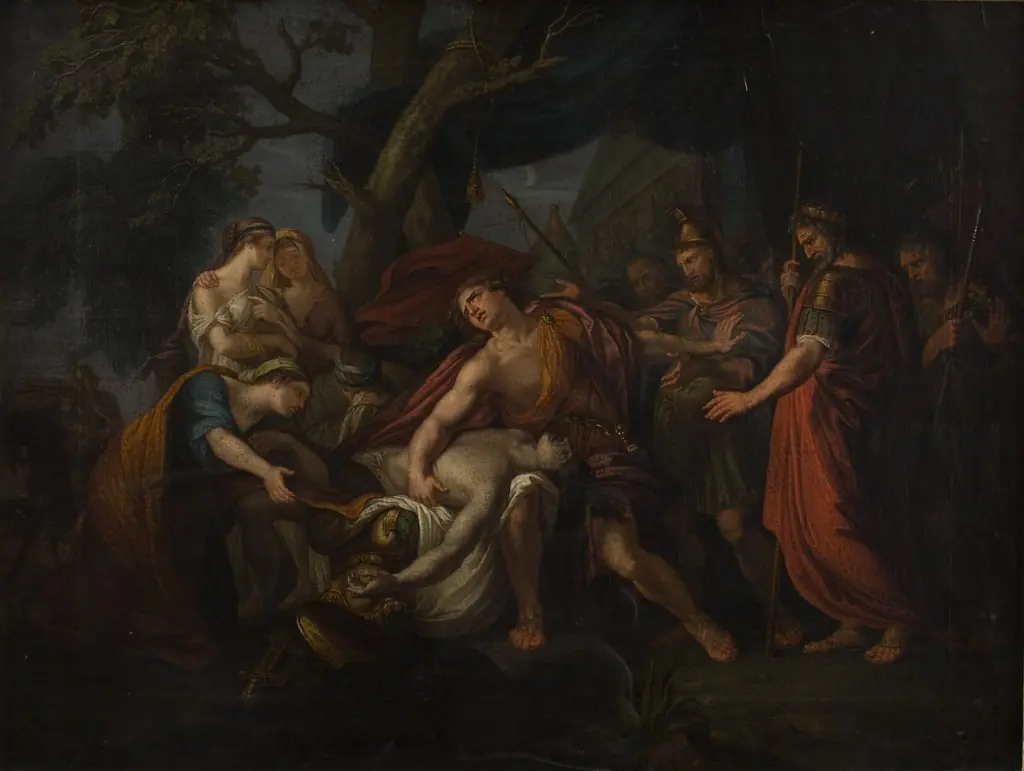
The painting depicts the Reconciliation of Jacob with Esau, a biblical episode drawn from Genesis in which the estranged brothers meet again after years of separation. The scene is set in a landscape with a tree and an open sky marked by a cloud, where Jacob, accompanied by women and children, approaches his brother Esau, who is shown in armor. The presence of the armed Esau alongside Jacob's vulnerable family group underscores the tension and the eventual peaceful resolution of their long-standing conflict.
The cloud above the figures carries traditional iconographic weight, signaling divine presence and the reconciliation ordained by God. The tree functions as a compositional and symbolic anchor, often associated with covenant and rootedness in biblical imagery. Together, these elements, the family group, the armored warrior, the tree, and the heavenly cloud, visualize the moment when hostility gives way to fraternal peace, presenting the reunion as both a human and a divinely sanctioned event.
Technique & Style
The painting is executed in oil paint on canvas, typical of 17th-century Flemish religious works, with a composition that emphasizes the moment of reconciliation between Jacob and Esau. The stylistic qualities reflect the Baroque emphasis on dynamic movement and emotive expression, while the handling of light and color underscores the narrative intimacy of the scene.
History & Provenance
Jacob and Esau are reconciled is an oil painting on canvas by Jan van den Hoecke. According to the available records, the work was created in 1635, with one source noting an inception range extending back to 1630. The painting is held in the collection of the Groeningemuseum, part of the Vlaamse Kunstcollectie, where it is currently located.
The sources do not provide further details regarding the circumstances of the commission, the original patron, or an earlier ownership chain prior to the work's acquisition by the Groeningemuseum. No intermediate owners, dealers, or sales transactions are documented in the available material.
The painting Jacob and Esau are reconciled by Jan van den Hoecke is housed in the Groeningemuseum as part of the museum's collection, cataloged under the inventory number Groeningemuseum inventory [unspecified in source]. It has been exhibited in the museum's thematic displays focusing on religious art, including presentations on biblical narratives such as the reconciliation of Jacob and Esau.
The work measures 378 cm in height and 237 cm in width, painted in oil on canvas in 1635.
Exhibition history includes its inclusion in the Groeningemuseum's presentation of Flemish religious paintings, highlighting narrative scenes from the Old Testament.
Overview
Jacob and Esau are reconciled is a 1635 oil painting by Flemish Baroque artist Jan van den Hoecke, depicting a biblical scene of reconciliation within a religious genre framework.
Context
As a product of the Flemish Baroque, the painting reflects the movement's emphasis on emotional depth and dramatic lighting, influenced by van den Hoecke's training under Rubens.
Legacy
While specific legacy details of Jacob and Esau are reconciled are not highlighted, its style and technique contribute to the broader understanding of Flemish Baroque art's evolution and van den Hoecke's contribution to it.
Artist & collection

Artist
Jan van den Hoecke (baptised on 4 August 1611 – 1651) was a Flemish painter, draughtsman and designer of wall tapestries.