Artwork
View of Arnhem
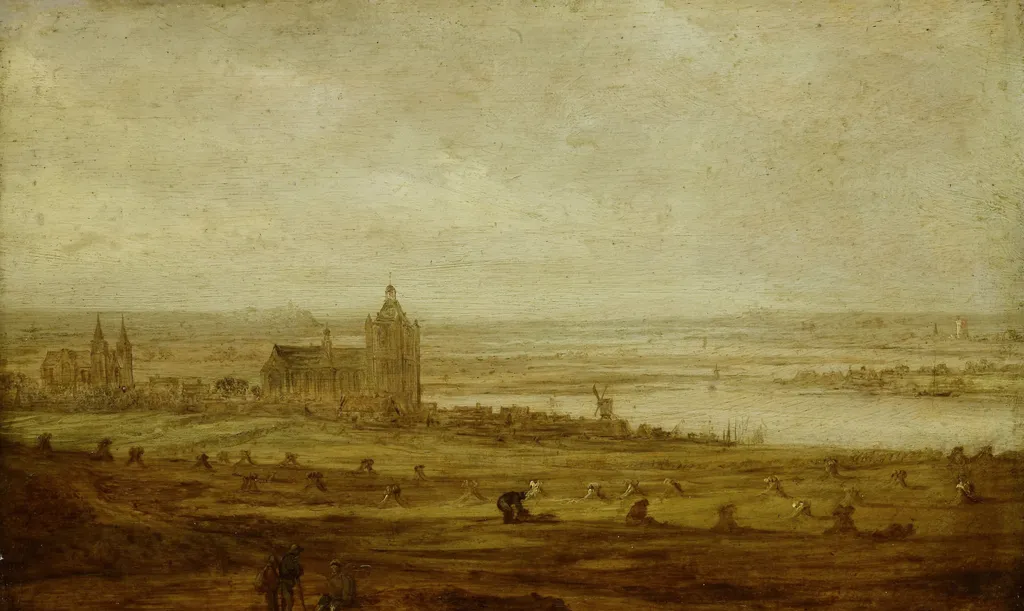
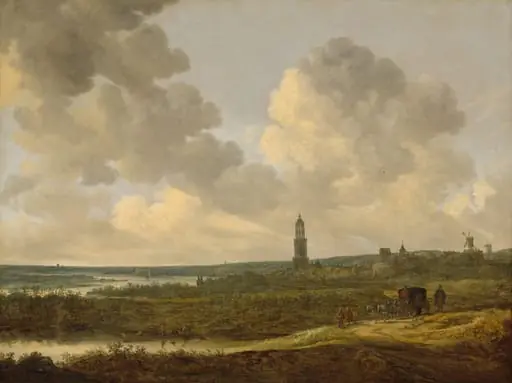
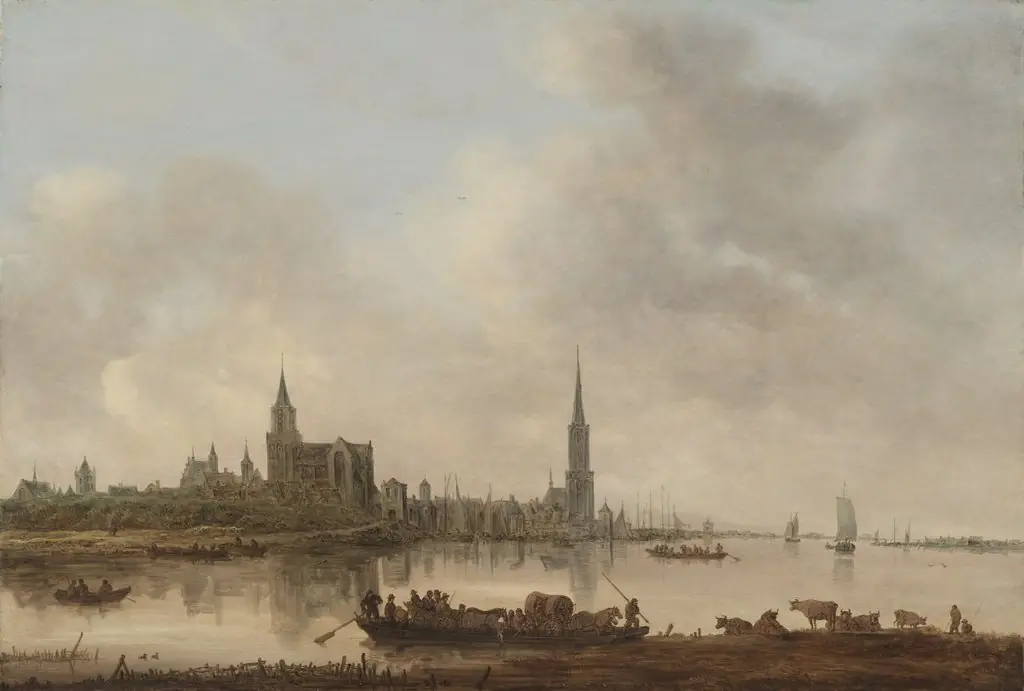
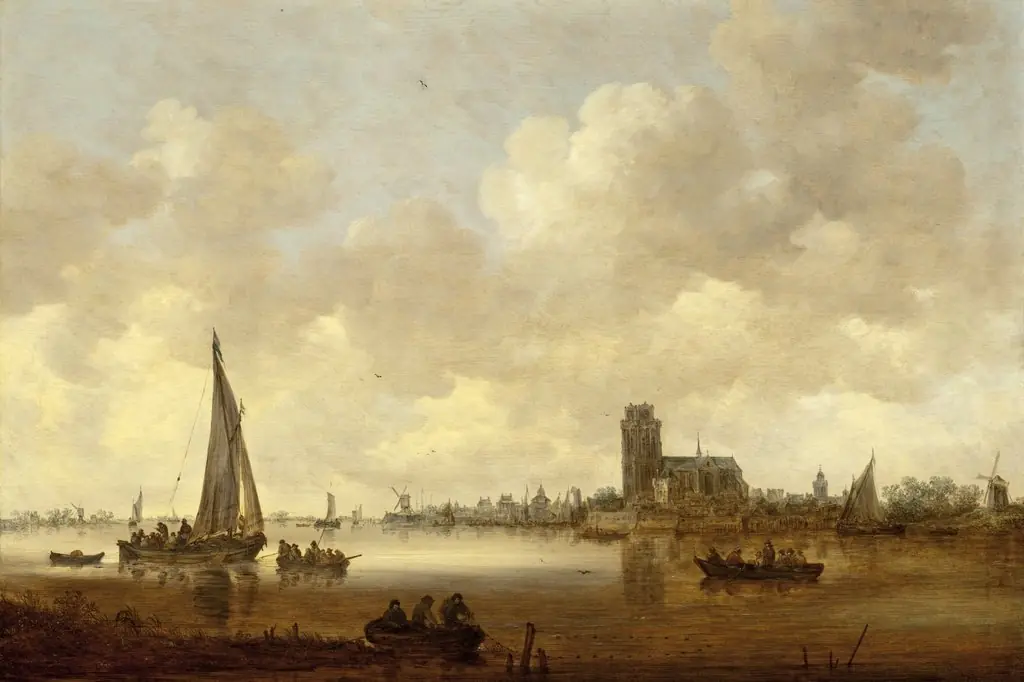
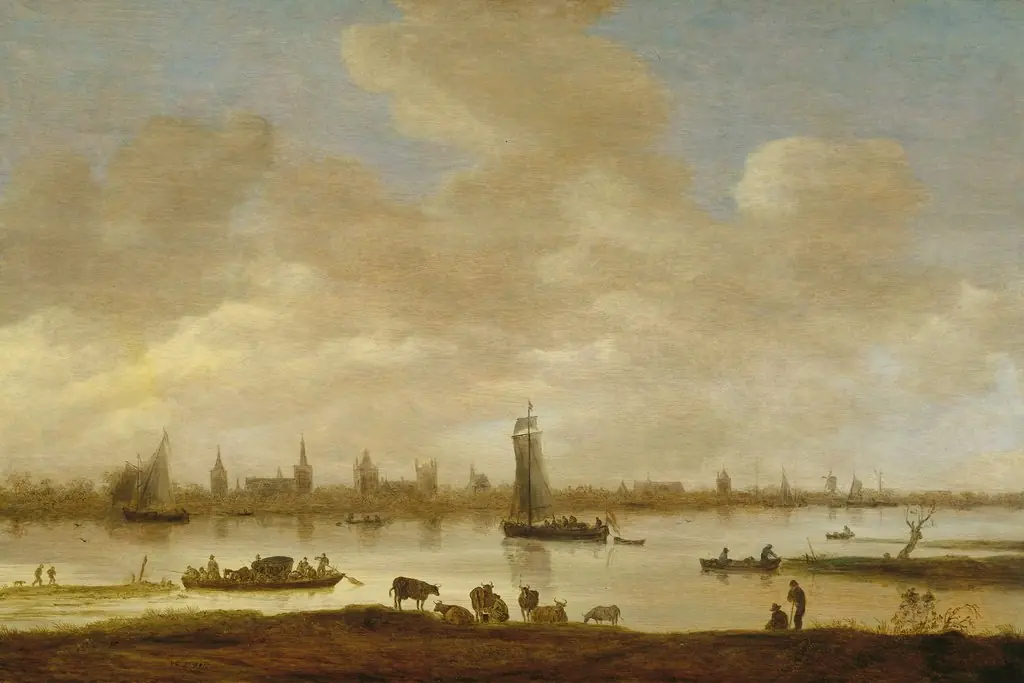
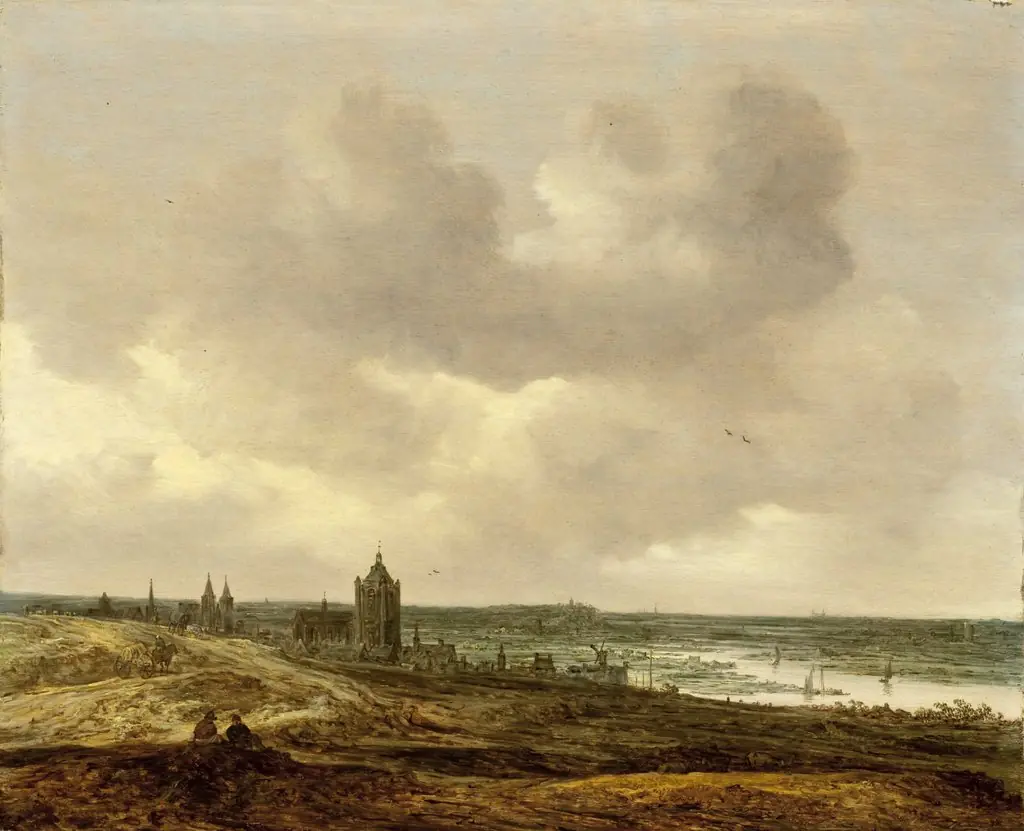
View of Arnhem is an oil painting by the Dutch Golden Age artist Jan van Goyen. It dates from 1644 and is held in the collection of the Rijksmuseum.
About this work
Subject & Meaning
Specific architectural landmarks are identifiable on the horizon, including the bell tower of the Great Church and the twin towers of the Sint-Walburgiskerk.
The painting depicts a panoramic view of the city of Arnhem as seen from across the Nederrijn river. The composition features a wide expanse of sky above a flat landscape, with the river diagonally separating the foreground from the distant city. Specific architectural landmarks are identifiable on the horizon, including the bell tower of the Great Church and the twin towers of the Sint-Walburgiskerk.
The foreground captures the bustling activity of the water, populated by several small boats. This work exemplifies tonal landscape painting, utilizing a restricted palette of brown and greenish hues to create depth through fading color nuances rather than linear perspective. The vast sky and horizontal bands of light and dark are characteristic of Dutch landscape art from the mid-seventeenth century.
Technique & Style
Executed in oil paint on a wooden panel in 1644, View of Arnhem exemplifies Jan van Goyen’s tonale landscape practice. The composition relies on a muted palette of close, earthy browns and muted greens, with broad horizontal bands of darker lower tones set against lighter upper zones, producing a calm spatial recession.
A diagonal stretch of the Nederrijn divides the foreground’s busy river traffic, small boats and bustling activity, from the distant cityscape. On the horizon the tall church towers of Arnhem rise, anchoring the scene. The handling combines delicate detail in the boats and buildings with atmospheric breadth in the expansive, lightly brushed sky, a hallmark of mid-seventeenth-century Dutch landscape painting.
History & Provenance
The work is dated 1646 by the Statens Museum for Kunst, Copenhagen, which holds the painting. It was commissioned or produced as part of a series of panoramic views of Arnhem that Van Goyen painted around this period.
The painting entered the Statens Museum for Kunst in 1837, acquired at the F.C. Bugges sale in Copenhagen. It was among the museum’s earliest significant acquisitions of older European art.
The painting is held by the Statens Museum for Kunst in Copenhagen, where it entered the collection in 1837 after acquisition at an auction of F.C. Bugges in Copenhagen.
No inventory or accession number is provided in the cited sources.
Context
Created in 1646, View of Arnhem stands as a quintessential example of Jan van Goyen's tonal landscape style, characterized by a restricted palette of brown and greenish hues and expansive skies typical of mid-seventeenth-century Dutch painting. The work is historically significant for its depiction of the city across the Rhine, utilizing atmospheric perspective rather than linear pathways to create depth. Although Van Goyen produced these panoramic views partly due to their commercial viability following his financial losses during the tulip mania, modern scholarship regards them as some of his finest achievements.
The painting's acquisition by the Statens Museum for Kunst in 1837 marked a pivotal moment for Danish art; it directly inspired local masters such as Christen Købke and Johan Christian Clausen Dahl, cementing Van Goyen's influence on the development of Danish landscape painting.
Legacy
View of Arnhem had a quiet but documented impact on later Northern European landscape painters. After its 1837 acquisition by the Statens Museum, the work attracted Danish artists such as Christen Købke and Johan Christian Clausen Dahl, who cited it as a model for tonal treatment of sky and water. Niels Lauris Høyen’s 1836 advocacy for Dutch art helped spread awareness of Van Goyen’s approach to atmospheric depth, influencing the generation of painters who emphasized muted colour harmonies and expansive horizons.
The painting’s compositional device of a diagonal river separating foreground activity from a distant skyline reappears in 19th‑century Danish panoramas, underscoring its role as a reference point for artists seeking to render the subtle light of the Dutch countryside.
Overview
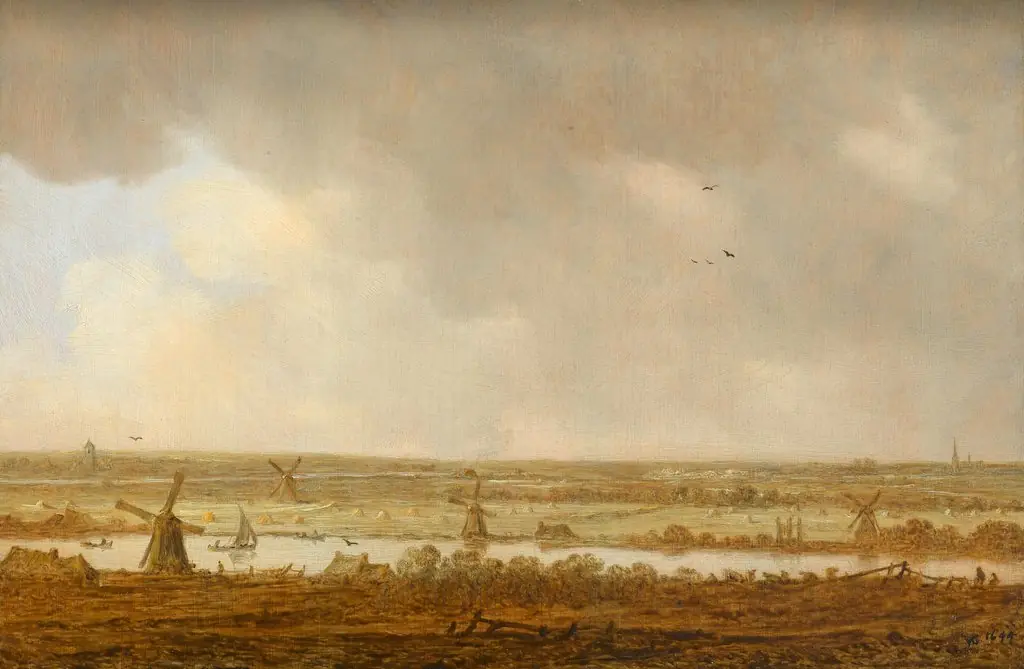
Jan van Goyen’s View of Arnhem (1644) is an oil painting that presents a quiet Dutch riverscape. The composition balances a broad, open field in the foreground with a calm stretch of water that recedes toward the horizon, under a muted sky. A solitary windmill and small groups of figures punctuate the scene, lending a sense of everyday life to the tranquil setting.
Own this work as a print
Artist & collection

Artist
Jan Josephszoon van Goyen (Dutch pronunciation: ; 13 January 1596 – 27 April 1656) was a Dutch landscape painter.