Artwork
A Town Gate in Leerdam
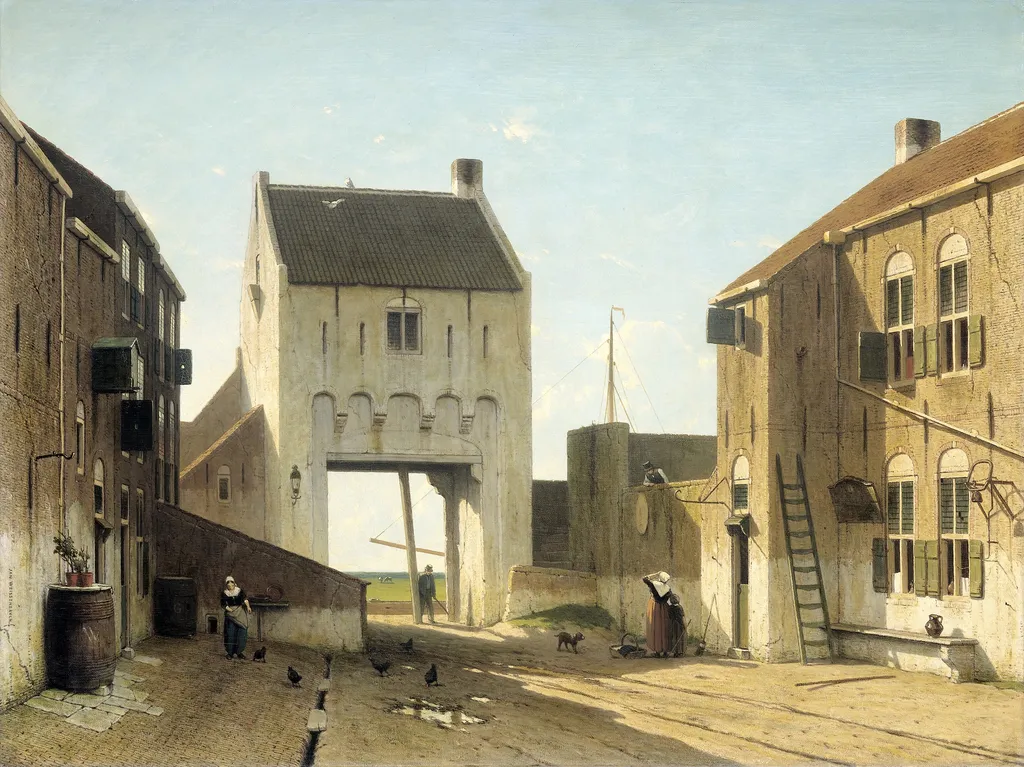
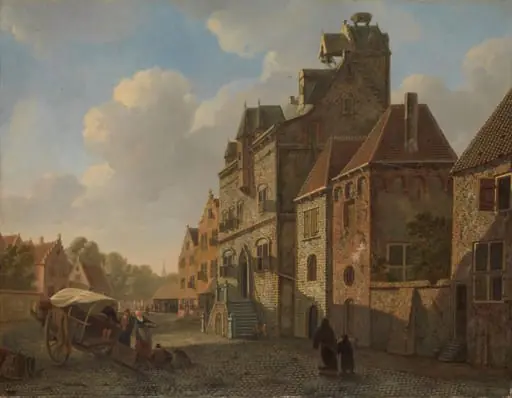
A Town Gate in Leerdam is an oil painting by the Dutch Golden Age artist Jan Weissenbruch. It is held in the collection of the Rijksmuseum.
About this work
Subject & Meaning
Weissenbruch specifically chose to illustrate the front of the structure, likely because it was more aesthetically pleasing than the rear.
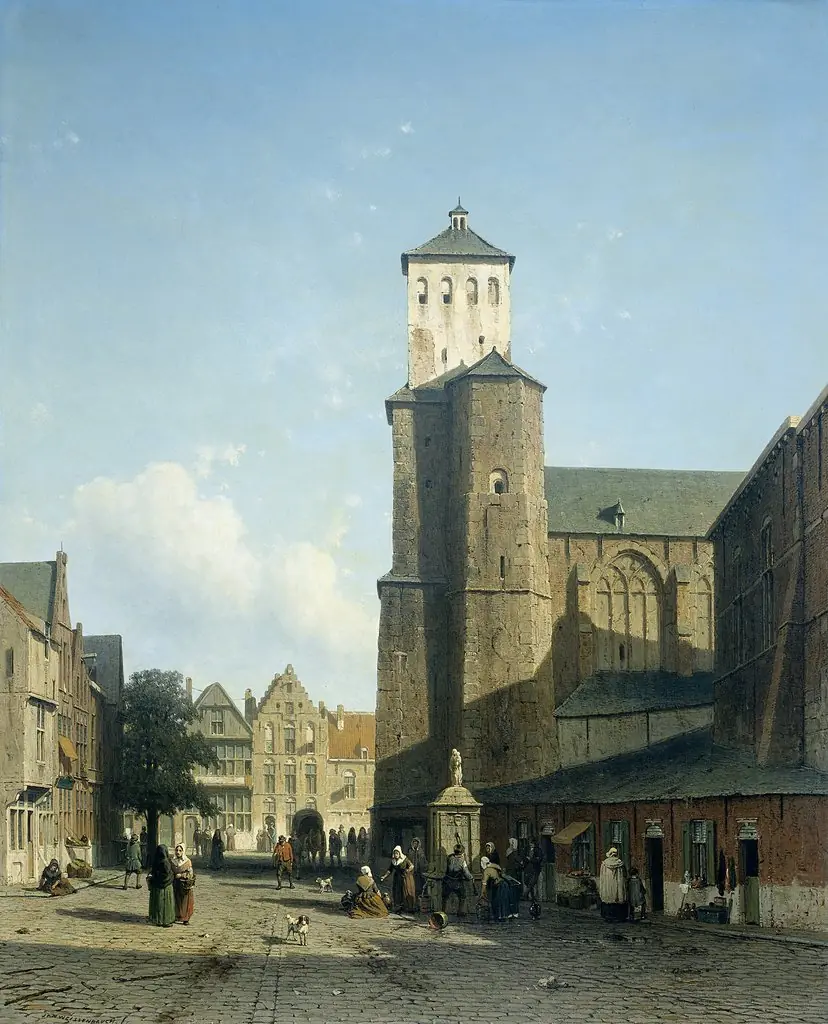
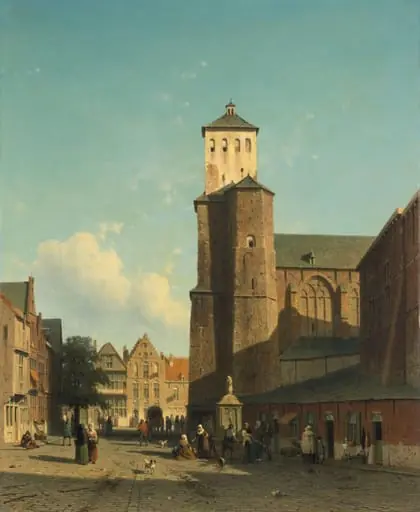
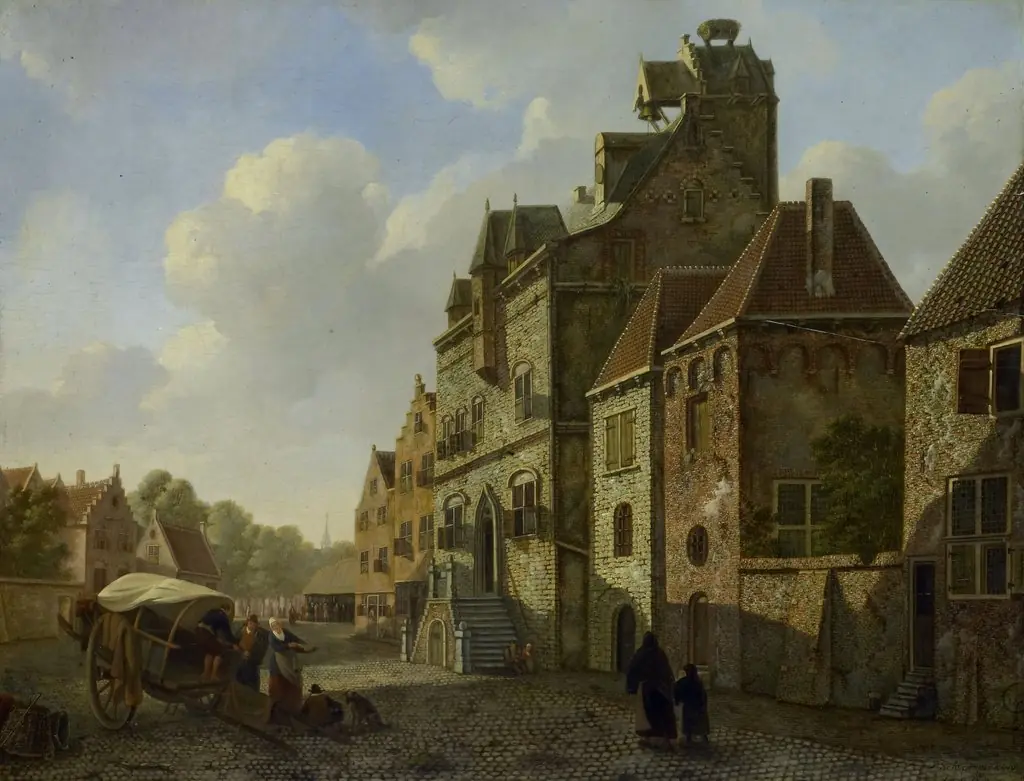
The painting depicts one of the town gates of Leerdam, a city in South Holland. The artist rendered the scene with significant detail, suggesting a faithful representation of the actual location, though the gate is portrayed wider than in reality. Weissenbruch specifically chose to illustrate the front of the structure, likely because it was more aesthetically pleasing than the rear.
The composition features puddles on the street under a clear blue sky with sunshine, implying that rain had recently fallen.
The work's realistic approach sparked local controversy shortly after its completion. A resident criticized the depiction via a local newspaper, arguing that elements such as free-roaming chickens and the unpaved road created an impoverished image of the city.
Technique & Style
Jan Weissenbruch executed this cityscape using oil paint on a canvas support. The work measures 77 cm in height and 104 cm in width. Stylistically, the painting is characterized by a high degree of detail, suggesting the artist aimed to depict the actual appearance of the Leerdam town gate, although he intentionally widened the structure for aesthetic effect.
The composition features a bright blue sky and sunlight illuminating the scene, contrasting with puddles on the street that imply recent rainfall. The foreground includes unpaved roads and free-roaming chickens, elements that contribute to a realistic, albeit somewhat gritty, portrayal of the urban environment.
History & Provenance
A Town Gate in Leerdam is an oil painting on canvas by the Dutch artist Jan Weissenbruch, created around 1868–1870, with 1869 commonly cited as the date of inception. The work depicts one of the town gates of the South Holland city of Leerdam, rendered in a highly detailed manner that suggests Weissenbruch based the scene on the actual location.
Shortly after its completion, the painting drew local criticism: a Leerdam resident complained through a local newspaper about how the town had been portrayed, objecting in particular to the loose chickens and unpaved road, which conveyed what the complainant considered an impoverished image of the city.
The painting is held in the collection of the Rijksmuseum in Amsterdam, where it remains located.
Context
The painting’s immediate reception was marked by controversy when a local resident publicly criticized Weissenbruch’s depiction of Leerdam in the press shortly after its completion. The complaint centered on the portrayal of a muddy street, loose chickens, and an unidealized urban scene, which the complainant argued projected an impoverished image of the town rather than its actual condition.
Scholarly discussions emphasize the work’s documentary realism and its departure from conventional picturesque city views. The unusually detailed rendering of the gate’s façade and the artist’s choice to depict the more visually appealing front rather than the rear underscore a deliberate aesthetic strategy. Within Weissenbruch’s oeuvre, the painting aligns with his broader focus on Dutch urban and architectural motifs during the late nineteenth century.
Overview
Jan Weissenbruch’s 1869 oil painting A Town Gate in Leerdam captures a modest street scene centered on a large white gate. The composition is quiet, with a few figures, a dark‑clad woman passing a barrel, another woman near a ladder, a dog and some pigeons, set against simple, low‑roofed buildings. The gate opens onto a brighter space that suggests a town square or harbor beyond.
Own this work as a print
Artist & collection
Artist
Johan Hendrik Louis Meijer (9 March 1809 – 31 March 1866) was a Dutch painter, etcher, lithographer, and draftsman.