Artwork
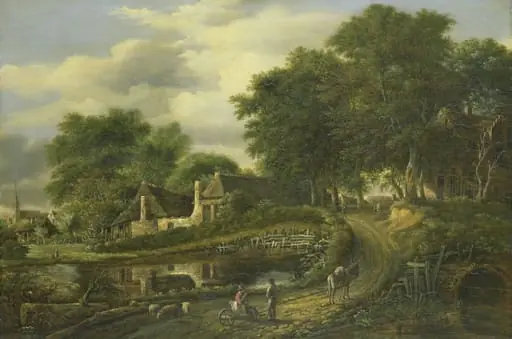
Farms on the Fringe of a Wood
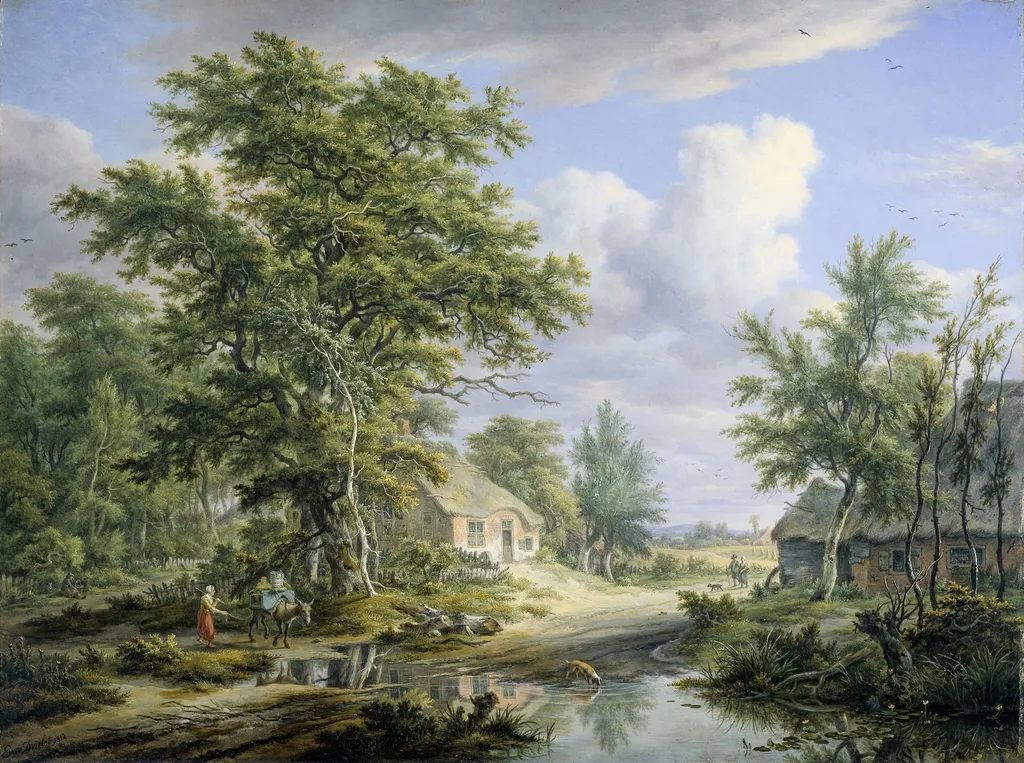
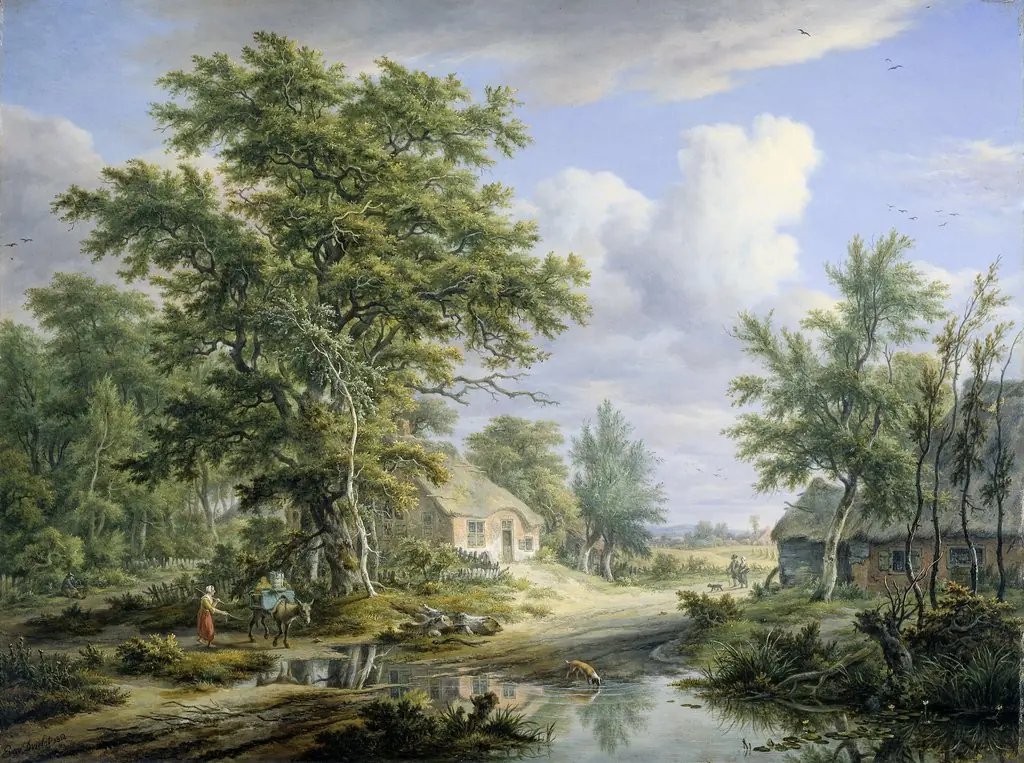
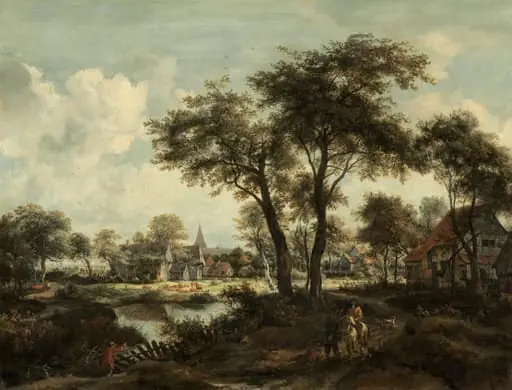
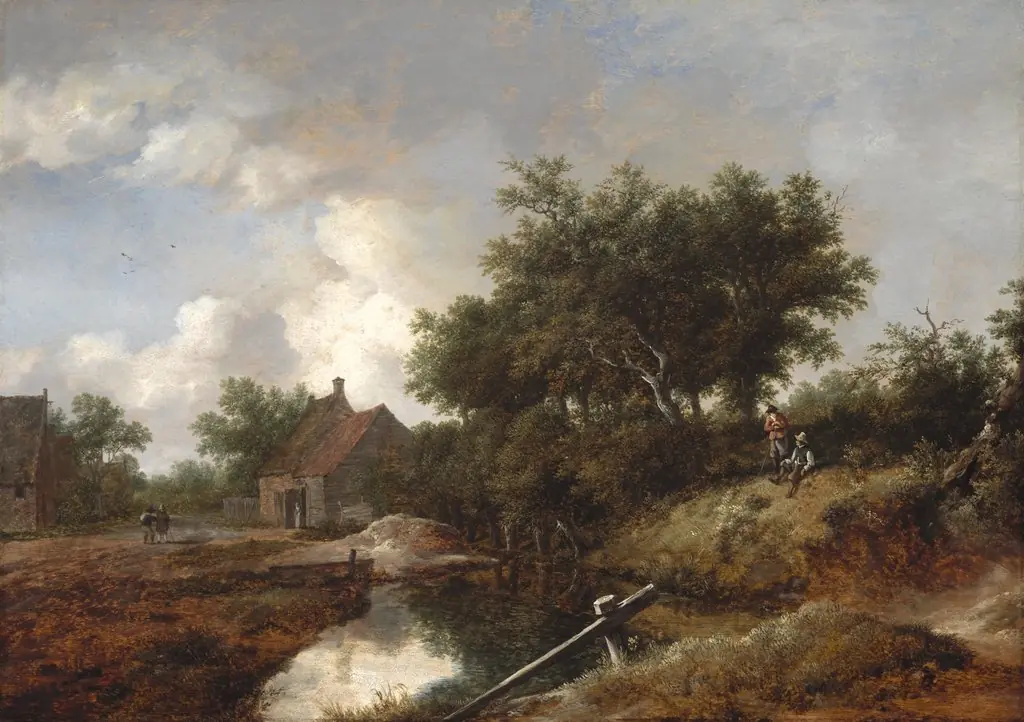
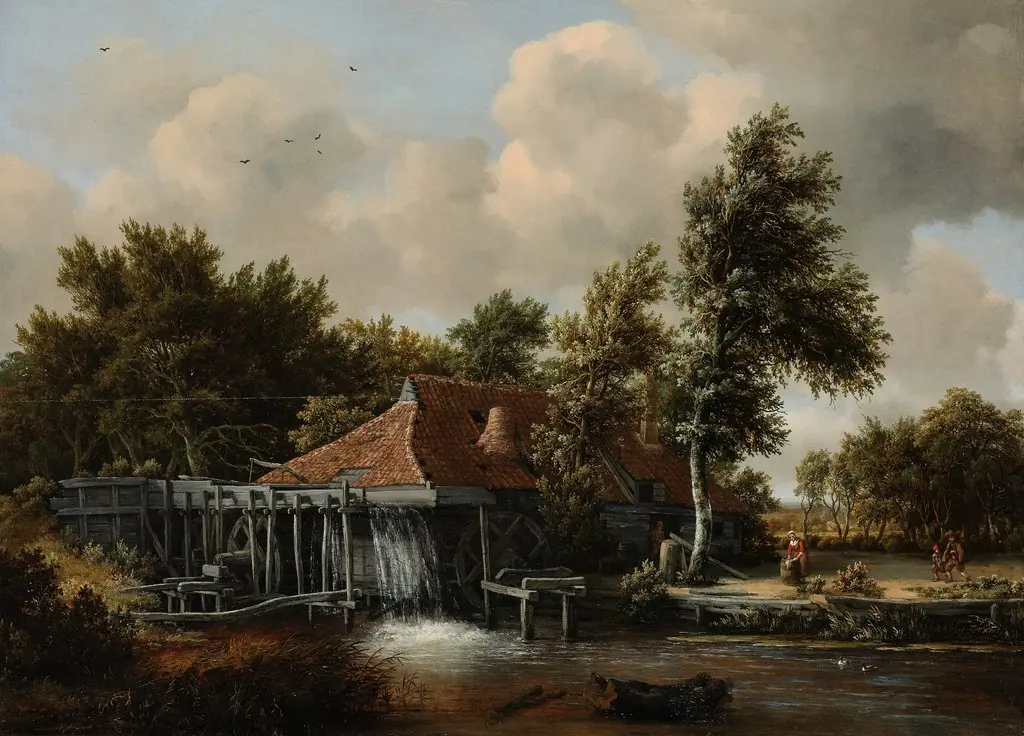
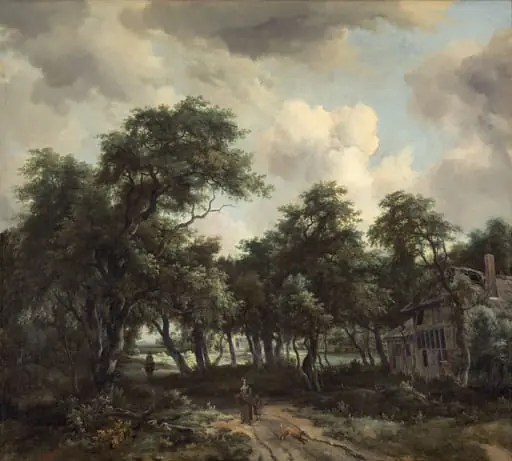
Farms on the Fringe of a Wood is an unspecified painting by the Biedermeier artist Egbert van Drielst. It dates from 1812 and is held in the collection of the Rijksmuseum. The work depicts a rural Dutch scene set near Laren in the Gooi region.
About this work
The dog’s ripples in the water and the way light hits the trees give it a quiet energy, even though the colors are soft and muted.
You see a dirt road cutting through two farmhouses, a few people walking, and a dog drinking from a puddle in the foreground.
The artist left no name, but the scene feels lived-in, like a quick snapshot of daily life in 1812. The dog’s ripples in the water and the way light hits the trees give it a quiet energy, even though the colors are soft and muted.
To see more quiet Dutch countryside scenes like this, visit the Rijksmuseum.
Technique & Style
Egbert van Drielst worked primarily as a wallpaper designer and painter, employing techniques characteristic of late 18th- and early 19th-century Dutch decorative arts. His landscapes were executed in watercolor and ink on paper, often depicting forest and rural scenes with a focus on atmospheric depth and compositional balance influenced by Dutch masters such as Jacob van Ruisdael and Meindert Hobbema. The work titled *Farms on the Fringe of a Wood* (1812) exemplifies his use of layered washes and fine linear detail to render naturalistic foliage and spatial recession. Executed on paper support, the piece reflects the handling typical of preparatory studies and small-format decorative paintings of the period, with minimal signs of aging or damage noted in archival records.
The painting’s formal qualities include a restrained palette of greens and earth tones, a horizon positioned at eye level, and a compositional structure that emphasizes quiet observation of the landscape. These stylistic choices align with the Drentse school of landscape painting, of which van Drielst was a notable figure. His approach to rendering trees and terrain featured meticulous attention to texture and light, achieved through controlled brushwork and subtle tonal gradation.
Condition assessments indicate stable pigment integrity, with no evidence of flaking or craquelure, consistent with works preserved in museum collections such as Rijksmuseum Twenthe and Museum Geelvinck-Hinlopen Huis. The painting’s survival is attributed to careful storage and limited exposure to light, as noted in conservation documentation.
Legacy
Egbert van Drielst is recognized for having significantly influenced numerous Dutch landscape painters of the 19th century. His dedication to depicting the forests and villages of Drenthe earned him the enduring epithet "Drentse Hobbema," linking his reputation to the 17th-century master Meindert Hobbema whose techniques he studied. While his large-scale wallpaper ensembles have rarely survived in their original locations, his landscape drawings remain popular collectibles. This lasting appreciation underscores his transition from a decorative painter to a respected artist whose nature studies shaped subsequent generations of Netherlandish landscape art.
Own this work as a print
Artist & collection
Artist
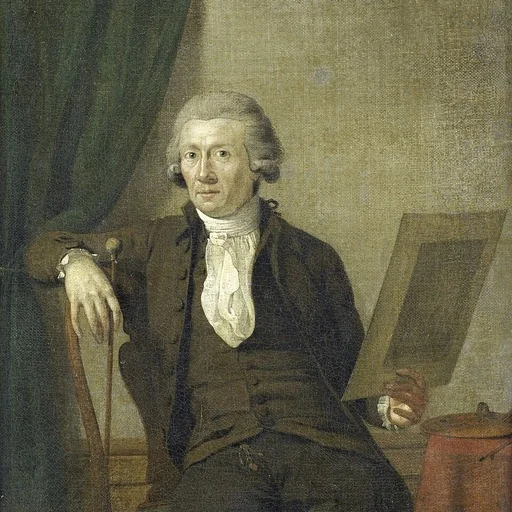
Egbert van Drielst (12 March 1745 – 4 June 1818) was a Dutch artist. He began his study of painting in a factory in his native Groningen which produced mainly lacquered objects. He soon went to Haarlem, where he became…