Artwork
Panoramic View of Antwerp from the East
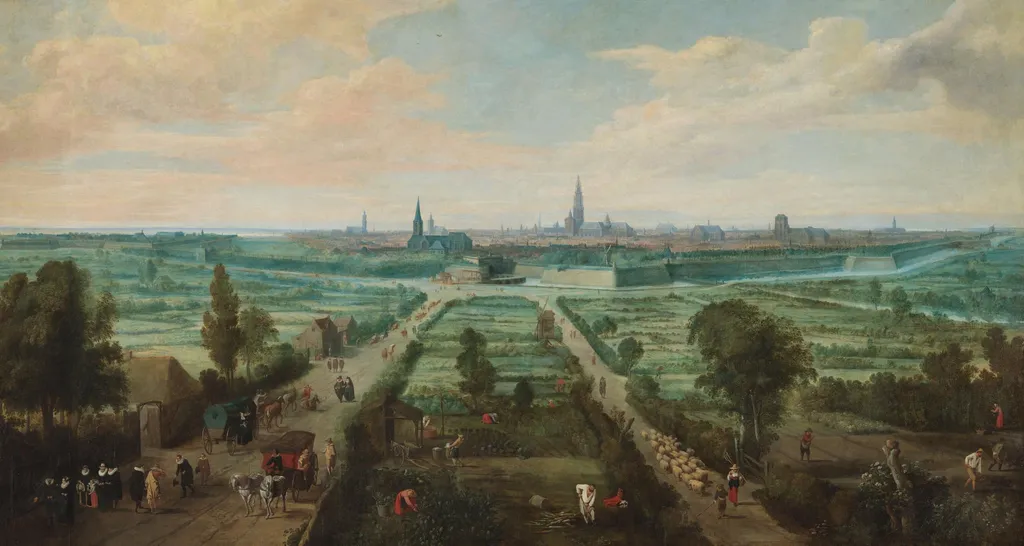
Panoramic View of Antwerp from the East is an unspecified painting by the Baroque artist Jan Wildens. It dates from 1636 and is held in the collection of the Rijksmuseum. The canvas presents an expansive east‑facing view of Antwerp and its surrounding countryside as seen from the landward side.
About this work
You see a wide, busy scene: Antwerp’s skyline in the distance, farmers working fields, travelers on roads, and sheep grazing.
You see a wide, busy scene: Antwerp’s skyline in the distance, farmers working fields, travelers on roads, and sheep grazing.
The painting was made in 1636, but no one knows who painted it. It’s like a snapshot of daily life, no heroes, just people going about their day. The artist paid close attention to small details, like the way light hits the buildings.
If you like this kind of cityscape, look up more works in the Baroque movement.
Technique & Style
Technique & Style
The work is an oil painting on canvas executed in 1636. It adopts a broad, decorative handling consistent with Wildens’s Antwerp practice in the 1620s–1630s, characterized by loose composition and softly blended passages that privilege overall harmony over minute detail. The handling recalls Rubens’s late landscape manner, with areas of wet-into-wet application and atmospheric, vibrating light that unifies sky, water, and built forms.
The palette is restrained yet luminous, favoring subdued greens, warm ochres, and pearly grays to convey the low light of an overcast day over the Scheldt.
Formal qualities center on a panoramic format that emphasizes horizontal sweep and symmetrical balance. The city’s fortified skyline is arranged along a central axis, anchored by the spire of the Onze-Lieve-Vrouwekathedraal and framed by gently graded planes of river, meadows, and distant hills. Figures populate foreground roads and riverbanks in carefully scaled vignettes that punctuate the expanse without disrupting its calm rhythm, reflecting Wildens’s preference for serene, ordered compositions.
History & Provenance
Jan Wildens executed the panoramic city view titled Panoramic View of Antwerp from the East in 1636. This large-scale oil on canvas work, measuring 197.5 by 367 cm, represents a mature phase in the artist's career where he produced significant independent landscapes following his extensive collaborations with Peter Paul Rubens.
The painting is currently held in the collection of the Rijksmuseum in Amsterdam. While Wildens created two city views of Antwerp around 1635 for the decorations celebrating the Joyous Entry of Cardinal-Infante Ferdinand, the specific commission details and early ownership history of this particular 1636 panorama are not explicitly detailed in the available records beyond its creation date and current location.
Jan Wildens's Panoramic View of Antwerp from the East (1636) is held in the collection of the Rijksmuseum in Amsterdam. The work is executed in oil on canvas, measuring 197.5 cm in height and 367 cm in width. This large-format landscape is one of the artist's most significant independent compositions, distinguished by its expansive dimensions.
While the painting is noted as a key piece in the Amsterdam museum's holdings, the provided sources do not record a specific inventory or accession number for the work. Furthermore, no details regarding the artwork's exhibition history or specific display dates are mentioned in the available documentation.
Context
Jan Wildens was a central figure in Flemish Baroque landscape painting, renowned for his serene, realistic compositions that balanced decorative form with detailed observation. His artistic development was significantly shaped by his Italian sojourn (1613–1616), where exposure to Paul Bril's work fostered a shift toward greater realism. Upon returning to Antwerp, Wildens became a key collaborator in Peter Paul Rubens' workshop, specifically tasked with painting landscape backgrounds for major history paintings and tapestry series like the Decius Mus cycle.
While his early work reflected influences from Joos de Momper and Jan Brueghel the Younger, his mature style of the 1620s and 1630s adopted a broader technique and symmetrical composition reminiscent of Rubens, yet distinct in its calm atmosphere. Art historians note that while Wildens was a diligent executor of Rubens' visions, he possessed less creative freedom than contemporaries like Frans Snyders. His independent large-scale city views, such as this 1636 panorama, demonstrate his capacity for grand, autonomous composition beyond collaborative studio work.
Overview
The canvas presents an expansive east‑facing view of Antwerp and its surrounding countryside as seen from the landward side. In the distance the city’s fortified silhouette rises above fields where farmers sow, reap and dig, while roads bustle with travelers, wagons, pedestrians and a shepherd tending sheep. The composition captures a moment of ordinary activity across urban and rural zones.
Subject & Meaning
The work functions as a documentary tableau of 17th‑century daily life, emphasizing the coexistence of commerce, agriculture and travel rather than heroic narrative. Figures are depicted in modest tasks, farmers at work, merchants on the road, suggesting a balanced view of the city’s economic and social networks without overt moralizing.
Artist & collection
Artist
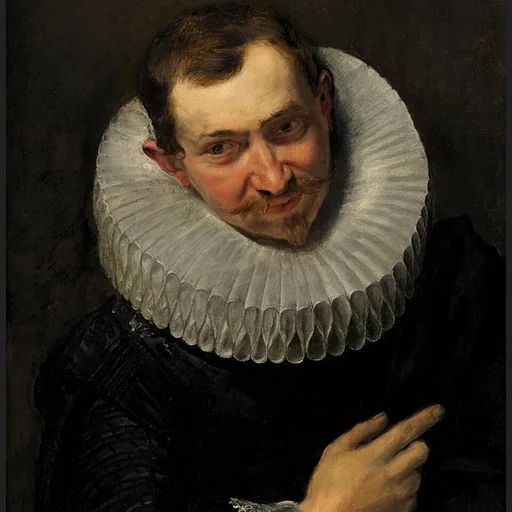
Jan Wildens (1586 in Antwerp – 16 October 1653 in Antwerp) was a Flemish painter and draughtsman specializing in landscapes.

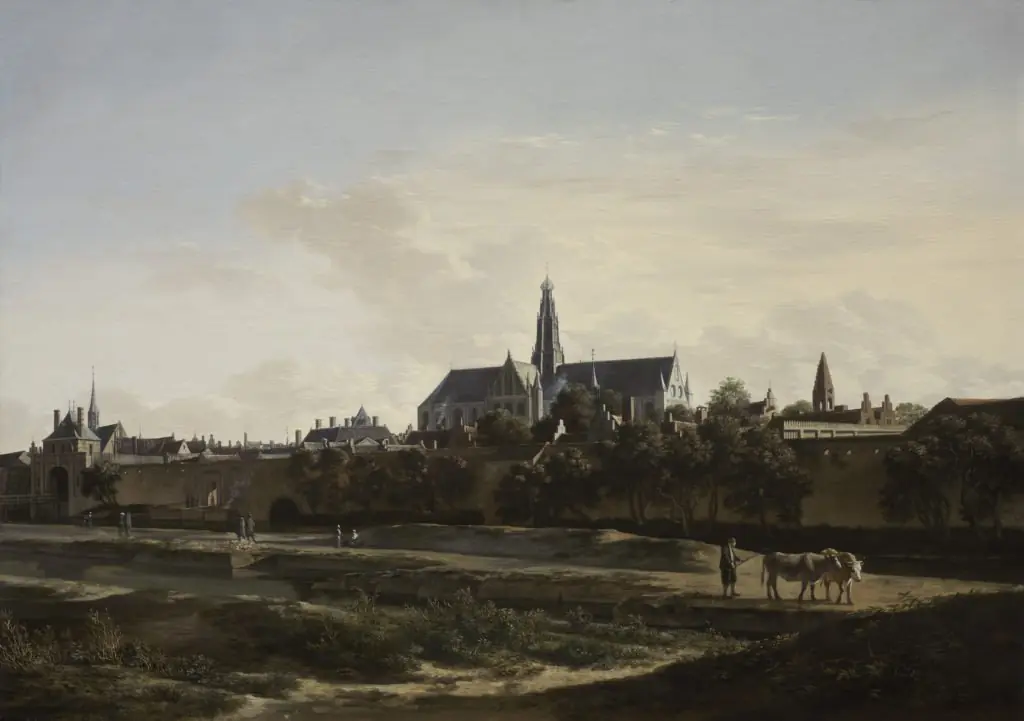 A View of Haarlem
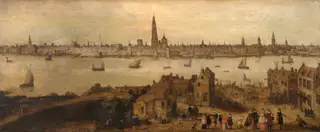 The Antwerp Waterfront
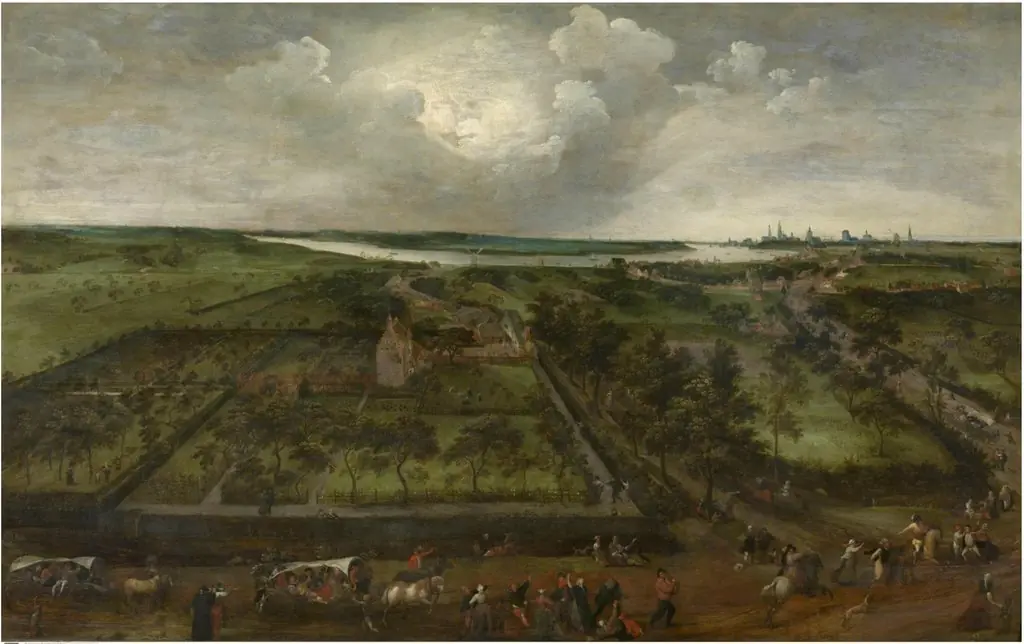 Kiel near Antwerp
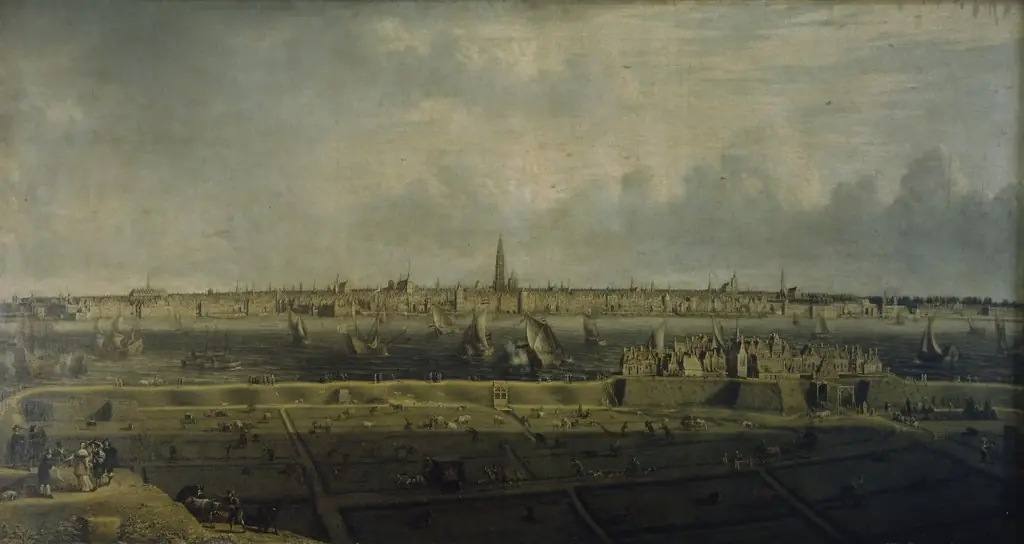 The Antwerp Waterfront and a part of the Vlaams Hoofd
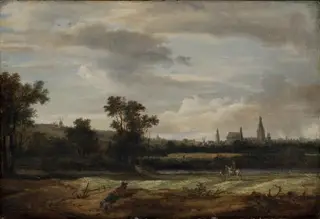 Landscape with a View Towards a Town
 Untitled
 View on Brussels
 Extensive Landscape
 Hendrik Trip’s Cannon Foundry in Julitabruk, Sweden
 Dresden from the Right Bank of the Elbe, above the Augustusbrücke