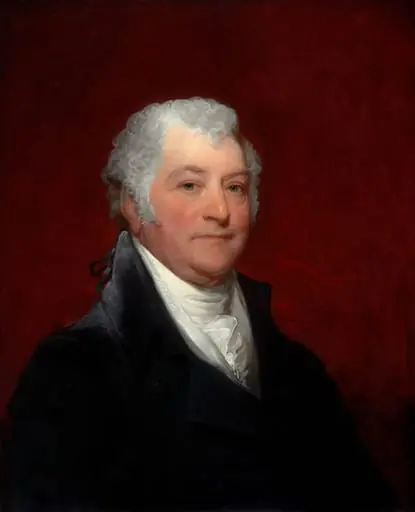
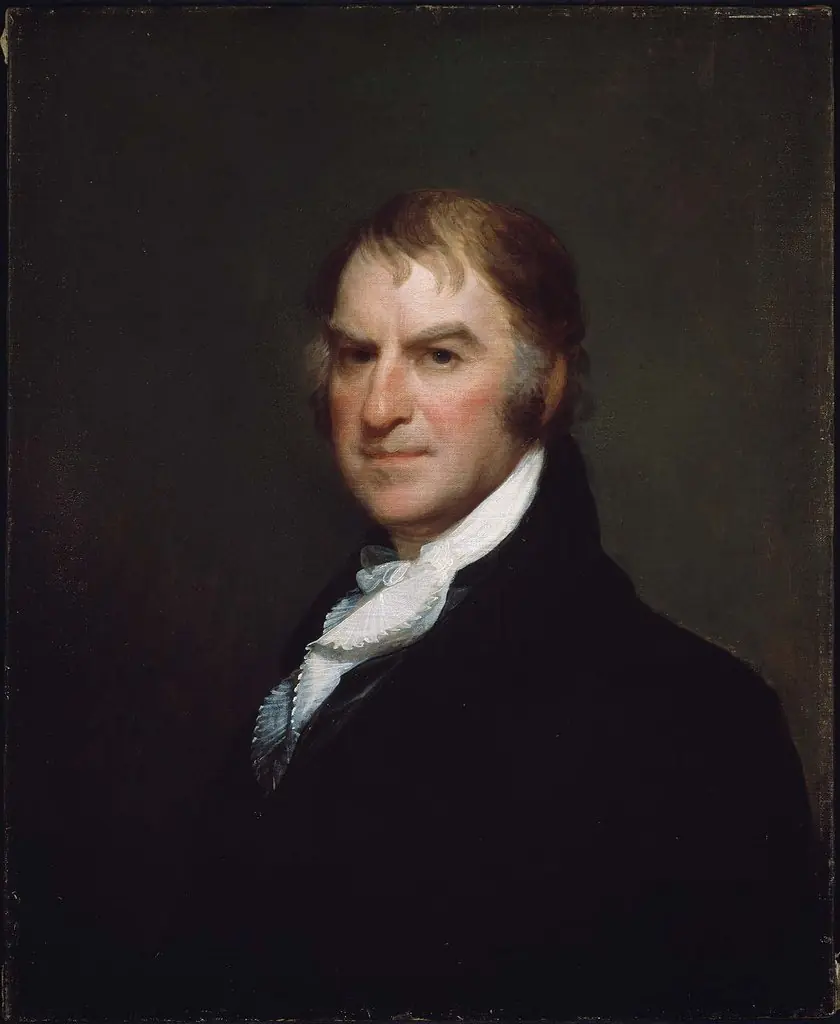
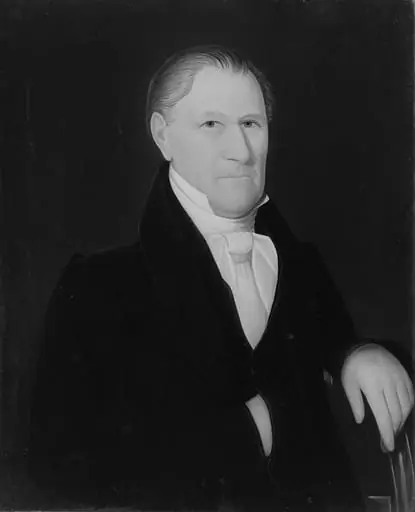
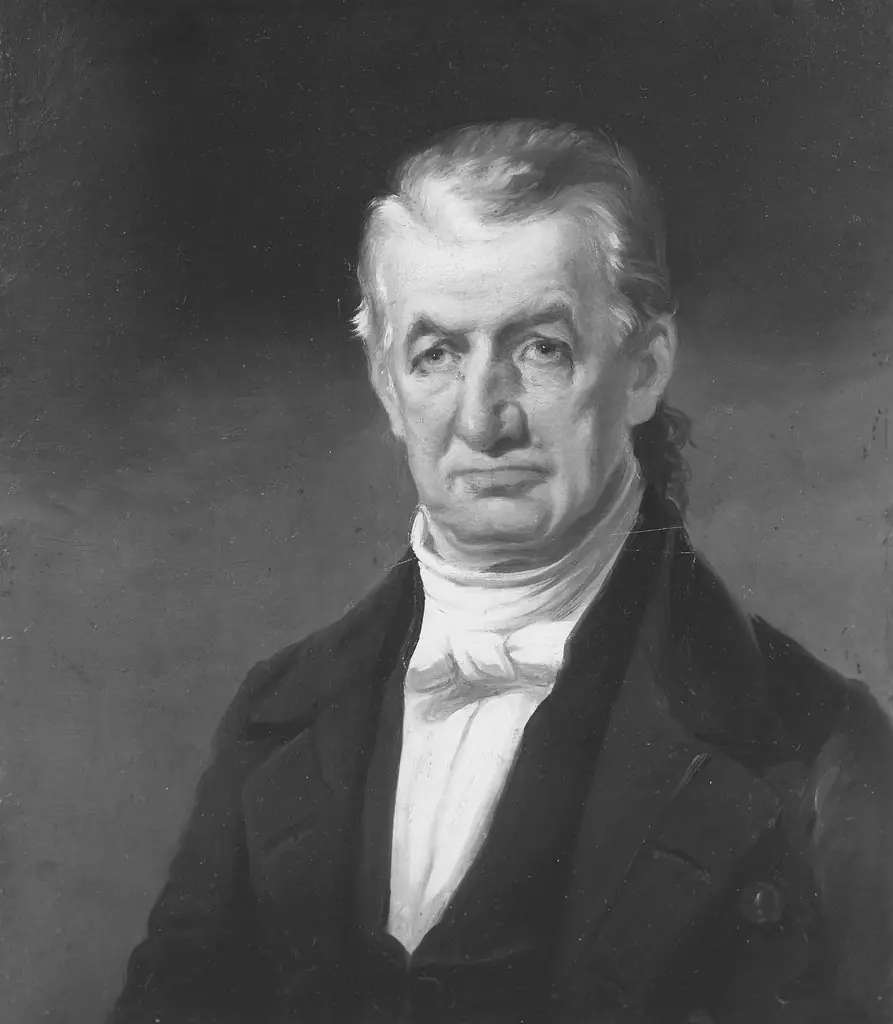
Artwork
Thomas Paine
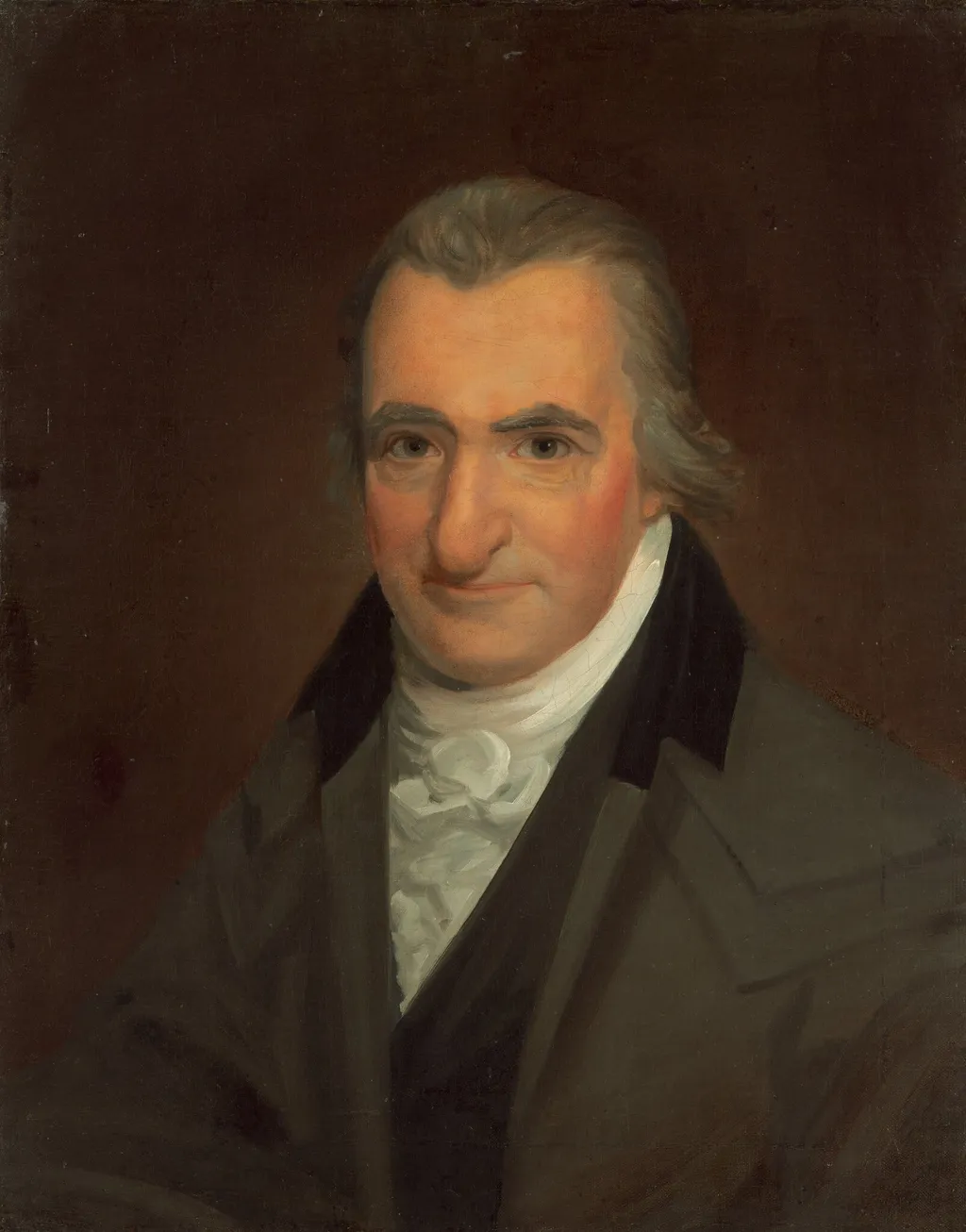
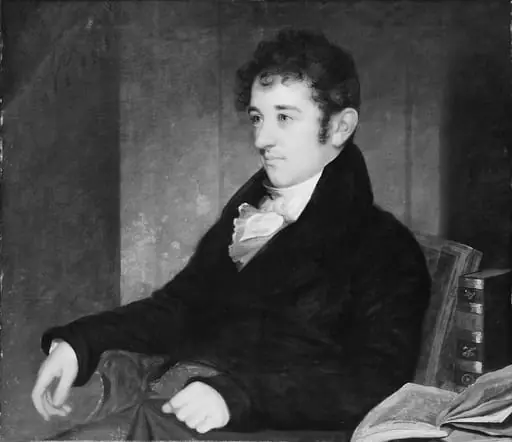
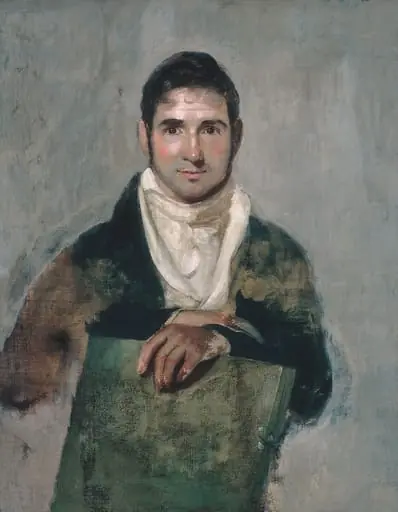
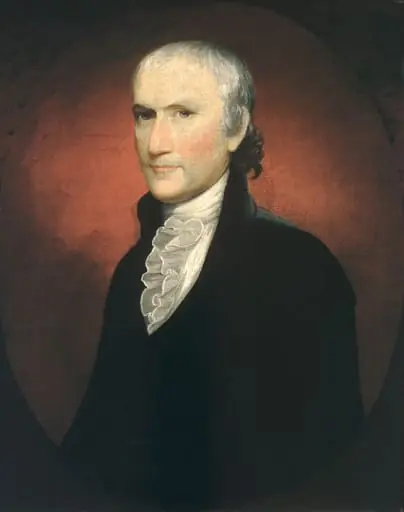
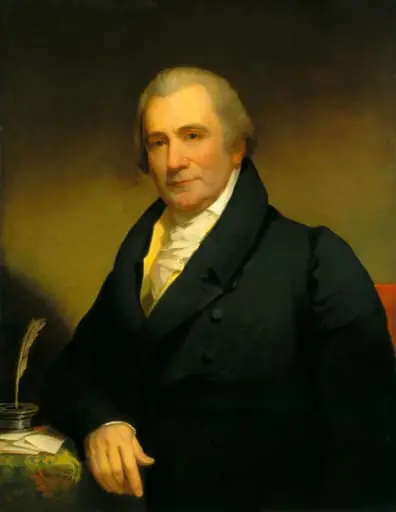
Thomas Paine is an oil painting by the American Folk Art artist John Wesley Jarvis. It dates from 1806 and is held in the collection of the National Gallery of Art.
About this work
Thomas Paine looks straight out with a firm expression, plainly dressed. John Wesley Jarvis used light and shadow to give the face depth and definition. Paine, a writer and philosopher, sat for this in 1806.
Subject & Meaning
The inclusion of the book functions as a symbol of his intellectual legacy and the dissemination of Enlightenment ideals.
John Wesley Jarvis’s 1806 portrait of Thomas Paine depicts the revolutionary writer in three-quarter view, seated and facing left, conveying both intellectual engagement and resolve. Paine’s direct gaze and the positioning of his right hand resting on an open book, likely a reference to his authored works such as Common Sense or The Rights of Man, underscore his identity as a radical thinker and pamphleteer whose writings fueled the American and French Revolutions. The inclusion of the book functions as a symbol of his intellectual legacy and the dissemination of Enlightenment ideals.
The provenance documentation, including a 1836 inscription by Jarvis asserting the portrait’s status as the only original painted in America, reinforces its iconographic authority as a primary visual representation of Paine in his later years.
Technique & Style
The portrait of Thomas Paine is an oil painting on canvas, executed circa 1805–1806 by John Wesley Jarvis. It measures approximately 65.4 cm in height by 52.1 cm in width and is classified as a portrait within the early American portrait genre. The work depicts the political writer Thomas Paine and was originally owned by Christopher C. Yates before passing through several collectors, eventually entering the National Gallery of Art collection in 1950.
The painting’s material consists of oil pigments applied to a canvas support, and its formal composition reflects the realistic rendering typical of early 19th‑century portraiture.
History & Provenance
The portrait of Thomas Paine was executed by John Wesley Jarvis between 1805 and 1806, as indicated by a contemporary label on the canvas that attributes the work to Jarvis and dates it to about 1805, and by the National Gallery of Art’s catalog, which lists an inception of 1806.[1][2] After its creation the painting entered the collection of Christopher C. Yates of New York, who owned it by 1836, and later passed to James Ferguson of Albany and Washington, D.C., by 1860.[1] Ownership then transferred to Amelia Ferguson, to Horatio Bridge in Washington, D.C., and to Bridge’s wife Charlotte by the late 1860s, and subsequently to their grand‑niece Marian Bridge Maurice in Athens, Pennsylvania, before being gifted to the National Gallery of Art in 1950.
John Wesley Jarvis's 1806 oil portrait of Thomas Paine is held in the collection of the National Gallery of Art in Washington, D.C., where it was accessioned in 1950 as a gift from Marian Bridge Maurice. Prior to this acquisition, the work passed through several private hands, including Christopher C. Yates by 1836 and James Ferguson by 1860, before entering the collections of the Bridge family in Pennsylvania. The painting is cataloged within the gallery's holdings as a significant American portrait.
While specific exhibition dates are not detailed in the provided records, the work's provenance traces a clear path from its creation in 1806 through mid-nineteenth-century ownership to its permanent placement in the national institution.
Context
The 1806 oil portrait of Thomas Paine by John Wesley Jarvis exemplifies early American portraiture that blended neoclassical technique with emerging democratic iconography. Its authenticity is documented by a contemporary label signed by the artist’s son, confirming the work’s creation circa 1805 and its status as the only original American likeness of Paine. Provenance records trace the painting from Yates and Ferguson to the National Gallery of Art, where it was gifted in 1950, underscoring its acceptance by major institutions.
Scholarship highlights the piece as a key artifact for understanding how visual culture commemorated revolutionary figures, situating Jarvis within the transitional period of American art after his stroke;.
Overview
This oil on canvas portrait, titled Thomas Paine, was created by John Wesley Jarvis around 1806. It captures the likeness of the influential writer and philosopher, Thomas Paine. The painting serves as a significant example of early 19th-century portraiture, reflecting the artistic practices of the era and offering a direct visual record of a key historical figure.
Own this work as a print
Artist & collection

Artist
John Wesley Jarvis (1781–1839) was an American artist, born in South Shields.