Artwork
Catskill Mountains
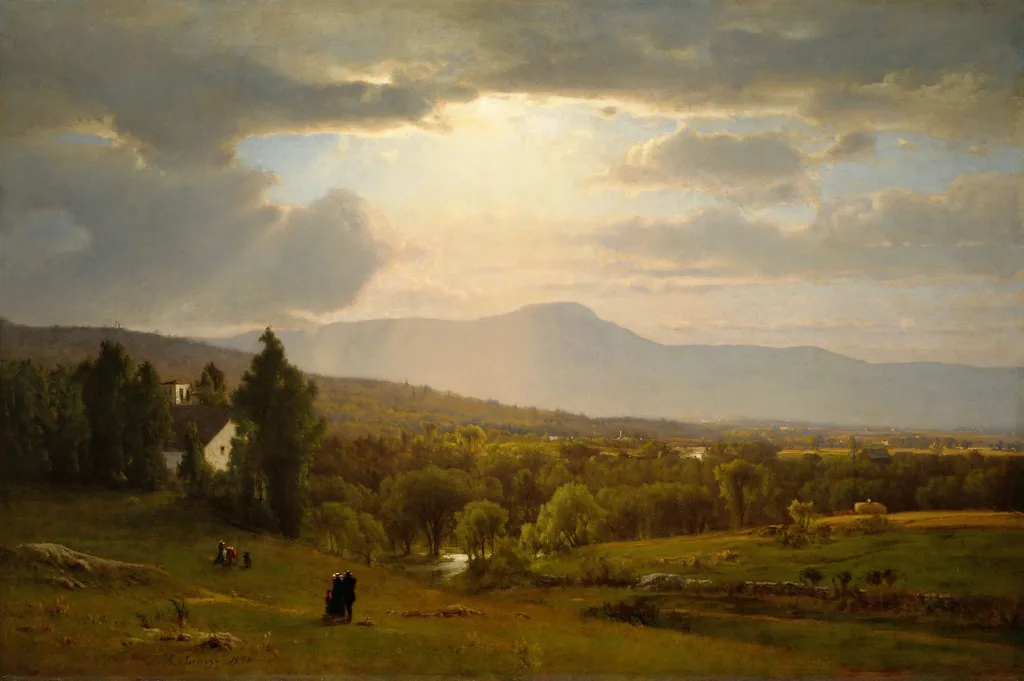
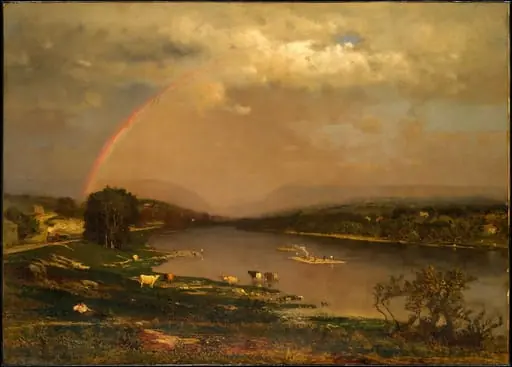
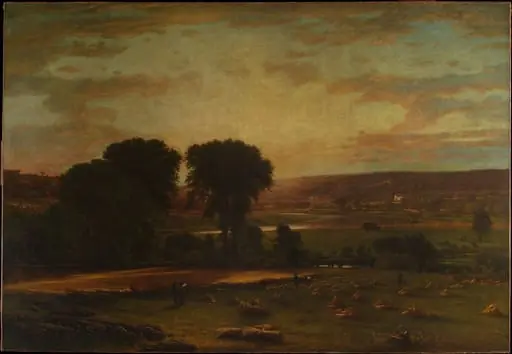
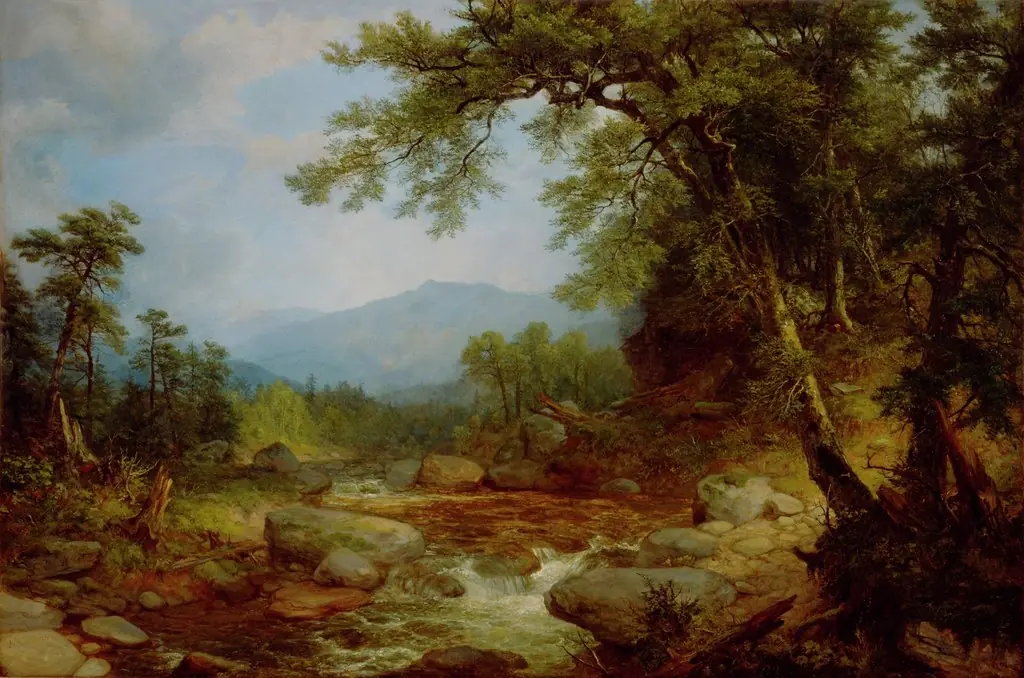
Catskill Mountains is an oil painting by the Hudson River School artist George Inness. It dates from 1870 and is held in the collection of the Art Institute of Chicago.
About this work
Technique & Style
The handling of the medium allows for the formal representation of this natural scenery, consistent with Inness's approach to the genre during this period.
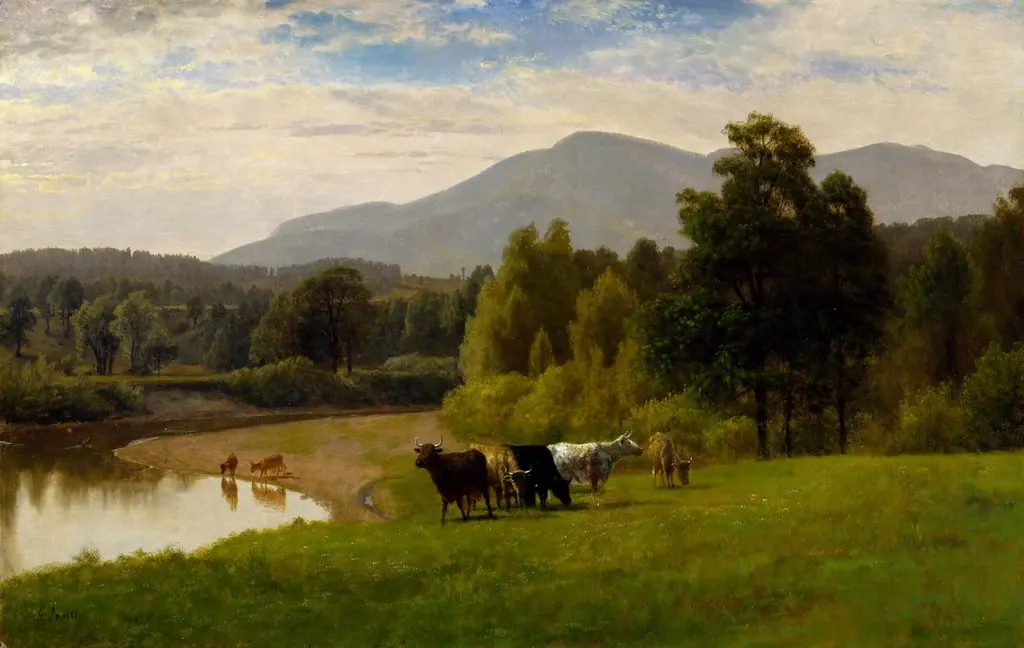
George Inness executed Catskill Mountains in 1870 using oil paint applied to a canvas support. The work measures 123.8 cm in height and 184.5 cm in width, presenting a substantial landscape format. As a landscape painting, the piece depicts the Catskill Mountains within a rural setting that includes trees.
The handling of the medium allows for the formal representation of this natural scenery, consistent with Inness's approach to the genre during this period.
History & Provenance
George Inness created the oil painting Catskill Mountains in 1870. Executed on canvas, the work depicts a rural landscape featuring trees and the mountain range for which it is named. The painting currently resides in the collection of the Art Institute of Chicago, where it is held as part of their landscape painting holdings.
Specific details regarding the original commission, early ownership history, or the chain of custody prior to its acquisition by the museum are not provided in the available records.
The painting Catskill Mountains by George Inness is held in the collection of the Art Institute of Chicago. It was accessioned with the identifier 1905.17 and has been part of the museum's exhibitions, including "American Art, 1800-1900" and "American Impressionism".
Context
Painted in 1870, Catskill Mountains exemplifies George Inness's mature landscape style, blending luminous atmosphere with spiritual resonance characteristic of the American Hudson River School. The work reflects Inness's broader synthesis of European romanticism and transcendentalist philosophy, positioning him within a pivotal American artistic movement that emphasized nature's divine presence. Measuring 123.8 cm by 184.5 cm, the oil-on-canvas piece resides in the permanent collection of the Art Institute of Chicago, where it has been part of ongoing scholarly discourse on 19th-century landscape painting.
Critics and historians have consistently interpreted Catskill Mountains as a meditation on nature's spiritual dimensions rather than topographical documentation, with Inness's approach influencing later modernist artists who explored abstraction through landscape forms. The painting's enduring presence in major institutional collections continues to inform studies of American art's evolution toward expressive interpretation of the natural world.
Overview
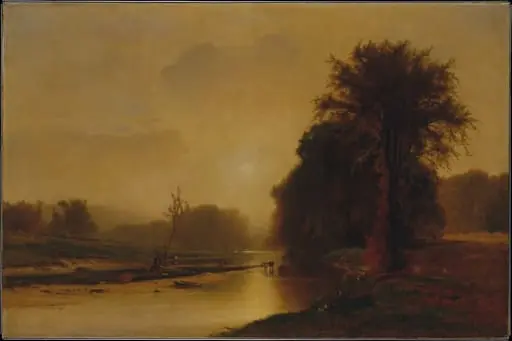
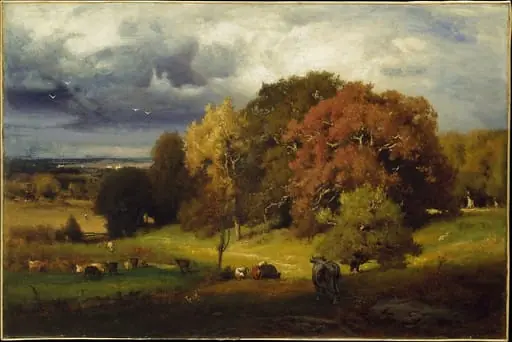
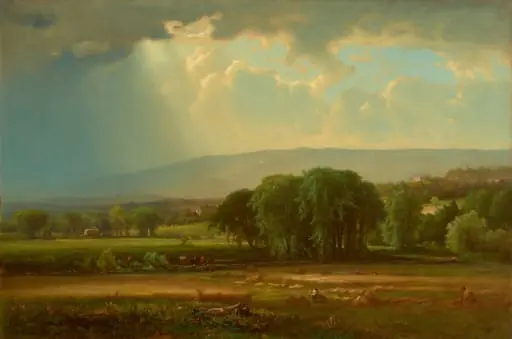
Catskill Mountains is an 1870 oil painting by George Inness, associated with the Hudson River School. The work depicts a serene rural landscape of the Catskill Mountains, featuring trees, a stream, and mist-shrouded peaks under a cloudy sky with sunlight breaking through.
Subject & Meaning
The painting captures a peaceful natural scene, emphasizing the interplay of light and landscape. While Inness later incorporated theological and European artistic influences, this work reflects his earlier, more traditional Hudson River School approach to landscape painting.
Legacy
Catskill Mountains contributes to Inness's reputation as a skilled capturer of American natural beauty. While not showcasing his later stylistic shifts, it remains a notable example of early Hudson River School landscape painting.
Own this work as a print
Artist & collection

Artist
George Inness (May 1, 1825 – August 3, 1894) was an American landscape painter. Now recognized as one of the most influential American artists of the nineteenth century, Inness was influenced by the Hudson River School…