Artwork
Mountainous Landscape
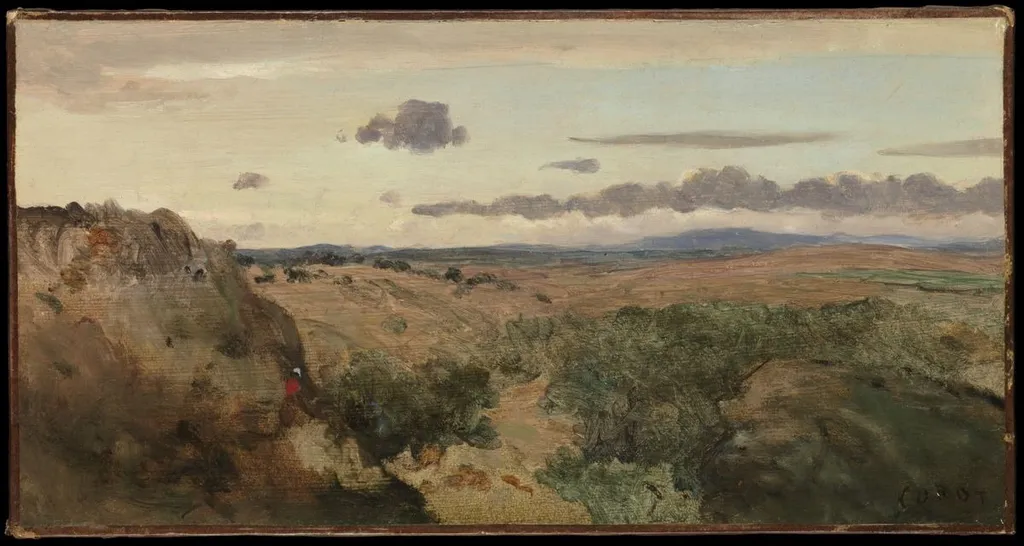
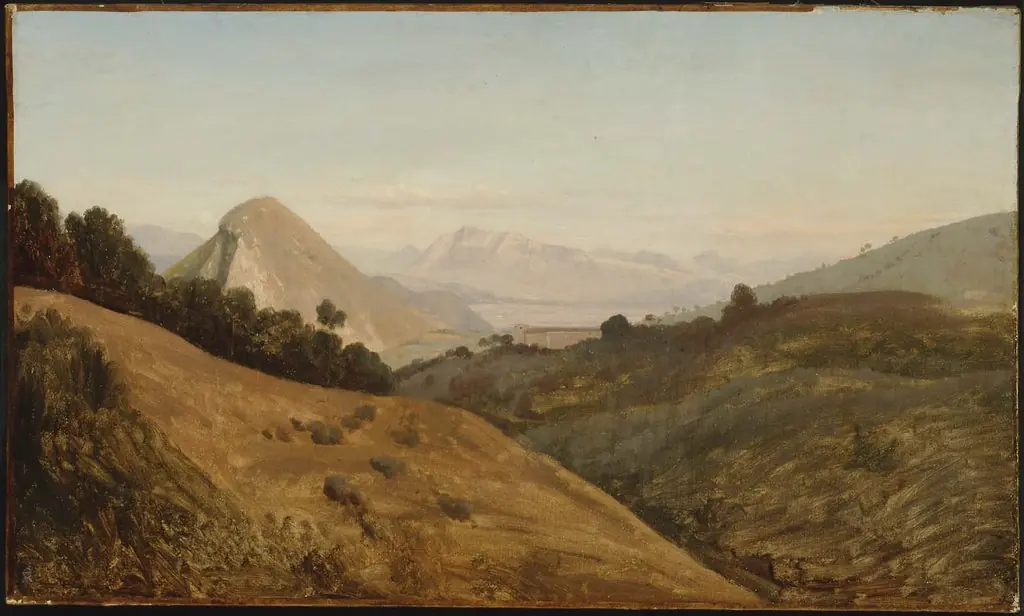
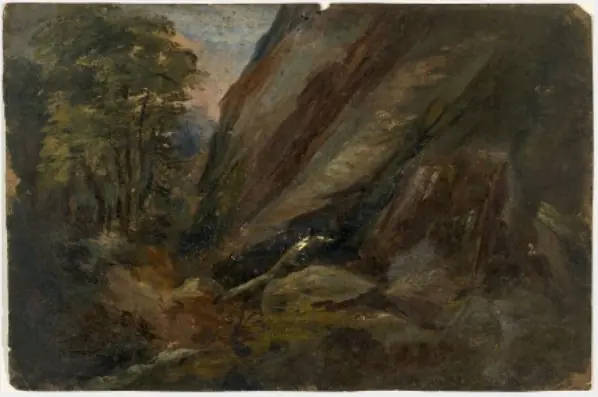
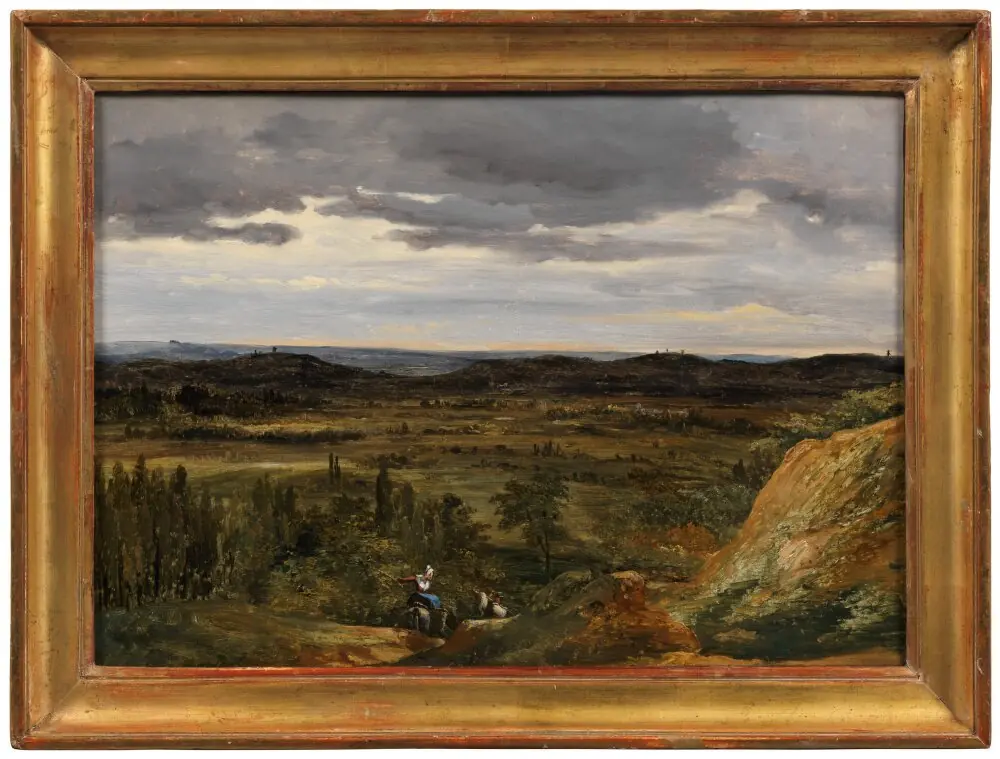
Mountainous Landscape is an unspecified painting by the Barbizon school artist Jean Baptiste Camille Corot. It dates from 1845 and is held in the collection of the Metropolitan Museum of Art.
About this work
Subject & Meaning
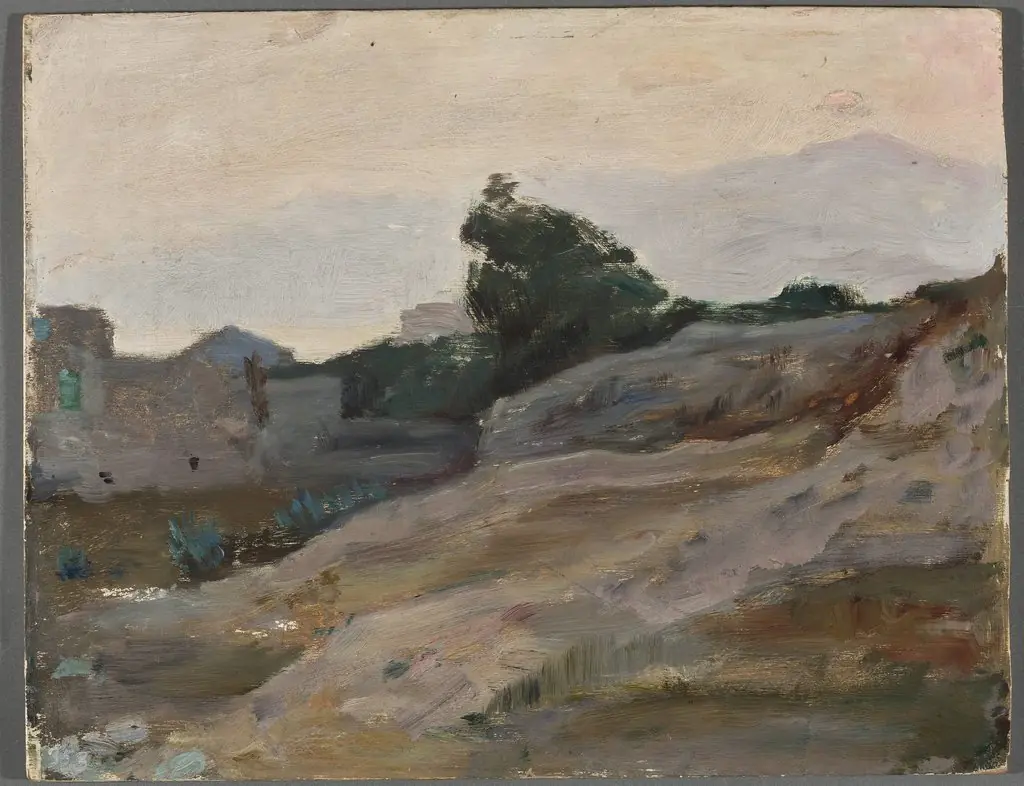
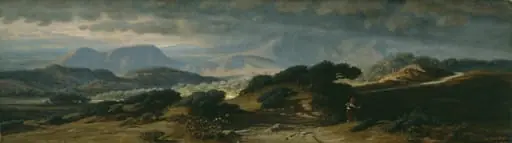
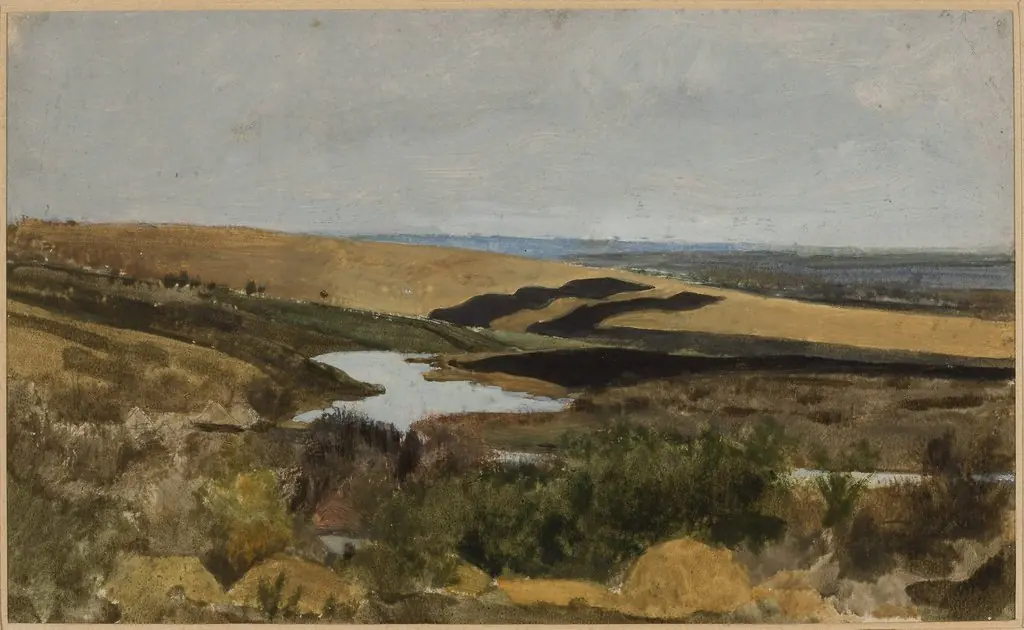
The painting depicts a generalized mountainous landscape rendered through softly modeled contours and atmospheric recession rather than specific topography.
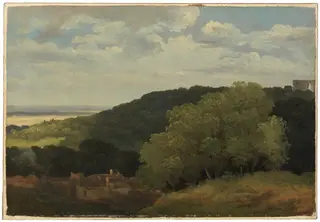
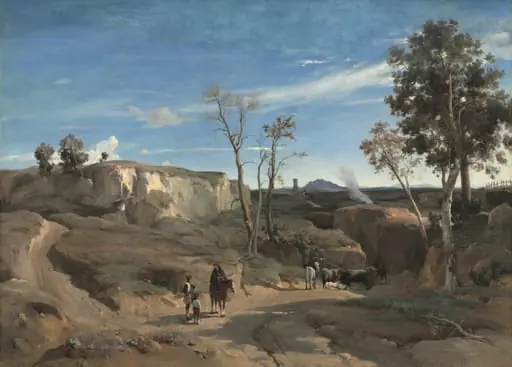
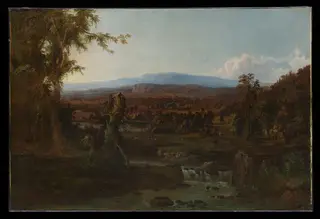
The painting depicts a generalized mountainous landscape rendered through softly modeled contours and atmospheric recession rather than specific topography. Corot's composition stages layered hills under a luminous sky, using silvery greens and warm browns to evoke the timeless rhythms of nature rather than a record of a particular place. The absence of narrative incident directs attention to the quiet grandeur of the terrain itself, aligning with mid-nineteenth-century Romantic ideals that framed landscape as a vehicle for contemplating the sublime and the eternal.
Such works functioned as meditations on nature's order and beauty, offering viewers a respite from modernity through idealized, harmonious scenery.
History & Provenance
The painting titled Mountainous Landscape was created by Jean-Baptiste Camille Corot in 1845. Classified as a landscape work, the piece measures 21 cm in height and 40.6 cm in width. The work is held in the collection of the Metropolitan Museum of Art.
While the specific commission details and the full chain of ownership prior to its arrival at the museum are not detailed in the available records, the work is dated to 1845.
Overview
Jean-Baptiste-Camille Corot's Mountainous Landscape, completed in 1845, exemplifies the artist's dedication to natural scenery. This work reflects the Barbizon School's interest in depicting rural environments with both realism and an evocative atmosphere. The painting is part of a significant body of work by Corot, who played a crucial role in the evolution of landscape painting in the 19th century, influencing subsequent artistic movements.
Technique & Style
Corot's approach in Mountainous Landscape demonstrates his transitional style, which blended elements of Neo-Classical composition with an emerging emphasis on direct observation. The painting's subtle color transitions and careful rendering of light and shadow suggest the artist's engagement with plein-air techniques. This method of painting outdoors, capturing transient effects, would later become a hallmark of Impressionism, a movement Corot anticipated.
Context
Created during the mid-19th century, Mountainous Landscape situates Corot within the Barbizon School, a group of artists who rejected academic conventions in favor of painting directly from nature in the Fontainebleau forest. Corot's work, including this piece, helped to establish a new appreciation for landscape as a primary subject, moving away from historical or mythological narratives and towards an intimate engagement with the natural world.
Artist & collection
Artist
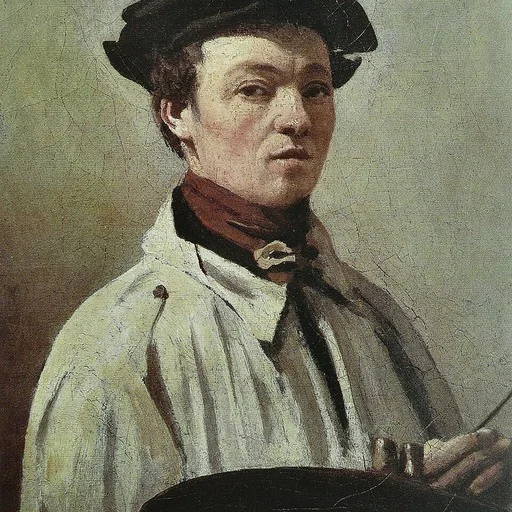
Jean-Baptiste-Camille Corot (UK: KORR-oh, US: kə-ROH, kor-OH; French:; 16 July 1796 – 22 February 1875), or simply Camille Corot, was a French landscape and portrait painter as well as a printmaker in etching.