Artwork
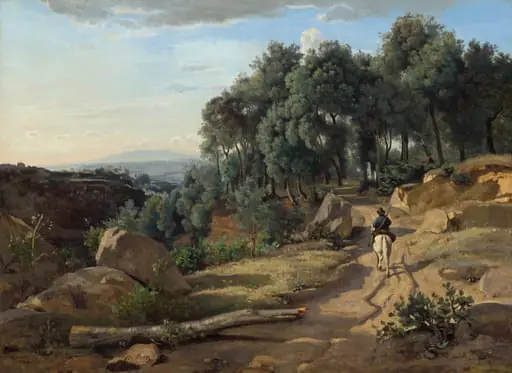
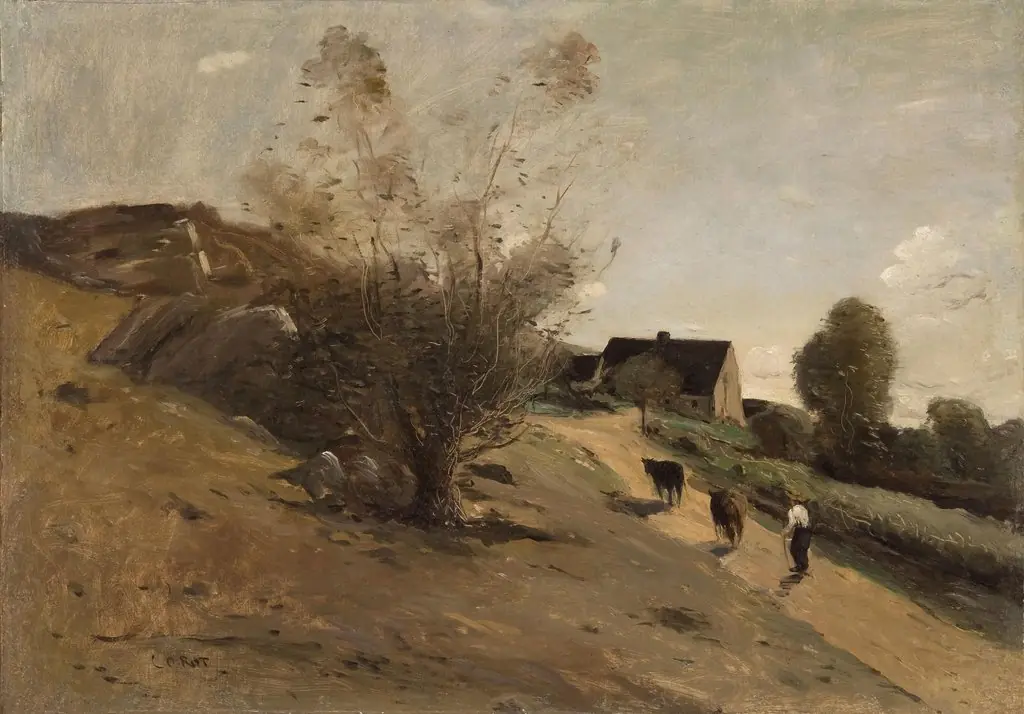
La Cervara, the Roman Campagna
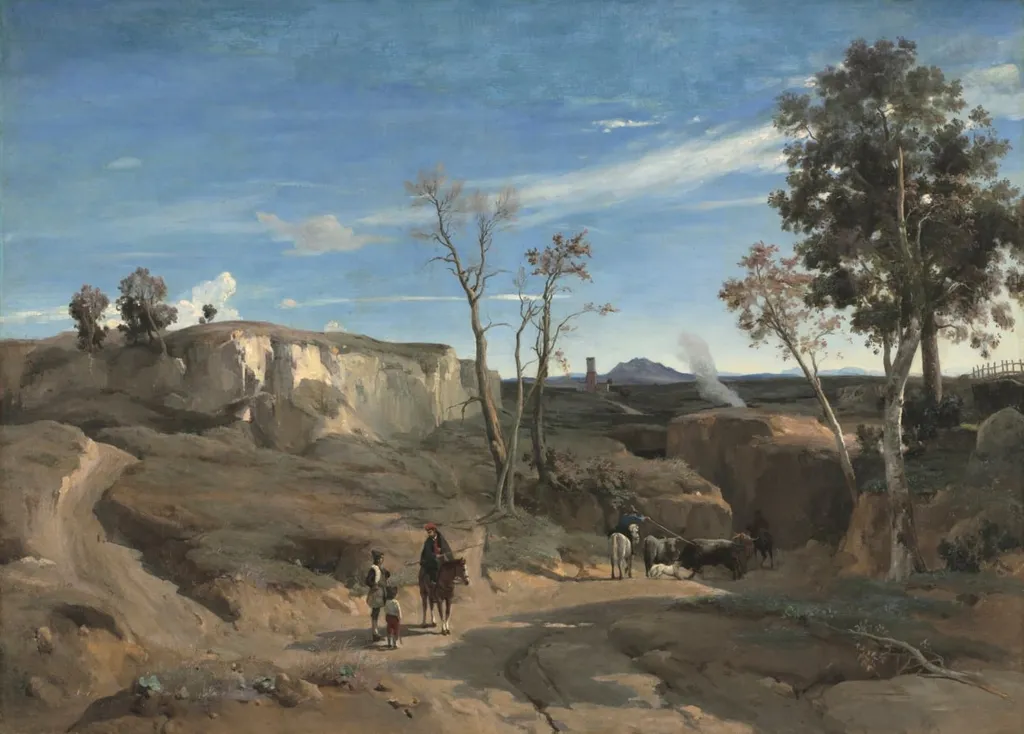
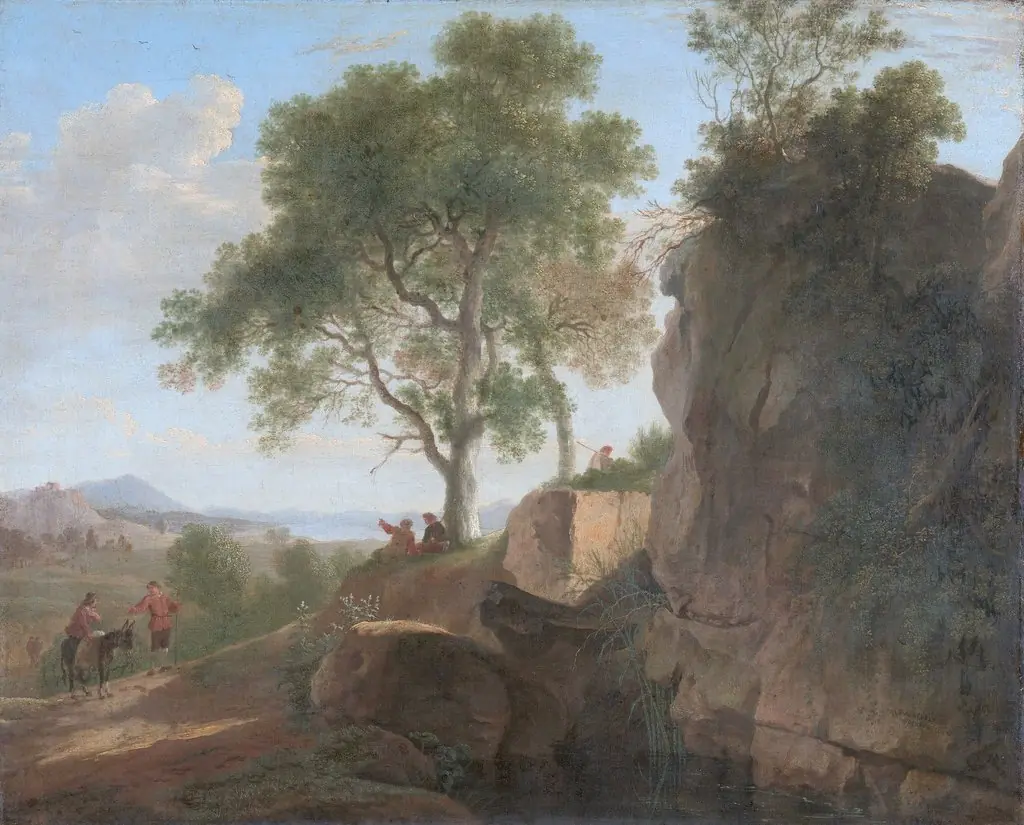
La Cervara, the Roman Campagna is an unspecified painting by the Barbizon school artist Jean Baptiste Camille Corot. It dates from 1830 and is held in the collection of the Cleveland Museum of Art.
- Accession no.
- 1963.91
- Credit line
- Leonard C. Hanna Jr. Fund
About this work
Overview
Jean‑Baptiste‑Camille Corot’s large oil, titled La Cervara, the Roman Campagna, depicts a tranquil valley near Rome at dusk, with a pink‑tinged sky and a winding road that recedes into the distance. The work is held in the collection of the Cleveland Museum of Art.
Subject & Meaning
The composition presents a quiet, pastoral scene of the Roman countryside, emphasizing the gentle transition from light to shadow as evening approaches. The winding road and rolling hills guide the viewer’s eye inward, suggesting a serene journey through nature.
Technique & Style
Corot assembled the painting in his studio, relying on a series of outdoor sketches and oil studies made while he was in Rome between 1825 and 1828. The canvas is organized around strong diagonal lines that lead the eye toward the horizon, a structural device characteristic of his early work and reminiscent of the classical landscape tradition of Nicolas Poussin.
History & Provenance
During his Roman residence, Corot produced numerous drawings of the surrounding countryside, which later served as the basis for this finished oil. After its completion, the painting entered private collections before being acquired by the Cleveland Museum of Art, where it remains on display.
Artist & collection
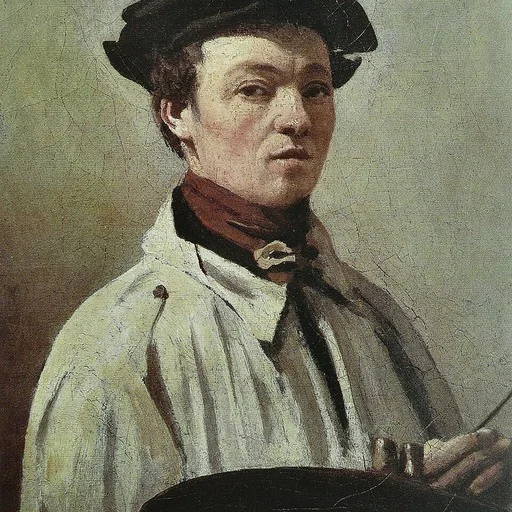
Artist
Jean-Baptiste-Camille Corot (UK: KORR-oh, US: kə-ROH, kor-OH; French:; 16 July 1796 – 22 February 1875), or simply Camille Corot, was a French landscape and portrait painter as well as a printmaker in etching.