Artwork
The Repose
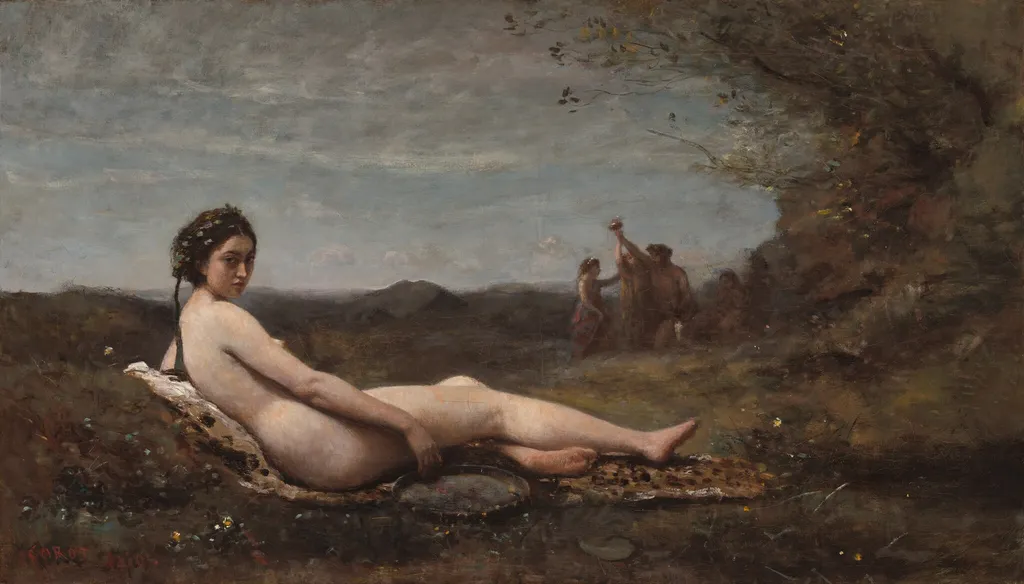
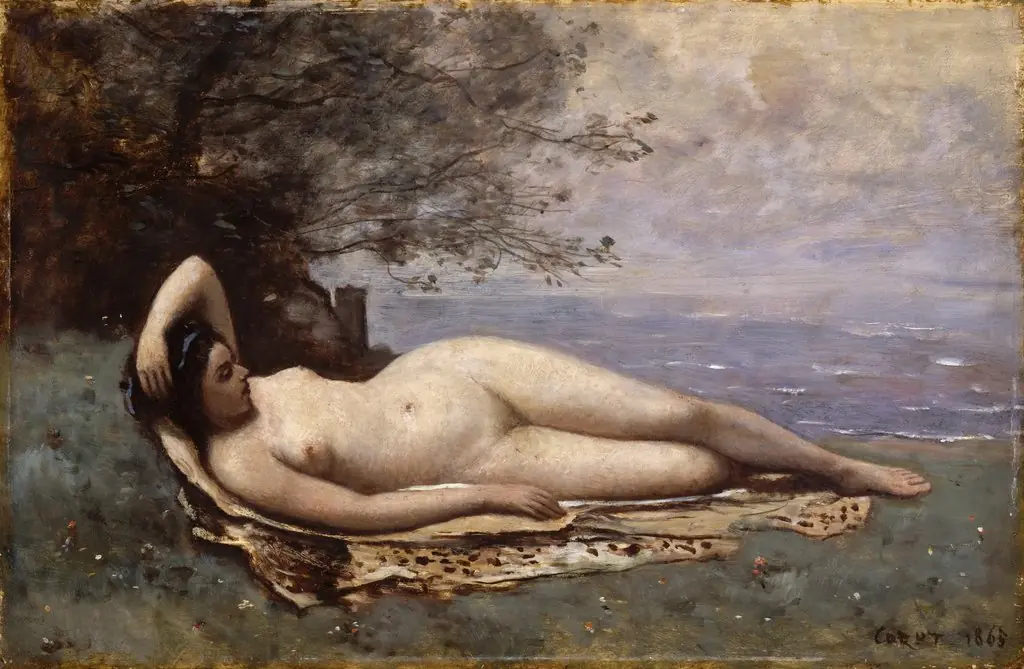
The Repose is an oil painting by the Barbizon school artist Jean Baptiste Camille Corot. It dates from 1868 and is held in the collection of the National Gallery of Art.
- Inscription
- Inscribed:lower left: Corot 1860.
About this work
Subject & Meaning
The setting, though tranquil, alludes to the continuing bacchanalian activity in the distance, reinforcing the theme of fleeting repose within mythic excess.
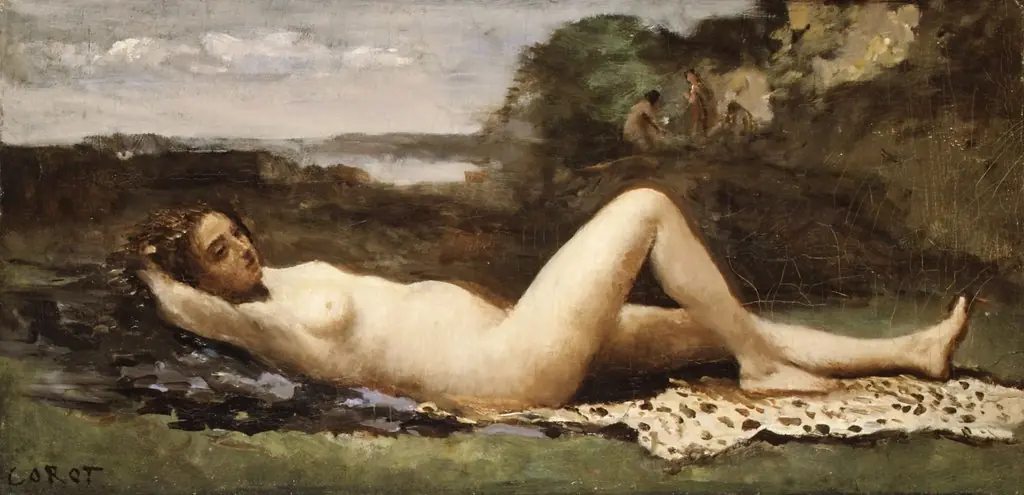
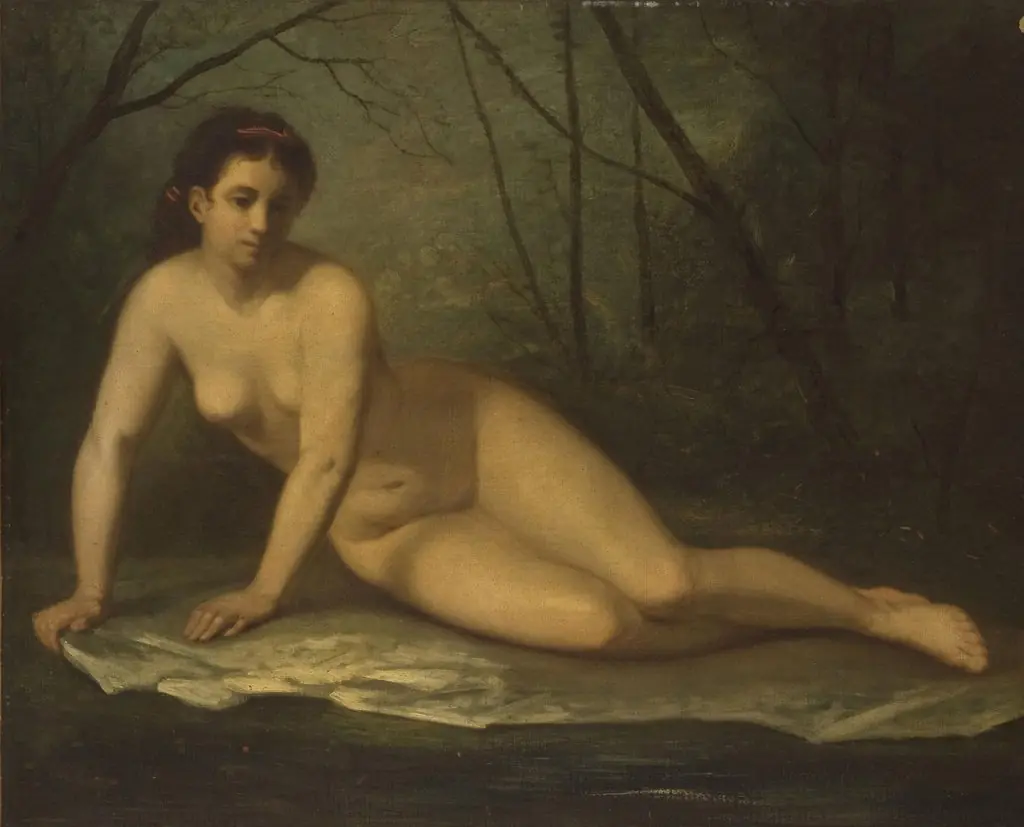
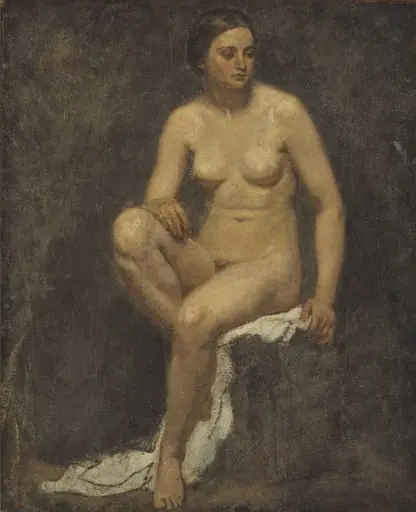
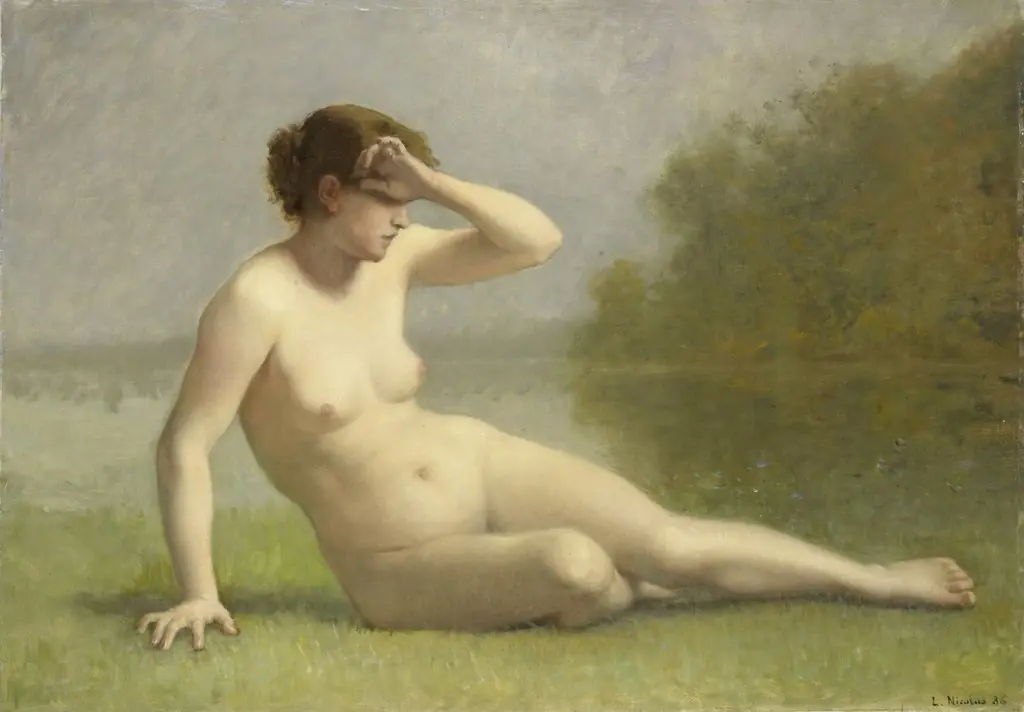
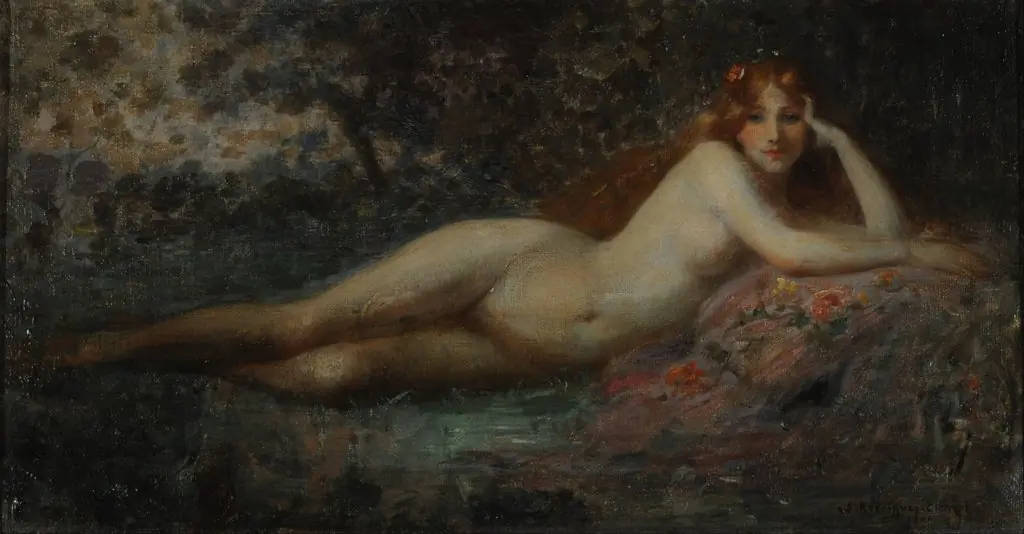
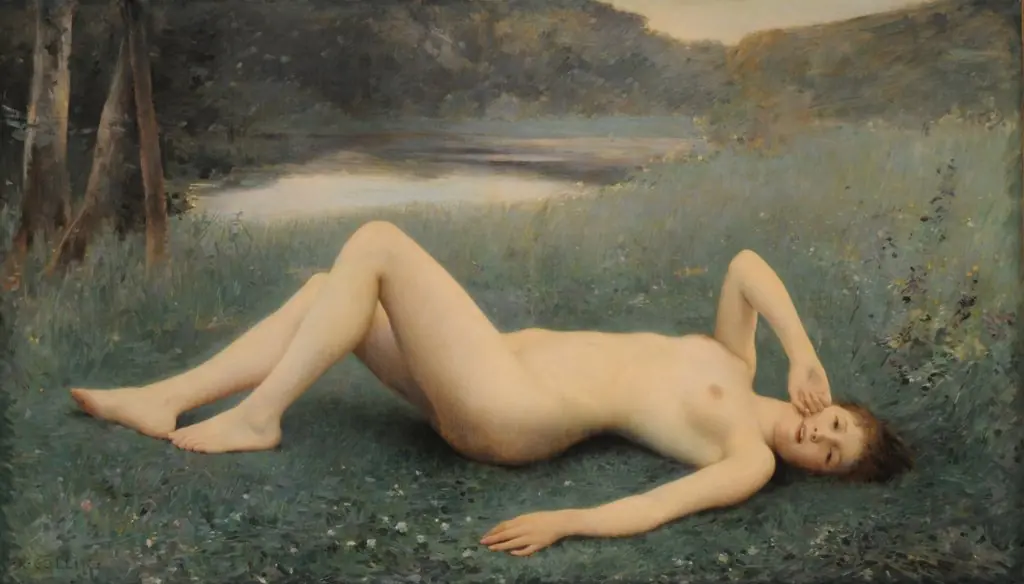
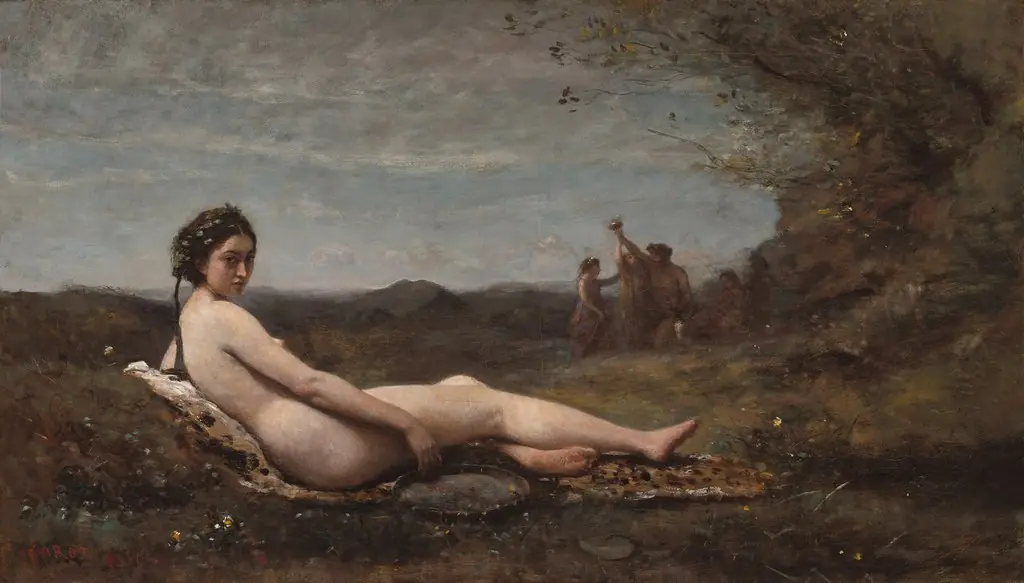
The painting depicts a reclining female nude identified as a bacchante, a follower of Bacchus in Roman myth, who pauses during a bacchanal. She lies on a panther skin with a wreath of foliage in her hair and an overturned tambourine nearby, evoking classical revelry. Her right-profile pose and the inclusion of a landscape backdrop align with Corot’s dreamlike fusion of myth and nature.
Her direct gaze toward the viewer breaks the conventional passivity of such figures, inviting contemplation of both the scene and its art-historical echoes, notably Ingres’s La Grande Odalisque. The setting, though tranquil, alludes to the continuing bacchanalian activity in the distance, reinforcing the theme of fleeting repose within mythic excess.
Technique & Style
The work is an oil painting on canvas executed in 1860 and reworked between about 1865 and 1870. The composition is horizontal, with the figure set against a softly modeled landscape. The reclining nude is rendered with smooth transitions in modeling, emphasizing a continuous contour that recalls classical precedent.
Handling includes delicate glazes over lighter passages, particularly in the landscape background, while the figure’s skin is treated with a more blended, atmospheric finish.
The surface shows evidence of the reworked passages, aligning with the later date range cited for revisions. The painting depicts a young woman lying on a panther skin in a restful pose, turning to engage the viewer’s gaze. She wears a wreath of foliage and a tambourine lies overturned nearby, evoking a bacchante at repose within a mythological setting.
History & Provenance
Jean-Baptiste-Camille Corot created The Repose in 1860, subsequently reworking the canvas around 1865 or 1870. The painting was first exhibited at the Paris Salon of 1861. By 1878, the work was in the possession of Th.
Bascle in Paris, who likely acquired it before 1872. Following Bascle's estate sale at the Hôtel Drouot in April 1883, where it was cataloged as Bacchante couché, the painting passed through the hands of a collector named Lucas. It was sold to the dealer Durand-Ruel in Paris on February 25, 1897, and later that year acquired by William Andrews Clark of New York.
Upon Clark's death in 1925, the work was bequeathed to the Corcoran Gallery of Art in Washington in 1926. The National Gallery of Art acquired the painting in 2014 after the Corcoran closed.
The Repose is currently held by the National Gallery of Art in Washington, D.C., where it was acquired in 2014 following the closure of the Corcoran Gallery of Art. The work entered the Corcoran collection in 1926 as a bequest from William Andrews Clark, having been purchased from the dealer Durand-Ruel in 1897. Prior to Clark's acquisition, the painting was part of the estate of Th.
Bascle in Paris, where it was sold at the Hôtel Drouot in April 1883 under the title Bacchante couché. The artwork was first exhibited at the Salon of 1861 in Paris. It was also lent to a Paris exhibition in 1878 by its then-owner, Bascle, and has since been featured in exhibitions such as Corot 1796-1875 and Corot. The Painter and his Models.
Context
Painted in 1860 and reworked circa 1865–1870, The Repose exemplifies Jean-Baptiste-Camille Corot's engagement with mythological themes within his landscape practice. The work depicts the model Agostina Segatori as a bacchante reclining on a panther skin, a composition that explicitly references Jean-Auguste-Dominique Ingres's La Grande Odalisque through its specific pose and the subject's direct gaze. Created during the Second Empire, this piece belongs to a series of dreamlike outdoor nudes Corot produced, bridging the gap between his lyrical landscapes and figure studies.
The painting was first exhibited at the Paris Salon of 1861, where it was recognized as a significant contribution to the artist's exploration of the female form in natural settings.
Overview
Jean‑Baptiste‑Camille Corot’s 1860 oil on canvas titled The Repose is part of the collection at the National Gallery of Art in Washington, D.C. The work presents a solitary female figure seated amid a tranquil woodland setting, rendered with the soft, atmospheric qualities characteristic of Corot’s mature landscape paintings.
Artist & collection
Artist
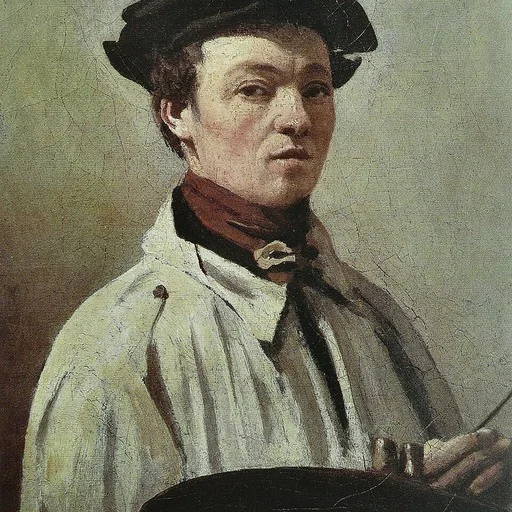
Jean-Baptiste-Camille Corot (UK: KORR-oh, US: kə-ROH, kor-OH; French:; 16 July 1796 – 22 February 1875), or simply Camille Corot, was a French landscape and portrait painter as well as a printmaker in etching.