What you'll explore
The lessons
-
The First Glance: Composition and Structure
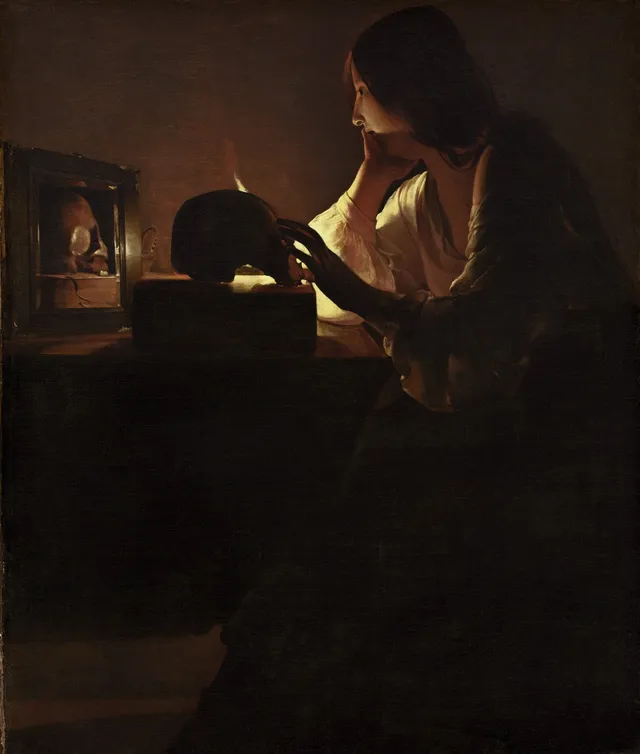 The Repentant Magdalen Georges de La Tour
 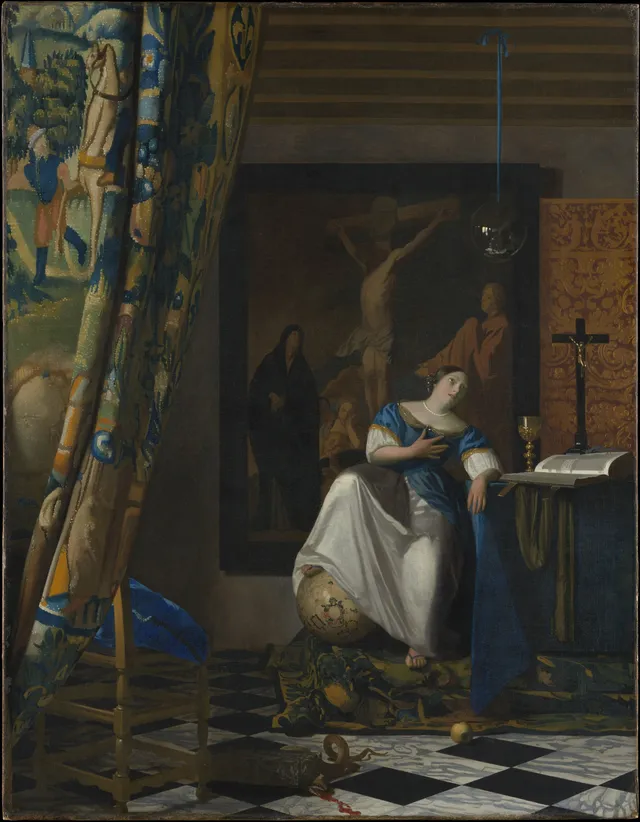 Allegory of the Catholic Faith Johannes Vermeer
 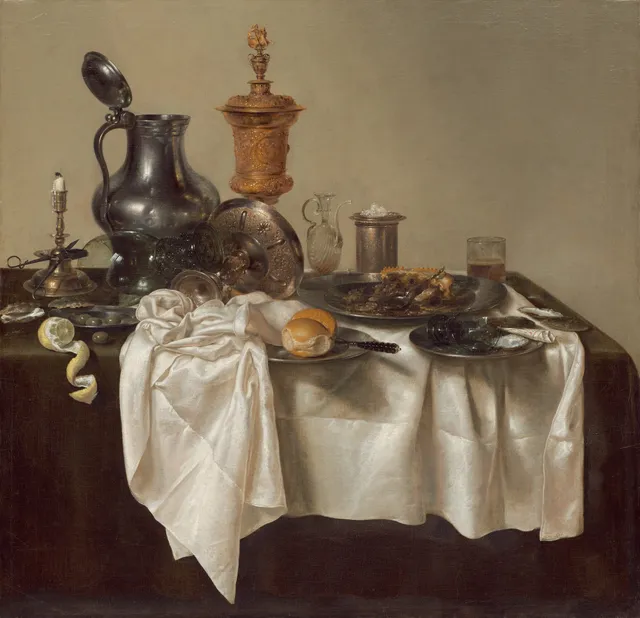 Banquet Piece with Mince Pie Willem Claesz Heda
 From the in-app quiz
-
Which painting uses a single light source to create a dramatic pyramid of attention?
You are correct. In "The Repentant Magdalen," Georges de La Tour arranges the figure, the mirror, and the skull into a stable triangle, using the single candle to illuminate this specific shape against the dark background.
-
In this still life, how does the artist use the dark background to define the edge of the plate?
Banquet Piece with Mince Pie , Willem Claesz Heda - The artist paints a bright white line along the rim to separate it from the shadow.
- The artist relies on the reflection of the candle on the silver to catch the eye.
- The artist allows the dark background to press against the metal, making the gleam define the form. Answer
That is a keen observation. Willem Claesz Heda lets the deep darkness surround the silver plate, so that the bright highlights on the metal surface are what tell us where the object begins and ends.
-
-
The Language of Light and Shadow
Allegory of the Catholic Faith Johannes Vermeer The Repentant Magdalen Georges de La Tour 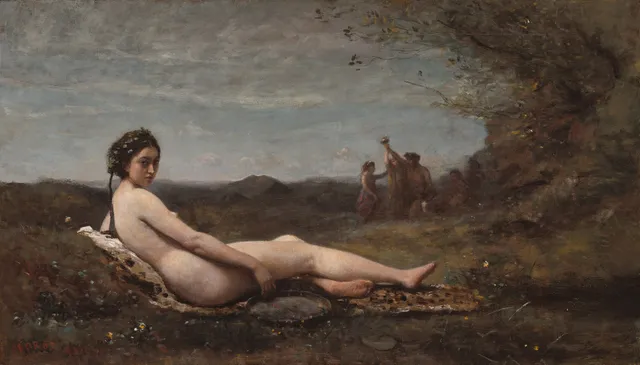 The Repose Jean Baptiste Camille Corot
 From the in-app quiz
-
Which of these works demonstrates the 'chiaroscuro' technique, where a single light source emerges from deep shadow?
You have chosen The Repentant Magdalen by Georges de La Tour. This painting is a masterclass in chiaroscuro, using a single candle to carve the figure out of the surrounding darkness.
-
How does the lighting in this portrait differ from the candlelit scenes we just studied? Look for the soft, hazy atmosphere.
The Repose , Jean Baptiste Camille Corot - It uses a single candle to create deep, dramatic shadows.
- It relies on bright, even daylight with minimal contrast.
- It features a soft, hazy light that unites the figures and landscape. Answer
- It uses harsh, direct sunlight to create sharp outlines.
Correct. The Repose by Corot uses a diffuse, dreamlike light that softens edges, unlike the sharp contrasts of the candlelit works we examined earlier.
-
-
Color as Emotion, Not Just Description
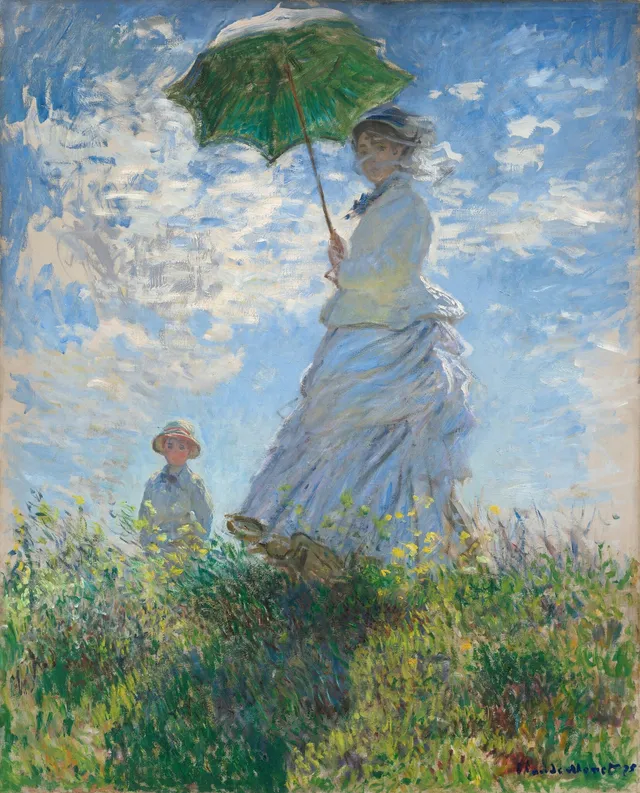
Woman with a Parasol - Madame Monet and Her Son Claude Monet 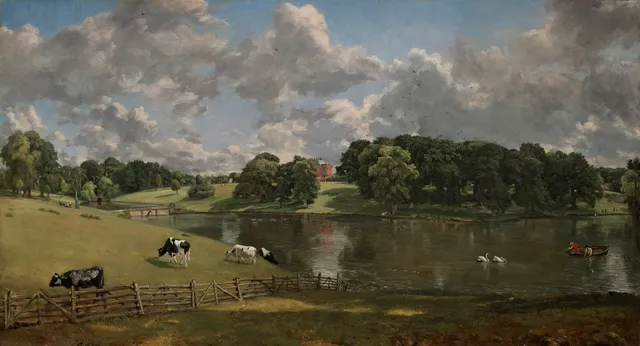 Wivenhoe Park, Essex John Constable
 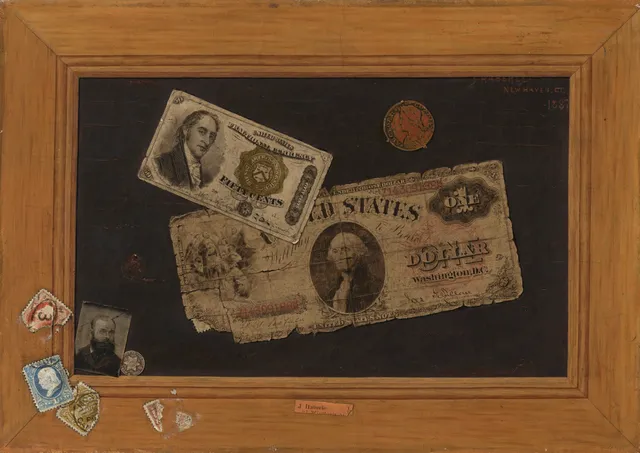 Imitation John Haberle
 From the in-app quiz
-
Which painting captures the fleeting effect of sunlight on a figure rather than a fixed, studio description?
Monet's 'Woman with a Parasol' uses vibrant, shifting colors to capture a specific moment of sunlight and breeze, unlike the more static, studio-bound lighting of the other options.
-
Look at the blue tones in the sky and shadows of this landscape. How does Constable's palette here compare to the shifting colors of Impressionism?
Wivenhoe Park, Essex , John Constable - The blues are mixed to create realistic, solid shadows, grounding the scene in a traditional naturalism. Answer
- The blues are pure, unmixed dabs of paint that vibrate against the green grass to create movement.
- The blues are absent, replaced entirely by warm ochres and browns to suggest an evening setting.
In 'Wivenhoe Park', Constable uses blended blues to create a sense of stable, natural shadow, contrasting with the broken, vibrant color techniques we see in Monet's work.
-
-
The Hand of the Artist: Brushwork and Texture
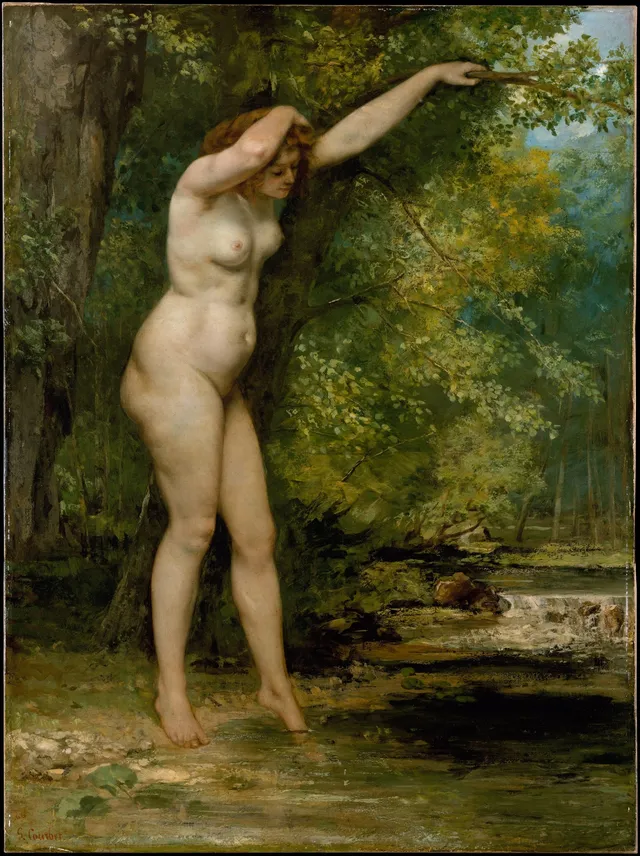 The Young Bather Gustave Courbet Imitation John Haberle
 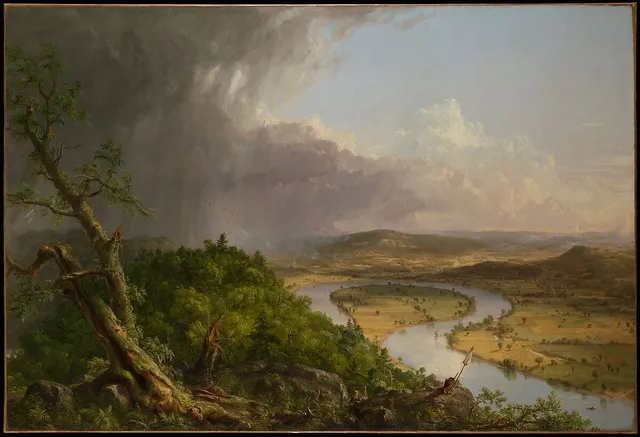 View from Mount Holyoke, Northampton, Massachusetts, after a Thunderstorm—The Oxbow Thomas Cole
 From the in-app quiz
-
In which painting does the paint itself become the subject through thick, visible brushstrokes?
You spotted the thick, textured surface of Courbet's 'The Young Bather.' Unlike the smooth finish of the other choices, here the paint stands proud of the canvas, making the artist's physical gesture the primary focus.
-
Look at the detail below. How does the texture of the water in this seascape differ from the smooth finish of classical portraits?
View from Mount Holyoke, Northampton, Massachusetts, after a Thunderstorm—The Oxbow , Thomas Cole - It is painted with loose, broken strokes that suggest movement and light. Answer
- It is rendered with a perfectly smooth, glass-like surface.
- It is created using a collage of real water and fabric.
This detail is from Thomas Cole's 'View from Mount Holyoke.' Notice how the water and clouds are built from distinct, energetic strokes, contrasting with the invisible finish found in classical portraiture.
-
-
Subject vs. Story: Reading the Narrative
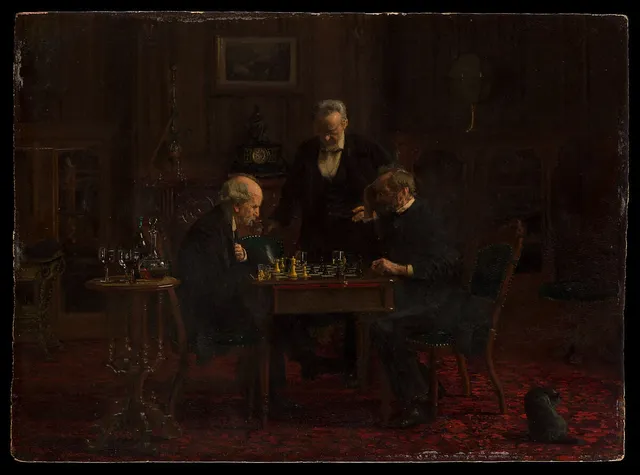 The Chess Players Thomas Eakins
 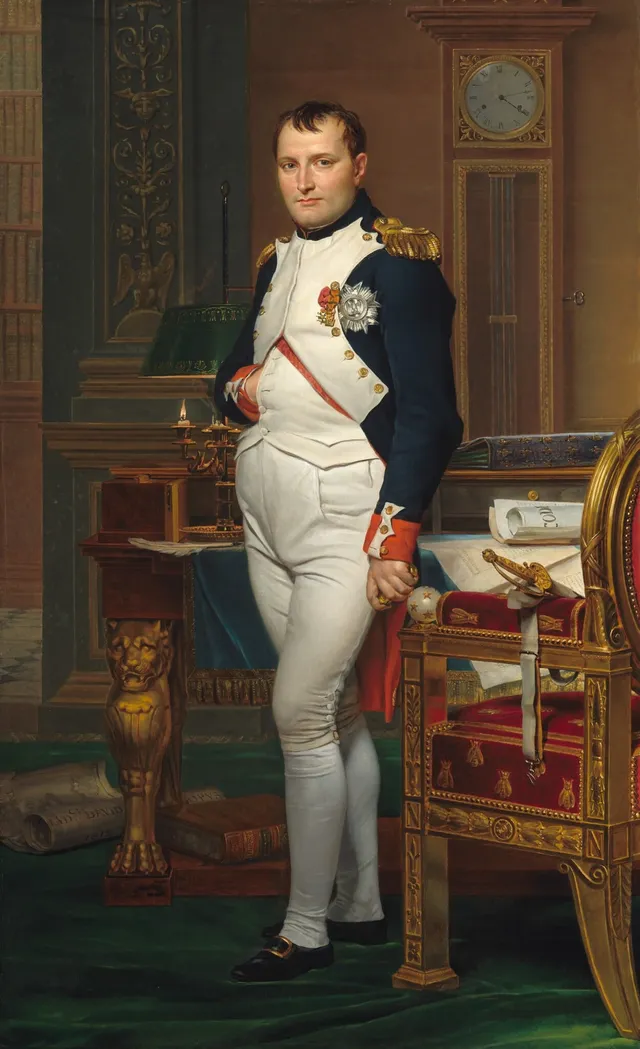 The Emperor Napoleon in His Study at the Tuileries Jacques-Louis David
 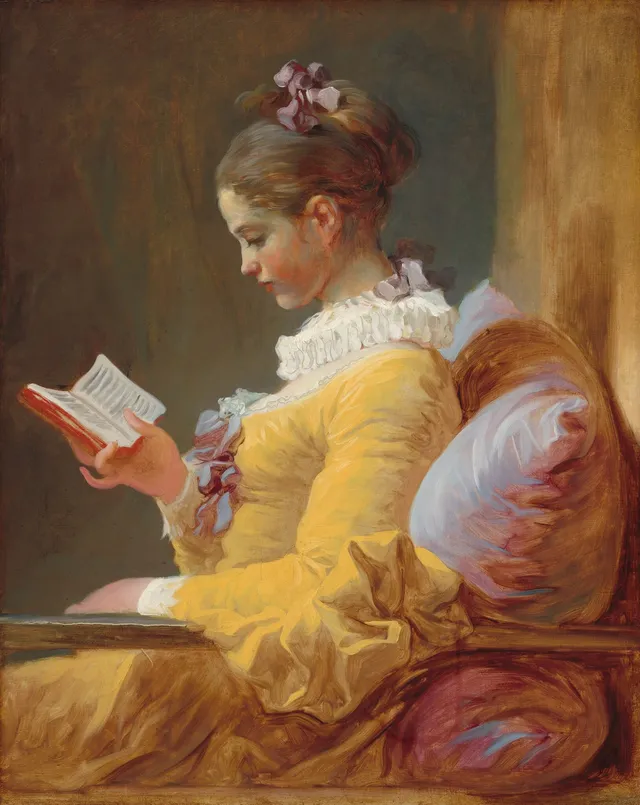 Young Girl Reading Jean Honoré Fragonard
 From the in-app quiz
-
Which of these paintings focuses on an ordinary, unheroic moment of daily life rather than a historical or mythological event?
Thomas Eakins' 'The Chess Players' captures a quiet, everyday scene of two men focused on a game, perfectly illustrating the Realist preference for ordinary subjects over grand historical narratives.
-
Identify the painting where the sitter's status is suggested by the specific details of his surroundings and attire.
The Emperor Napoleon in His Study at the Tuileries , Jacques-Louis David - The Emperor Napoleon in His Study at the Tuileries Answer
- The Chess Players
- Young Girl Reading
- Wivenhoe Park, Essex
In David's portrait, the scattered papers, the clock, and Napoleon's formal dress all work together to narrate his status as a busy, powerful leader, unlike the more intimate or landscape-focused works in the other options.
-
-
Your Museum: Where to Go from Here
View from Mount Holyoke, Northampton, Massachusetts, after a Thunderstorm—The Oxbow Thomas Cole 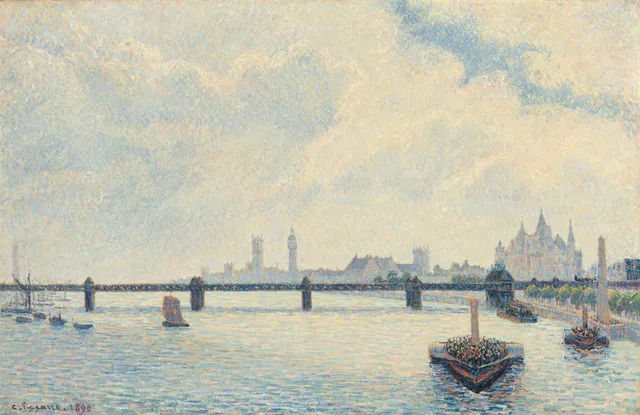 Charing Cross Bridge, London Camille Pissarro Imitation John Haberle
 From the in-app quiz
-
Which of these artists is known for painting the sublime vastness of the American landscape?
Thomas Cole is celebrated for his grand, dramatic landscapes that capture the sublime power of the American wilderness, as seen in View from Mount Holyoke.
-
If you were to visit a museum today, which of these movements would you look for to see the transition from realism to modernism?
- Romanticism
- Impressionism Answer
- Baroque
Impressionism marks a pivotal shift where artists began to focus on light and perception, bridging the gap between traditional realism and the modern art that followed.
-