Artwork
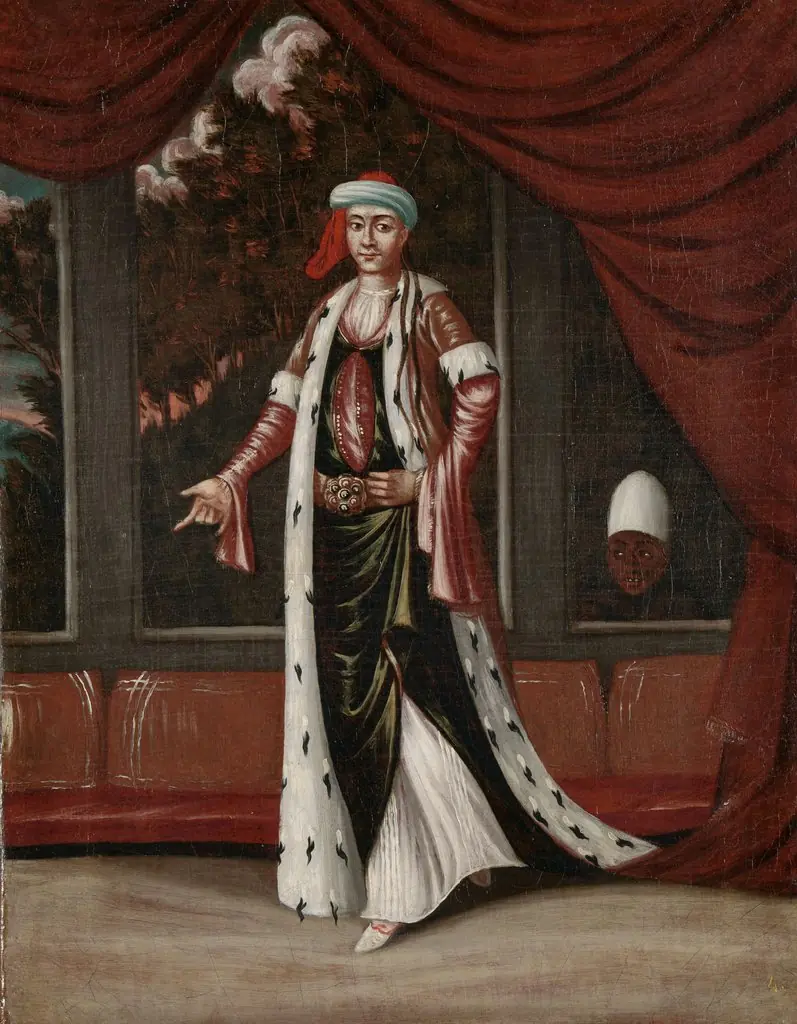
Woman from the Island of Patmos
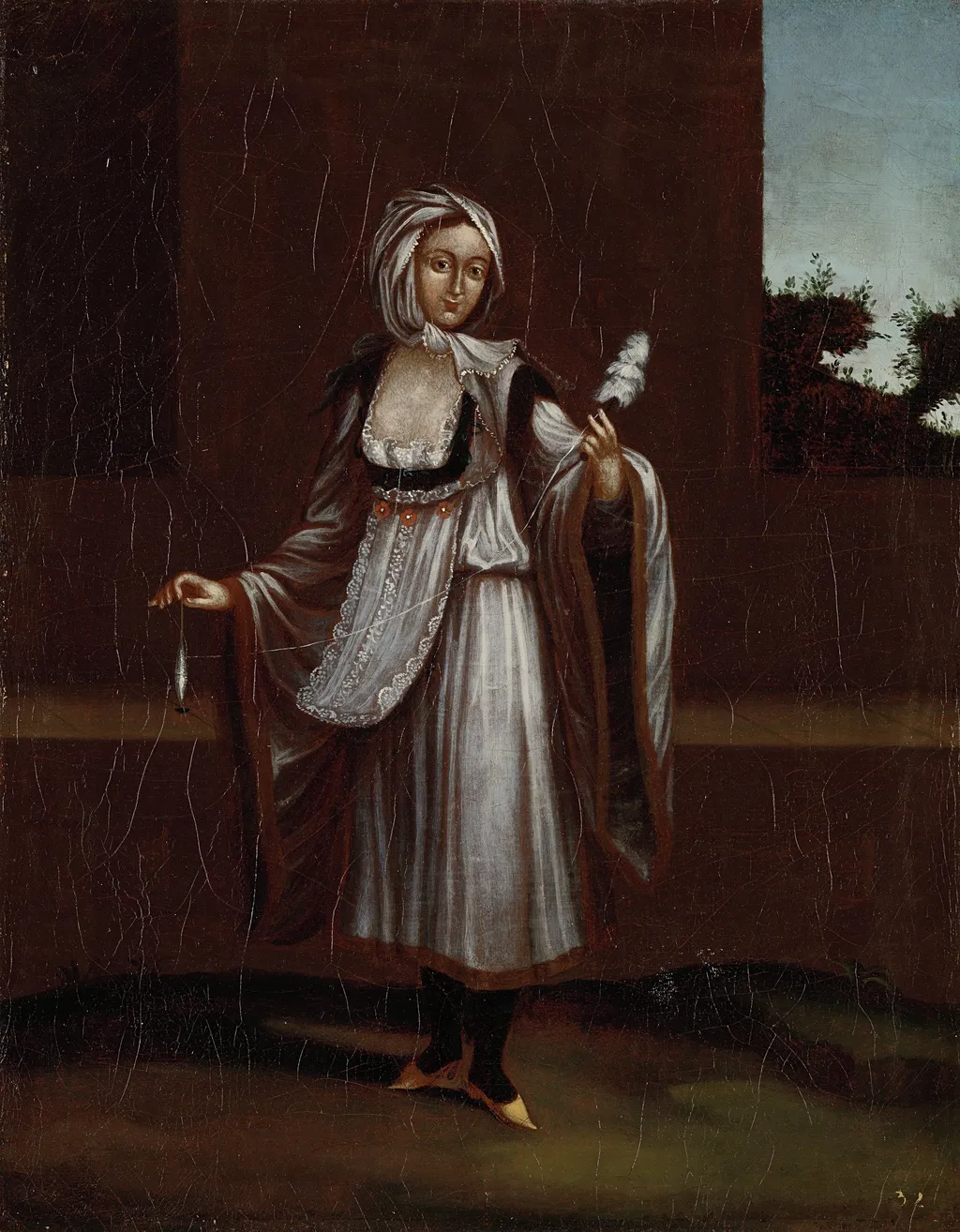
Woman from the Island of Patmos is an oil painting by the Orientalist artist Jean Baptiste Vanmour. It dates from 1718 and is held in the collection of the Rijksmuseum.
About this work
Subject & Meaning
The painting shows a woman posed in an interior setting that reflects her status within elite Ottoman circles; her clothing and jewelry signal both European and Ottoman influences, symbolizing cultural exchange and diplomatic identity in the early 18th century.
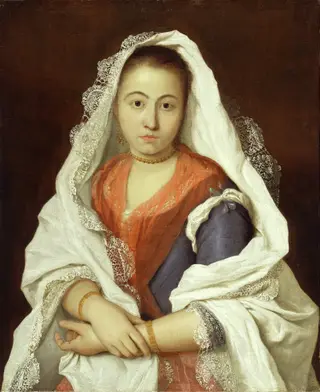
The work is interpreted as a portrait of a European woman residing in Istanbul, possibly a member of a diplomatic family, embodying the cosmopolitan nature of the period.
Symbolically, the sitter's direct gaze and the inclusion of objects associated with literacy and trade suggest virtues of modesty and commercial acumen, reinforcing contemporary ideals of femininity tied to moral and economic virtue.
Technique & Style
Dated to 1718, it portrays a woman from the Island of Patmos and exemplifies Jean Baptiste Vanmour’s portraiture practice during his Istanbul period.
The painting is executed in oil paint on a canvas support, measuring 39.5 cm in height and 31 cm in width. Dated to 1718, it portrays a woman from the Island of Patmos and exemplifies Jean Baptiste Vanmour’s portraiture practice during his Istanbul period. The work belongs to the portrait genre, reflecting the artist’s careful rendering of costume and facial features typical of early‑eighteenth‑century Orientalist depictions.
No specific details about the handling of the brush or the current condition of the work are provided in the sources.
History & Provenance
Created in 1718, Woman from the Island of Patmos is an oil painting on canvas by Jean Baptiste Vanmour. The work was produced in Istanbul and depicts a woman in a portrait style. Its provenance includes ownership by Cornelis Calkoen and Nicolaas Calkoen.
The painting is currently held in the collection of the Rijksmuseum, having entered the institution through the Directie van de Levantse handel en de Navigatie op de Middellandse Zee, the Koninklijk Kabinet van Zeldzaamheden, or the Nederlandsch Museum voor Geschiedenis en Kunst.
Overview
Jean Baptiste Van Mour painted Woman from the Island of Patmos in 1718. Executed in oil, the work depicts a solitary female figure indoors, illuminated by a focused light that highlights her face, hands, and the delicate folds of her costume against a darkened interior. The painting is part of the Rijksmuseum’s collection.
Context
Created during the Ottoman Empire’s Tulip Era under Sultan Ahmed III, the painting reflects the period’s heightened cultural exchange between Europe and the Ottoman world. Van Mour, a Flemish‑French artist active in Constantinople, documented local customs and costumes, contributing to the early Orientalist visual record.
Own this work as a print
Artist & collection
Artist
Jean Baptiste Vanmour or Van Mour (9 January 1671 – 22 January 1737) was a Flemish-French painter, remembered for his detailed portrayal of life in the Ottoman Empire during the Tulip Era and the rule of Sultan Ahmed III.