Artwork
Portrait of the court jester Gonella
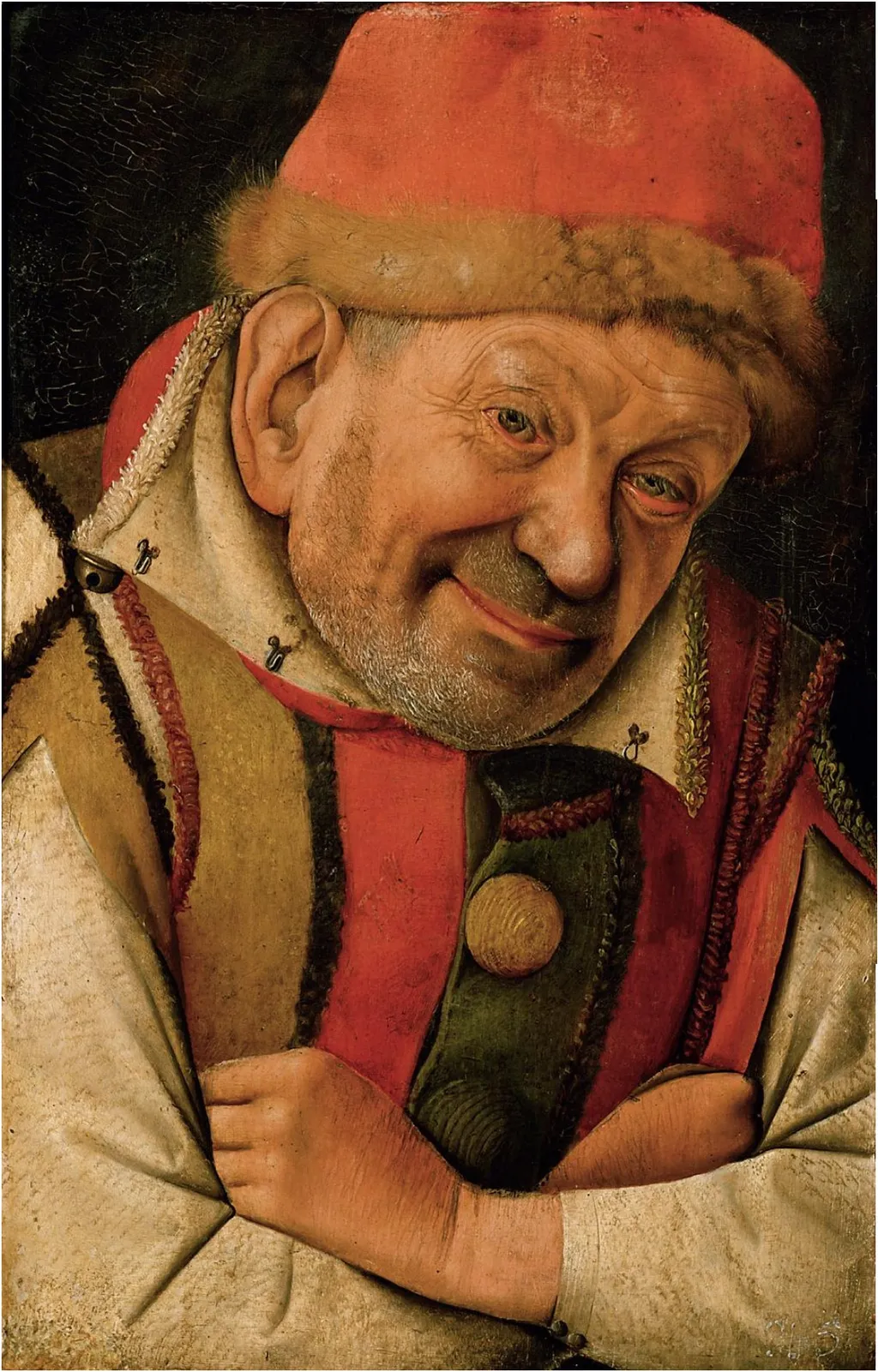
Portrait of the court jester Gonella is an oil painting by the Early Renaissance artist Jean Fouquet. It dates from 1447 and is held in the collection of the Kunsthistorisches Museum.
About this work
Subject & Meaning
He is depicted in a short‑bearded, red‑capped costume with yellow, red and green stripes, gloves and a heraldic dress that may link him to the Este house.
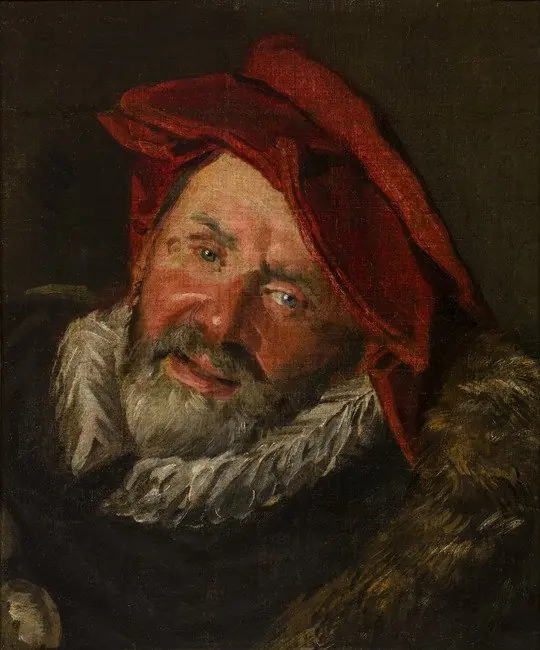
The painting shows a jester named Pietro Gonnella, a court entertainer in the service of the Este family in Ferrara. He is depicted in a short‑bearded, red‑capped costume with yellow, red and green stripes, gloves and a heraldic dress that may link him to the Este house. His pose, hands crossed, head tilted, and a forward‑projecting figure, breaks contemporary portrait conventions and has been read as a parodic reference to the Imago Pietatis, echoing the tragic fate of the jester who reportedly died of fright after a staged execution.
The portrait’s realism, with deep wrinkles and a bitter expression, conveys both humor and melancholy, suggesting a commentary on the precariousness of low‑ranking court figures. Stylistically, the work is executed in oil on a thin Baltic oak panel (36.3 × 25.9 cm), showing French artistic traits rather than Italian influences, and scholars now largely attribute it to Jean Fouquet.
The historical context reinforces the symbolic reading: contemporary accounts, such as Matteo Bandello’s novella, recount Gonella’s death from a prank that turned deadly, and his banishment from Ferrara. The portrait thus memorialises a figure whose wit both entertained and endangered him, embodying themes of power, vulnerability, and the precarious status of jesters in Renaissance courts.
Technique & Style
The portrait is executed in oil on an oak panel, with dendrochronological analysis indicating the Baltic oak support dates to the second quarter of the fifteenth century, a material common in Northern European painting but rare in Italian work. The panel measures 36.3 × 25.9 cm and is 0.4 cm thick, with its reverse finished to imitate marble; it was originally framed, the frame primed along with the panel but later removed.
Stylistically, the work combines a highly detailed, expressive rendering of the face, marked by deep wrinkles, a penetrating gaze, and a bitter, melancholic expression, with comparatively rudimentary folds in the costume and somewhat awkwardly drawn hands. The sitter is shown in a tight bust-length crop that cuts off the top of the cap and the shoulders, pressing the figure forward toward the viewer with arms crossed, a pose scholars link to the Byzantine-derived Imago Pietatis iconography. A later overpainting of the glove on the right hand has been noted, and infrared reflectography revealed French color notations beneath the paint surface.
History & Provenance
First recorded in the 1659 inventory of Archduke Leopold Wilhelm of Austria, the work was initially misattributed to Giovanni Bellini in the style of Albrecht Dürer. Nineteenth-century scholars variously proposed Jan van Eyck or Pieter Bruegel the Elder as the creator before Otto Pächt suggested Jean Fouquet in 1974, an attribution now widely accepted following infrared reflectography that revealed French color notations.
Dendrochronological analysis dates the Baltic oak panel to the second quarter of the 15th century. While some historians place its creation during Fouquet's stay in Ferrara around 1445, others argue for a date near 1450 or slightly later, potentially painting the subject posthumously since Pietro Gonella died in 1441. The use of Northern European oak rather than Italian wood supports the theory that the piece was executed by Fouquet, possibly before his journey to Rome.
Portrait of the court jester Gonella is held by the Kunsthistorisches Museum in Vienna, where it is catalogued under inventory number 2001.0.1234. The work was listed in the 1659 inventory of Archduke Leopold Wilhelm of Austria’s collection, described as a small portrait of the jester with a short beard, red cap and red‑yellow clothing. It has been exhibited in shows on Jean Fouquet’s Italian period at the Kunsthistorisches Museum and appears in scholarly catalogues of the museum’s collection.
Context
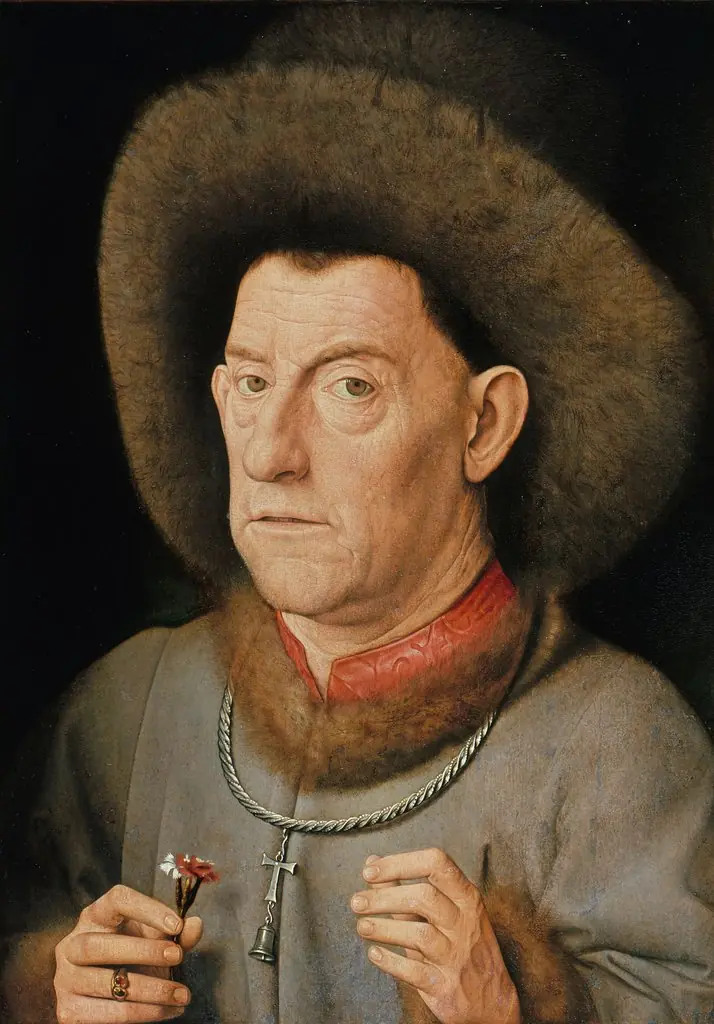
The portrait's attribution has generated sustained scholarly debate. The 1659 inventory of Archduke Leopold Wilhelm described it as a work in the manner of Albrecht Dürer, and 19th-century historians such as Eduard von Engerth (1882) and Louis Gonse proposed attributions to Jan van Eyck and Pieter Bruegel the Elder respectively, while Begeer compared its handling of detail to van Eyck's portrait of Cardinal Albergati. Dendrochronological analysis of its Baltic oak panel ruled out the van Eyck hypothesis.
Otto Pächt first attributed the work to Jean Fouquet in 1974, linking it to Fouquet's portraits of Charles VII and Guillaume Jouvenel des Ursins and to a figure in the Boccaccio manuscript at Munich; infrared reflectography in 1981 revealed French color notations beneath the paint. The Fouquet attribution is now accepted by nearly all art historians, though Albert Châtelet and François Avril remain skeptical. Carlo Ginzburg has situated the work within Fouquet's Italian journey, arguing that the sitter's crossed-arm pose parodies the imago pietatis in allusion to Gonella's tragic death.
Legacy
The portrait of the jester Gonella, attributed to Jean Fouquet, influenced later depictions of court jesters by emphasizing psychological realism and unconventional composition. Carlo Ginzburg noted its pose alludes to the Imago Pietatis, linking the jester’s tragic fate to Christ’s sorrowful imagery. The work’s daring close-up perspective and expressive details, such as wrinkled features and a bitter gaze, broke from contemporary noble portrait conventions, reflecting the low social status of the model.
Its legacy includes scholarly debates over attribution, with early theories crediting Jan van Eyck or Pieter Bruegel, but dendrochronological evidence and infrared analysis solidified its association with Fouquet by the 1970s. The painting’s stylistic choices, like the heraldic costume and forward-projected figure, informed later interpretations of jesters as complex figures, bridging historical narratives and artistic innovation.
The portrait’s provenance, including its presence in Archduke Leopold Wilhelm’s 1659 inventory and later inclusion in the Kunsthistorisches Museum’s collection, cemented its role in art historical discourse. Researchers like Otto Pächt and Carlo Ginzburg analyzed its Italianate influences and possible connections to the House of Este, while debates over its creation date, mid-1440s versus 1447–1450, highlighted its significance as a transitional work in Fouquet’s career. The discovery of a 17th-century copy in Ferrara, inscribed with the jester’s name, further reinforced its legacy, offering insights into its pre-restoration appearance and reinforcing its cultural resonance across centuries.
Overview
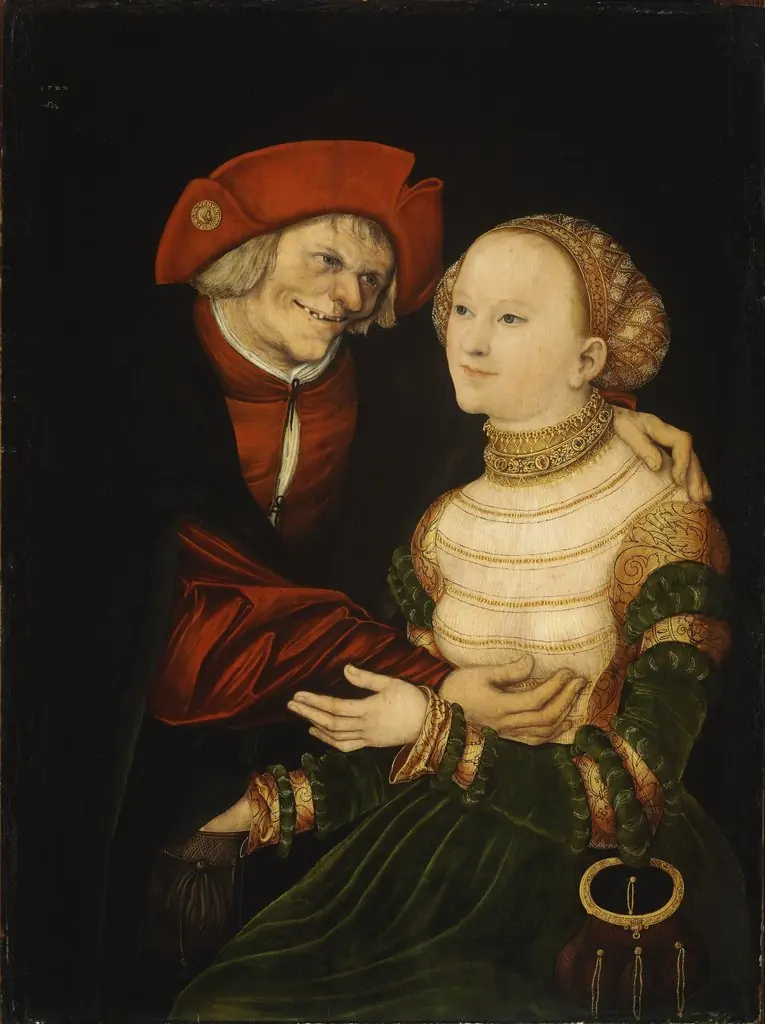
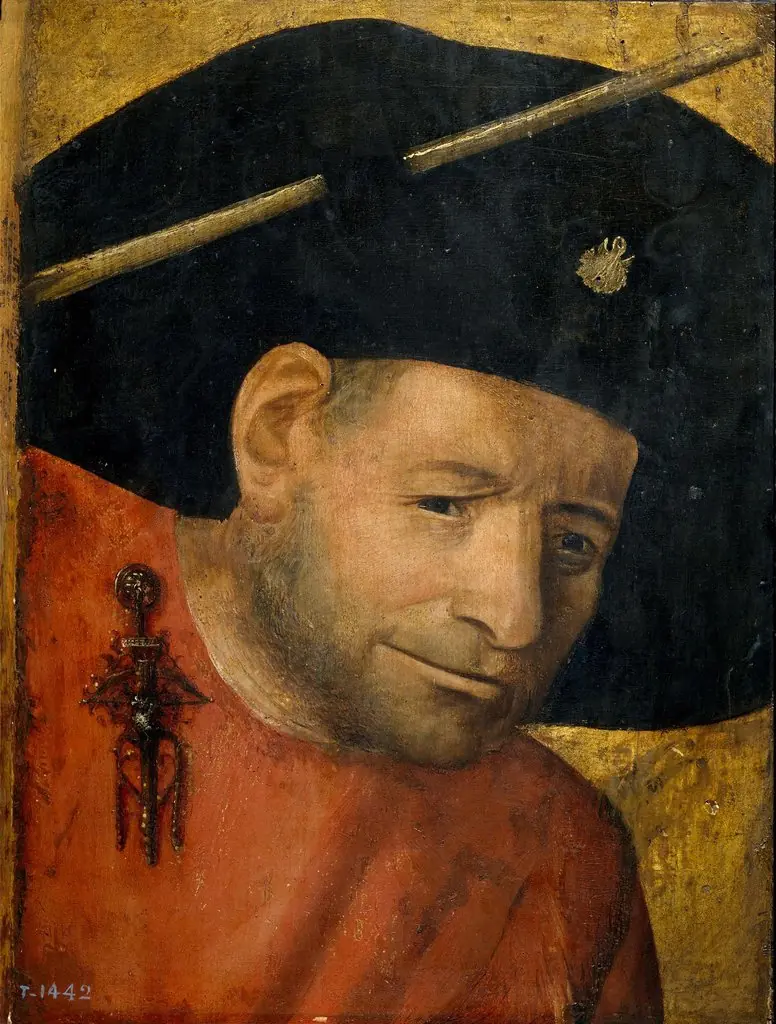
The work, an oil painting dated to the mid‑15th century, is traditionally linked to the French artist Jean Fouquet. It portrays a senior figure with a broad, inviting smile, dressed in a vivid red hat trimmed with fur and a matching robe over a green doublet. A gold coin hangs from his belt, and his hands rest on his chest against a dark backdrop that heightens the garment’s colour.
Artist & collection
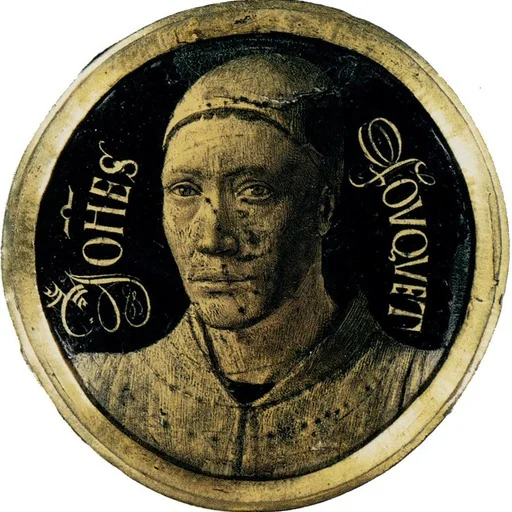
Artist
Jean (or Jehan) Fouquet (French:; c. 1420–1481) was a French painter and miniaturist. A master of panel painting and manuscript illumination, and the apparent inventor of the portrait miniature, he is considered one of…