Artwork
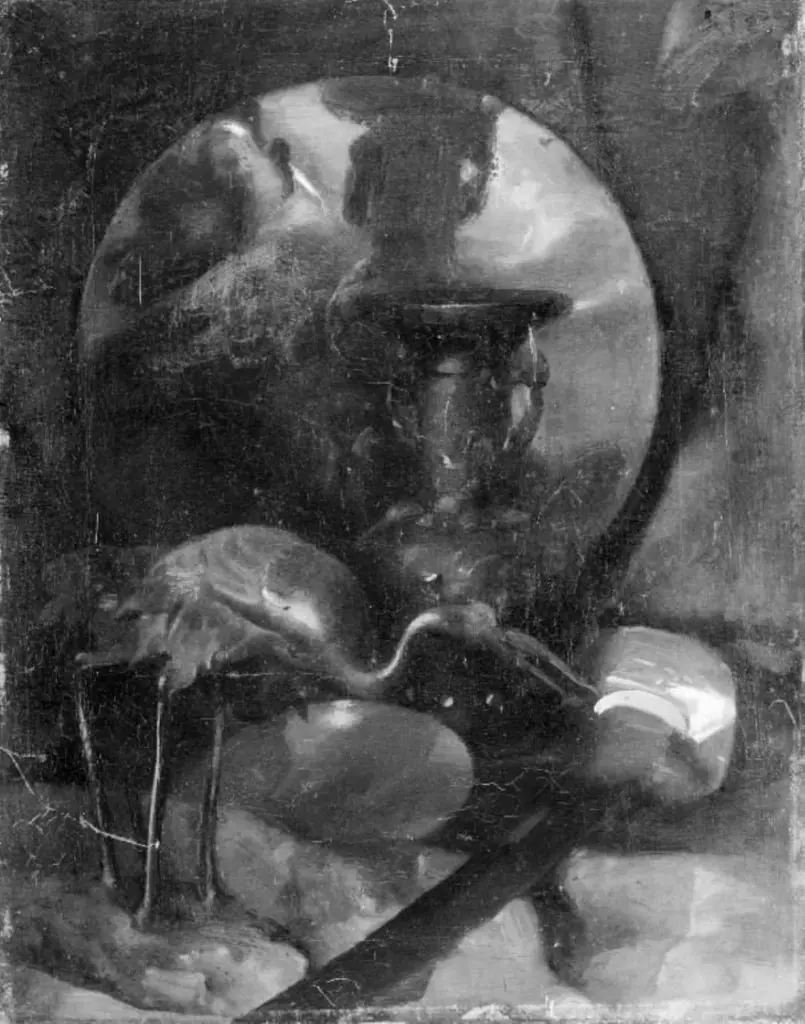
Trompe l'oeil with Palettes and Miniature
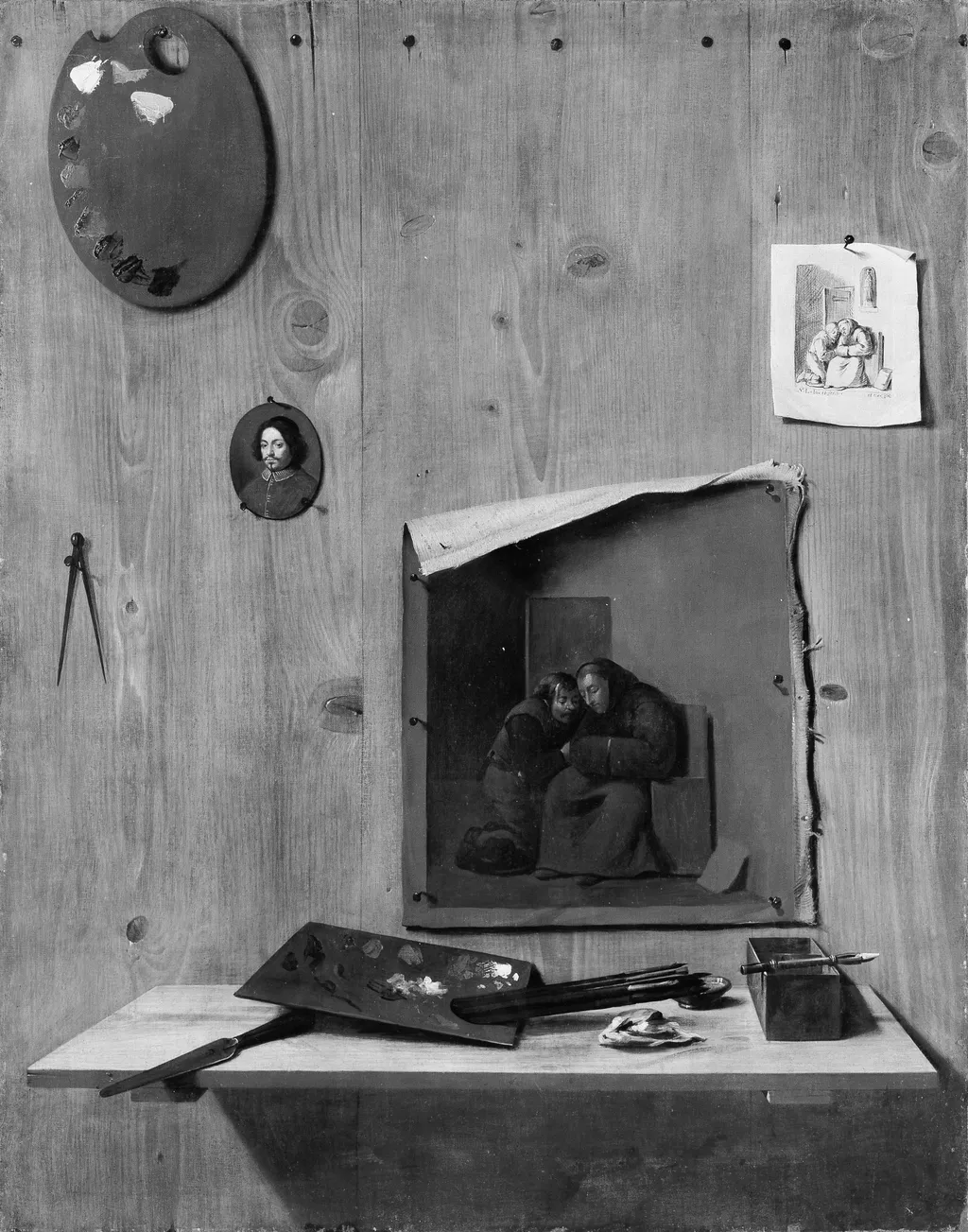
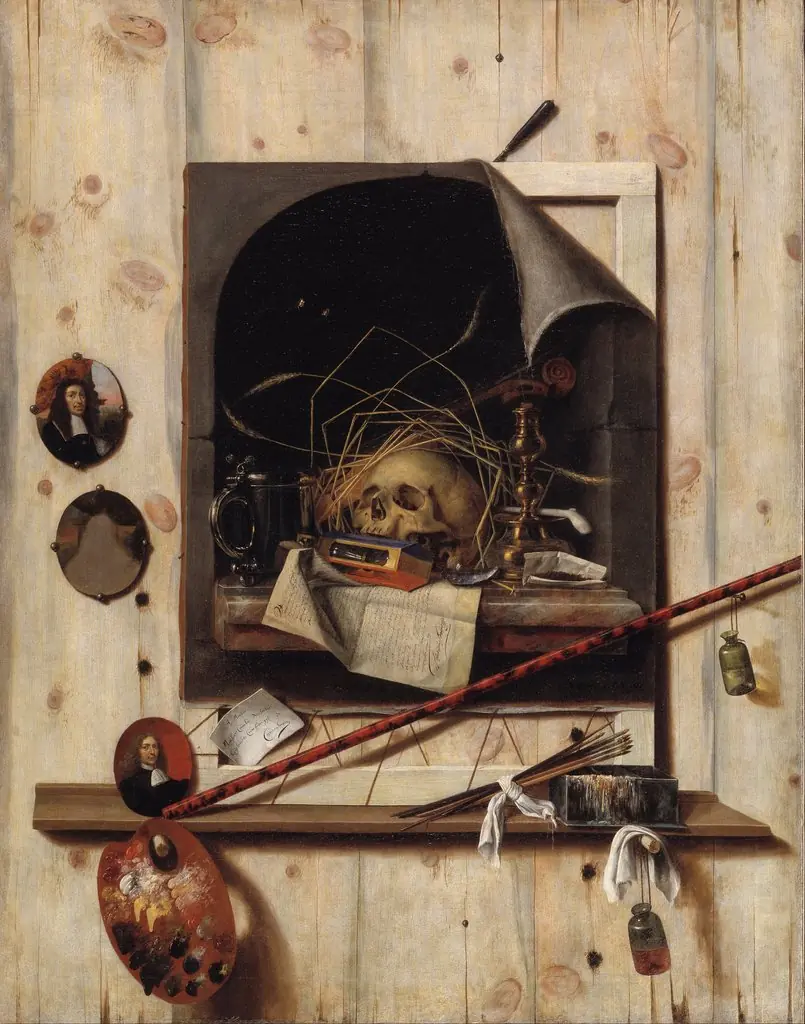
Trompe l'oeil with Palettes and Miniature is an oil painting by the Rococo painting artist Jean François de Le Motte. It is held in the collection of the Metropolitan Museum of Art.
About this work
Technique & Style
The work is an oil painting executed on canvas, a medium consistent with the trompe l'oeil tradition of rendering illusionistic still-life arrangements.
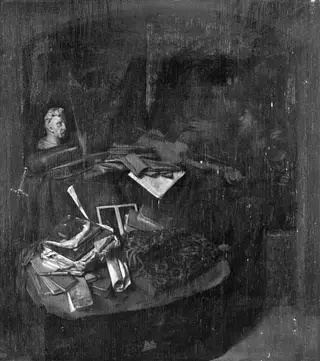
The work is an oil painting executed on canvas, a medium consistent with the trompe l'oeil tradition of rendering illusionistic still-life arrangements. Its dimensions, 119.1 cm in height by 91.8 cm in width, place it in a vertical, near-life-size format suited to displaying palettes and a miniature at near-natural scale. The composition depicts a man and a painting, employing the visual deception characteristic of the trompe l'oeil genre, in which objects are rendered with such fidelity that they appear to project from the picture plane.
Stylistically, the handling reflects the early eighteenth-century French approach to illusionism, with carefully modeled surfaces and convincing spatial relationships between the depicted objects. The canvas support provides the smooth ground necessary for the fine detail and glazed finish typical of the technique.
History & Provenance
Trompe l'oeil with Palettes and Miniature was created in 1700 by Jean François de Le Motte, executed in oil paint on canvas and measuring 119.1 by 91.8 cm. It is held in the collection of the Metropolitan Museum of Art in New York. The sources do not provide an inventory or accession number, an exhibition history, or details of commission or prior ownership.
Overview
Trompe l'oeil with Palettes and Miniature is an oil painting created in 1700 by Jean François de Le Motte. This work, now part of The Metropolitan Museum of Art's collection, exemplifies the trompe l'oeil genre, which aims to deceive the viewer's eye. The composition features an arrangement of artistic implements alongside a small portrait, all rendered with meticulous detail to create a powerful illusion of reality.
Subject & Meaning
The painting meticulously depicts what appears to be a weathered wooden wall, complete with simulated cracks and nails. Affixed to this surface are various objects associated with an artist: a paint palette, brushes, a small sketch, and a pair of dividers. A central element is a miniature portrait, framed and seemingly hanging, which shows two figures in close proximity.
The entire arrangement is a carefully constructed visual deception, designed to make the painted objects seem physically present.
Own this work as a print
Artist & collection
Artist
Jean François de Le Motte (1635–1685) was an artist, born in Tournai.