Artwork
Le Chamineau
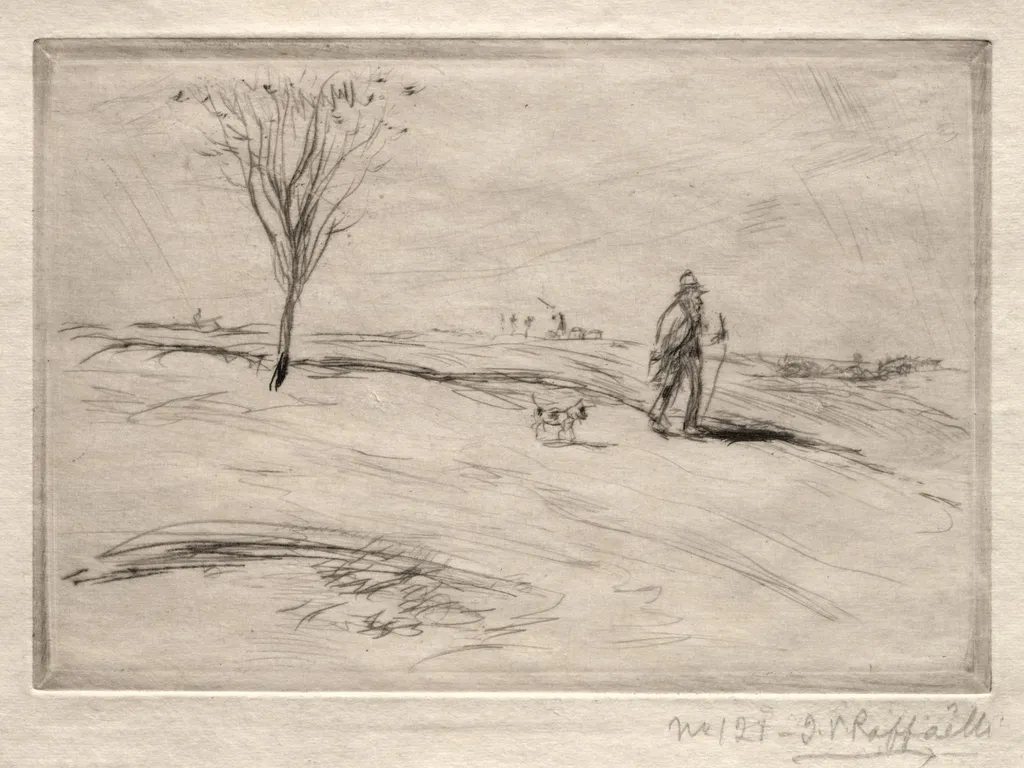
Le Chamineau is a print by the Impressionist artist Jean-François Raffaëlli. It dates from 1897 and is held in the collection of the Cleveland Museum of Art.
- Accession no.
- 1960.255
- Credit line
- Gift of Mrs. Malcolm L. McBride
About this work
Overview
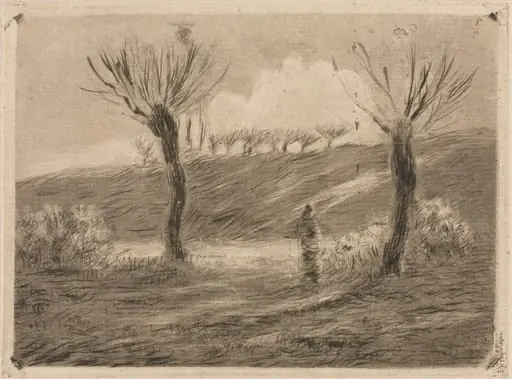
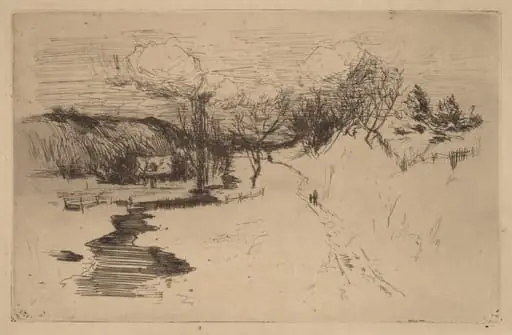
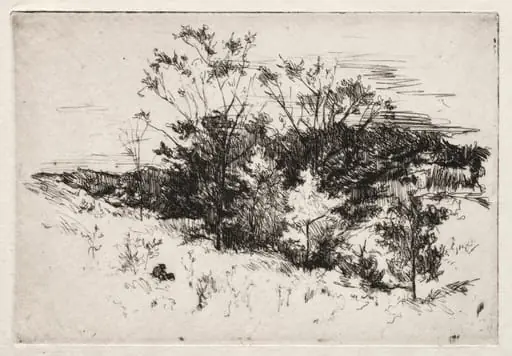
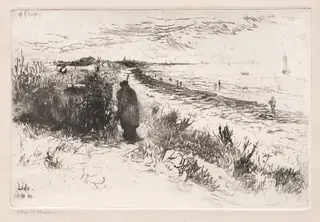
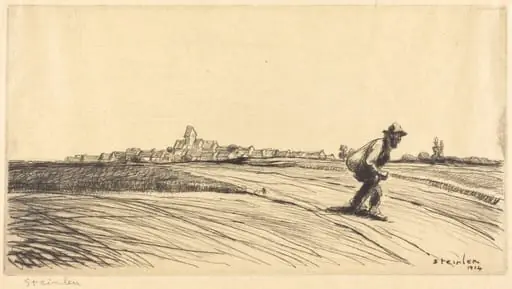
Created in 1897 by French artist Jean-François Raffaëlli, Le Chamineau is a drypoint print capturing a solitary pedestrian and their dog on a damp, uneven path.
Created in 1897 by French artist Jean-François Raffaëlli, Le Chamineau is a drypoint print capturing a solitary pedestrian and their dog on a damp, uneven path. Raffaëlli, known for his realist approach and association with Impressionist circles, employed printmaking to convey fleeting moments of urban and rural life. The work is part of the Cleveland Museum of Art’s collection, reflecting his interest in everyday scenes rendered with immediacy and quiet observation.
Subject & Meaning
The print depicts a figure in a hat, leaning on a stick, walking a small dog along a muddy lane. The dog moves ahead, suggesting a casual, unhurried rhythm. Behind them, bare trees and distant buildings frame the scene without drawing attention.
There is no narrative climax, only the quiet persistence of routine. The subject’s anonymity and the unremarkable setting emphasize the dignity of ordinary moments, a recurring theme in Raffaëlli’s work.
Technique & Style
Raffaëlli used drypoint to create dense, expressive lines that suggest texture and movement. The wet ground is rendered with smudged, irregular strokes; grass and foliage appear as quick, scratchy marks. The figure and dog are loosely defined, avoiding detail in favor of gesture.
The background buildings are simplified, their forms emerging from faint, overlapping contours. This approach aligns with Impressionist sensibilities, prioritizing atmosphere over precision.
History & Provenance
Raffaëlli produced Le Chamineau during a period when he was actively exhibiting prints alongside Impressionist peers, though he maintained a distinct realist focus. The work entered the Cleveland Museum of Art’s collection through established acquisition channels in the 20th century. Its preservation reflects growing institutional interest in late 19th-century printmaking as a legitimate medium for social observation, separate from painting.
Context
In the 1890s, French artists increasingly turned to printmaking to explore modern life beyond the studio. Raffaëlli, though often grouped with Impressionists, favored unidealized subjects, laborers, street dwellers, solitary walkers. Le Chamineau fits within this trend, echoing the quiet realism of Degas and Daumier.
The scene’s lack of sentimentality and its focus on mundane movement reflect broader cultural shifts toward documenting everyday experience without embellishment.
Legacy
Though less widely known than his Impressionist contemporaries, Raffaëlli’s prints like Le Chamineau contributed to the legitimacy of printmaking as a vehicle for social observation. His emphasis on unadorned, transient moments influenced later realist and modernist printmakers. The work remains a quiet testament to the value of ordinary life, preserved not through grandeur but through careful, unassuming observation.
Own this work as a print
Artist & collection
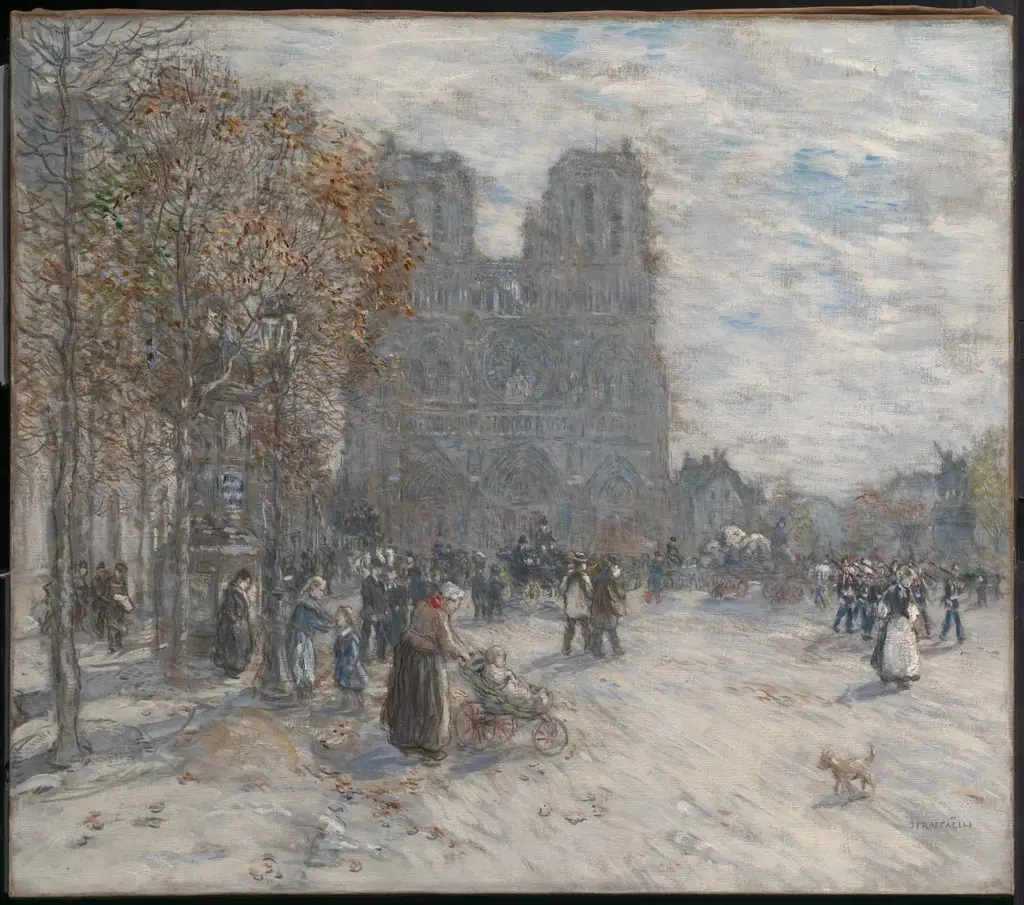
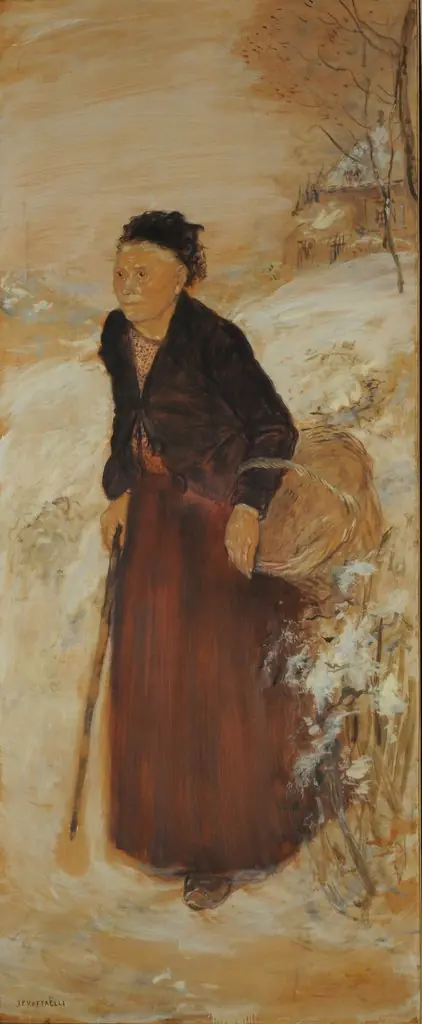
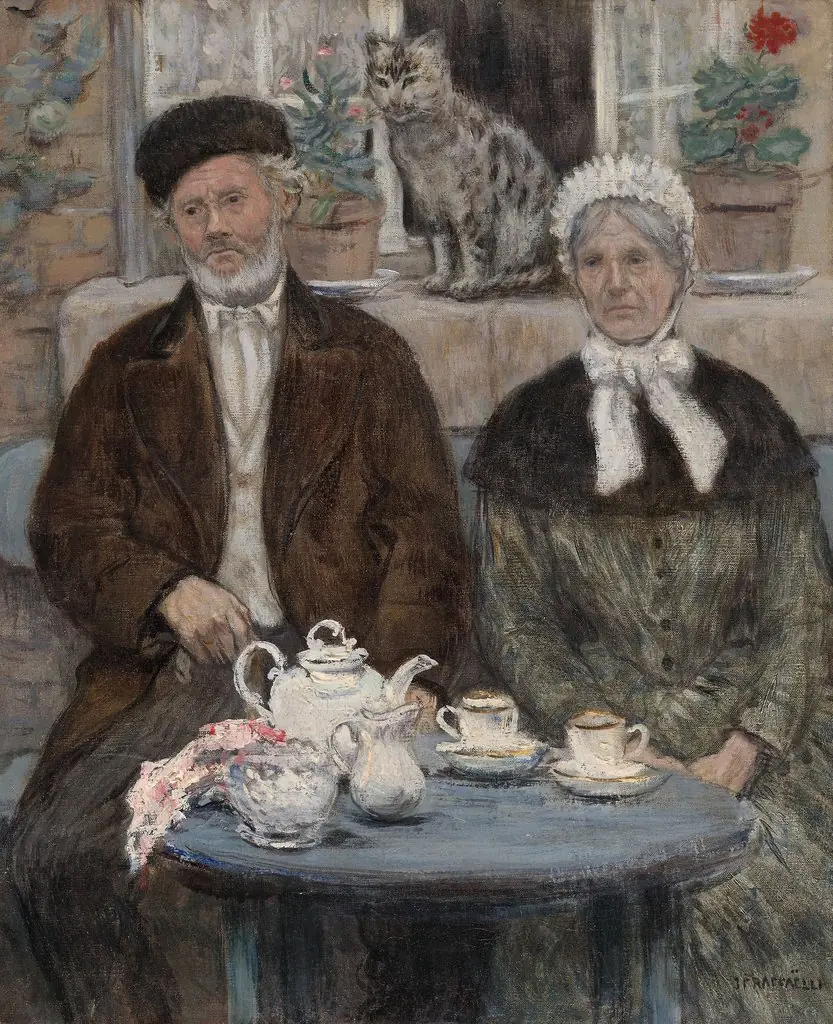
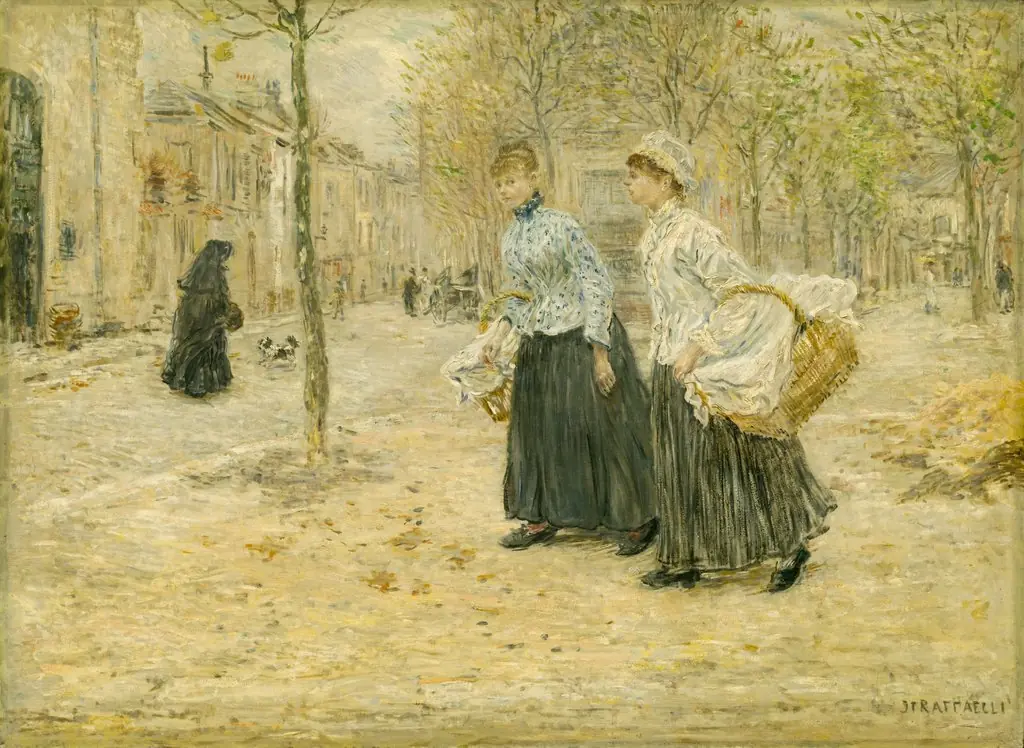
Artist
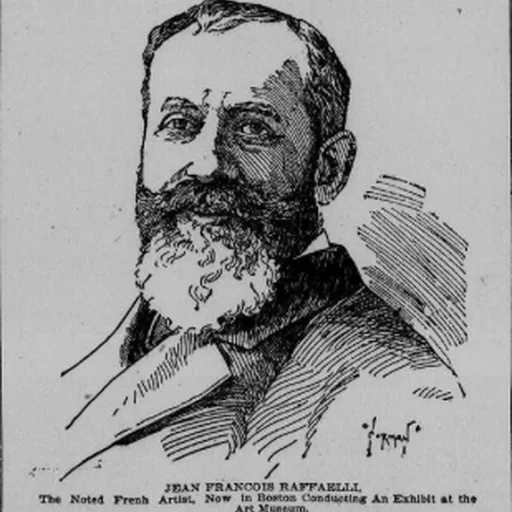
Jean-François Raffaëlli (April 20, 1850 – February 11, 1924) was a French realist painter, sculptor, and printmaker who exhibited with the Impressionists. He was also active as an actor and writer.