Artwork
The Christian Martyrs' Last Prayer
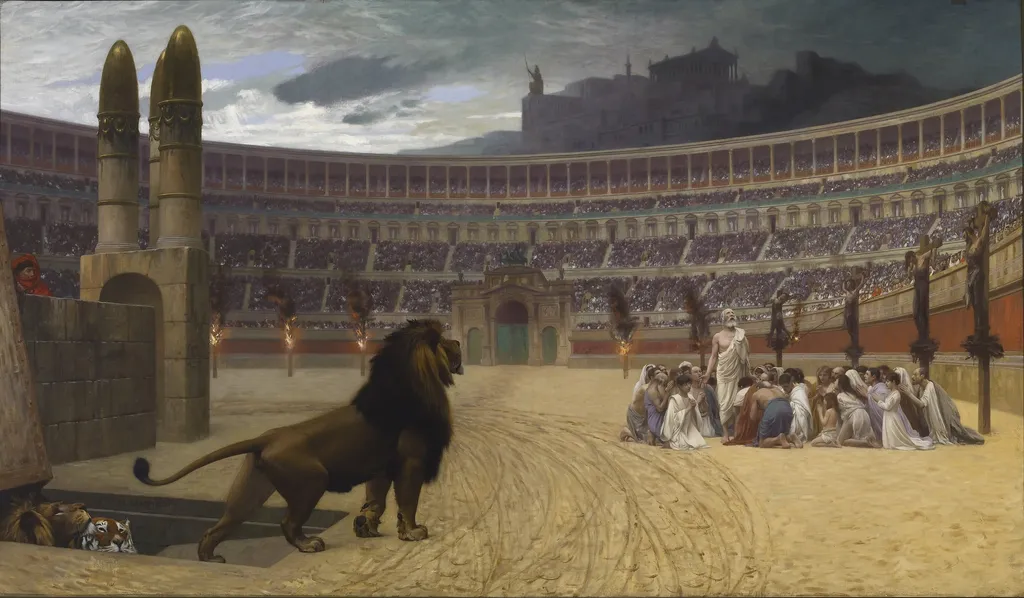
The Christian Martyrs' Last Prayer is an oil painting by the Academic Art artist Jean Léon Gérôme. It dates from 1892 and is held in the collection of the Walters Art Museum. Painted in 1883 by Jean-Léon Gérôme, this oil on canvas work depicts a moment of solemnity amid impending violence.
About this work
Overview
The scene unfolds in a vast, ancient amphitheater under a hazy sky, where a group of figures in white garments kneel in prayer.
Painted in 1883 by Jean-Léon Gérôme, this oil on canvas work depicts a moment of solemnity amid impending violence. The scene unfolds in a vast, ancient amphitheater under a hazy sky, where a group of figures in white garments kneel in prayer. A lion, poised on a raised stone platform, faces them, its presence suggesting imminent threat. The composition emphasizes stillness against looming danger, characteristic of Gérôme’s theatrical realism.
Subject & Meaning
The painting illustrates the final moments of Christian martyrs before execution in the Roman arena. Rather than depicting violence, Gérôme focuses on their quiet devotion, contrasting spiritual resolve with the predatory animal nearby. The lion, neither attacking nor restrained, heightens psychological tension.
The work reflects 19th-century fascination with antiquity and religious martyrdom, evoking themes of faith under persecution without overt sentimentality.
Technique & Style
Gérôme employs precise, polished brushwork to render textures of fabric, stone, and fur with archaeological attention to detail. The lighting is theatrical, casting soft shadows that define the figures’ forms and isolate them against the dim arena. The circular architecture recedes into atmospheric perspective, enhancing depth.
His academic style prioritizes clarity and control, using composition to guide the viewer’s gaze toward the central group and the looming predator.
History & Provenance
Completed in 1883, the painting entered the collection of the Walters Art Museum in Baltimore, where it remains today. It was exhibited in Paris during Gérôme’s lifetime and later acquired by Henry Walters, a noted American collector of European art. The work’s journey from French studio to American museum reflects broader 19th-century patterns of art patronage and the transatlantic circulation of academic painting.
Context
Gérôme painted this during a period when historical and biblical subjects dominated French academic art. His interest in Roman antiquity aligned with contemporary archaeological discoveries and public fascination with ancient Rome’s spectacles. While not based on a specific historical account, the scene draws from widely circulated narratives of early Christian persecution, filtered through 19th-century ideals of stoicism and moral courage.
Legacy
The painting exemplifies the academic tradition’s emphasis on narrative clarity and technical precision. Though later overshadowed by modernist movements, it retains scholarly interest for its depiction of religious trauma and its engagement with classical architecture. It continues to be studied as a case of how 19th-century artists interpreted ancient history through contemporary moral and aesthetic frameworks.
Artist & collection

Artist
Jean-Léon Gérôme was a French painter and sculptor in the style now known as academicism.

 Chariot Race
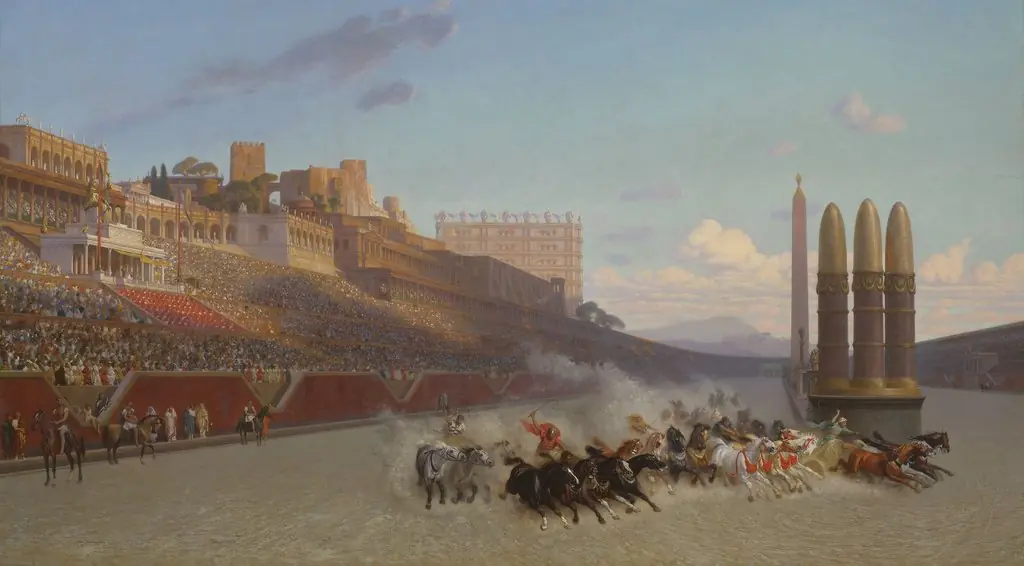 Chariot Race
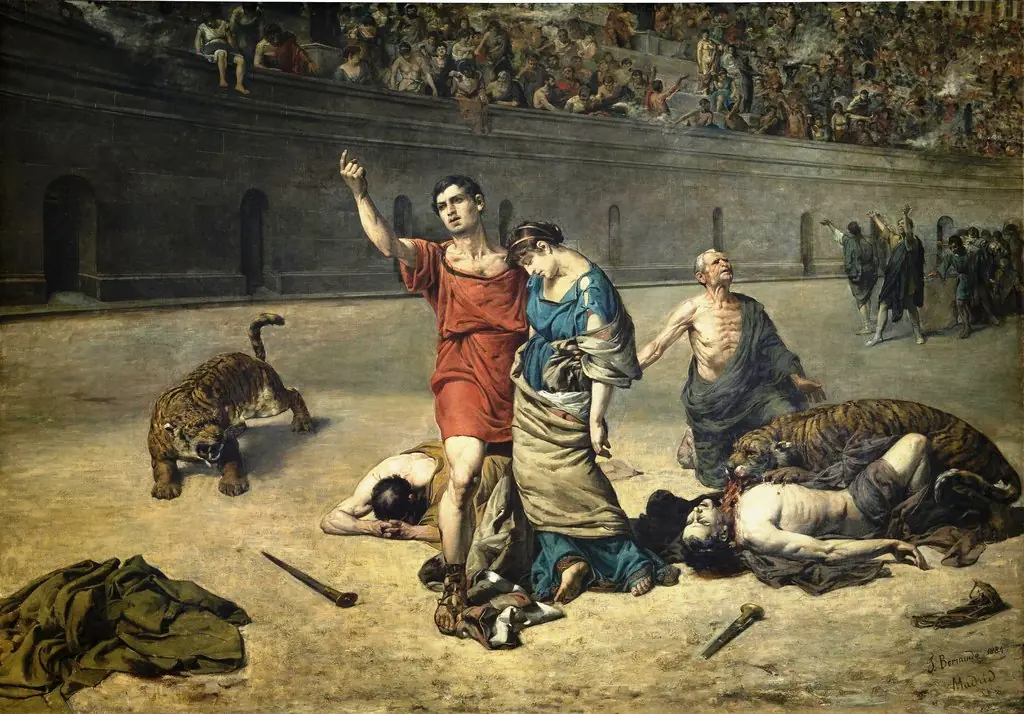 Eudoro y Cimodocea en el anfiteatro
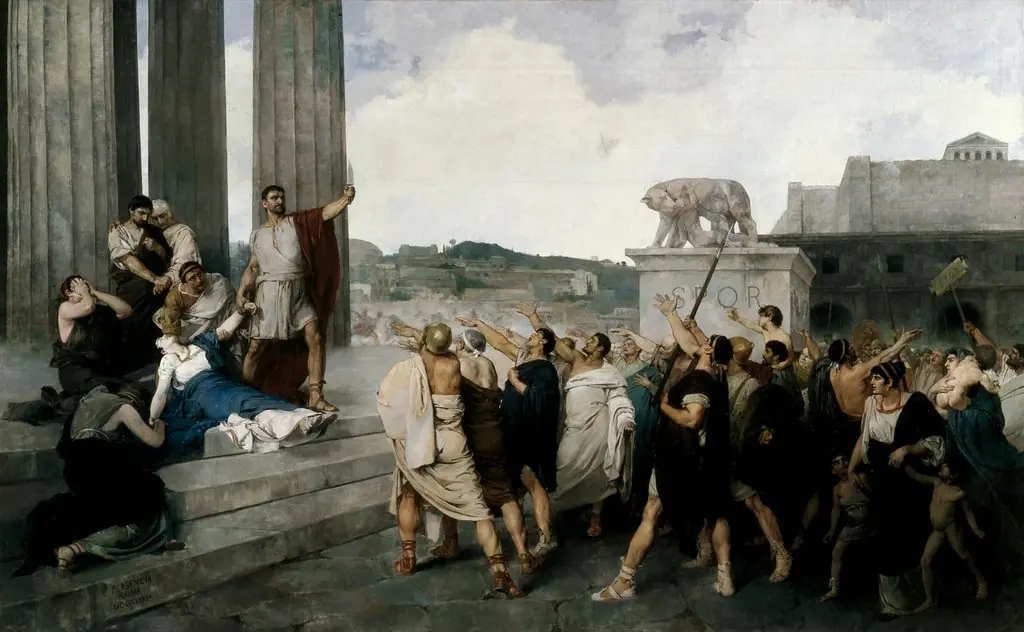 Origen de la República Romana (año 598 antes de la era cristiana)
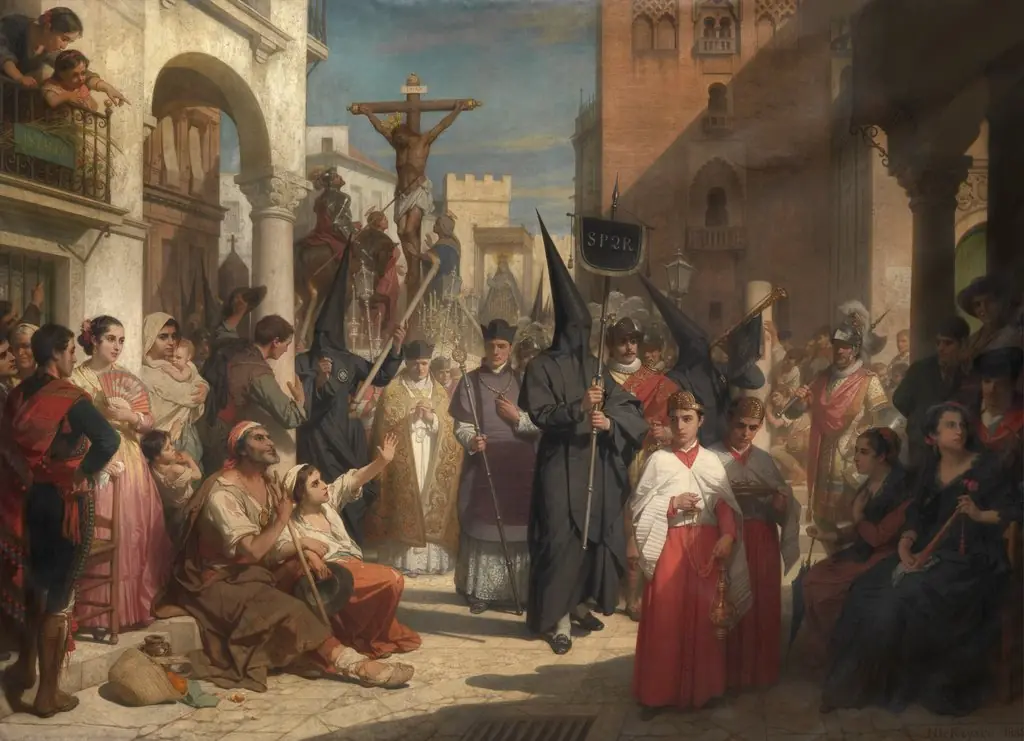 Good Friday Procession in Seville
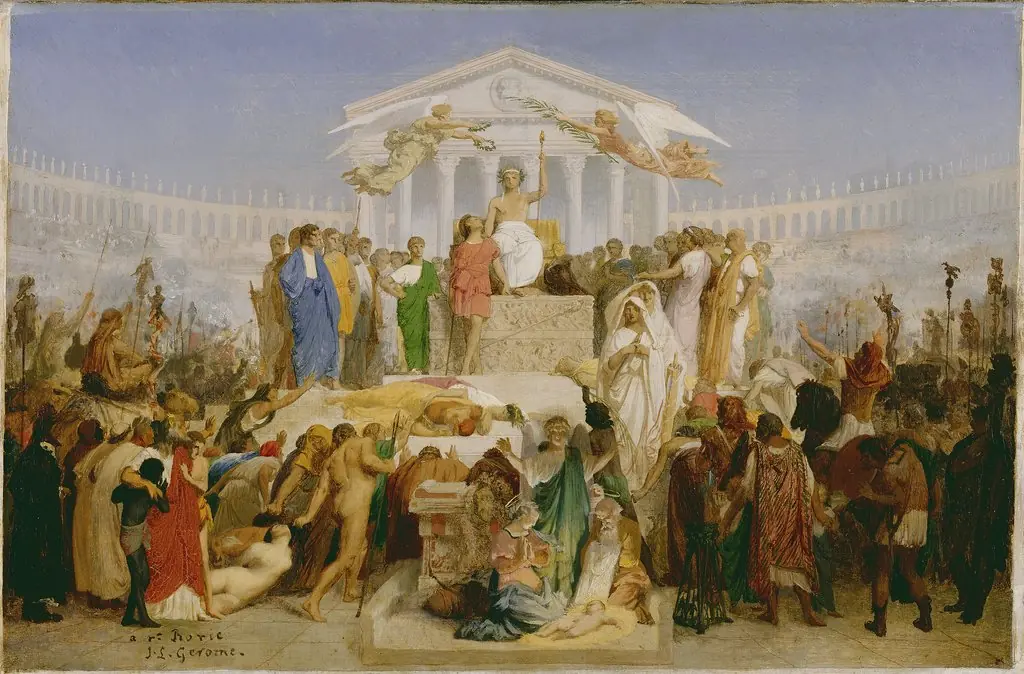 The Age of Augustus, the Birth of Christ
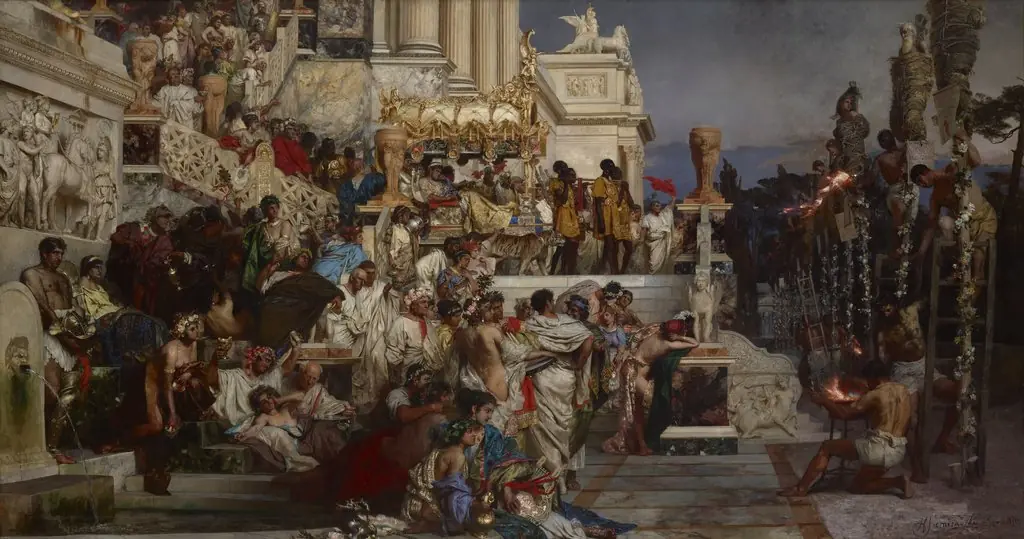 Nero's Torches
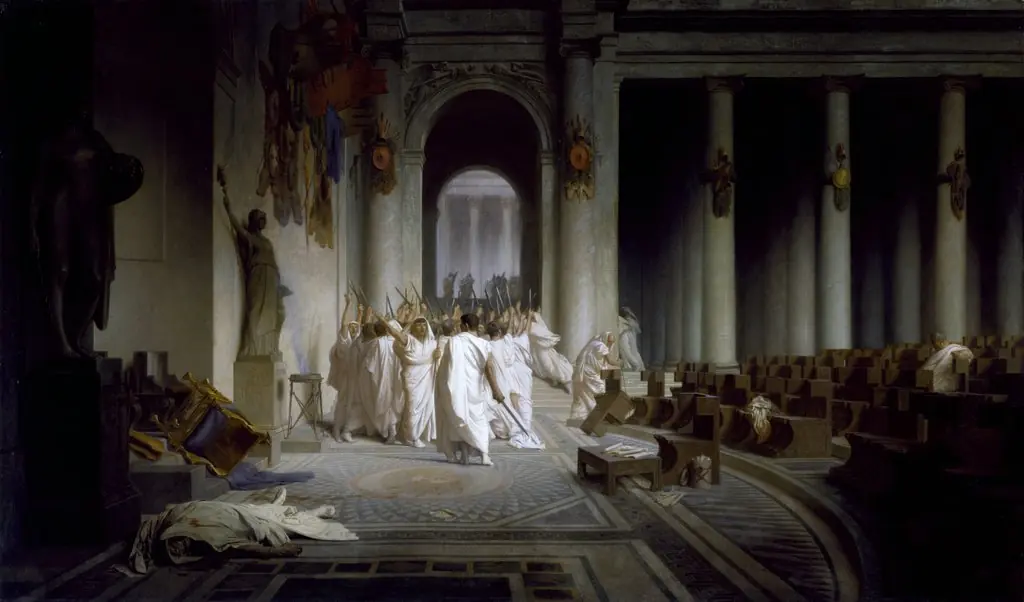 The Death of Caesar
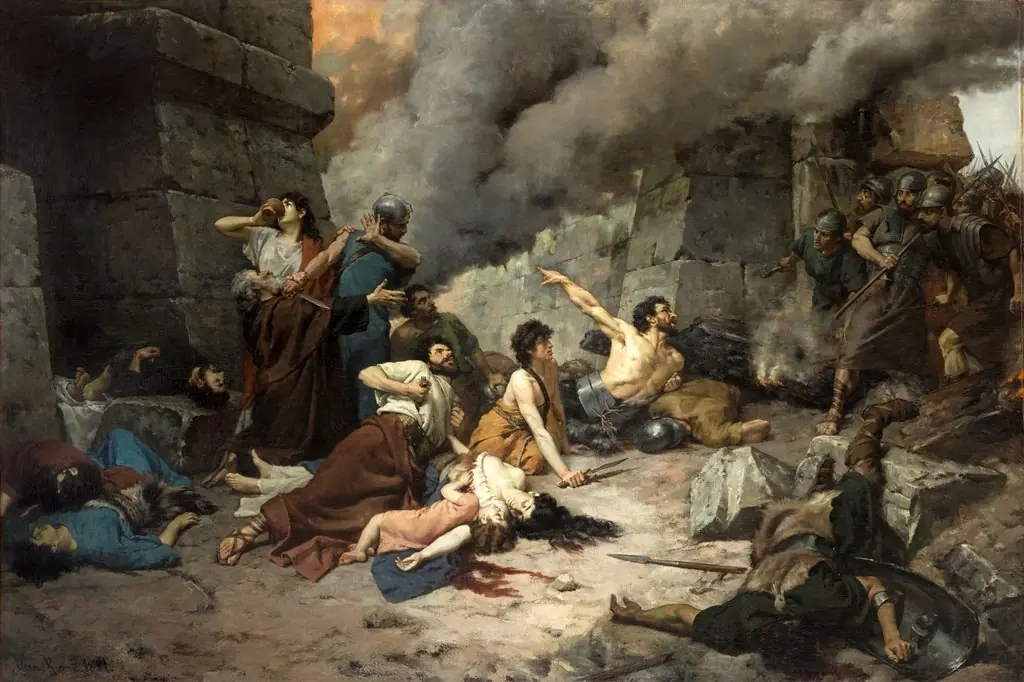 El darrer dia de Numància
 The Bullfight
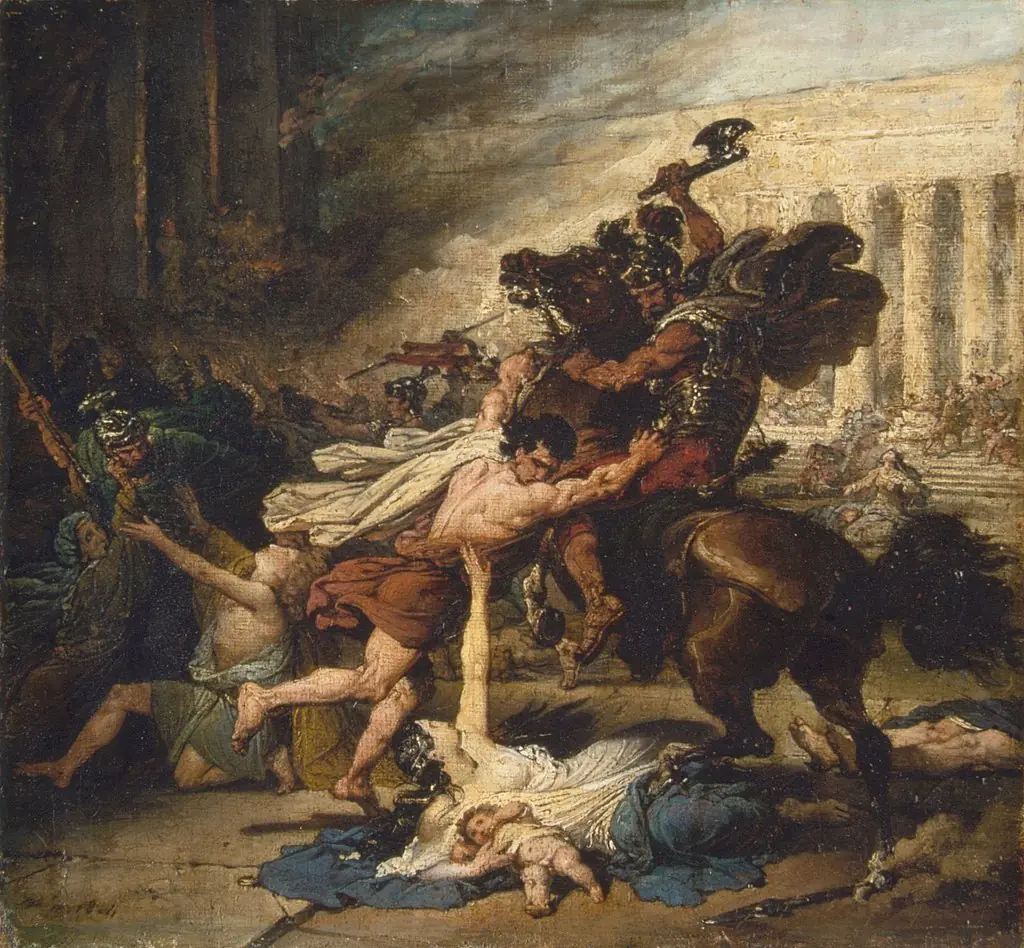 The Sack of Jerusalem by the Romans
- A Christian Martyr