Artwork
View of the Nile at Luxor
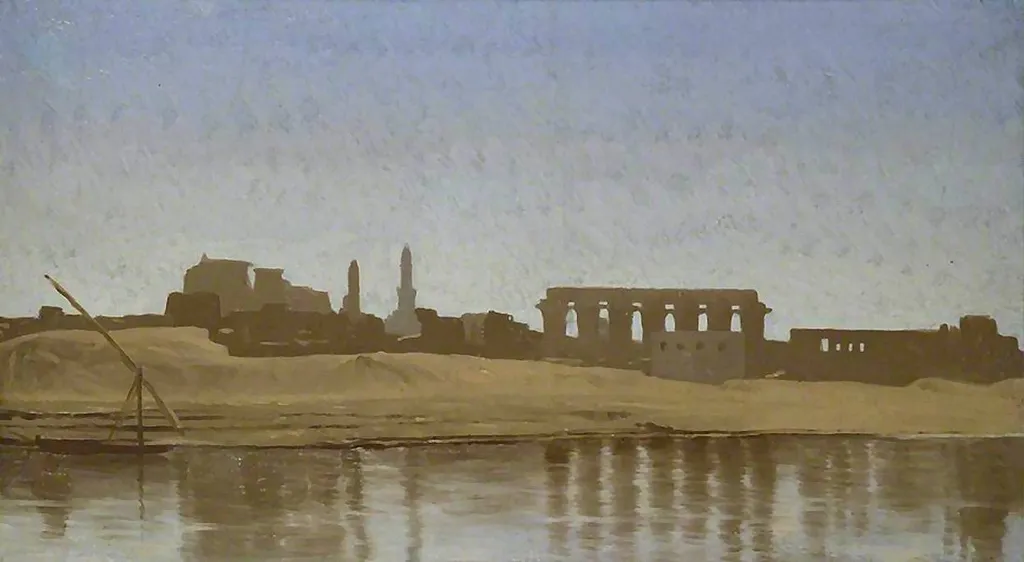
View of the Nile at Luxor is an oil painting by the Orientalist artist Jean Léon Gérôme. It dates from 1857 and is held in the collection of the Ashmolean Museum.
About this work
Overview
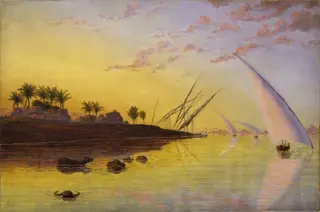
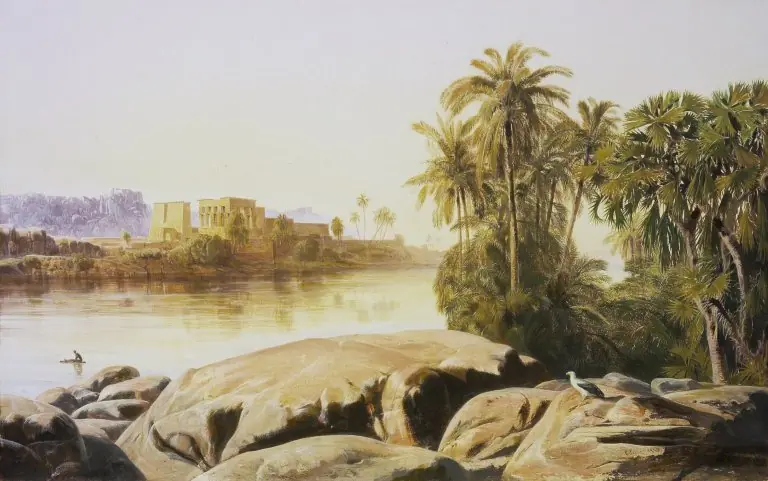
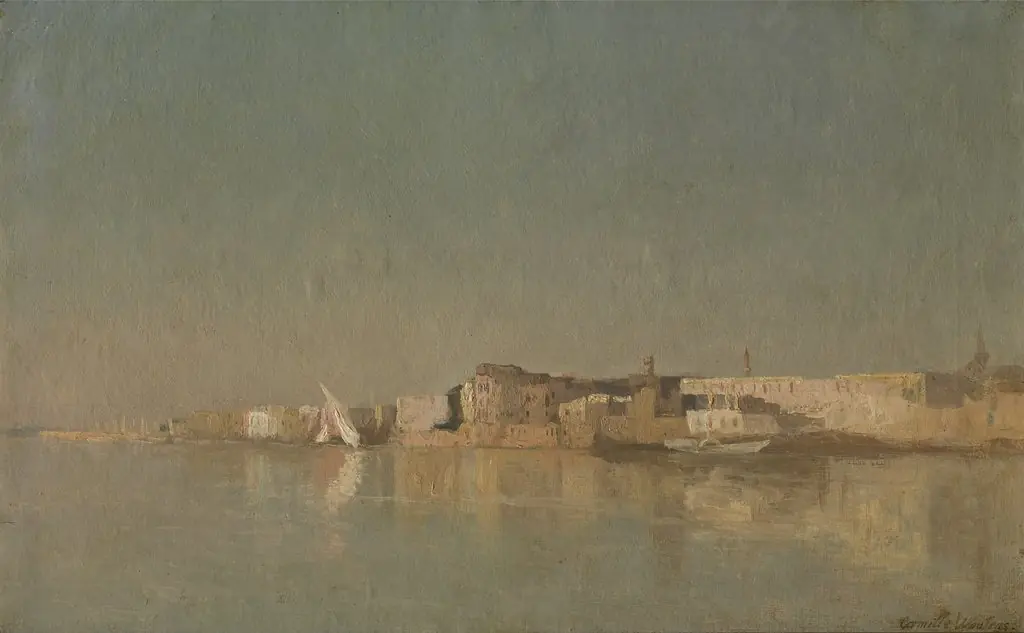
Painted in 1857, View of the Nile at Luxor captures a tranquil moment along the Egyptian riverbank during Jean Léon Gérôme's first journey to the Middle East.
Painted in 1857, View of the Nile at Luxor captures a tranquil moment along the Egyptian riverbank during Jean Léon Gérôme's first journey to the Middle East. The composition is structured around the broad, calm expanse of the Nile, which occupies the foreground and reflects the soft light of the sky. On the far bank, the artist delineates a cluster of structures, including traditional houses and architectural elements suggestive of local religious buildings, rendered with precise attention to form and texture.
Gérôme employs a muted, earthy palette dominated by ochres, siennas, and cool blues to evoke the arid atmosphere and the specific quality of North African light. This work exemplifies the artist's commitment to academic realism and his fascination with Orientalist subjects, prioritizing topographical accuracy and atmospheric observation over romanticized narrative. Created shortly after his arrival in Egypt, the painting marks a pivotal moment in Gérôme's career, establishing the visual language and thematic focus that would define his subsequent Orientalist masterpieces.
It stands as a documentary-style landscape that reflects the 19th-century European interest in the exoticism and perceived timelessness of the Orient.
Subject & Meaning
The painting captures a quiet stretch of the Nile, its surface mirroring a pale sky dotted with thin clouds. Distant structures, likely a temple or mosque, anchor the landscape, suggesting the coexistence of natural and built environments in Luxor. The overall mood conveys a sense of stillness and contemplation, inviting viewers to consider the timelessness of the river.
Technique & Style
Gérôme employs a restrained palette of browns, beiges and soft blues, allowing the light to diffuse gently across the scene. Fine brushwork renders the texture of stone façades and the rippling water, while subtle tonal variations give depth to the horizon. The meticulous detail reflects the artist’s academic training and his interest in precise, realistic representation.
History & Provenance
Completed in 1857, the canvas entered the Ashmolean Museum’s holdings, where it remains on display. Its acquisition reflects the 19th‑century European fascination with Oriental subjects, a trend that Gérôme helped popularise through his travels and depictions of Egyptian locales.
Artist & collection

Artist
Jean-Léon Gérôme was a French painter and sculptor in the style now known as academicism.