Artwork
a) After Douai (recto); b) Untitled (verso)
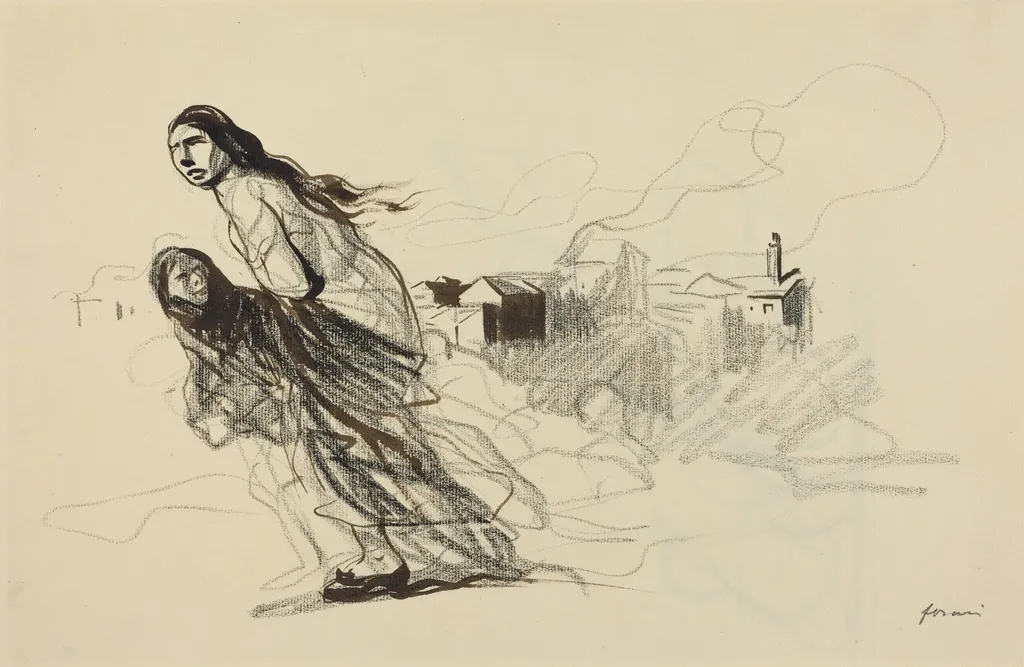
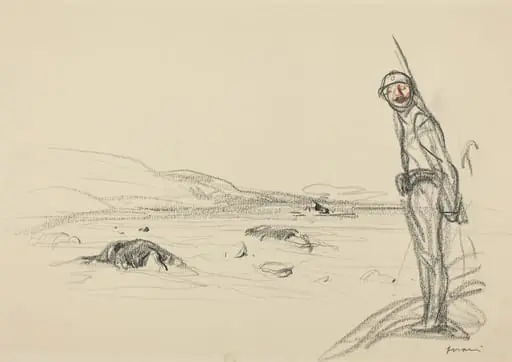
a) After Douai (recto); b) Untitled (verso) is an ink drawing by Jean-Louis Forain. It dates from 1918 and is held in the collection of the National Gallery of Art. Created circa 1918, the double-sided drawing by French artist Jean‑Louis Forain presents two complementary studies on laid paper.
- Inscription
- Inscribed:"forain" lower right margin, graphite, artist's hand. Not dated. "Après Douai. "Les troupes allemandes ont reçu l'ordre le plus formel d'éparquer la propriété prirée." Solf. Sans doute, l'ordre h'était pasencore arrivé..." lower margin, graphite, unknown hand. "A. 2360" lower right margin, graphite, unknown hand. Verso: none.
- Markings
- Marked:"LRJ" verso, black stamped ink, (Lugt 1760b). "National Gallery of Art" verso, black stamped ink, (Lugt 1932d).
About this work
Overview
Both sheets belong to the same sheet, offering a glimpse into Forain’s rapid sketching practice during the later phase of his career.
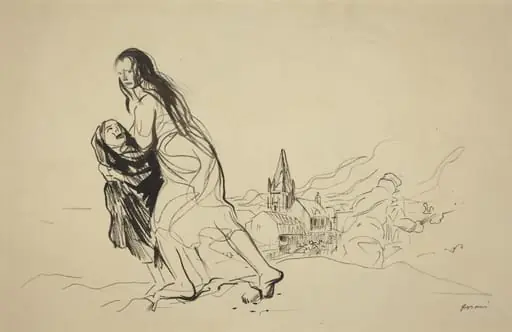
Created circa 1918, the double-sided drawing by French artist Jean‑Louis Forain presents two complementary studies on laid paper. The recto, titled After Douby, combines brown and black ink applied with a brush and black crayon, while the verso, left untitled, is executed solely in black crayon. Both sheets belong to the same sheet, offering a glimpse into Forain’s rapid sketching practice during the later phase of his career.
Subject & Meaning
The front image depicts a woman bearing a child on her back as she moves past a modest streetscape. She is dressed in simple, loose garments and a head covering, suggesting a working‑class figure. Behind her, a cluster of low houses and a distant factory chimney rise, hinting at an industrial environment and the everyday labor of the period.
Technique & Style
Forain employs a brisk, gestural line, building volume through dense cross‑hatching with ink and crayon. The overlapping strokes generate subtle tonal shifts without relying on color, allowing the figures and architecture to emerge from the paper’s texture. The verso’s exclusive use of black crayon demonstrates a similar economy of means, emphasizing line over surface.
History & Provenance
The drawing dates to the final years of World War I, a time when Forain was active in both illustration and fine‑art circles. Though primarily known for his prints and paintings, he produced numerous paper studies for personal or preparatory purposes. The work’s ownership history is not fully documented, but it remains attributed to Forain’s late‑period output.
Own this work as a print
Artist & collection

Artist
Jean-Louis Forain (French pronunciation:; 23 October 1852 – 11 July 1931) was a French Impressionist painter and printmaker, working in media including oils, watercolour, pastel, etching and lithograph.

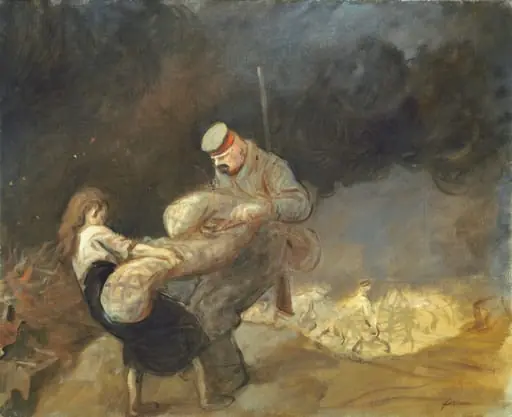
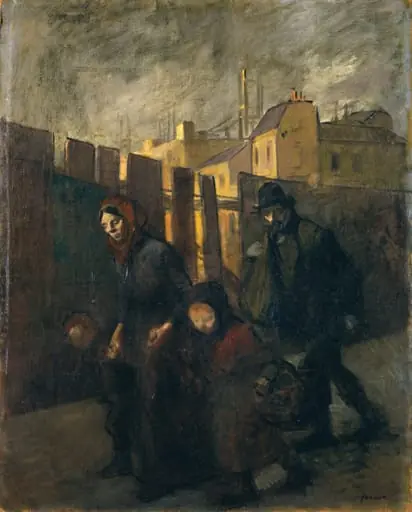
- After Douai
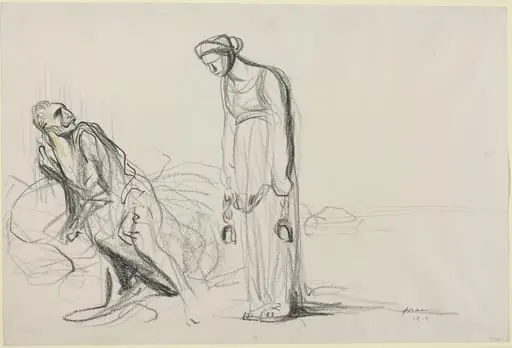 a) Fetters (recto); b) Sketch for Fetters (verso)
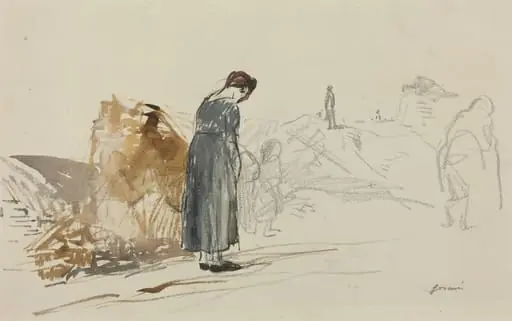 a) Les Allemandes sont partis (recto); b) Sketch of a Man (verso)
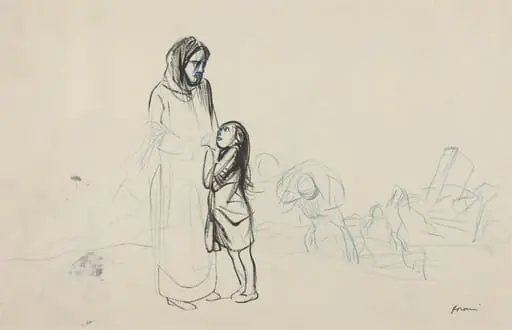 a) Refugees (recto); b) No 2 (verso)
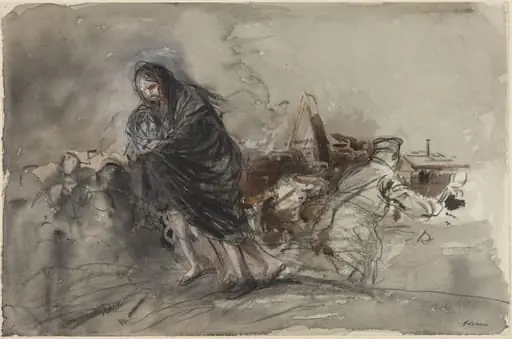 a) Après Douai (After Douai) (recto); b) Figure (verso)
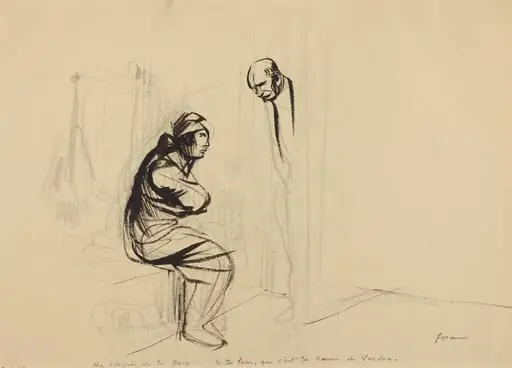 a) Au congres de la Paix (recto); b) Untitled (verso)
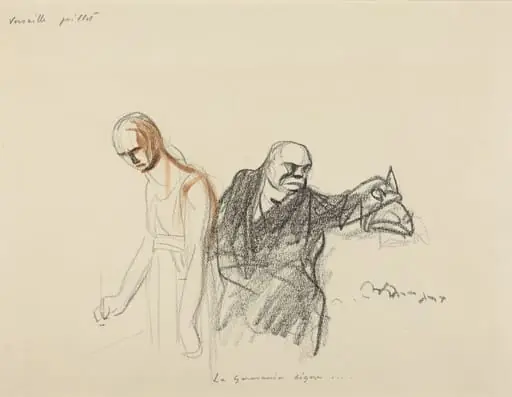 a) Versailles juillet. La Germania signe... (recto); b) Sketch for Figure of Germania (verso)
 a) Along the Marne (recto); b) Study for Along the Marne (verso)