Artwork
A Night Class
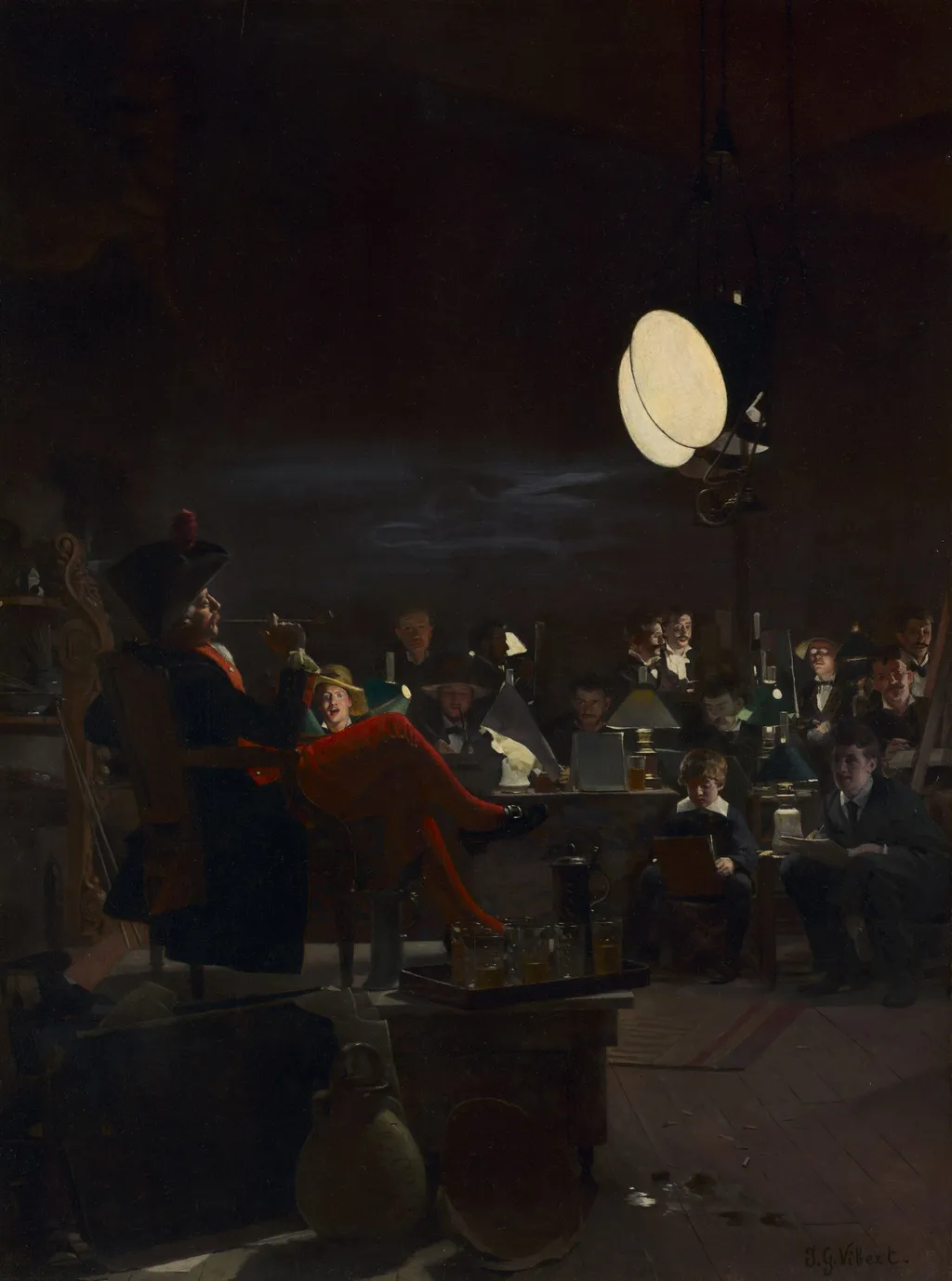
A Night Class is an unspecified painting by the Post-Impressionist artist Jehan Georges Vibert. It dates from 1891 and is held in the collection of the Cleveland Museum of Art.
About this work
History & Provenance
The work entered the collection of the Cleveland Museum of Art, where it is cataloged under the accession number 1980.
Jehan Georges Vibert painted A Night Class in 1881 in France. The work entered the collection of the Cleveland Museum of Art, where it is cataloged under the accession number 1980.292. While the specific circumstances of its commission and the details of its ownership history prior to 1980 are not provided in the available records, the painting's creation date and current institutional home are firmly established.
A Night Class is held in the collection of the Cleveland Museum of Art in Cleveland, Ohio, with accession number 1980.292. The oil on canvas measures 60.8 cm by 45.4 cm and was painted in France in 1881. It has been part of exhibitions at the Cleveland Museum of Art, including a 1980 survey of French academic painting and a 2015 display of 19th-century European genre scenes.
Context
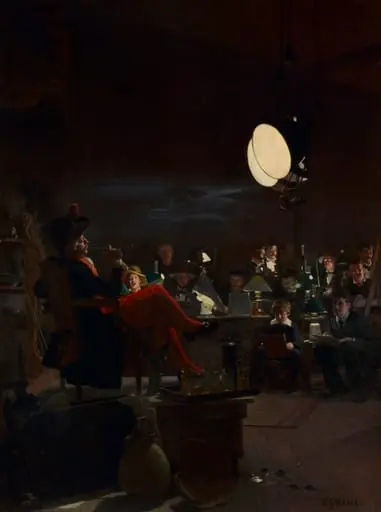
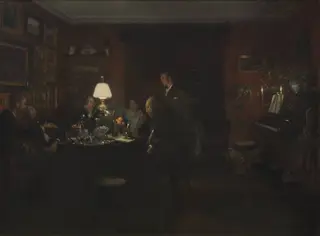
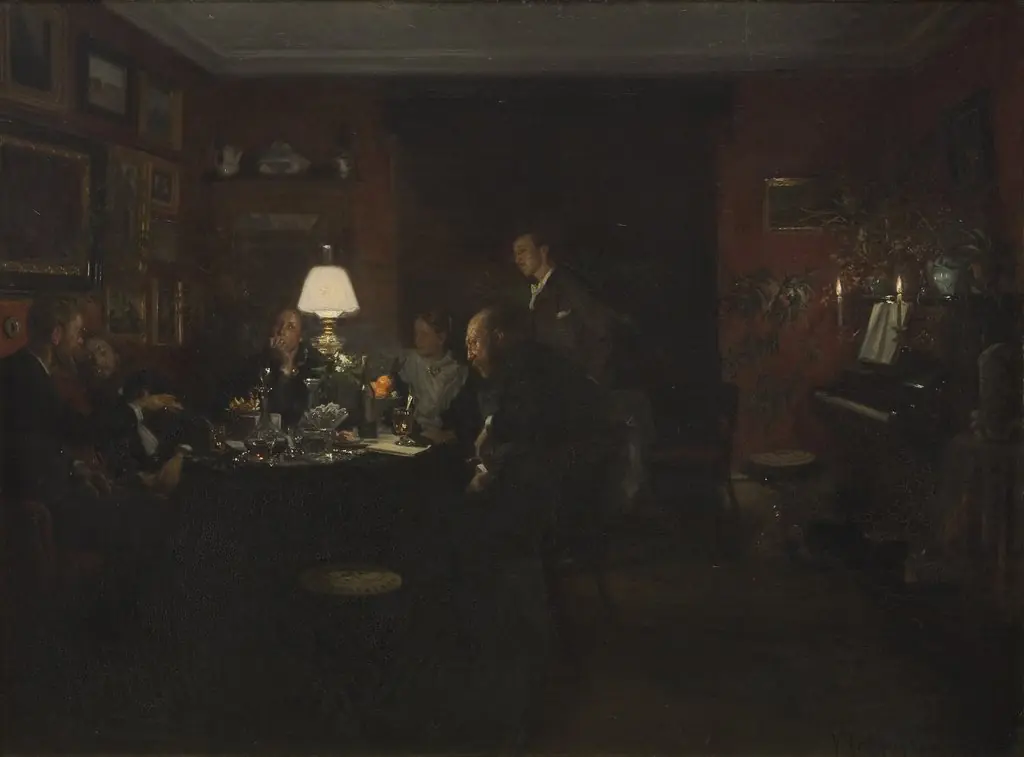
Jehan Georges Vibert painted A Night Class in 1881, depicting an interior scene of students attentively listening to a lesson illuminated by a single lamp, a composition reflecting his interest in narrative and chiaroscuro effects. The work entered the Cleveland Museum of Art collection in 1980 and remains part of its European painting holdings. Vibert's genre scenes, which often explored theatrical and historical subjects through a realist lens, positioned him within the broader academic tradition of 19th-century French painting, bridging the gap between academic realism and emerging impressionistic treatments of light and space.
Scholarship on Vibert emphasizes his technical precision and psychological depth within domestic and institutional settings, though his work has received less sustained critical attention compared to contemporaries like Manet or Degas. A Night Class is frequently cited in studies of nocturnal genre painting and the representation of interior light, underscoring its significance within his oeuvre and the evolving discourse on European art of the period.
Legacy
Jehan Georges Vibert's 1881 painting A Night Class has been recognized for its subtle narrative and technical skill, influencing later academic painters who valued interior genre scenes. The work entered the collection of the Cleveland Museum of Art, where its presence has contributed to scholarly discussions of 19th‑century French realism and its role in shaping museum displays of European painting.
Overview
Jehan Georges Vibert's 'A Night Class,' painted in 1891, is a genre scene depicting an intimate, dimly lit interior where a group of figures gathers around a table. The composition centers on a woman dressed in a striking red garment who stands while gesturing, appearing to instruct or perform for the seated and leaning audience. A single hanging lamp serves as the primary light source, creating a dramatic chiaroscuro effect that casts deep shadows while illuminating the faces of the observers and the central figure.
This work exemplifies Vibert's mature style, characterized by his satirical yet meticulous observation of 19th-century French social life and his skill in rendering theatrical lighting. The painting reflects the artist's interest in scenes of education, performance, and domestic interaction, capturing a moment of focused attention within a confined space. Executed during the height of his career, the piece demonstrates his ability to combine narrative detail with a sophisticated handling of light and texture, typical of his contributions to French academic painting of the late nineteenth century.
Subject & Meaning
The scene captures an intimate instructional moment, possibly a private lesson in music, drawing, or etiquette, as implied by the woman’s animated pose. The contrast between the illuminated central figure and the subdued attendees emphasizes the act of teaching and the attention it commands, inviting viewers to consider the dynamics of observation and instruction within a confined social setting.
Technique & Style
Vibert employs a chiaroscuro approach, using a single overhead lamp to create strong light‑and‑shadow contrasts. Dark tonalities dominate the background, while the red dress and the illuminated faces draw the eye to the focal point. This manipulation of light enhances the sense of depth and concentrates the viewer’s focus on the central figure’s movement.
Own this work as a print
Artist & collection