Artwork
View of Arnheim (recto); Studies of a Bull (verso)
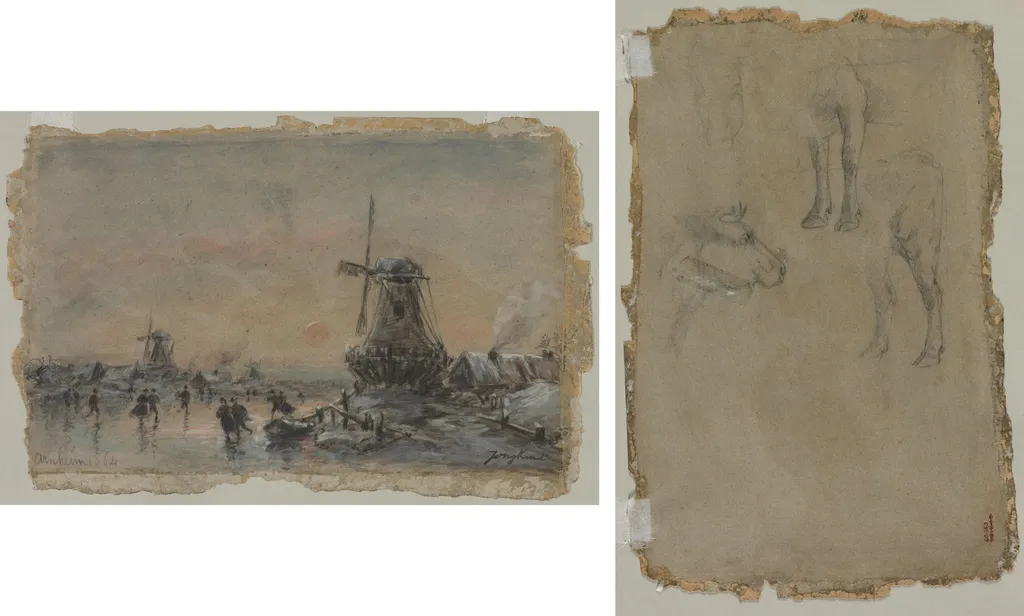
View of Arnheim (recto); Studies of a Bull (verso) is a drawing by the Impressionist artist Johan Jongkind. It dates from 1864 and is held in the collection of the Cleveland Museum of Art. Created in 1864, this double-sided drawing by Johan Barthold Jongkind pairs a landscape view of Arnheim with informal studies of a bull.
- Accession no.
- 1960.163
About this work
The windmill and river scene feels loose and quick, like a first draft, not a finished painting.
This sketch shows a windmill by a river at sunset, with people walking along the shore. The sky is soft pink and orange, while the water looks muddy and choppy. On the other side of the paper, there are quick, rough drawings of bulls in pencil.
The artist signed it "Jongkind 1864," which matches the date. The windmill and river scene feels loose and quick, like a first draft, not a finished painting.
Next, check out The Cleveland Museum of Art to see this sketch in person.
Overview
Created in 1864, this double-sided drawing by Johan Barthold Jongkind pairs a landscape view of Arnheim with informal studies of a bull. Executed in ink and pencil on paper, it reflects the artist’s habit of working rapidly across both sides of a single sheet. The recto captures a riverside scene at dusk, while the verso contains spontaneous sketches of livestock.
The work is held in The Cleveland Museum of Art and exemplifies Jongkind’s practice of blending observation with immediacy.
Subject & Meaning
The recto depicts a quiet riverside at twilight, featuring a windmill, figures on the bank, and a reflective, turbulent stream. The scene suggests a moment of daily life, unembellished and transient. The verso’s bull studies, rendered with minimal strokes, convey movement and anatomy without narrative.
Together, the two sides reveal Jongkind’s interest in both place and creature, treating nature and animal form with equal attention to fleeting perception rather than idealized representation.
Technique & Style
Jongkind employed loose, fluid ink lines for the landscape, suggesting light and motion with minimal detail. The sky’s hues are implied through washes of pink and orange, while the water’s texture emerges from erratic strokes. The bull studies on the reverse are executed in dry pencil, with rapid, gestural marks that capture posture and weight.
The absence of finish and the visible corrections emphasize spontaneity, aligning with a sketchbook ethos that prioritized direct observation over polished execution.
History & Provenance
The drawing is signed and dated 'Jongkind 1864,' confirming its origin during the artist’s active period in the Netherlands. It entered The Cleveland Museum of Art’s collection through documented acquisition, though its earlier ownership remains unrecorded. Its survival as a two-sided work is uncommon, offering insight into Jongkind’s working habits.
The paper’s condition suggests it was kept as a study, not a commercial product, preserving its raw, unrefined character.
Context
In the mid-19th century, Jongkind worked alongside emerging artists who rejected academic conventions. His sketches like this one, made outdoors and with swift brushwork, anticipated the Impressionist focus on light and transient effects. While not a finished painting, this drawing reflects a broader shift toward valuing the artist’s immediate response to nature.
The inclusion of animal studies alongside landscape underscores a holistic approach to visual inquiry common among artists of the period.
Legacy
This drawing contributes to Jongkind’s reputation as a bridge between 19th-century Romanticism and Impressionism. Its informal structure and emphasis on perception over detail influenced later artists who sought to capture fleeting moments. Though modest in scale, it exemplifies how sketchbook practices evolved into foundational methods for modern painting. Its preservation allows ongoing study of how observation and technique converged in pre-Impressionist art.
Artist & collection
Artist
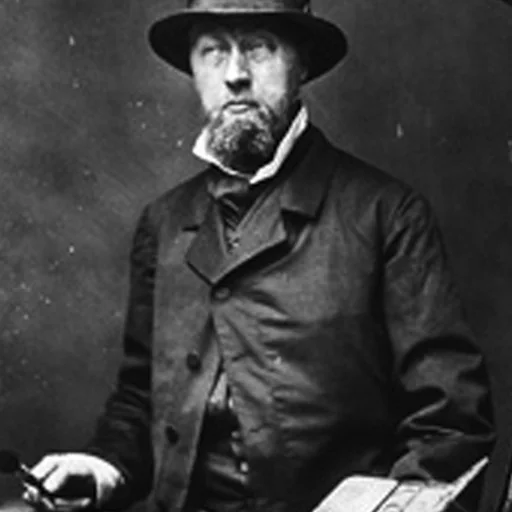
Johan Barthold Jongkind (Dutch pronunciation:; 3 June 1819 – 9 February 1891) was a Dutch painter and printmaker. He painted marine landscapes in a free manner and is regarded as a forerunner of impressionism.

 Chaumière de pêcheur (Fisherman's Cottage)
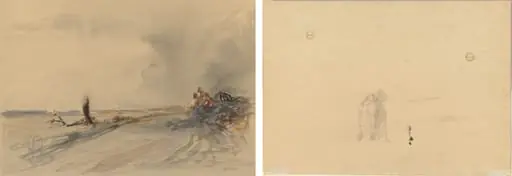 Devastated Land (recto); Figures in a Landscape (verso)
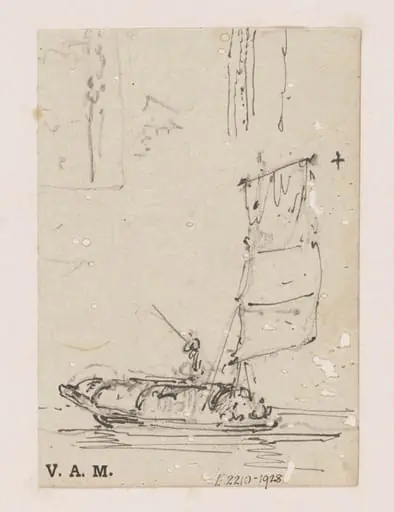 A small boat under sail
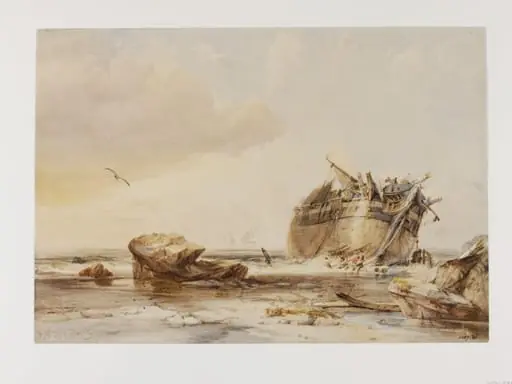 Rocky Shore with Dismantled Vessel
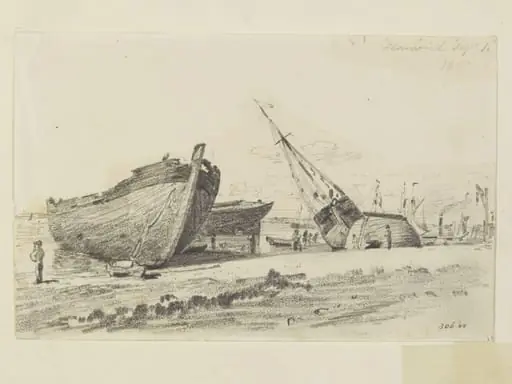 The breakwater at Harwich, with ships on the beach
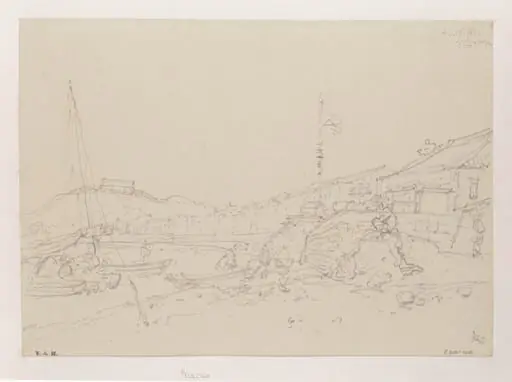 The Praya Grande, Macau, from S. Pedro fort
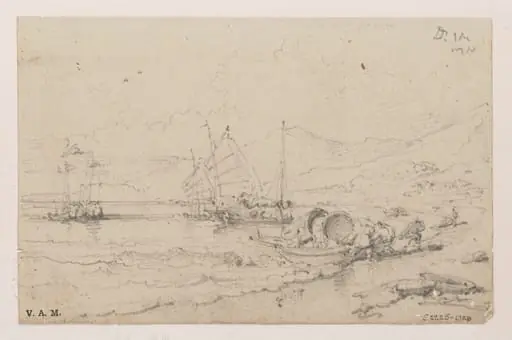 A drawing of the Praya Grande, Macau, with figures beaching a Tanka boat and other craft in the bay
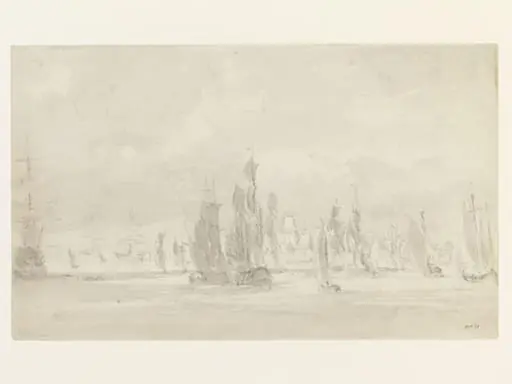 Shipping under a cloudy sky in the Thames
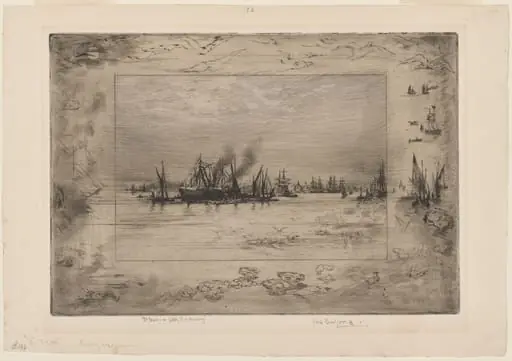 Le Port aux Mouettes (Port with Seagulls)