Artwork
Dancing Peasants

Dancing Peasants is a print by the Renaissance artist Johann Theodor de Bry. It dates from 1590 and is held in the collection of the Cleveland Museum of Art.
- Accession no.
- 1922.276
- Credit line
- Gift of The Print Club of Cleveland
About this work
Overview
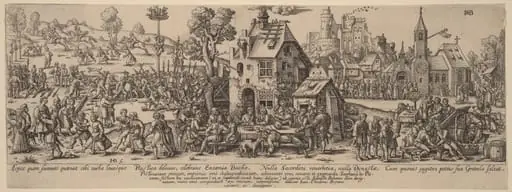
Johann Theodor de Bry’s print Dancing Peasants dates from 1590 and is part of the collection of the Cleveland Museum of Art. Executed as a long, narrow engraving, the image presents a procession of rural figures in motion, set against a simple landscape that includes a tree, a table with a pitcher, and a dog at rest.
Subject & Meaning
The composition depicts a group of peasants engaged in a communal dance, some clasping arms, others holding hands, and a few wearing broad-brimmed hats. A Latin inscription at the bottom, translating roughly as “good dancers make life sweeter,” suggests a celebratory view of folk merriment and the social cohesion it fosters.
Technique & Style
De Bry employed line engraving with modest cross‑hatching to suggest volume and movement. The restrained use of shading creates a sense of depth while the rhythmic arrangement of figures conveys kinetic energy. The overall style reflects late‑Renaissance printmaking, emphasizing clarity of form over elaborate detail.
History & Provenance
Created in the closing decade of the sixteenth century, the print entered the Cleveland Museum of Art’s holdings through acquisition (specific acquisition details are recorded in the museum’s catalog). Its survival in a public collection allows scholars to examine de Bry’s lesser‑known genre works alongside his more famous cartographic prints.
Artist & collection

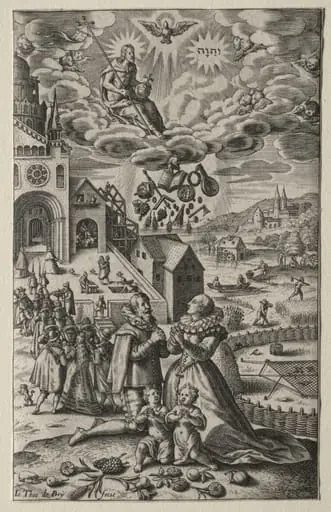
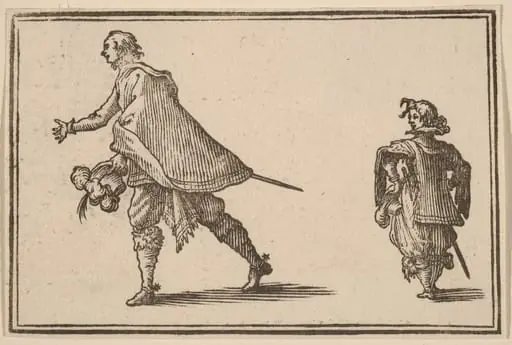
- Gentleman and His Page
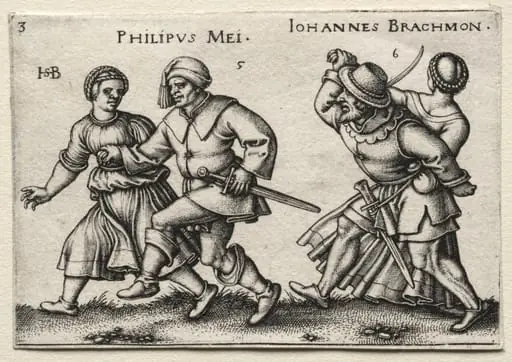 The Village Wedding: Philipus Mei
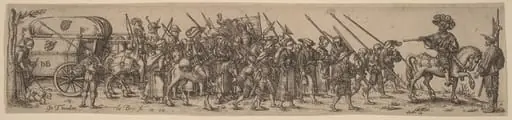
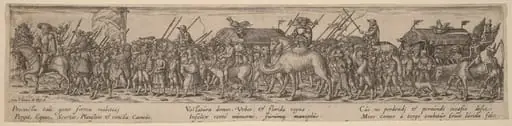
 Marching Soldiers, in the Center a Standard Bearer
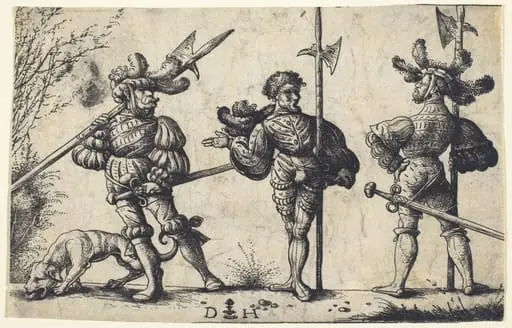 Three German Soldiers Armed with Halberds
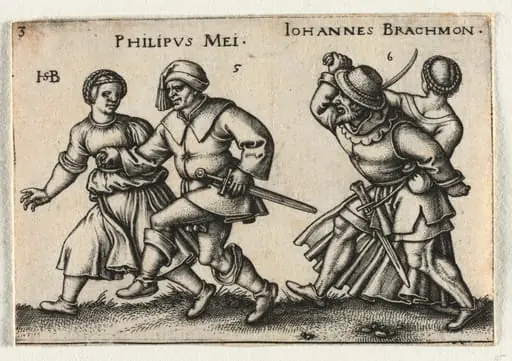 The Peasant Wedding or the Twelve Months: 5-Philipus Mei 6-Johannes Brachmon
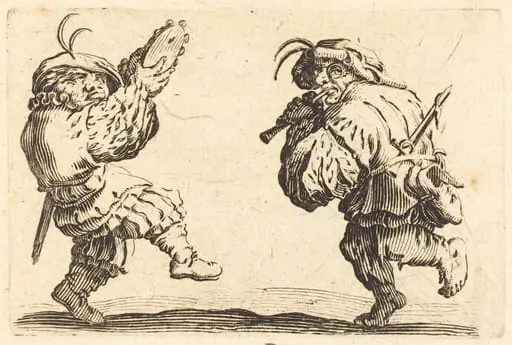
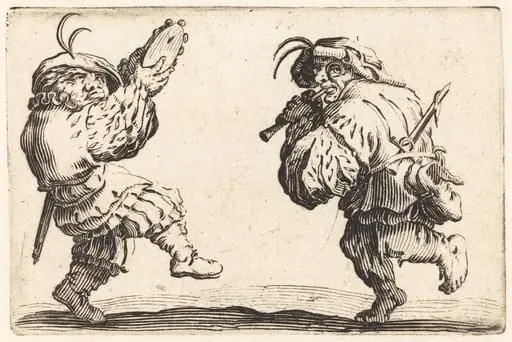
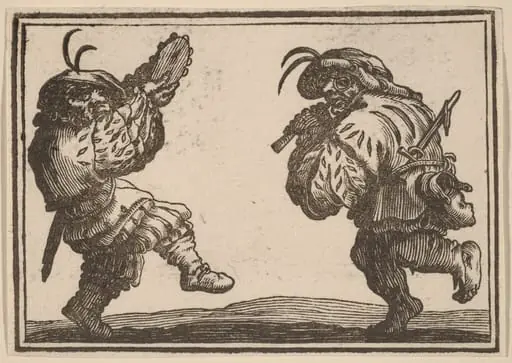 Dancers with Flute and Tambourine
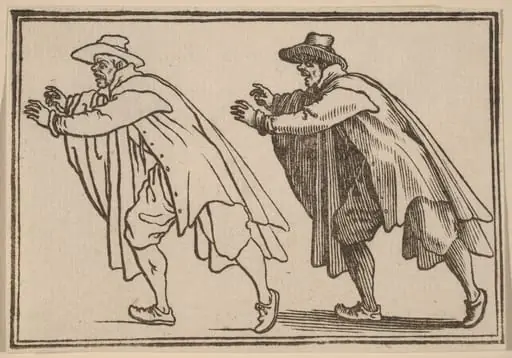 Man Moving Abruptly
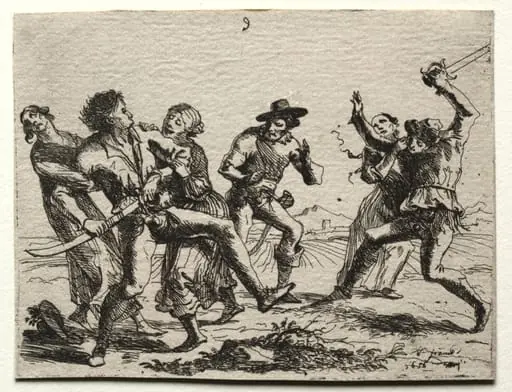 Military Subjects: A Quarrel
 Dancers with Flute and Tambourine
 Dancers with Flute and Tambourine
 The Enrollment of the Troops
 Man Seen from Behind with His Right Arm Extended