Artwork
Frederik Adrian (1804-74), graaf van Limburg Stirum of Thomas Henry (1804-42), graaf van Limburg Stirum
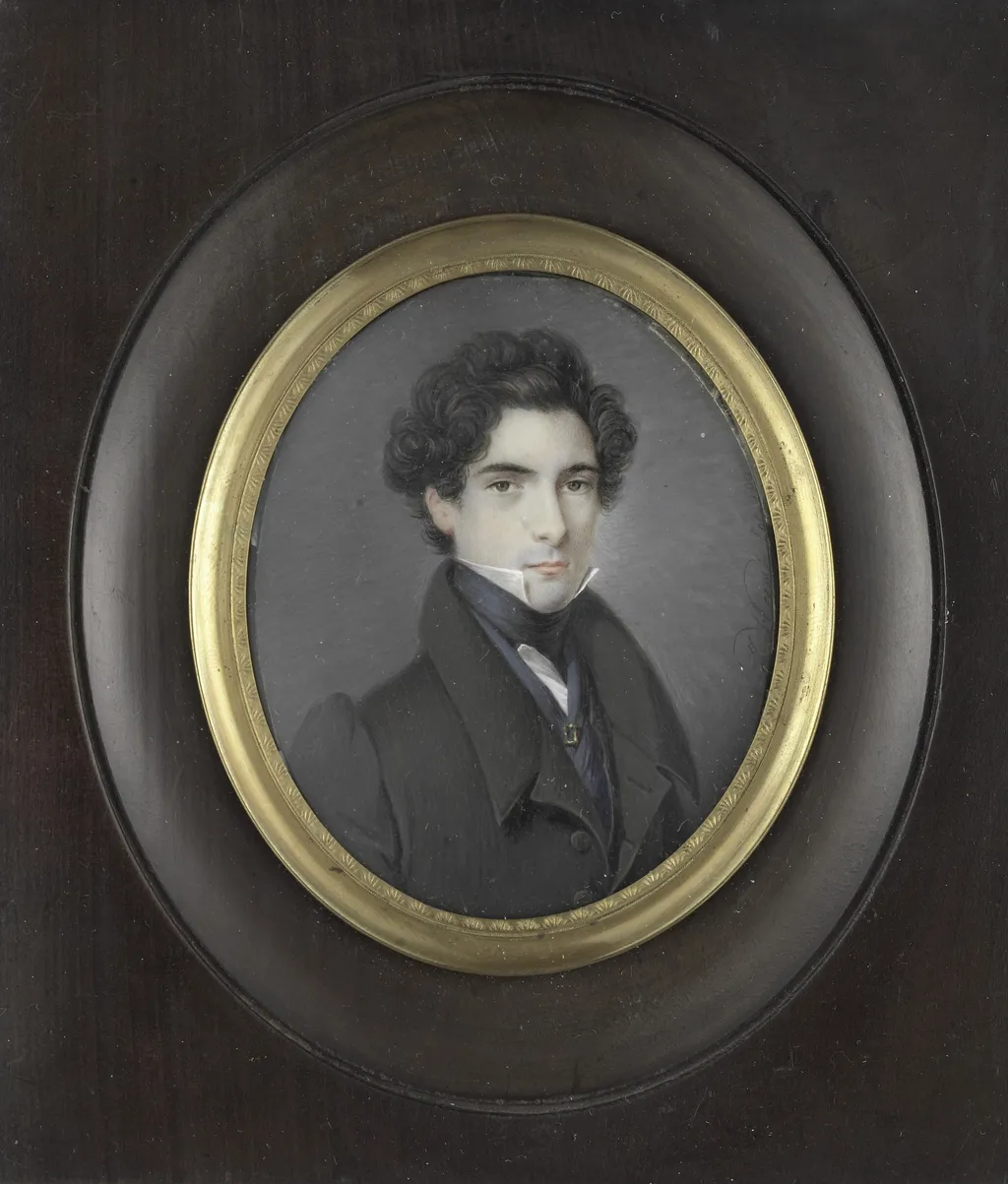
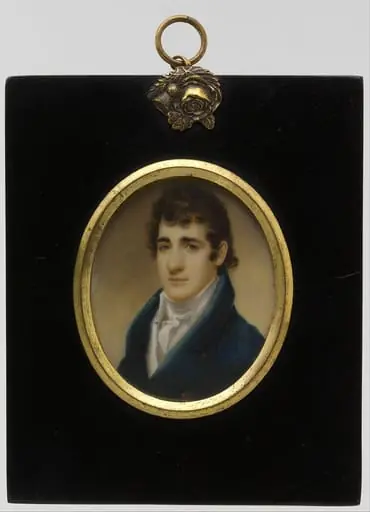
Frederik Adrian (1804-74), graaf van Limburg Stirum of Thomas Henry (1804-42), graaf van Limburg Stirum is an ivory painting by the Biedermeier artist Johannes Hari. It dates from 1832 and is held in the collection of the Rijksmuseum.
About this work
Technique & Style
Executed in 1832 by Johannes Hari, this portrait is a miniature painting rendered on an ivory support. The work measures 8 cm in height and 6.5 cm in width, reflecting the intimate scale characteristic of the genre. As a painted ivory object, the piece relies on the smooth, luminous quality of the material to achieve its formal effects, typical of early nineteenth-century portraiture.
History & Provenance
The portrait was painted in 1832 by Johannes Hari, depicting Frederik Adrian, graaf van Limburg Stirum, of Thomas Henry (1804-42), graaf van Limburg Stirum.
The portrait was painted in 1832 by Johannes Hari, depicting Frederik Adrian, graaf van Limburg Stirum, of Thomas Henry (1804-42), graaf van Limburg Stirum. It is an ivory miniature portrait created for Thomas Henry, who commissioned the work. The painting entered the collection of the Rijksmuseum, where it remains on display today.
The portrait is held in the collection of the Rijksmuseum, as recorded in the Wikidata entry for the work. No specific inventory or accession number is documented in the available sources.
No exhibition history is recorded in the sources provided.
Overview
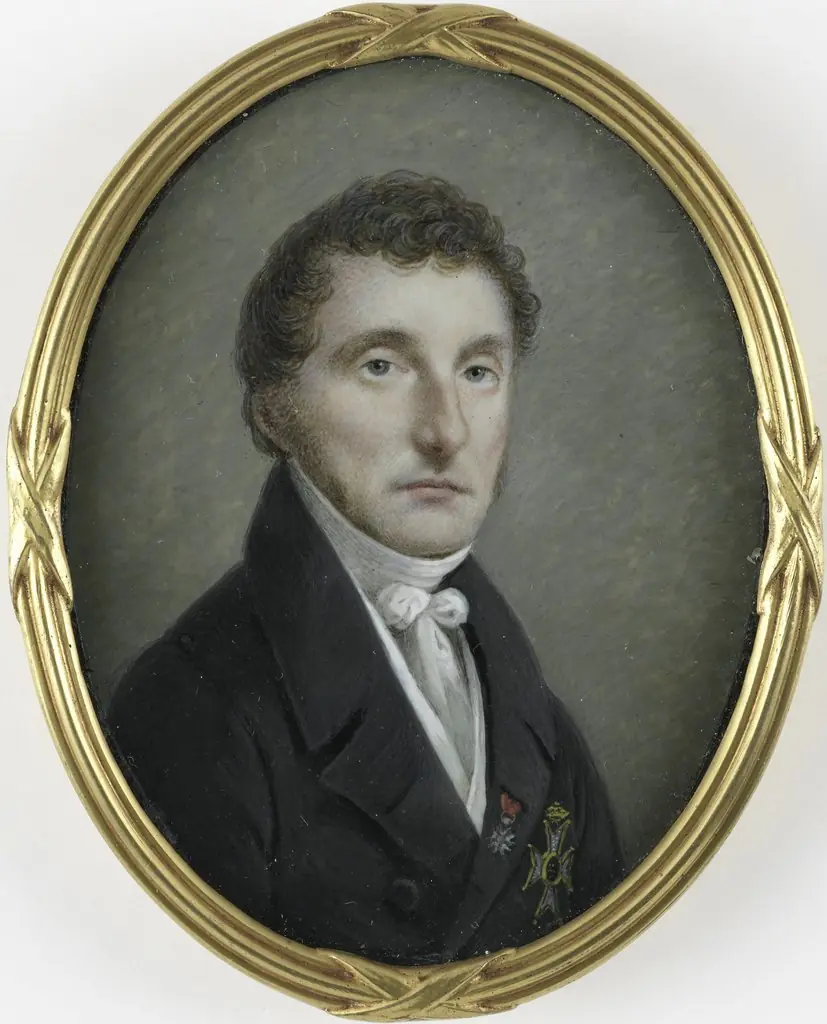
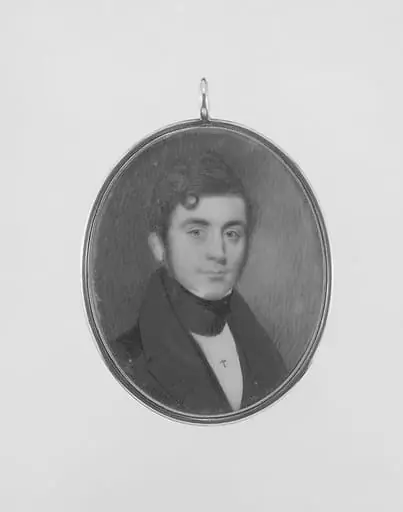
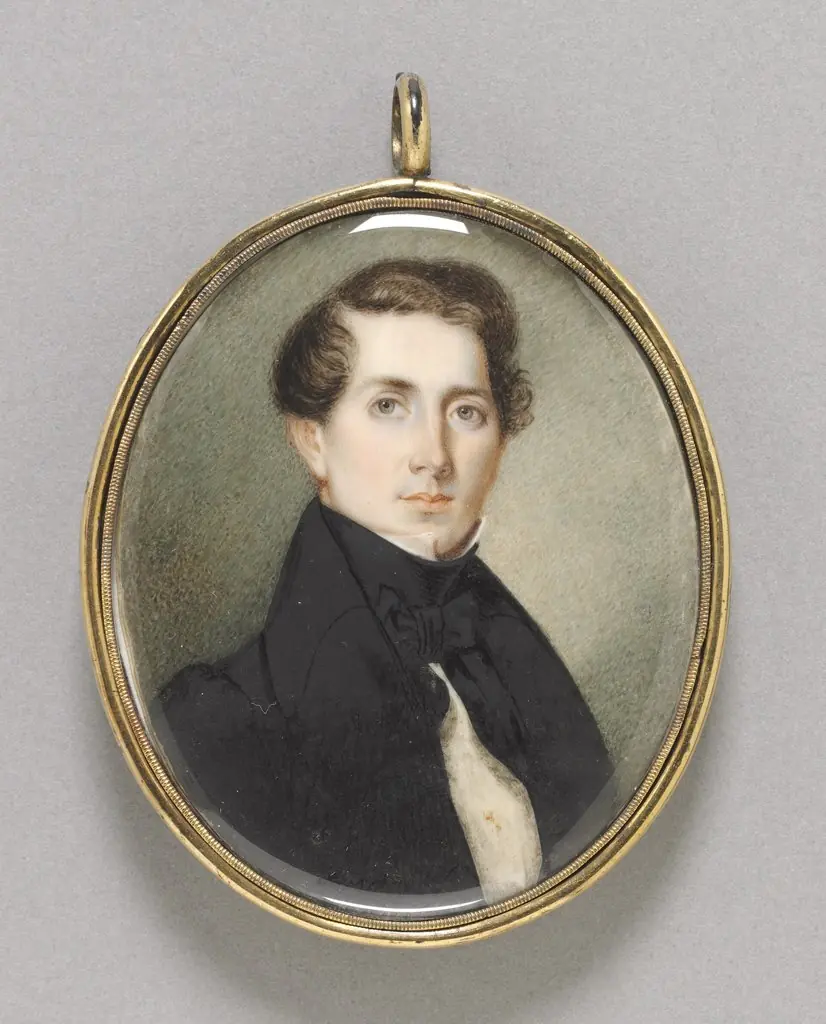
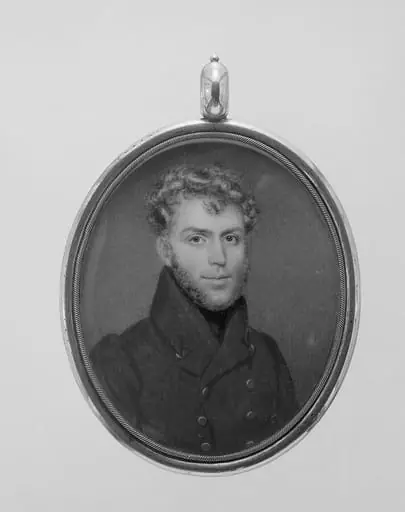
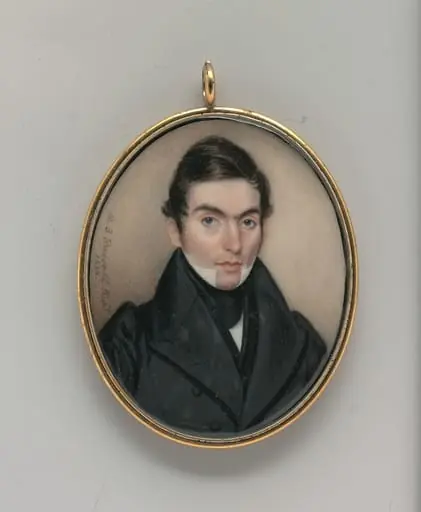
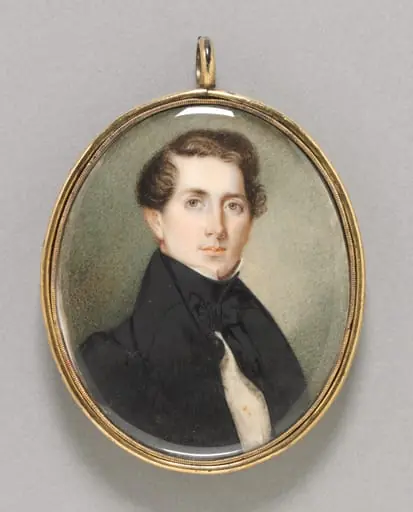
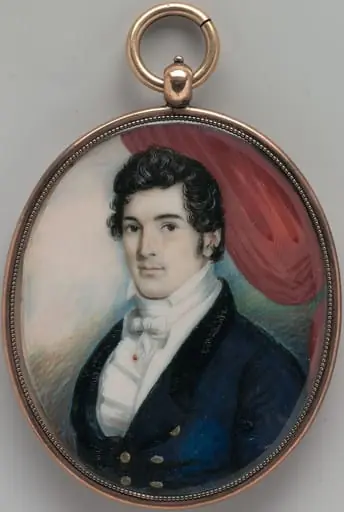
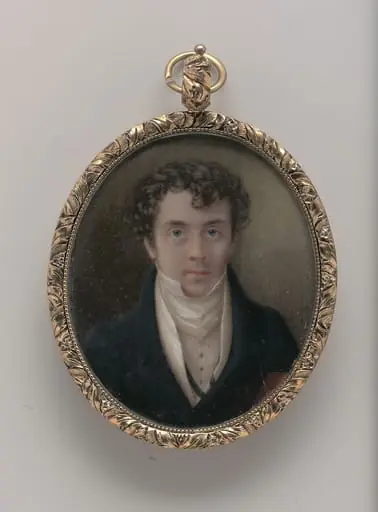
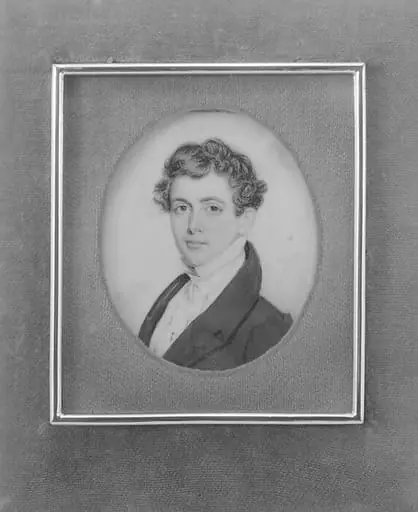
This small, oval portrait, carved directly into ivory by Johannes Hari in 1832, depicts a forward-facing man with curly dark hair and attire characteristic of the period, including a white cravat and a dark coat with a high collar. The piece is framed by a thin gold border and features a plain, dark background.
Subject & Meaning
The subject of the portrait is identified as either Frederik Adrian, Count of Limburg Stirum (1804-74), or Thomas Henry, Count of Limburg Stirum (1804-42), highlighting the artwork's potential connection to Dutch nobility of the time.
Context
The portrait reflects early 19th-century European fashion and aristocratic portraiture traditions. The choice of ivory as the medium, due to its rarity and cost, places the work within the context of luxury items commissioned by the wealthy elite.
Own this work as a print
Artist & collection