Artwork
The Thompson Children
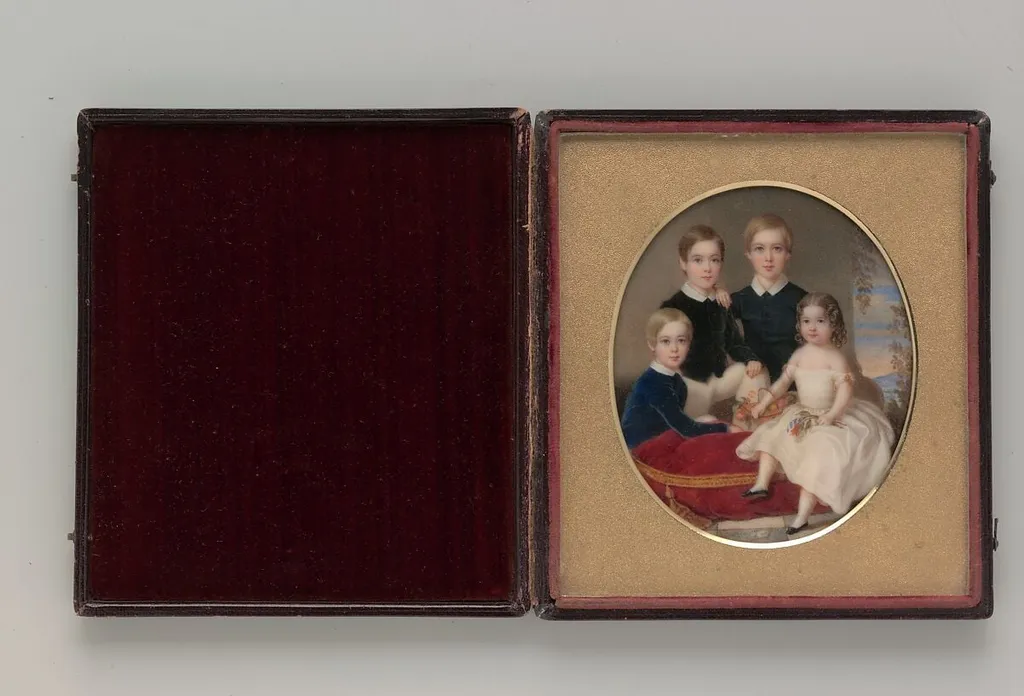
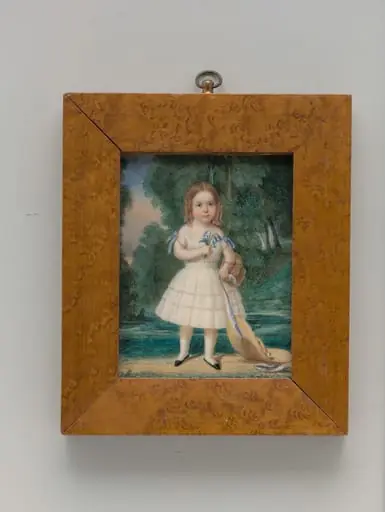
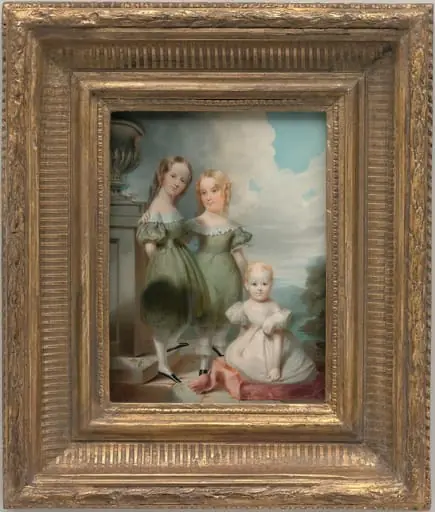
The Thompson Children is a watercolor painting by the British Romanticist artist John Carlin. It dates from 1846 and is held in the collection of the Metropolitan Museum of Art.
About this work
Technique & Style
The Thompson Children is executed in watercolor on an ivory support, a technique that was common for delicate mid‑19th‑century portraiture.
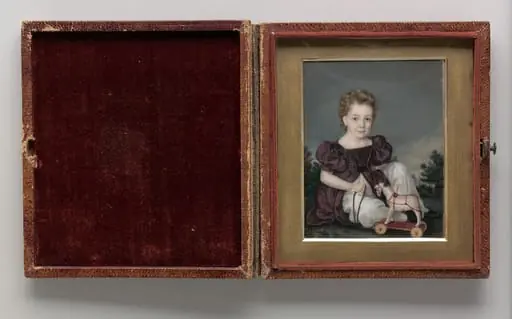
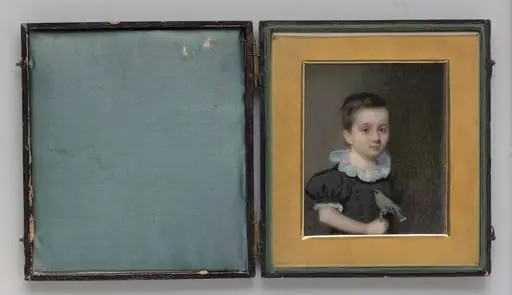
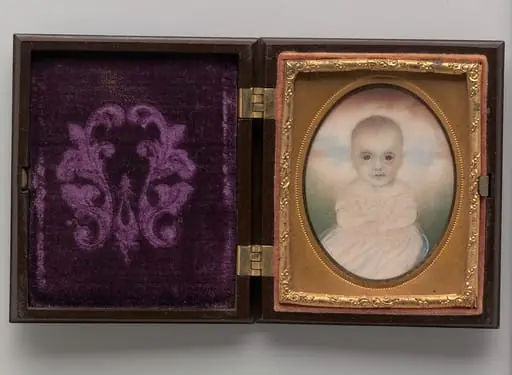
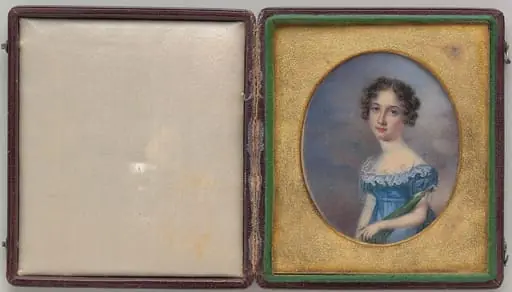
The Thompson Children is executed in watercolor on an ivory support, a technique that was common for delicate mid‑19th‑century portraiture. The work measures approximately 11 × 9 (units as recorded in the catalog) and belongs to the portrait genre within the American Wing of the Metropolitan Museum of Art. Its composition depicts a boy and a girl, rendered with the soft washes and fine line work typical of watercolor portraits of the era.
The piece is classified as a portrait and is part of the Metropolitan Museum of Art's collection, reflecting both the subject matter and the formal qualities associated with early American portrait painting.
History & Provenance
Created in 1846, The Thompson Children is a watercolor on ivory executed by the artist John Carlin. The work functions as a portrait depicting a boy and a girl. Since its inception, the piece has entered the collection of the Metropolitan Museum of Art, where it is classified under the American Wing.
The physical dimensions of the artwork are recorded as 11 units in height and 9 units in width. No further details regarding the specific commission, intermediate ownership history, or acquisition date are provided in the available records.
The Thompson Children, a watercolor on ivory painted by John Carlin in 1846, is held in the collection of the Metropolitan Museum of Art. The work is classified under the museum's American Wing. While the sources confirm the artwork's location and creator, they do not provide a specific inventory or accession number for the piece.
Additionally, the available documentation does not list any specific exhibition history for this portrait, noting only its creation date and physical dimensions of 11 by 9 inches.
Overview
John Carlin, an American artist and the first published deaf poet in the United States, created The Thompson Children in 1846. This watercolor on ivory portrait captures three young subjects in a formal, domestic setting. The work exemplifies Carlin's diverse artistic practice during the 19th century, reflecting his skill in both painting and illustration.
Subject & Meaning
The portrait features three children, two boys in matching blue suits and a girl in a white dress, arranged in a stiff, formal pose against a dark background. Their smooth, serious expressions, reminiscent of dolls, were characteristic of children's portraiture during the period. The depiction emphasizes a sense of decorum and the children's status within their family.
Context
Created in the mid-19th century, before the widespread adoption of photography, miniature portraits like The Thompson Children served as cherished personal mementos for families. These small, portable artworks functioned similarly to modern photographs, allowing loved ones to be carried close. The children's formal attire, mirroring adult fashion, was a common practice in American portraiture of the era, reflecting societal norms for youthful presentation.
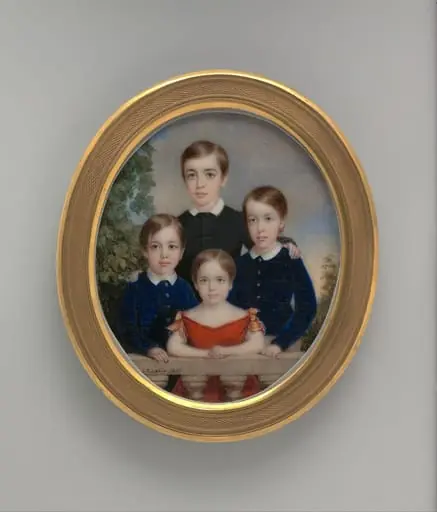
Artist & collection

Artist
John Carlin (15 May or 15 June 1813 in Philadelphia – 23 April 1891 in New York City) was an American illustrator, painter and poet. He was the first published deaf poet in the USA.