Artwork
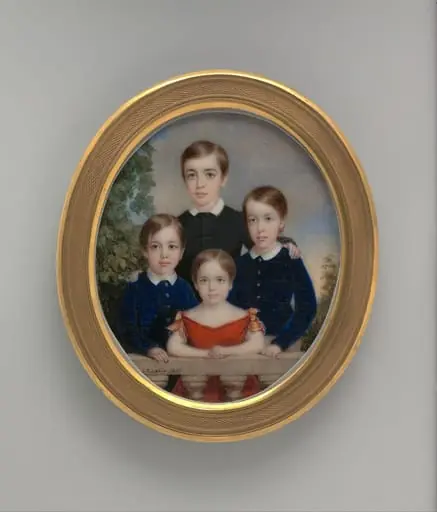
The Children of Homer Ramsdell, Esq.
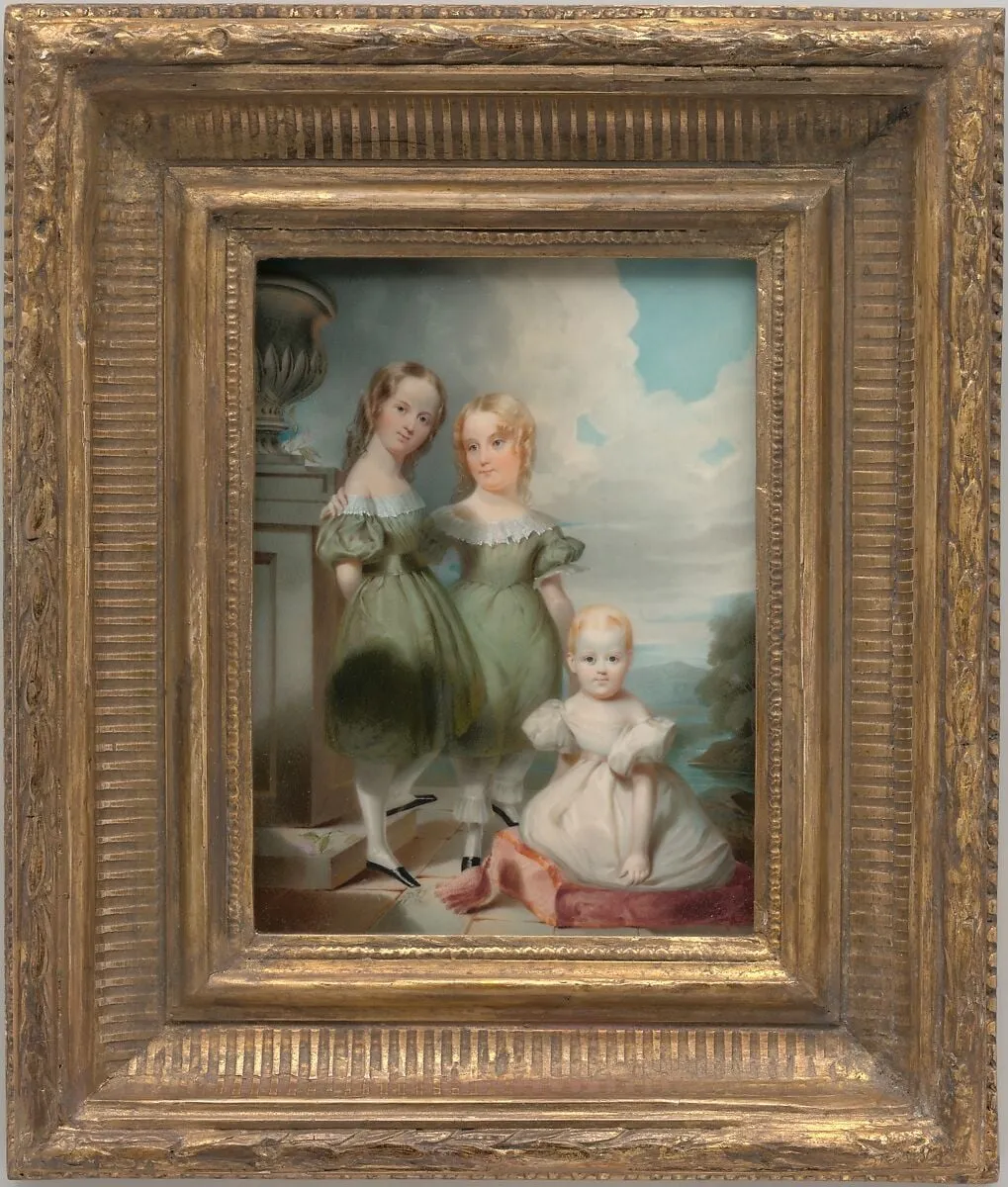
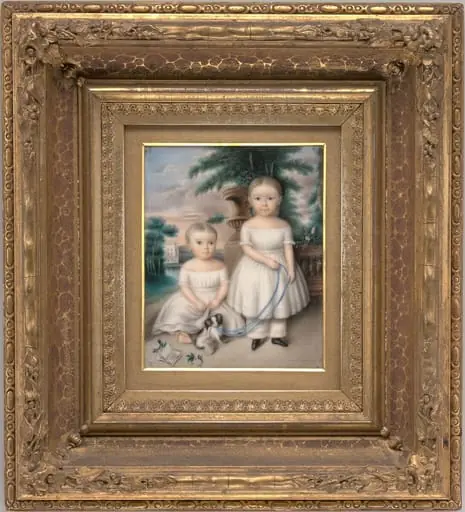
The Children of Homer Ramsdell, Esq. is a watercolor painting by the American Folk Art artist Thomas Seir Cummings. It dates from 1842 and is held in the collection of the Metropolitan Museum of Art.
About this work
Technique & Style
Stylistically, the piece functions as a formal depiction of two children, a boy and a girl, rendered with the delicacy associated with the medium.
Created in 1842, this portrait by Thomas Seir Cummings is executed in watercolor on an ivory support. The work measures approximately 18.7 centimeters in height and 14.6 centimeters in width, adhering to the compact dimensions characteristic of miniature portraiture. Stylistically, the piece functions as a formal depiction of two children, a boy and a girl, rendered with the delicacy associated with the medium.
The use of ivory as a base material informs the handling of the watercolor, allowing for translucent layers and fine detail typical of the genre. As a work housed within the American Wing of the Metropolitan Museum of Art, the piece represents a specific historical approach to capturing youthful subjects through the refined technique of miniature painting.
History & Provenance
The Children of Homer Ramsdell, Esq. was created in 1842 by the American artist Thomas Seir Cummings. Executed as a watercolor on ivory, this portrait depicts a boy and a girl, likely commissioned by their father, Homer Ramsdell, Esq., given the work's title. The piece measures 18.7 cm in height and 14.6 cm in width.
Following its creation, the artwork entered the collection of the Metropolitan Museum of Art in New York, where it is currently housed within The American Wing. The specific date of inception is recorded as January 1, 1842, marking the year of its completion and establishing its place within mid-19th-century American portraiture.
The Children of Homer Ramsdell, Esq. is held in the collection of the Metropolitan Museum of Art, classified within The American Wing. Created by Thomas Seir Cummings in 1842, the watercolor on ivory portrait is documented in the museum's records. No specific accession number, acquisition details, or exhibition history are provided in the available sources.
The work's physical dimensions are recorded as 18.7 cm in height and 14.6 cm in width, and it is catalogued as a portrait depicting a boy and a girl. Beyond its identification within the Metropolitan Museum of Art's holdings and its classification under The American Wing, the sources do not supply further information regarding accession numbering, provenance transfers, or past or current exhibitions of the work.
Overview
Thomas Seir Cummings' 1842 watercolor on ivory, The Children of Homer Ramsdell, Esq., depicts three young siblings posed formally against a neutral ground. The composition features two boys dressed in dark suits flanking a central girl in a white dress. Executed in the miniature tradition, the work utilizes the translucency of ivory to achieve a luminous skin tone, a technique characteristic of early 19th-century American portraiture.
The figures are arranged in a tight, static grouping that emphasizes their youth and familial bond, with the artist employing fine brushwork to render facial features and fabric textures with precision. Created during the height of the American miniature painting era, this piece reflects Cummings' reputation as a leading portraitist in New York. The small scale of the work, typical for the medium, was intended for intimate viewing and personal possession, often serving as a keepsake for the sitter's family.
Cummings, a founder of the National Academy of Design, frequently worked in this format before his career shifted toward larger oil portraits and historical subjects. This specific commission for the Ramsdell family demonstrates the enduring popularity of ivory miniatures in American domestic culture prior to the widespread adoption of photography.
Subject & Meaning
The portrait presents two young boys in dark suits alongside a girl in a white dress, all posed formally. Their composed expressions and rigid stances reflect the prevailing conventions of mid-19th-century portraiture, which often sought to convey decorum and social standing. This work served as a lasting visual record of the Ramsdell children, likely commissioned to preserve their likenesses for the family.
Artist & collection

 The Allen Children
 The Drummond Children
 Mrs. William Gordon Ver Planck and Her Son Samuel Hopkins Ver Planck
 The Misses Case
 The Affectionate Brothers (The Lamb Children)
 Watson Van Benthuysen II and Thomas Van Benthuysen
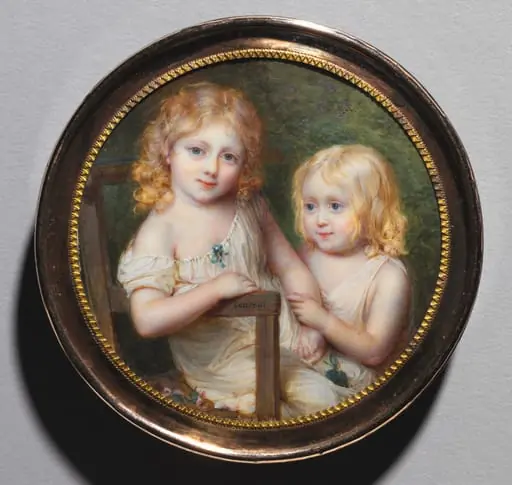 Portrait of the Artist's Children Emma and Paul
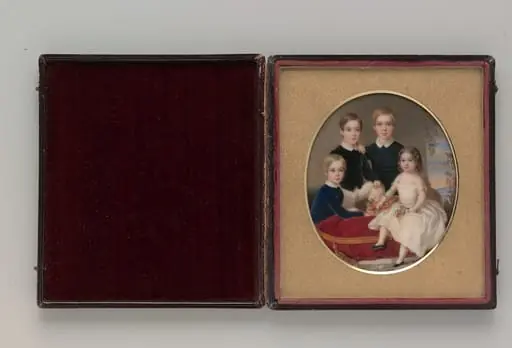 The Thompson Children
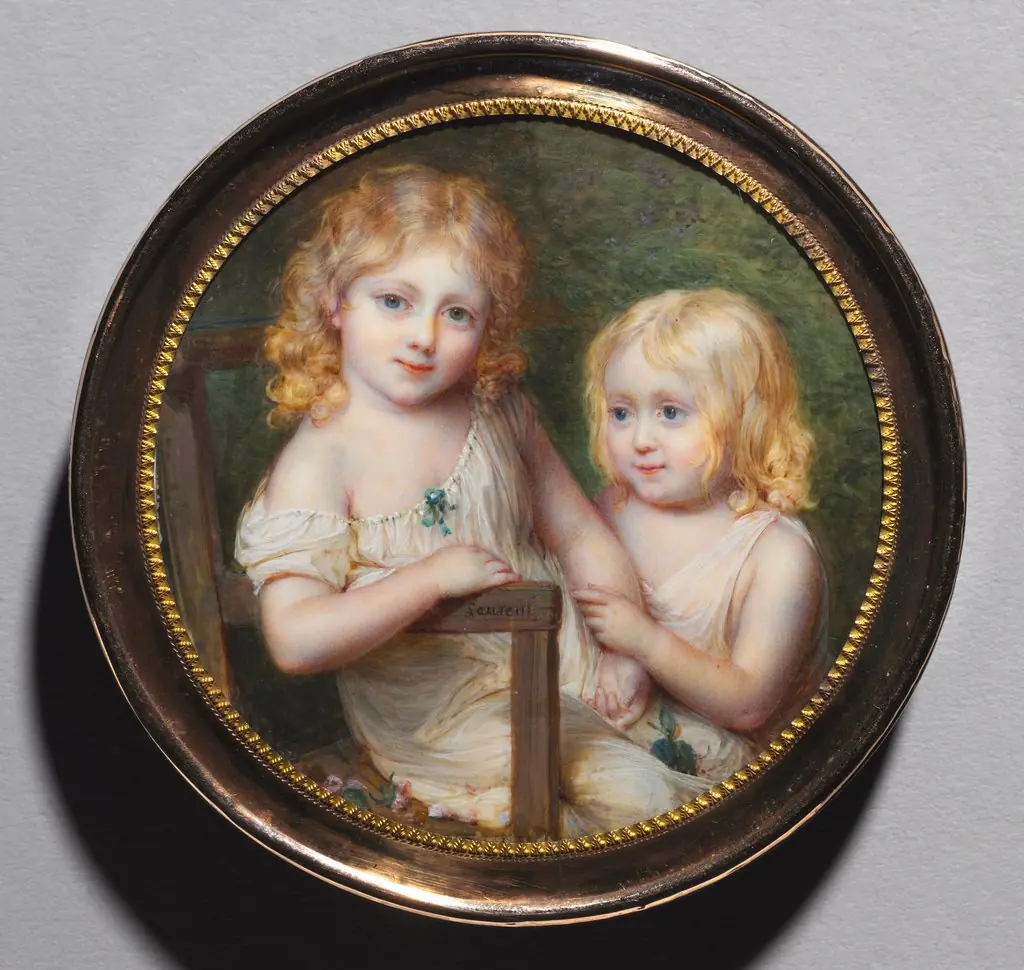 Portrait of the Artist's Children Emma and Paul