Artwork
Trompe l'oeil painting
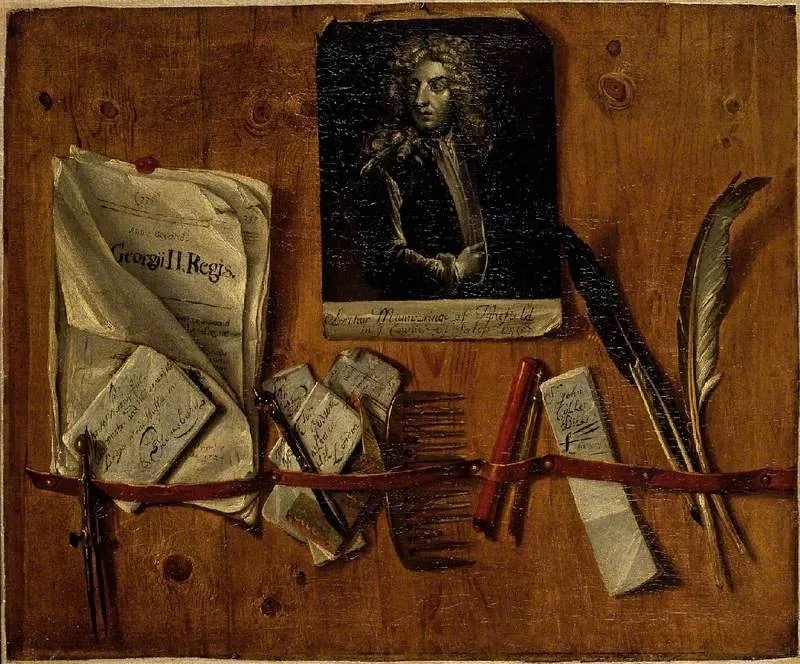
Trompe l'oeil painting is an oil painting by the Rococo painting artist John Collier. It dates from 1729 and is held in the collection of the Fitzwilliam Museum.
About this work
Overview
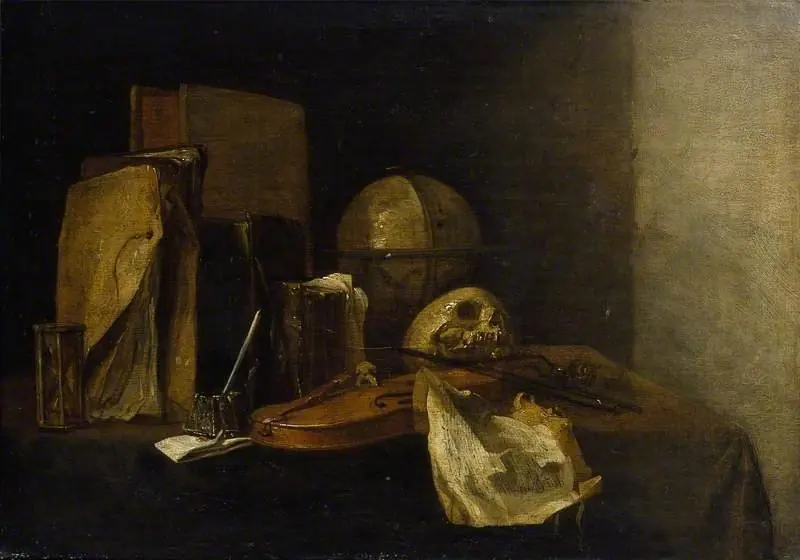
Trompe l'oeil painting, created in 1729 with oil paint, showcases the artist's skill in deceptive realism, presenting a seemingly three-dimensional arrangement of everyday objects on a wooden table.
Subject & Meaning
The painting features a carefully composed still life, including a portrait, feather quill, and handwritten paper, inviting viewers to engage with the illusion of tangible, accessible items.
Technique & Style
Employing chiaroscuro, the artist achieves deep contrasts between light and dark, enhancing the trompe l'oeil effect and contributing to the overall sense of depth and texture.
History & Provenance
Attributed to John Collier, an English portrait painter of note, though the provided biographical details (Eton College, Paris and Munich training from 1875, marriages) appear inconsistent with the 1729 creation date, suggesting potential attribution errors or a different artist with the same name.
Context
While the painting's style aligns with the deceptive realism characteristic of trompe l'oeil, its attribution to the Rococo movement may require further scrutiny given the discrepancies in the artist's biography and the work's date.
Legacy
This work stands as a testament to the enduring appeal of trompe l'oeil, a technique that continues to fascinate audiences with its blend of illusion and realism, though its specific impact or exhibition history is not detailed here.
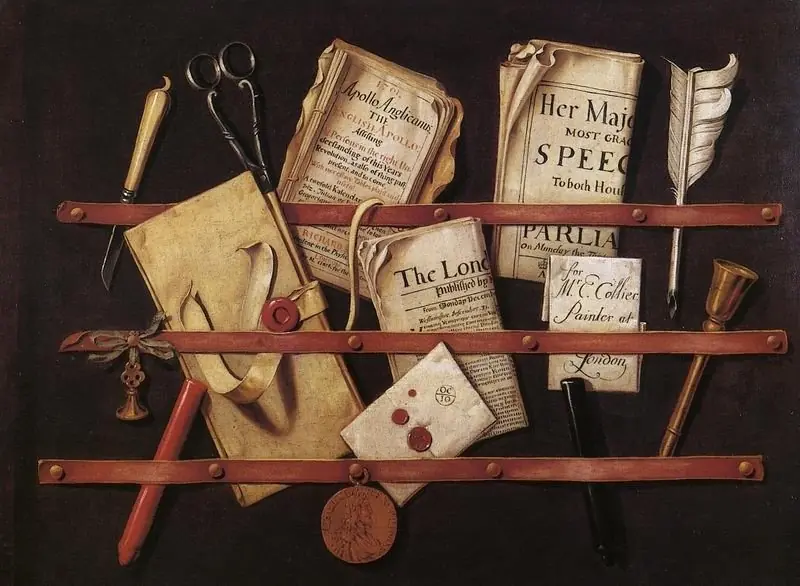
Artist & collection
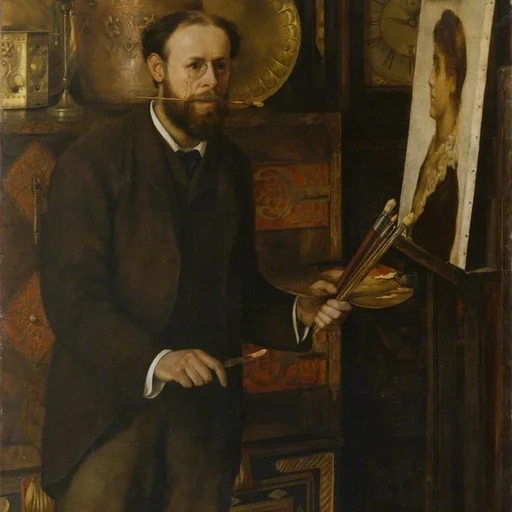
Artist
John Maler Collier (; 27 January 1850 – 11 April 1934) was an English painter and writer.

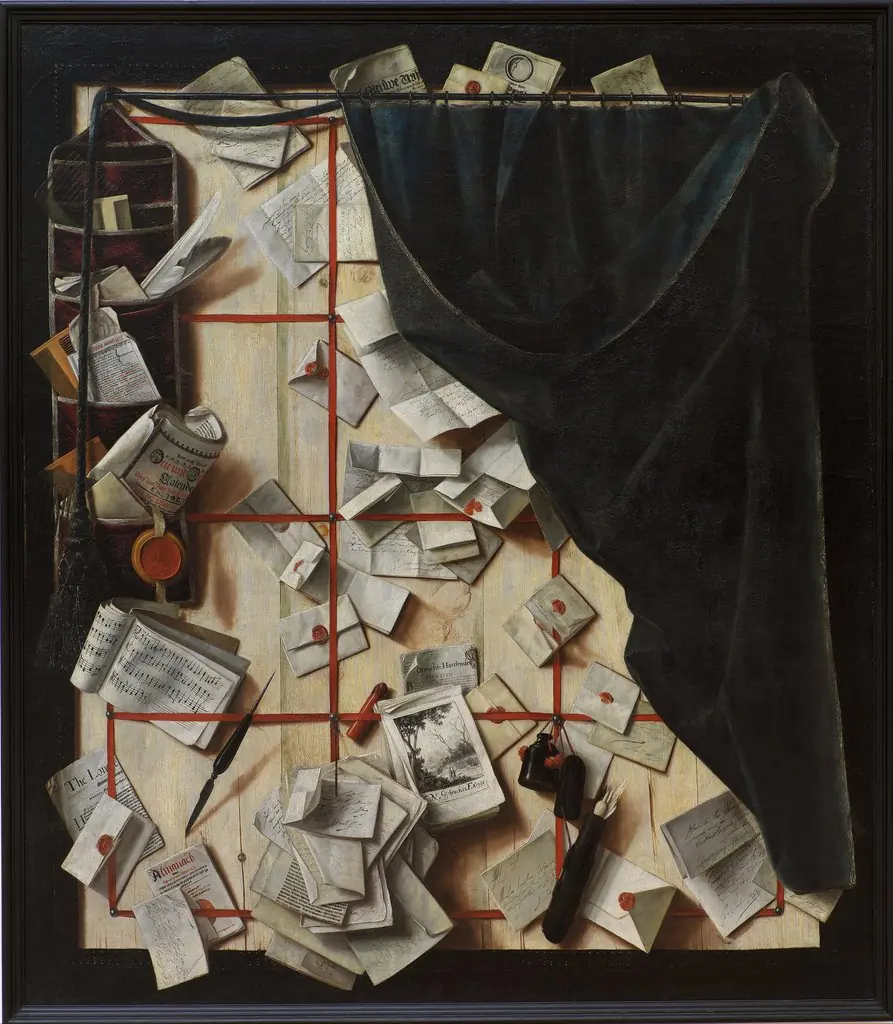 Trompe l'oeil. Board Partition with Letter Rack and Music Book
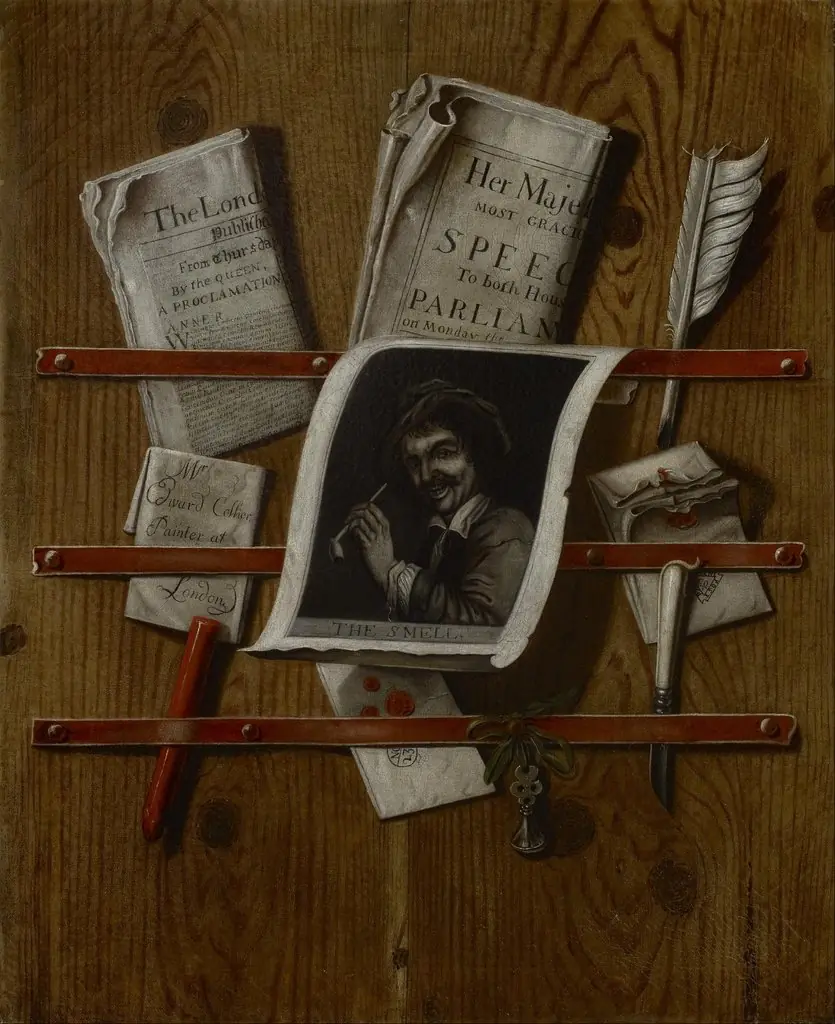 Still Life: The Smell
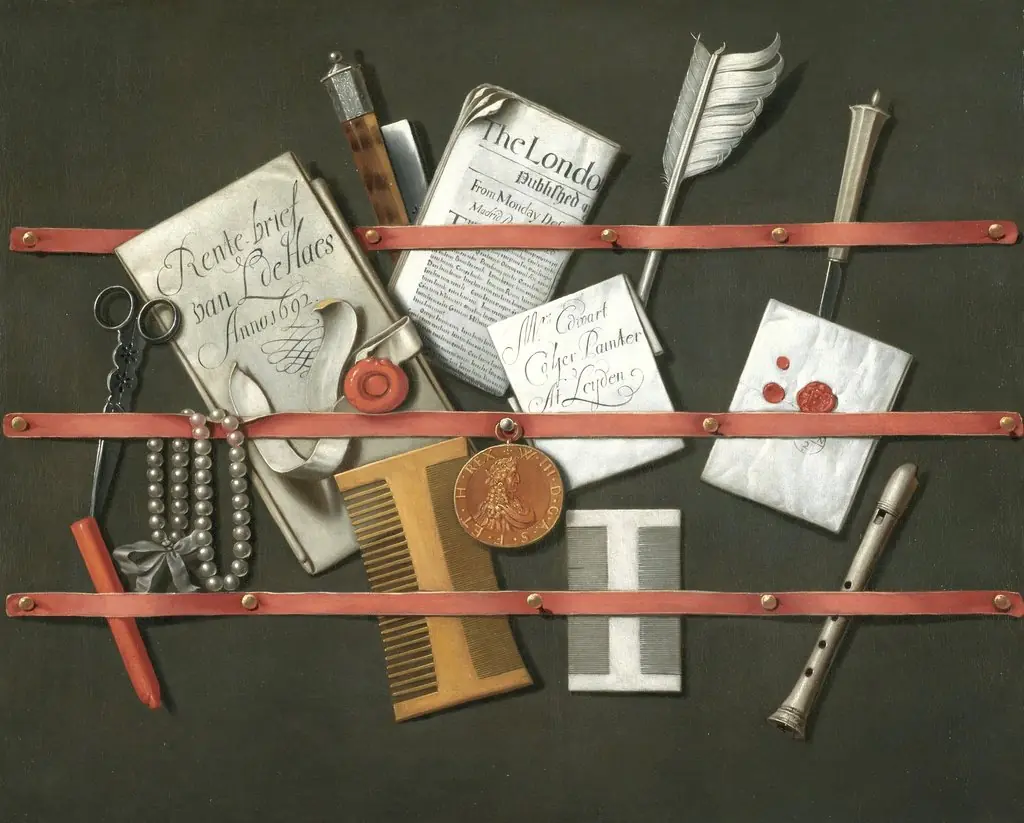 Still Life: A Letter Rack
 Trompe l'oeil. Letter Rack with a Barber-Surgeon's Instruments
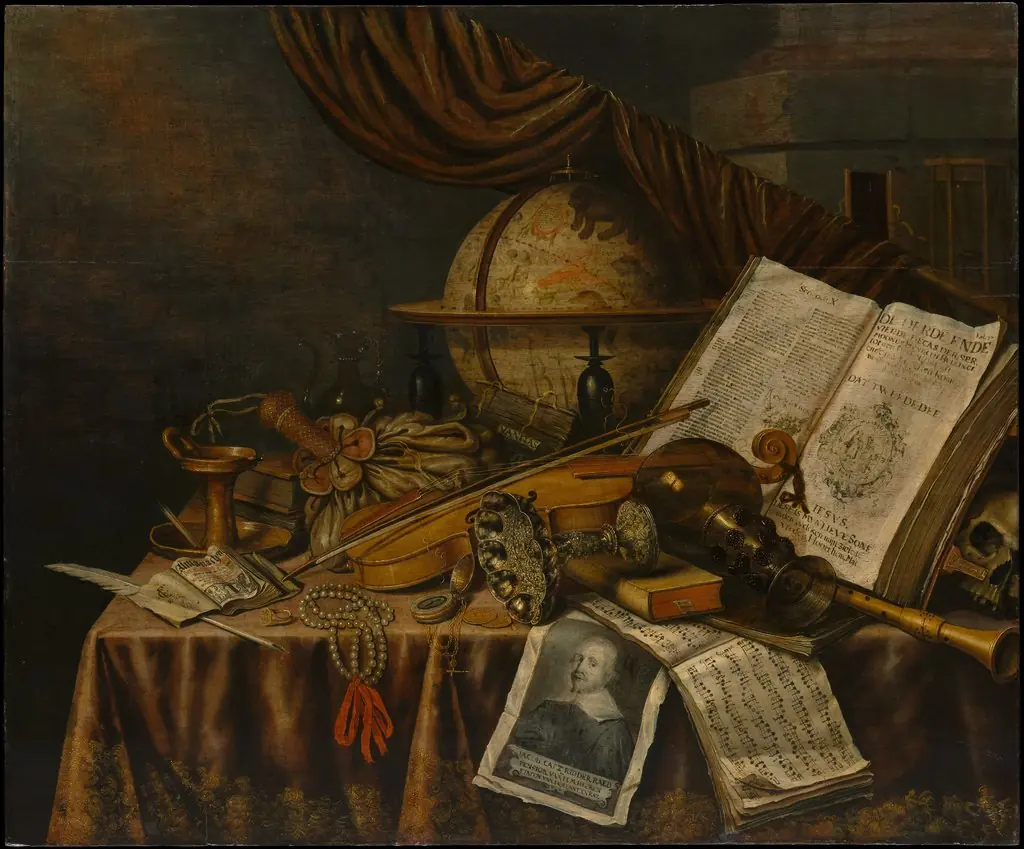 Vanitas Still Life
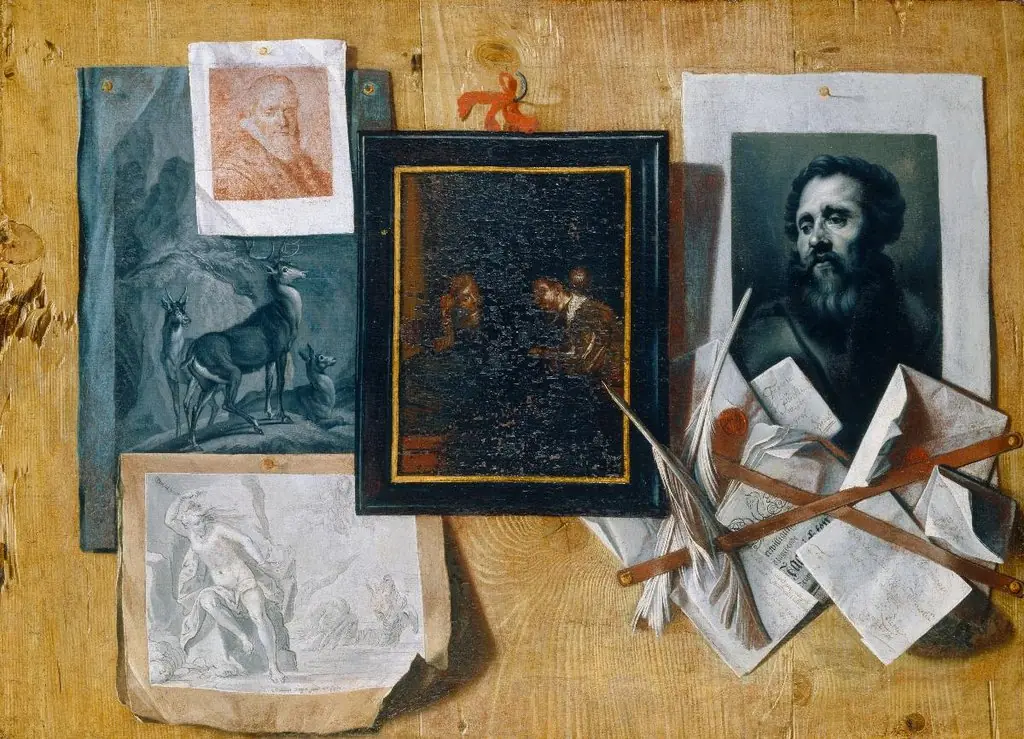 Quodlibet mit einem Gemälde, Zeichnungen, einem Schabkunstblatt und Briefen
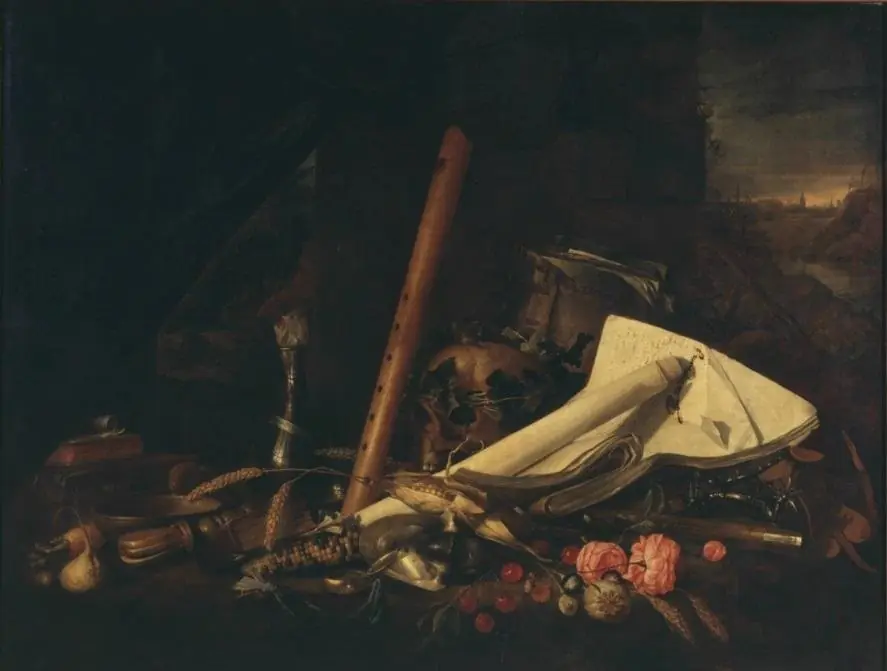 Vanitas
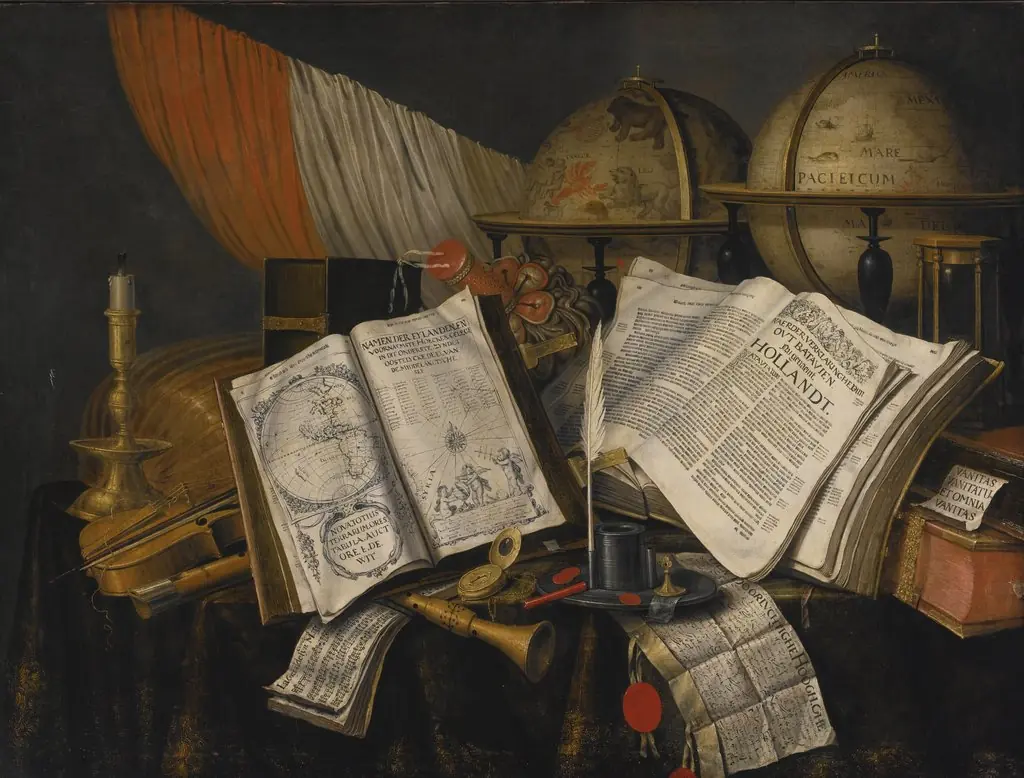 Vanitas Still Life with a Candlestick, Musical Instruments, Dutch Books, a Writing Set, an Astrological and a Terrestial Globe and an Hourglass, All on a Draped Table
 Still Life with a Violin