Artwork
The Wheel of Fortune
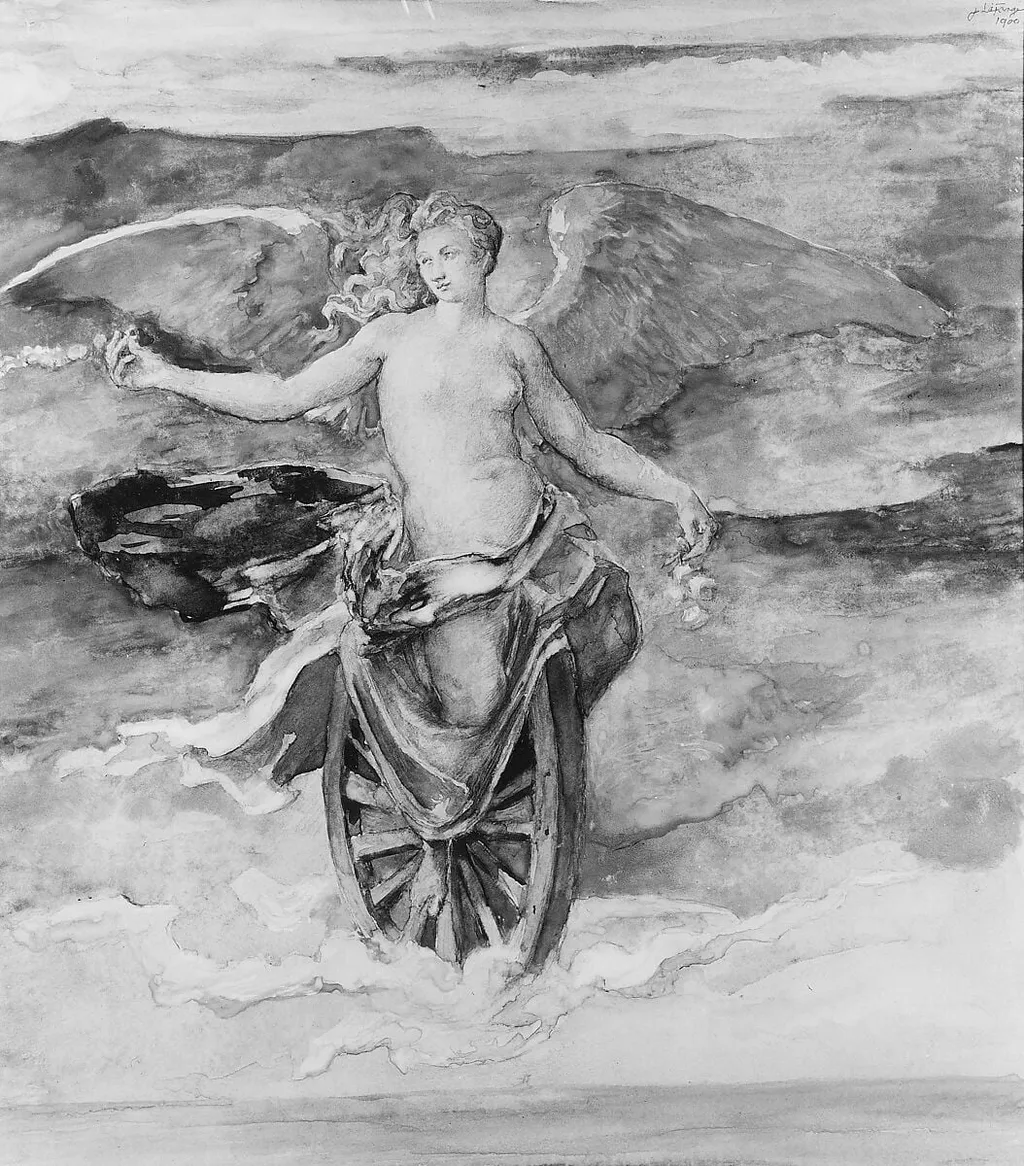
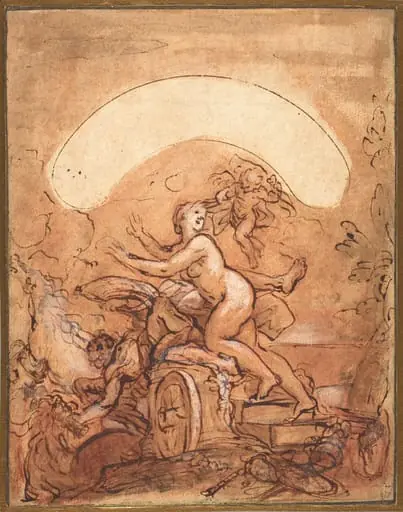
The Wheel of Fortune is a watercolor work on paper by the American Impressionist artist John La Farge. It dates from 1900 and is held in the collection of the Metropolitan Museum of Art.
About this work
Overview
It is held in the Metropolitan Museum of Art in New York as part of the American Wing collection, under accession number 67.
The Wheel of Fortune is a 1900 work on paper by the American artist John La Farge. Executed in gouache, watercolor, and graphite on light tan wove paper, the composition measures 15 5/8 by 12 1/4 inches. It is held in the Metropolitan Museum of Art in New York as part of the American Wing collection, under accession number 67.55.170. The piece belongs to La Farge's broader engagement with mythological and allegorical subjects, depicting a winged female figure atop a large wheel, a classic personification of chance and fate.
Subject & Meaning
The artwork visualizes the classical concept of Fortuna, the goddess of chance, depicted as a winged nude female figure balancing atop a large wheel that emerges from swirling clouds or mist. Her right arm extends outward holding an indistinct object, while her left hand grasps a small figure or doll, emphasizing the capricious nature of fate and the ease with which fortune elevates or crushes individuals. The distant mountainous or land forms visible in the background anchor the celestial phenomenon within a broader atmospheric realm. The subject matter explores the fickleness of fortune, a theme La Farge would revisit in a closely related 1901 stained glass commission for the Frick office building in Pittsburgh, where the precarious balancing act served as an emblem of fortune's instability.
Technique & Style
La Farge combined gouache, watercolor, and graphite on light tan wove paper to construct the composition. The work is executed in monochrome tones, utilizing fluid washes that create soft gradations from light to dark across the sky and landscape. The brushwork varies considerably across the image: broad, atmospheric passages define the sky and clouds, while more defined linear details articulate the wheel and the figure's drapery. The overall finish balances sketchy spontaneity with areas of more finished rendering, particularly in the face and torso of the central figure. This hazy, mysterious handling of the central figure's face aligns the work with the aesthetic strategies of contemporary French Symbolist painters such as Odilon Redon. A signature and date appear in the upper right corner.
History & Provenance
Created in 1900, the work later entered the Metropolitan Museum of Art through the bequest of Susan Dwight Bliss in 1966. It carries the object number 67.55.170. The drawing was included in the 1970 exhibition catalog titled 19th C American Drawings: Art and Architecture, held at the Metropolitan Museum of Art. The concept of fortune balancing on a wheel clearly held lasting interest for La Farge, as he returned to the exact motif the following year when commissioned in 1901 to design a stained glass window for the Frick office building in Pittsburgh, resulting in a related work now in the Cleveland Museum of Art.
Context
John La Farge (1835-1910) was a multifaceted American artist recognized for his paintings, murals, interior design, and stained glass innovations. By 1900, when he created this work, he was an established figure in the American art world, having co-founded the Society of American Artists in 1877 and serving as president of the National Society of Mural Painters from 1899 to 1904. He held a patent for superimposing panes of glass, a technical innovation central to his stained glass practice. His extensive travels in Asia and the South Pacific during the 1880s and 1890s profoundly influenced his painterly approach to color and atmosphere. The Symbolist leanings visible in this drawing reflect his awareness of broader international trends, moving beyond the conservative boundaries of the National Academy of Design that he and his peers had earlier protested.
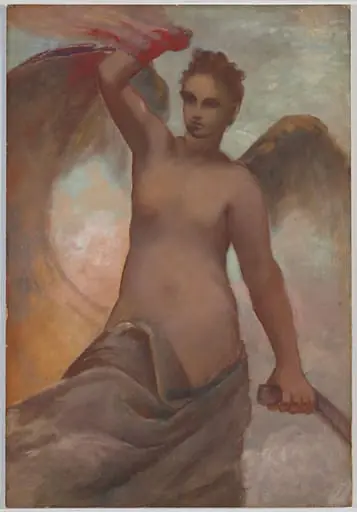
Artist & collection

Artist
John La Farge (March 31, 1835 – November 14, 1910) was an American artist whose career spanned illustration, murals, interior design, painting, and popular books on his Asian travels and other art-related topics.

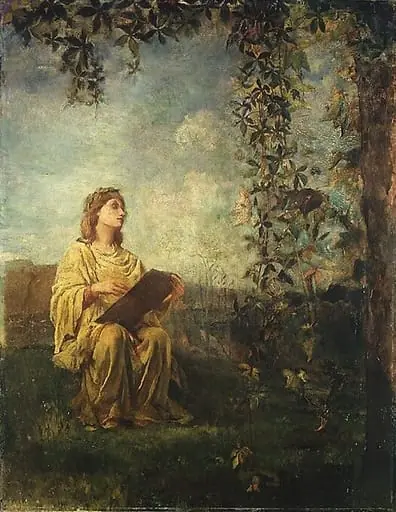 The Muse of Painting
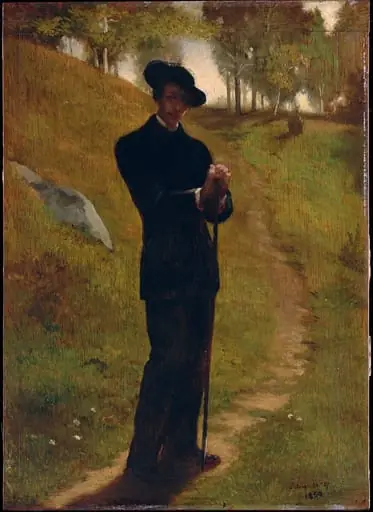 Portrait of the Painter
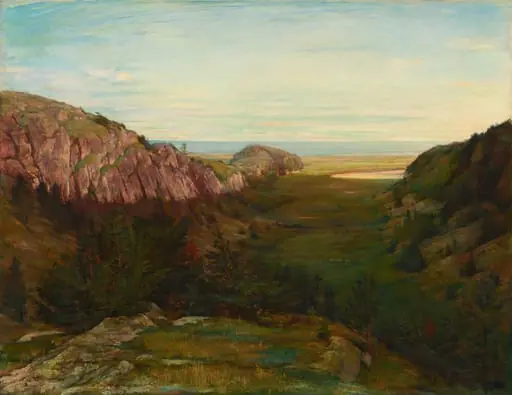 The Last Valley - Paradise Rocks
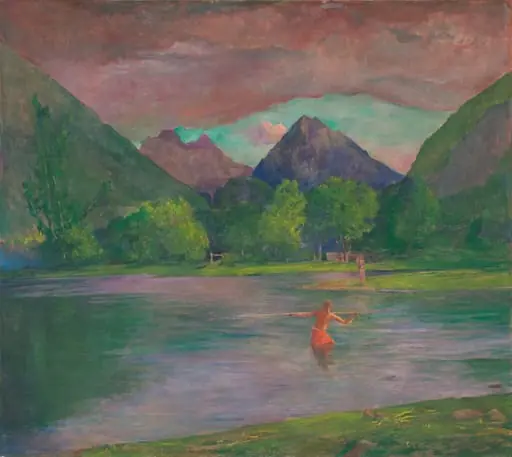 The Entrance to the Tautira River, Tahiti. Fisherman Spearing a Fish
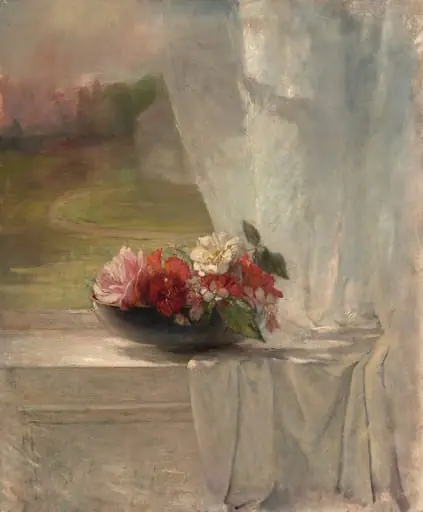 Flowers on a Window Ledge
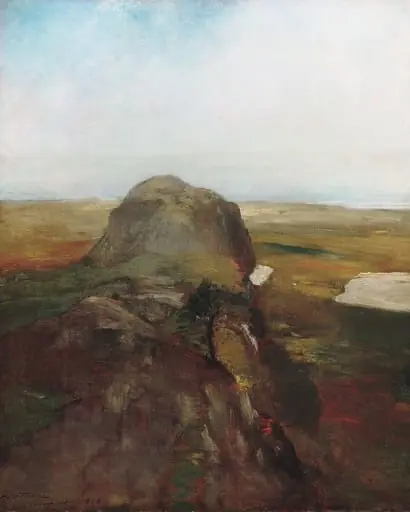 Autumn Study, View over Hanging Rock, Newport, R.I.
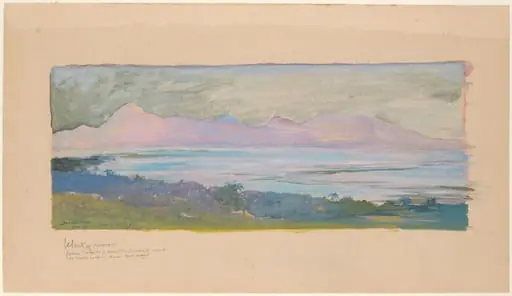 The Island of Moorea Looking across the Strait from Tahiti, January 1891
 Double Study of Dawn, Moorea Seen across the Water, Tahiti