Artwork
Gitana
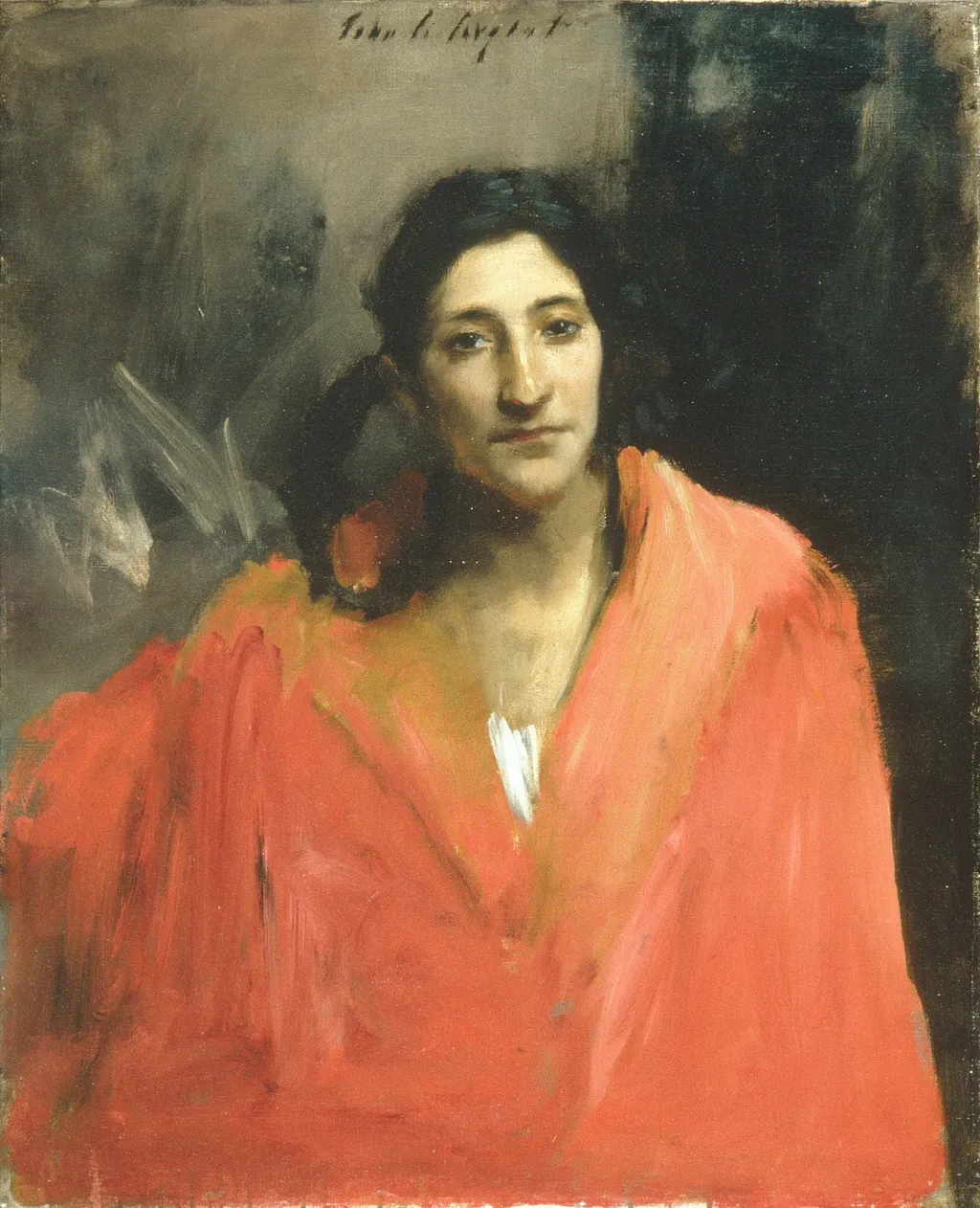
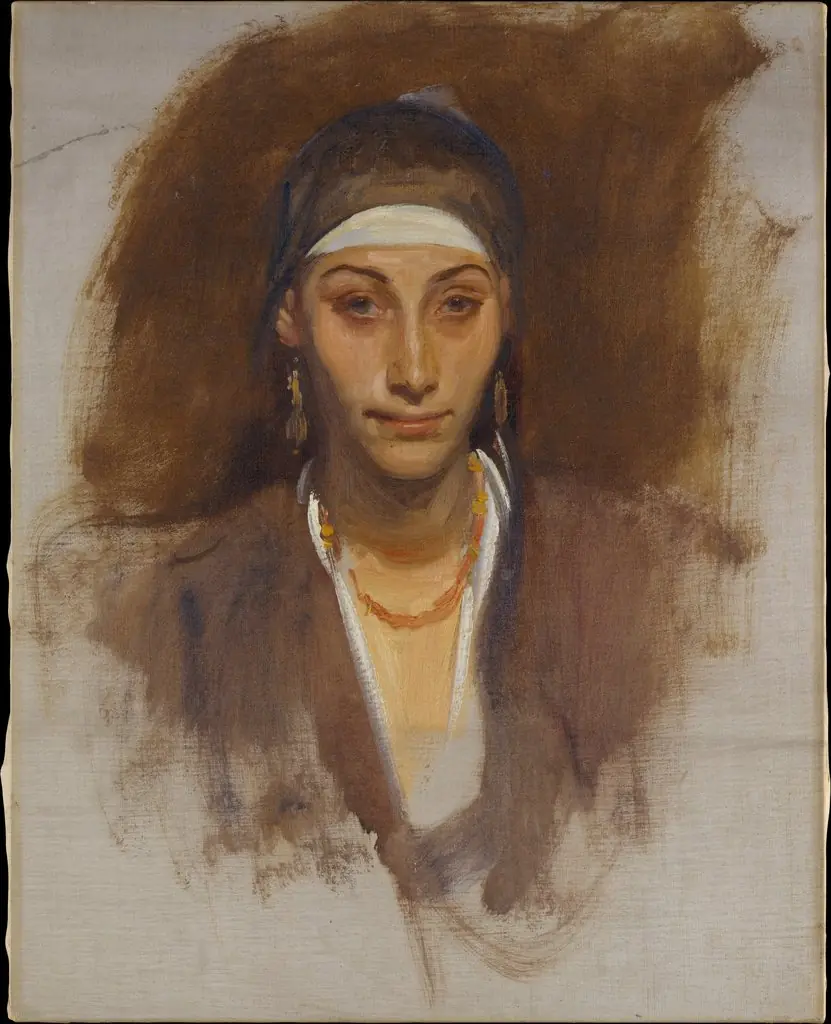
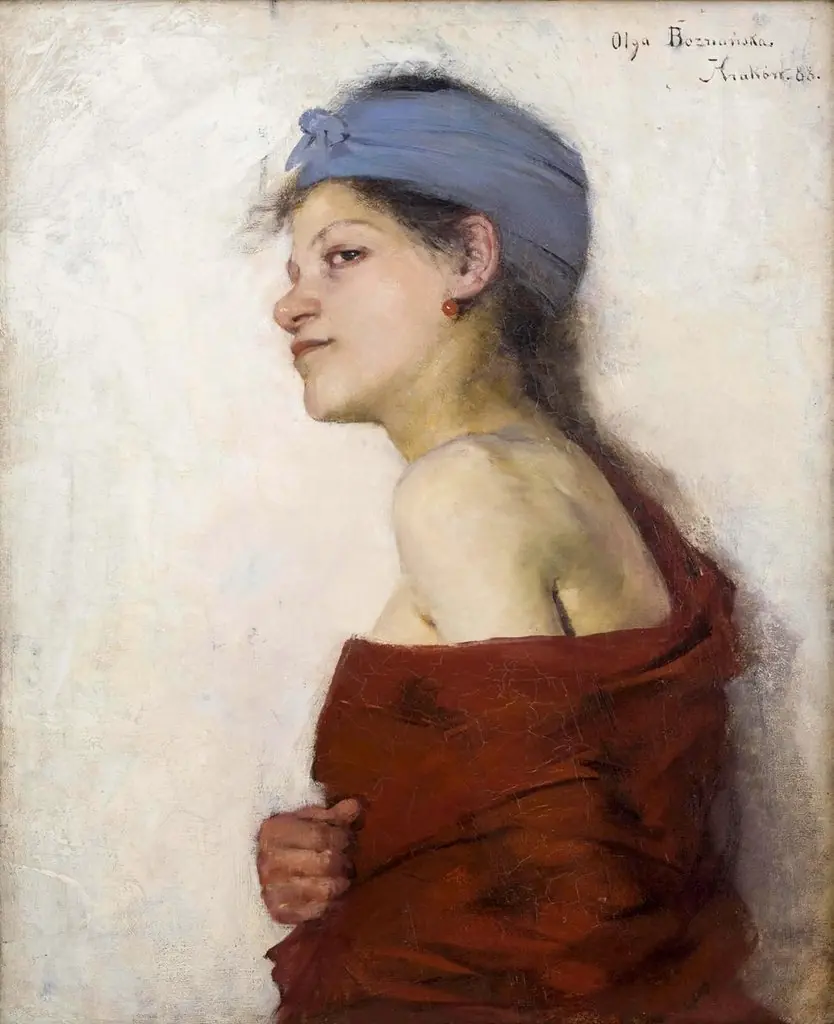
Gitana is an oil painting by the Impressionist artist John Singer Sargent. It dates from 1888 and is held in the collection of the Metropolitan Museum of Art.
About this work
Subject & Meaning
The painting is classified as a portrait, depicting the subject in a frontal, unidealized manner typical of Sargent's early approach to character study.
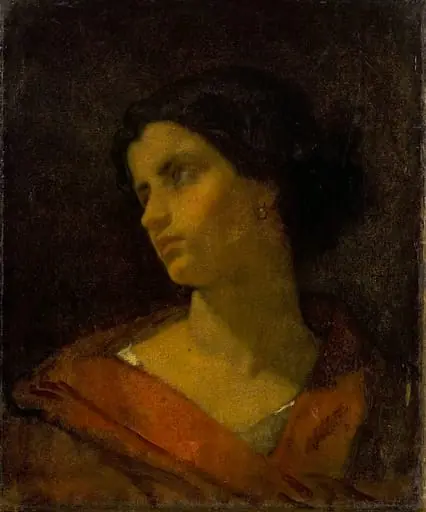
Gitana portrays an unidentified woman believed to be a Romani woman, painted by John Singer Sargent in 1876. The sitter is rendered directly and without flattery, set in full light. She wears a slightly oversized red-orange garment, and her hair is braided into two plaits that form loops on either side of her head.
The painting is classified as a portrait, depicting the subject in a frontal, unidealized manner typical of Sargent's early approach to character study.
Technique & Style
Executed in 1876, Gitana is an oil painting on canvas by John Singer Sargent. The work measures 73.7 cm in height and 60 cm in width. Stylistically, the portrait depicts an unidentified woman, presumed to be a Romani woman, rendered with directness and without flattery under full illumination.
The figure wears a slightly oversized orange-red garment, and her hair is styled in two braids that form curls on either side of her head. The medium of oil paint allows for the vivid description of the subject's attire and the stark lighting conditions, characteristic of Sargent's approach to portraiture during this period.
History & Provenance
Gitana was painted by John Singer Sargent around 1876. The picture was not a formal commission; evidence suggests Sargent gave it to the French painter Alfred Roll, who owned the canvas and had it photographed in his studio. Roll, an early subscriber to the 1899 fund for acquiring Manet's Olympia, retained the painting until it entered the Metropolitan Museum of Art's collection, where it is now housed. The painting has been shown in the exhibition Sargent and Paris.
Context
John Singer Sargent's Gitana (1876) occupies a nuanced position in the artist's early career and the broader evolution of late 19th-century portraiture. Painted during Sargent's formative years in Paris, the work reflects his engagement with direct, unidealized figuration, a departure from academic conventions. The portrait's provenance, including its ownership by Alfred Roll, underscores its circulation among avant-garde circles, particularly those supportive of Manet's Olympia.
While less studied than Sargent's later portraits, Gitana exemplifies his early rejection of sentimentality in favor of striking realism, foreshadowing modernist tendencies in portraiture.
Overview
John Singer Sargent's 1888 oil painting, Gitana, presents a compelling portrait of a woman. This work exemplifies the American expatriate artist's engagement with contemporary European art movements, particularly Impressionism, during his extensive career. It is currently housed within the collection of The Metropolitan Museum of Art, representing a facet of his diverse output beyond his renowned society portraits.
Own this work as a print
Artist & collection

Artist
John Singer Sargent (; January 12, 1856 – April 15, 1925) was an American expatriate artist, considered the "leading portrait painter of his generation" for his evocations of Belle Époque and Edwardian-era luxury.