Artwork
The Brown Family
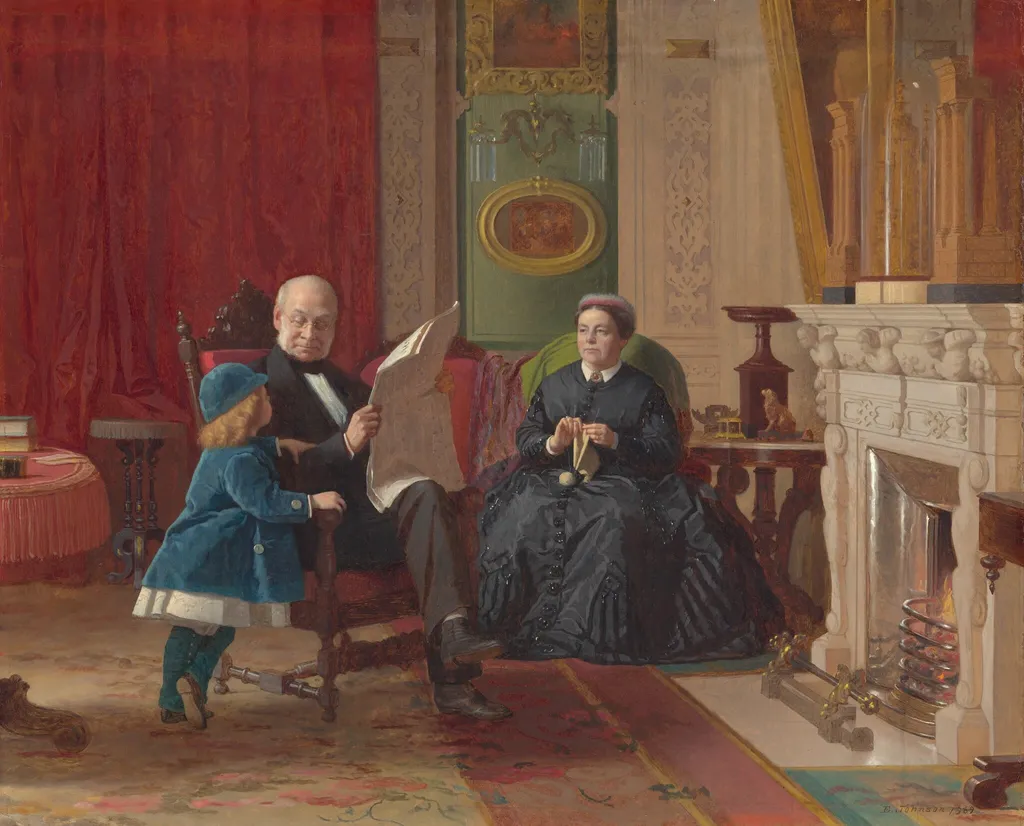
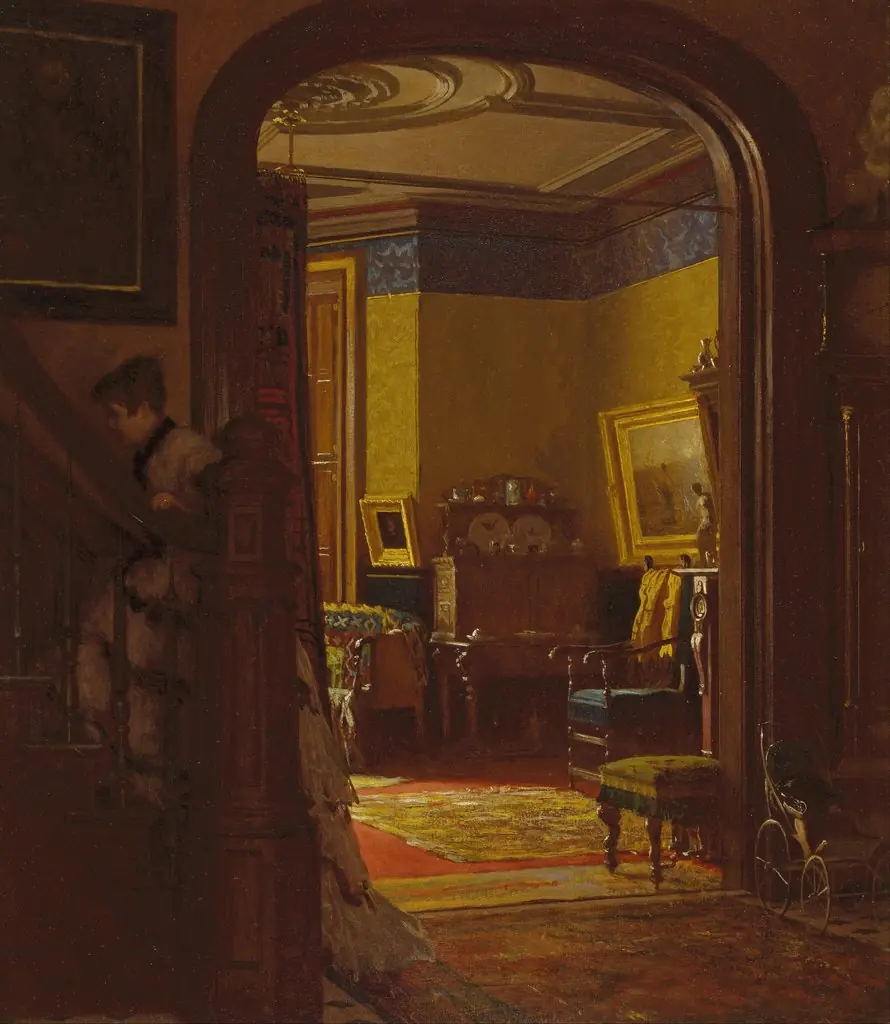
The Brown Family is an oil painting by the American Folk Art artist Eastman Johnson. It dates from 1869 and is held in the collection of the National Gallery of Art.
- Inscription
- Inscribed:lower right: E. Johnson 1869
About this work
Technique & Style
Eastman Johnson executed The Brown Family in 1869 using oil paint applied to paper, which was subsequently mounted on a canvas support. This group portrait measures 59 cm in height and 72.4 cm in width. The work is classified as a painting within the portrait genre, capturing the family subjects through the artist's handling of oil media on this specific layered support structure.
History & Provenance
Its precise accession number is not specified in the available documentation, but the acquisition is noted as a formal addition to the gallery’s holdings.
The Brown Family, an 1869 oil on paper on canvas portrait by Eastman Johnson, measures 59 cm by 72.4 cm. It was originally owned by Eliza Maria and James Brown of New York, who presented the work to their grandson James Clifton Brown in December 1870; the painting remained in the Brown family in England through subsequent generations. Around 1950 it passed to Katherine and Ion Garnett‑Orme, was sold through Peter H. Davidson & Co. by 1978, and was acquired by the National Gallery of Art in November 1978.
The Brown Family, painted by Eastman Johnson in 1869, is part of the National Gallery of Art’s permanent collection in Washington, D.C. The work entered the museum on 15 November 1978 after being acquired from the New York dealer Peter H. Davidson & Co., a transaction documented in the institution’s provenance records. Its precise accession number is not specified in the available documentation, but the acquisition is noted as a formal addition to the gallery’s holdings. No exhibition history for the piece is recorded in the cited sources, and thus its public display record remains unspecified.
Overview
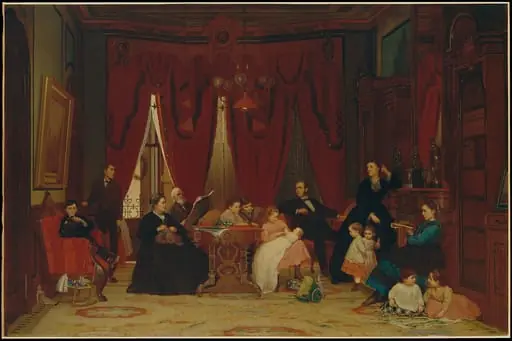
Eastman Johnson's The Brown Family, executed in 1869, is a formal group portrait depicting three members of the Brown family within an opulent interior. The composition centers on an older man in a dark suit who stands holding a large sheet of paper, positioned beside a young boy dressed in a blue coat. To their right, a woman in a long black dress is seated, holding a wooden spindle.
The setting is defined by walls covered in red wallpaper and a fireplace featuring ornate carvings, elements that establish the domestic wealth and status of the subjects. Painted in oil on paper mounted on canvas, the work reflects Johnson's mature style, characterized by meticulous attention to texture and the psychological presence of his sitters. Created during a period when the artist was highly sought after for his portraiture of prominent American families, the painting serves as a document of Gilded Age domesticity.
The inclusion of the spindle and the paper held by the patriarch suggests specific familial roles or achievements, grounding the image in the specific identity of the Brown household rather than serving as a generic allegory.
Subject & Meaning
The composition features an older man in a dark suit, holding a large sheet of paper, standing beside a boy in a blue coat whose posture suggests engagement. A woman in a long black dress is seated nearby, occupied with a wooden spindle. The rich interior, with its red wallpaper, carved fireplace, and green door, provides a warm backdrop, while the woman's dark attire creates a visual focal point amidst the vibrant surroundings.
Own this work as a print
Artist & collection
Artist
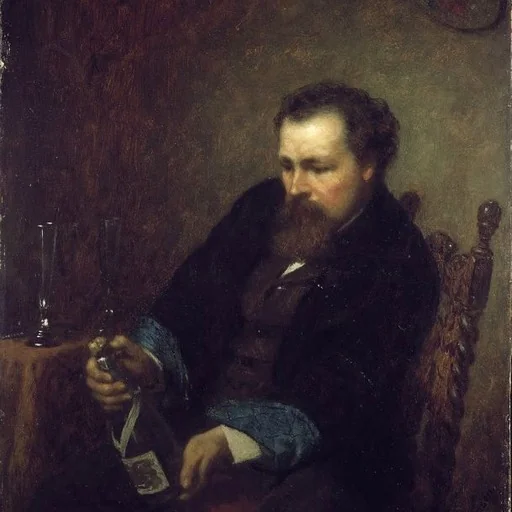
Jonathan Eastman Johnson (July 29, 1824 – April 5, 1906) was an American painter and co-founder of the Metropolitan Museum of Art, New York City, with his name inscribed at its entrance.