Artwork
Christian Allegory with two Children Hugging each other
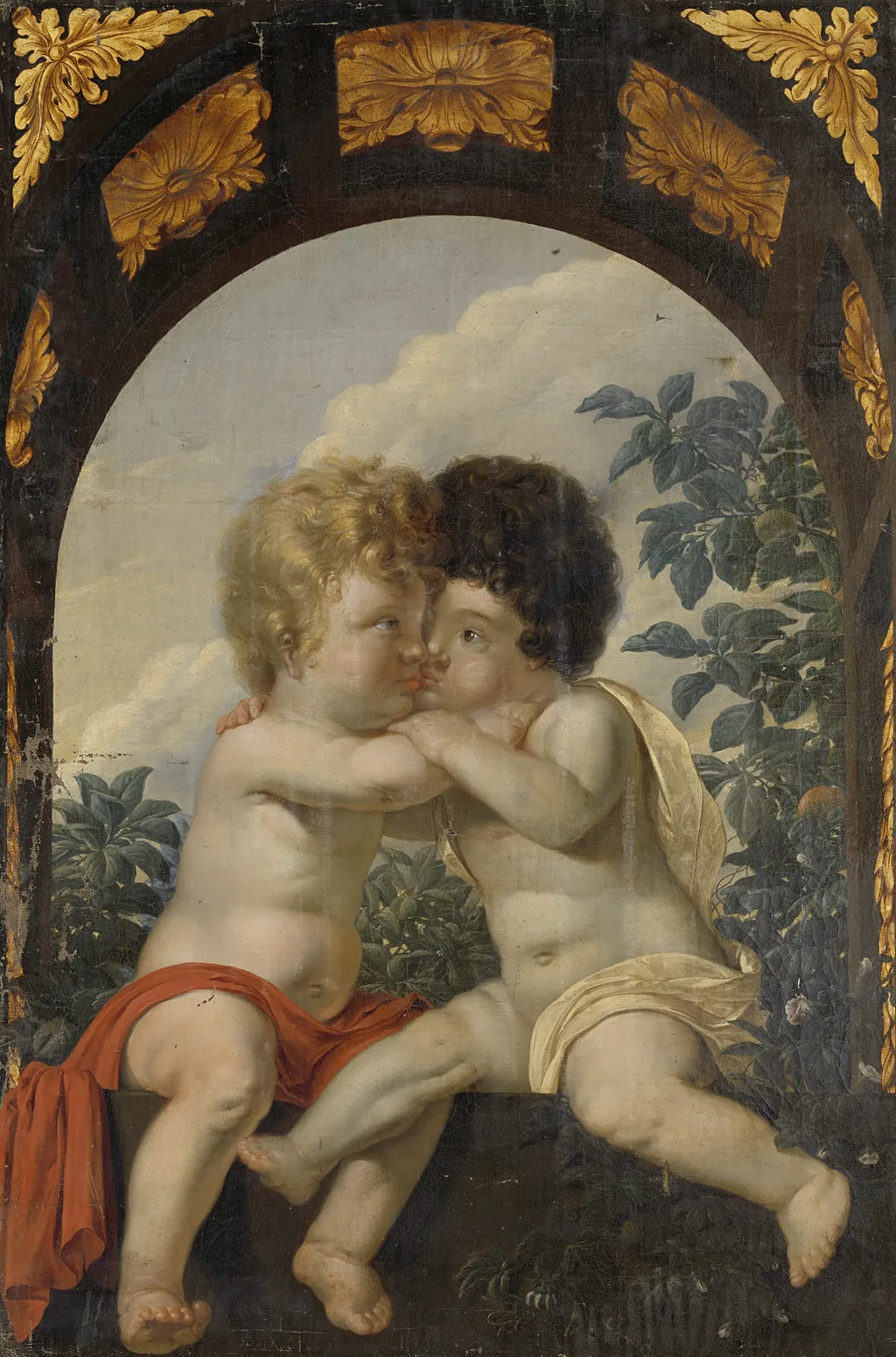
Christian Allegory with two Children Hugging each other is an oil painting by the Flemish Baroque painting artist Unknown. It dates from 1650 and is held in the collection of the Rijksmuseum. This oil painting depicts two nearly identical, bare-chested boys embracing each other, set against a decorative background.
About this work
Technique & Style
These material and stylistic choices reflect the technical conventions of anonymous religious art produced in the Northern Low Countries around 1650.
The work is an oil painting executed on canvas, measuring 115 cm in height by 76 cm in width. Pigment analysis indicates a conventional Northern Baroque handling of oil medium, with layered glazes producing a luminous surface typical of mid‑17th‑century Dutch studios. The composition employs a restrained chiaroscuro to model the children's forms, while the surrounding allegorical symbols are rendered in a naturalistic style characteristic of the period.
These material and stylistic choices reflect the technical conventions of anonymous religious art produced in the Northern Low Countries around 1650.
History & Provenance
Christian Allegory with two Children Hugging each other is an oil painting attributed to the anonymous tradition of the Northern Low Countries, created in 1650. The work entered the collection of the Rijksmuseum and is currently housed in the Mauritshuis, both institutions noted as custodians of the piece. Its provenance reflects a continuous ownership chain within these museum collections since its creation, with no recorded private sales or transfers documented.
The dating of 1650 is based on stylistic analysis and archival records from the period, situating the painting firmly within the religious allegorical genre of the Dutch Golden Age.
Christian Allegory with two Children Hugging each other is an oil painting created in 1650 in the Northern Low Countries. It measures 115 cm by 76 cm and is housed in the Rijksmuseum under inventory number SK-A-245. The work has been part of the Rijksmuseum's collection since its acquisition and is classified as a religious allegory.
It was exhibited in the museum's 19th-century European paintings gallery in 1885 and featured in the 2015 exhibition 'Dutch Masters: Intimacy and Allegory'.
Overview
This oil painting depicts two nearly identical, bare-chested boys embracing each other, set against a decorative background. The work combines vivid, symbolic elements with a sense of intimate, serene interaction between the subjects.
Subject & Meaning
The painting features two chubby, curly-haired boys in a tight hug, their facial expressions serene with closed eyes, suggesting a deep, possibly symbolic connection. The contrasting red and pale drapery may allude to dual aspects of a Christian allegory, though the specific narrative remains ambiguous.
Context
The dreamy, symbolic quality, coupled with the use of chiaroscuro, places the painting within a tradition of emotionally charged, allegorical artworks common in European religious and mythological themes of the period, though the exact date and artist are not specified here.
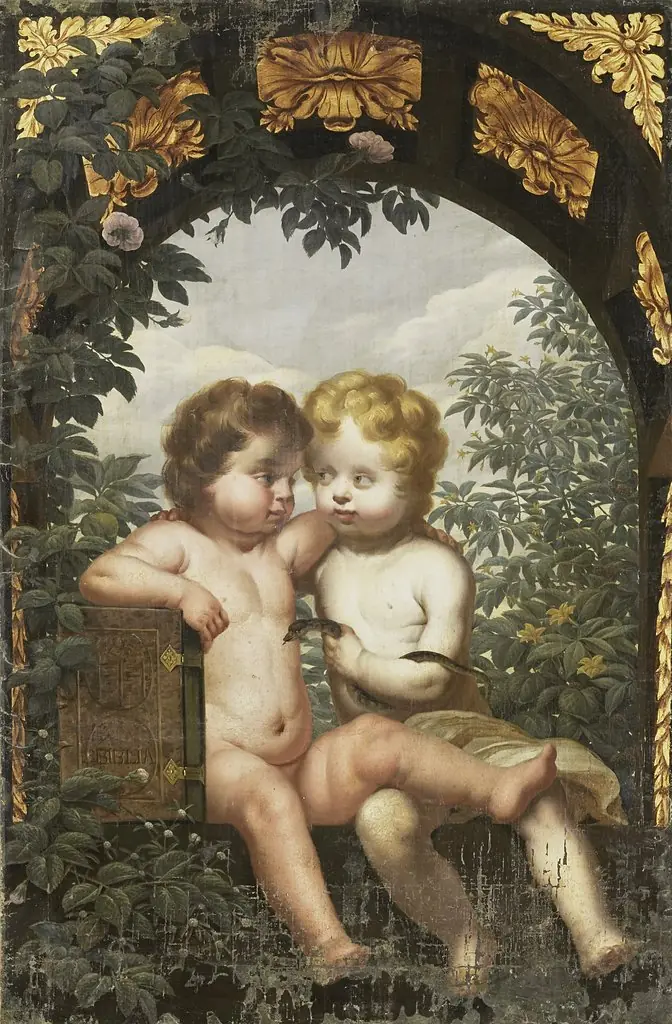
Artist & collection









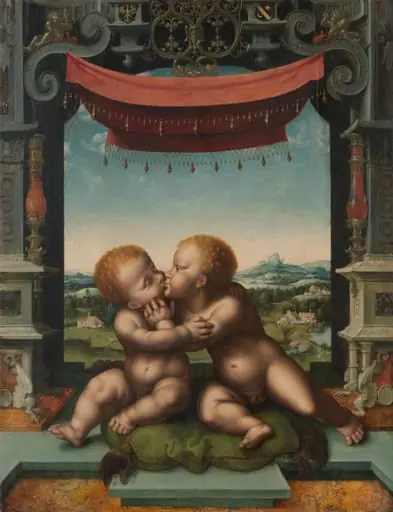 The Infants Jesus Christ and Saint John the Baptist Embracing
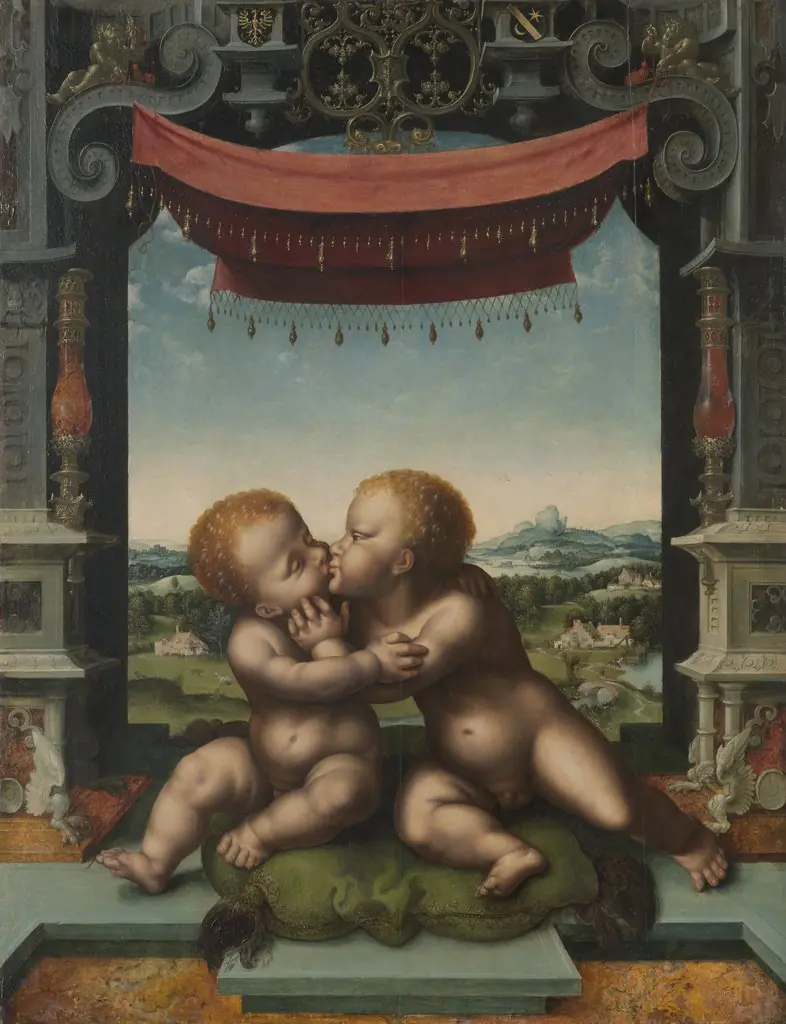 The Infants Christ and Saint John the Baptist Embracing
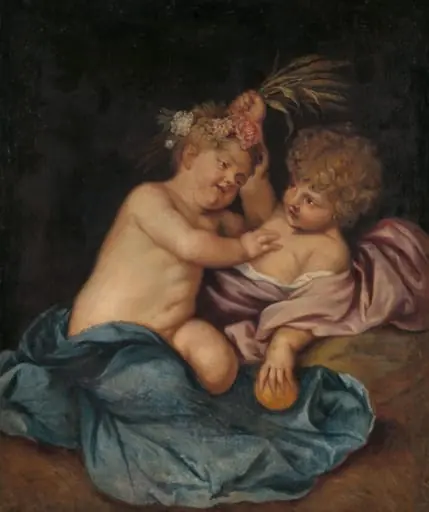 Two Infants, Personifications of Spring and Autumn
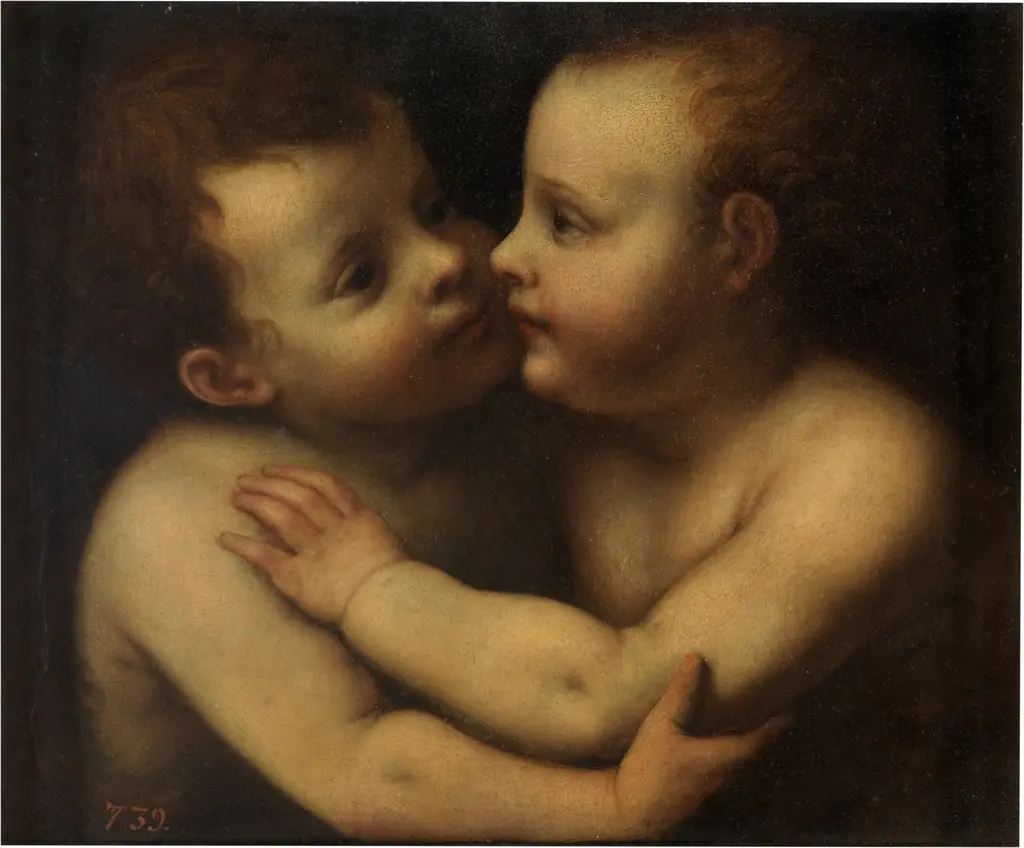 The Infant Christ and St John the Baptist
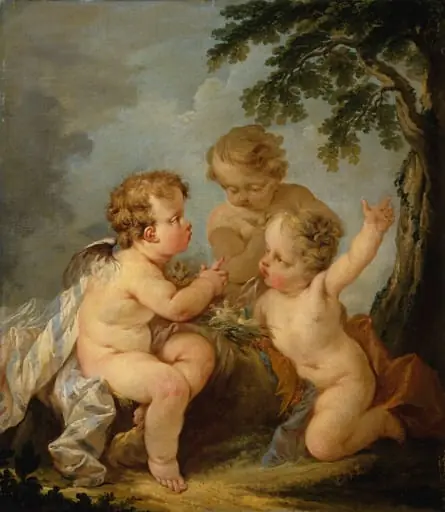 Kolme linnunpesällä leikkivää amoriinia
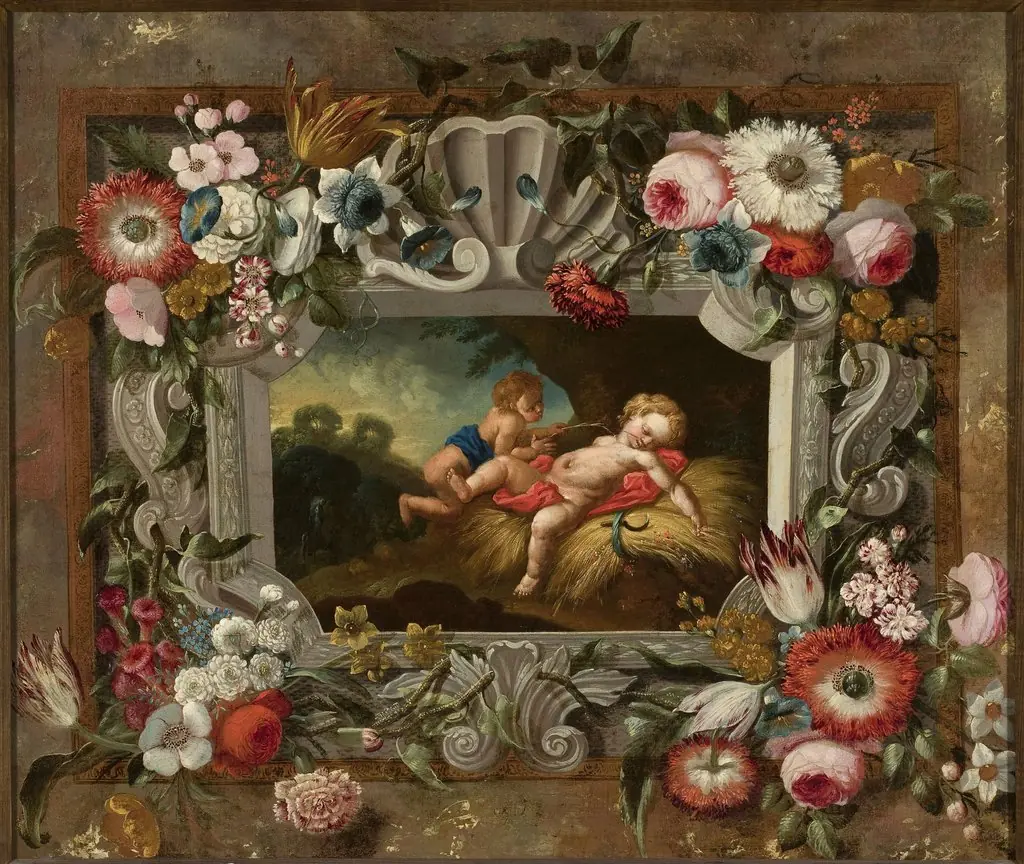 Allegory of summer in a circle of flowers
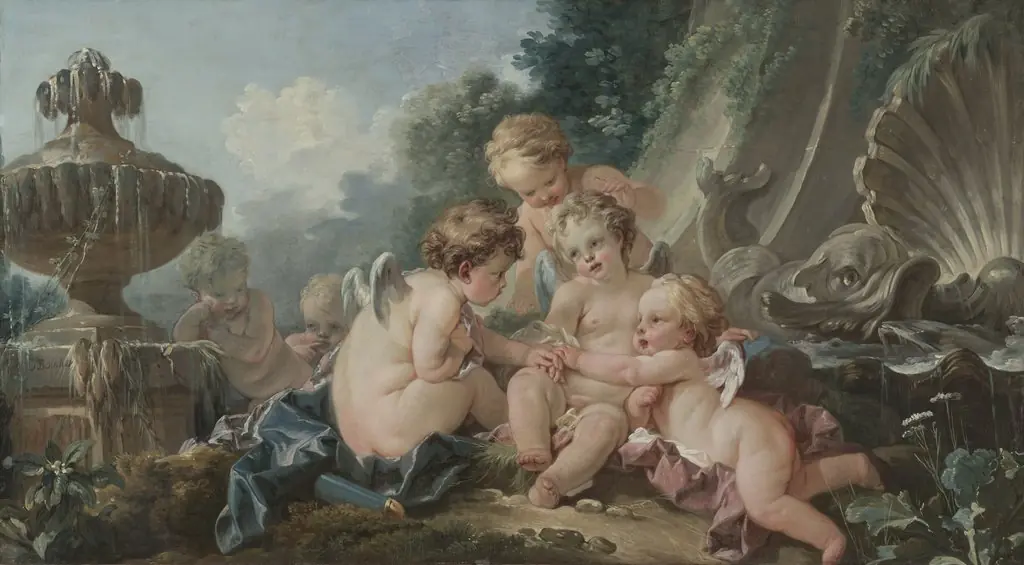 Cupids in Conspiracy
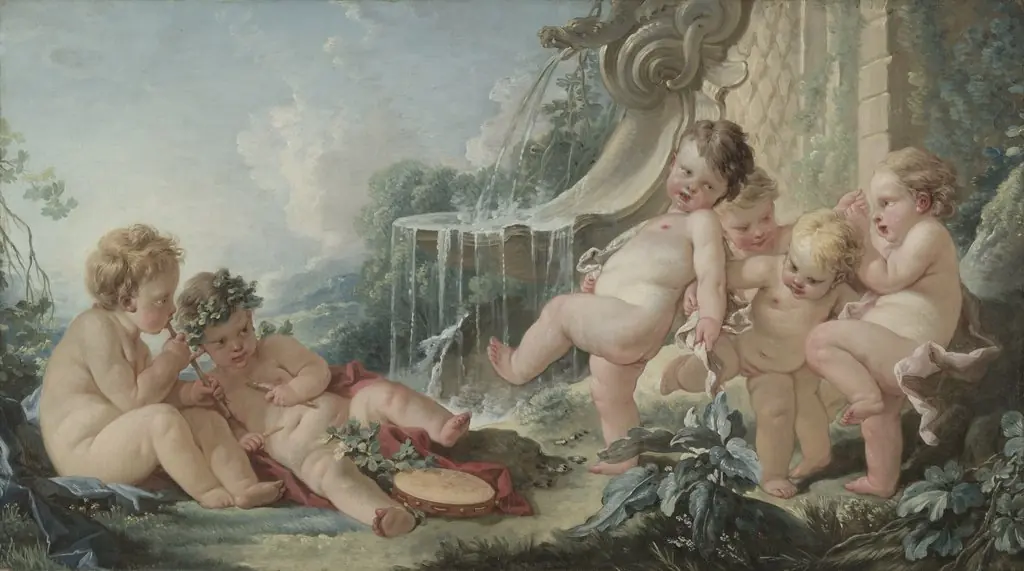 Music and Dance
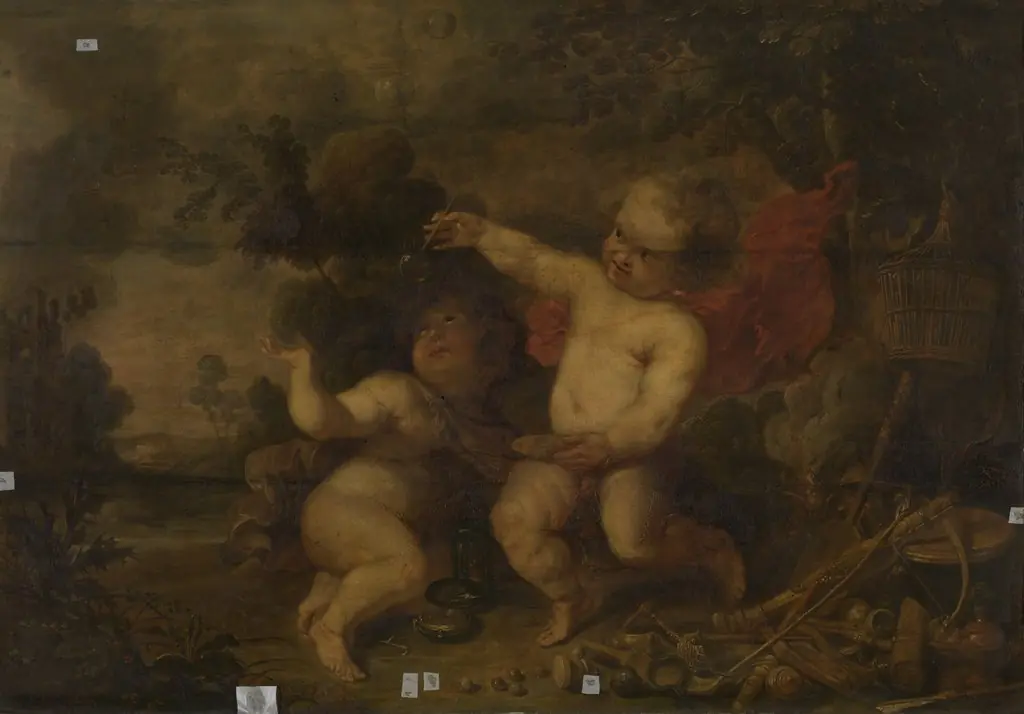 Vanitas