Artwork
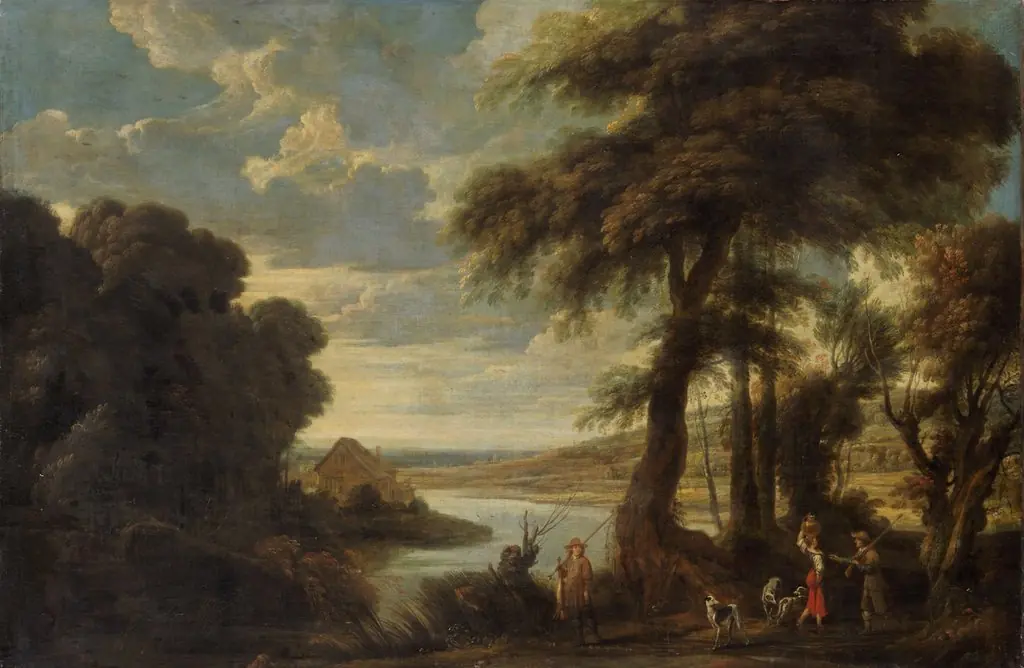
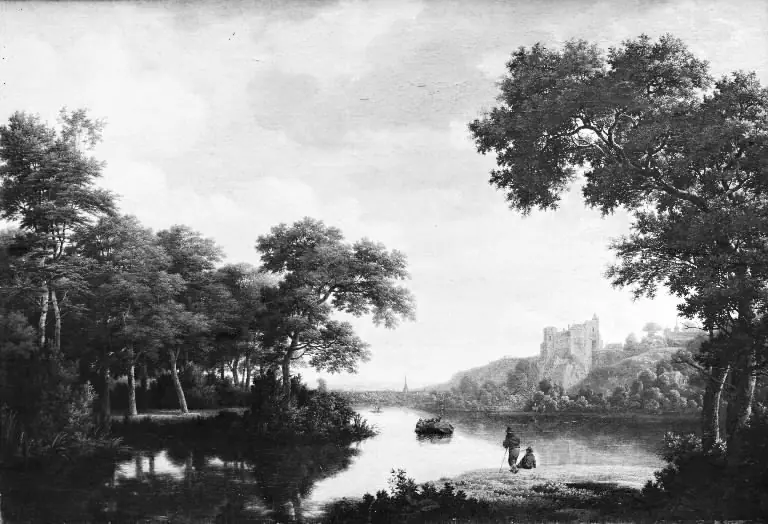
Landscape with Fisherman with a square Net
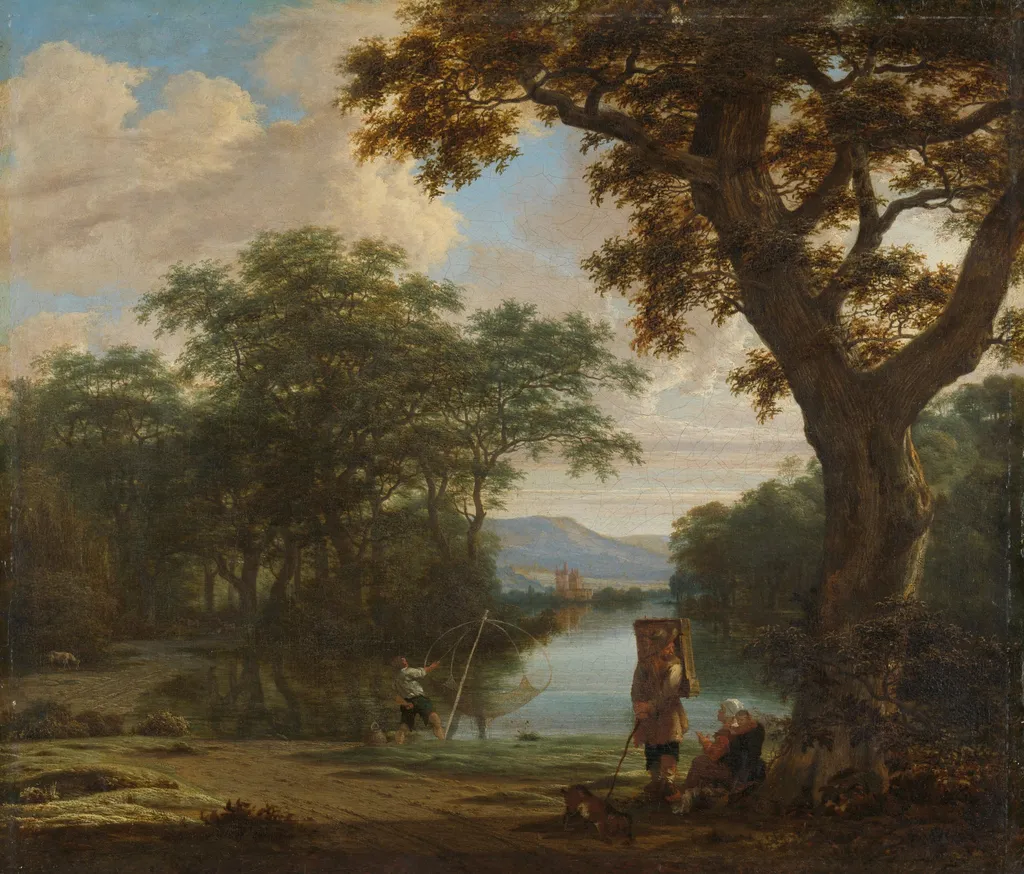
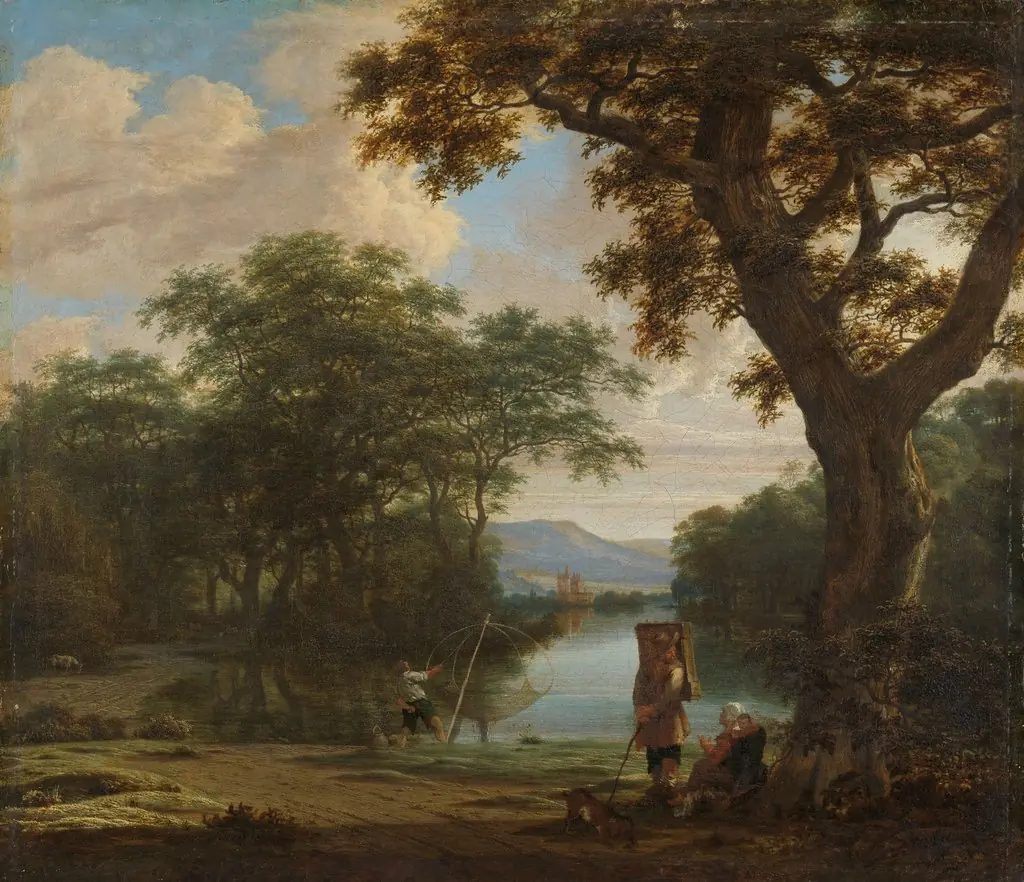
Landscape with Fisherman with a square Net is an unspecified painting by the Dutch Golden Age artist Joris van der Haagen. It dates from 1645 and is held in the collection of the Rijksmuseum.
About this work
Technique & Style
The work exemplifies the Dutch Golden Age landscape genre, characterized by meticulous detail and a focus on rural scenes featuring waterways and paths.
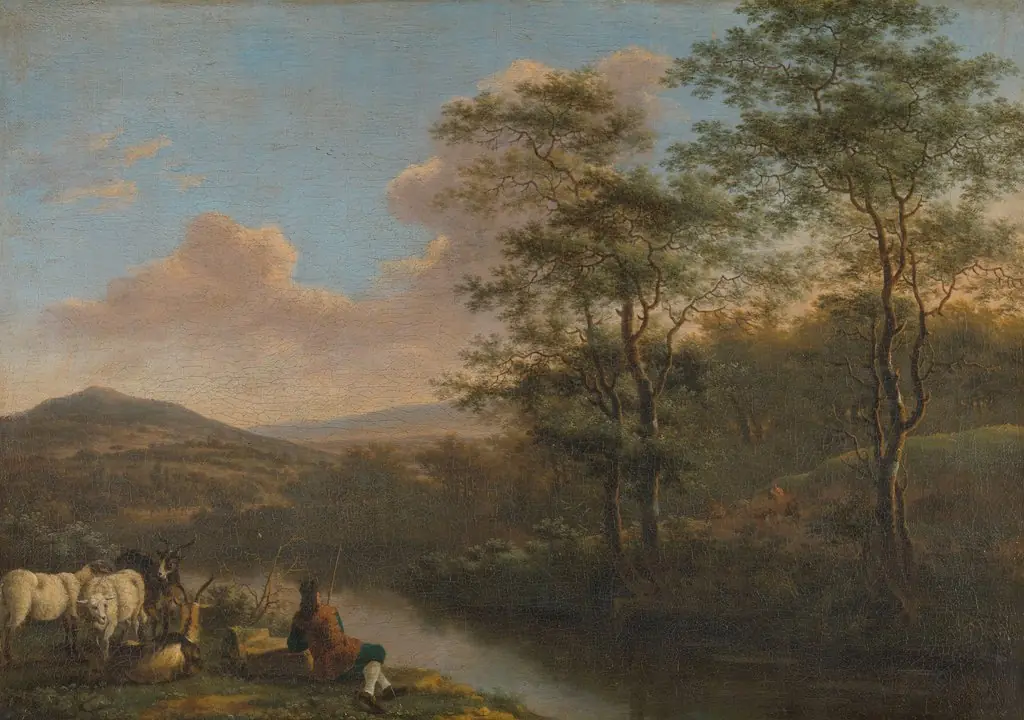
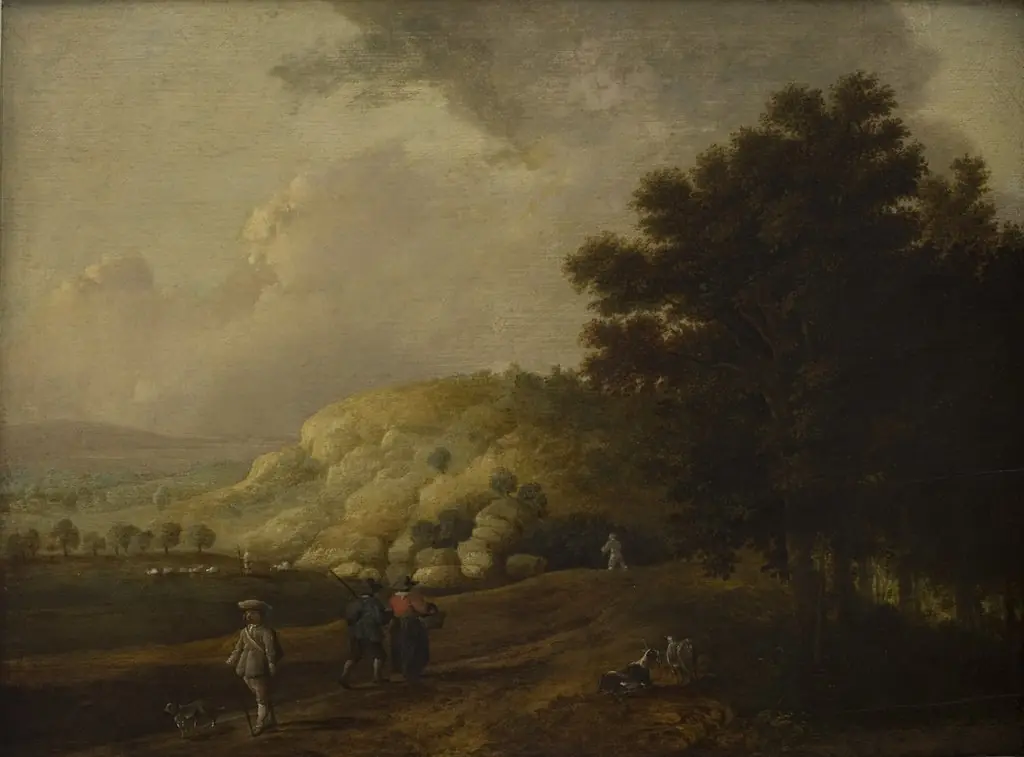
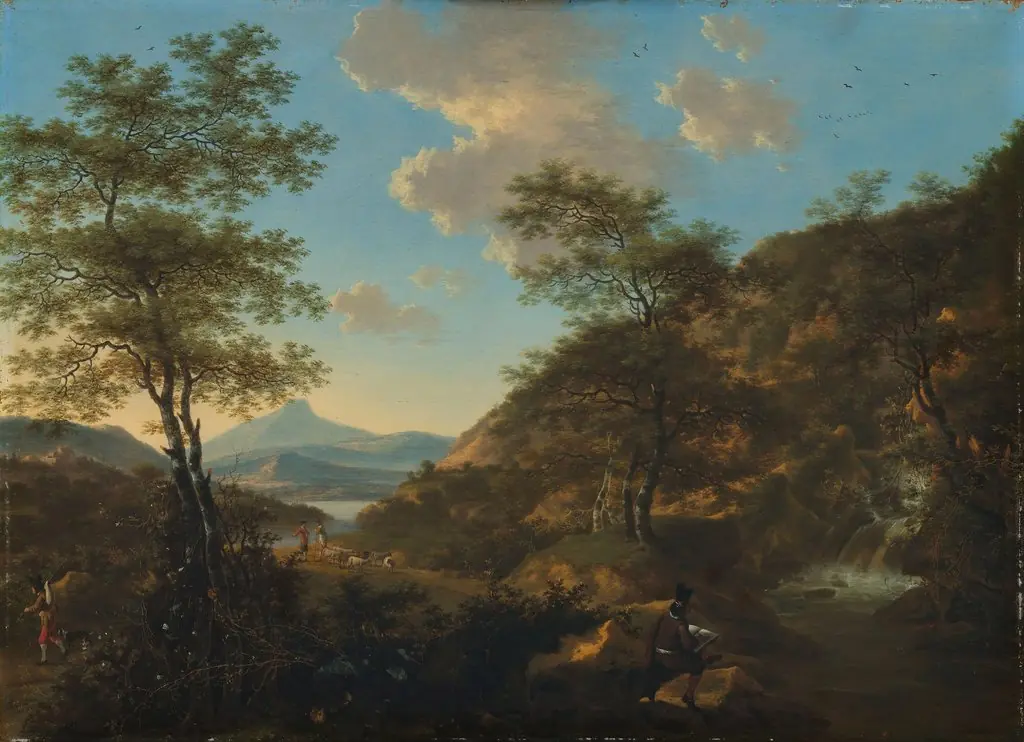
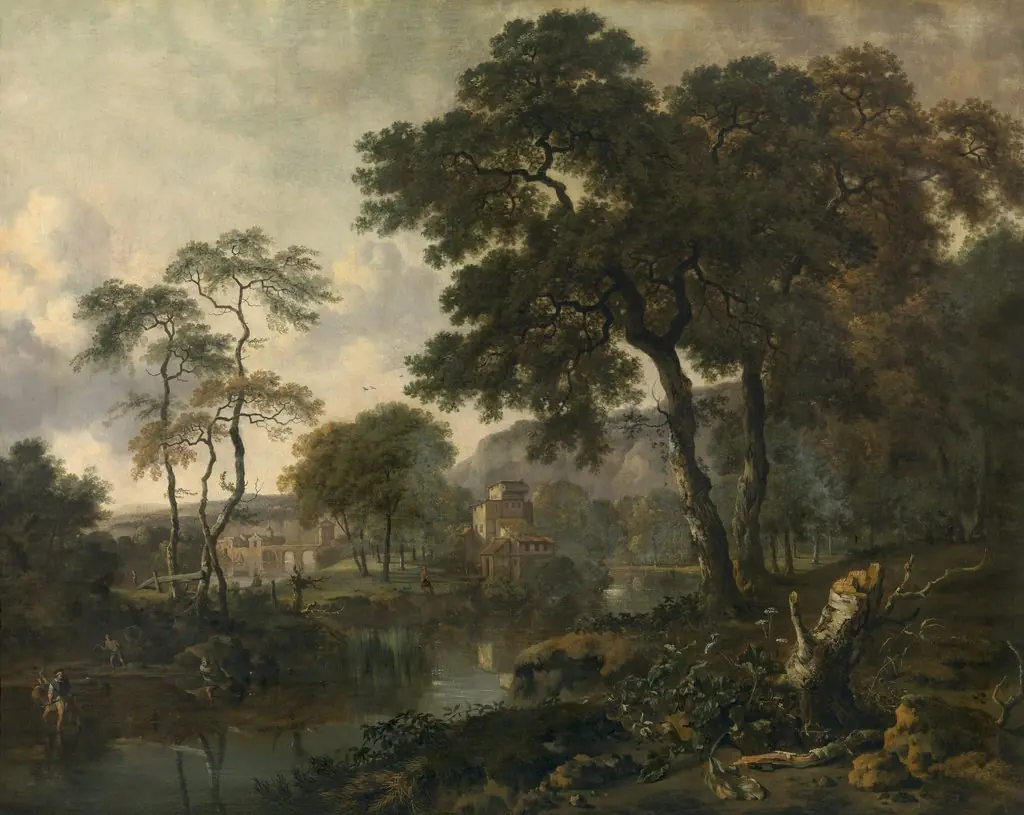
Landscape with Fisherman with a square Net is an oil painting on canvas created by Joris van der Haagen between c. 1645 and c. 1655. The work exemplifies the Dutch Golden Age landscape genre, characterized by meticulous detail and a focus on rural scenes featuring waterways and paths. While the painting depicts a fisherman using a square net, the human figures were likely added by collaborating artists, a common practice for the artist who frequently worked with specialists like Dirck Wyntrack. Historical accounts note that Van der Haagen utilized blue ash to create green pigments, a technique that reportedly caused the color to fade significantly by the early 18th century. Despite this material vulnerability affecting the original chromatic range, the composition remains noted for its careful execution and atmospheric rendering of the Dutch countryside.
History & Provenance
The painting *Landscape with Fisherman with a square Net* (also titled *Paysage avec un pêcheur au carrelet*) is held in the collection of the Rijksmuseum in Amsterdam. The work is attributed to the Dutch Golden Age painter Joris van der Haagen, who was active between approximately 1645 and 1655. While the specific inventory or accession number is not provided in the available records, the museum's online presence confirms the artwork's location within its holdings. The sources do not list any specific exhibition history for this particular canvas, noting only the artist's general legacy and other works by him in the same institution.
Context
Landscape with Fisherman with a square Net (c. 1645-1655) belongs to Joris van der Haagen’s mature Dutch Italianate oeuvre, a phase noted for its idealized river valleys and luminous skies. Within his wider practice, van der Haagen specialized in topographical views and collaborated frequently with figure painters such as Dirck Wyntrack, whose staffage enlivened his compositions. His works circulated in the Hague market and fetched high prices in the later seventeenth century, a pattern corroborated by Arnold Houbraken’s observation that van der Haagen’s green pigments, made with blue ash, had faded by 1715 yet did not diminish demand. The painting aligns with mid-century Dutch landscape conventions that fused Italianate motifs with local scenery, a synthesis advanced by artists such as Paulus Potter and Jan Wijnants, both of whom van der Haagen counted among his collaborators. By the 1650s, his scenes of rivers and fishermen had become emblematic of the Dutch Golden Age’s pastoral ideal, reinforcing his status within the Hague’s artistic networks, including the Confrerie Pictura founded in 1656.
Own this work as a print
Artist & collection
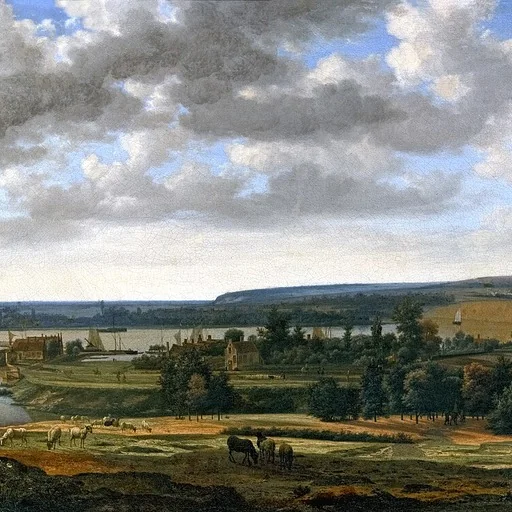
Artist
Joris Abrahamsz. van der Haagen (c. 1615 – 23 May 1669 (buried)) was a Dutch Golden Age painter specialized in landscapes.

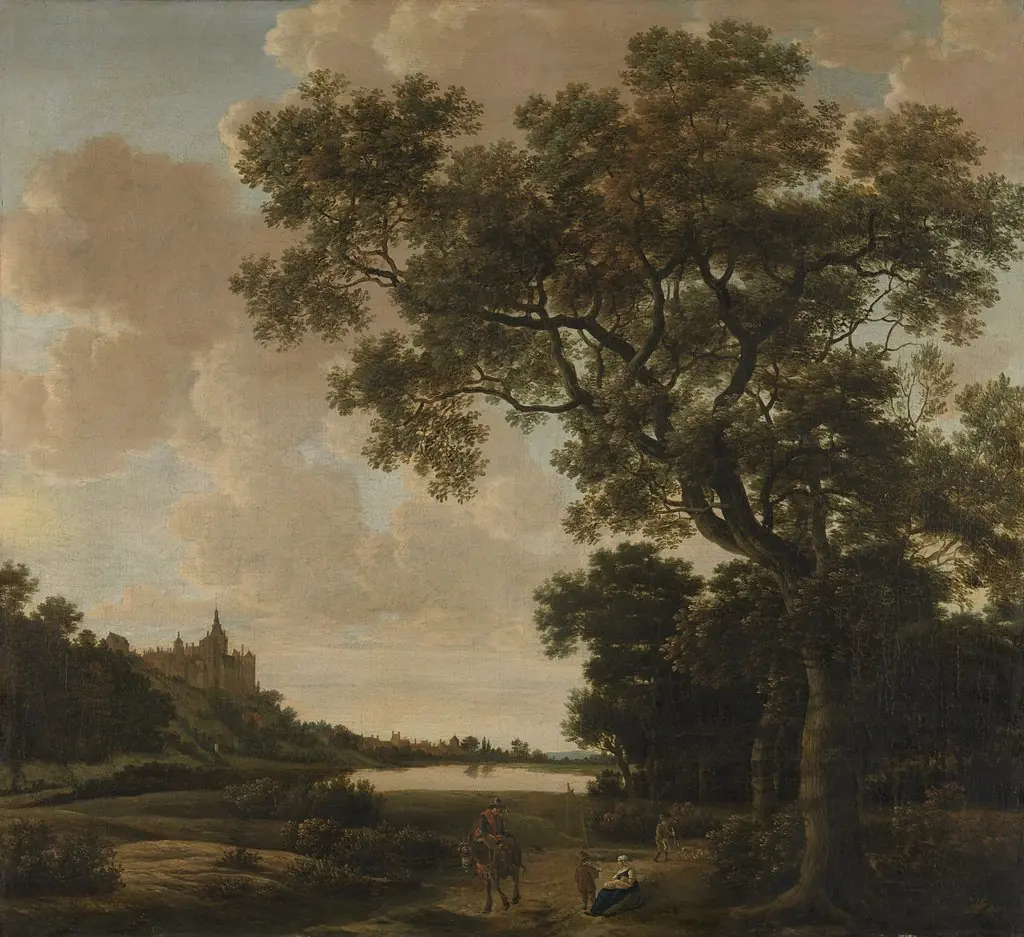 Landscape with the Schwanenturm, Kleve
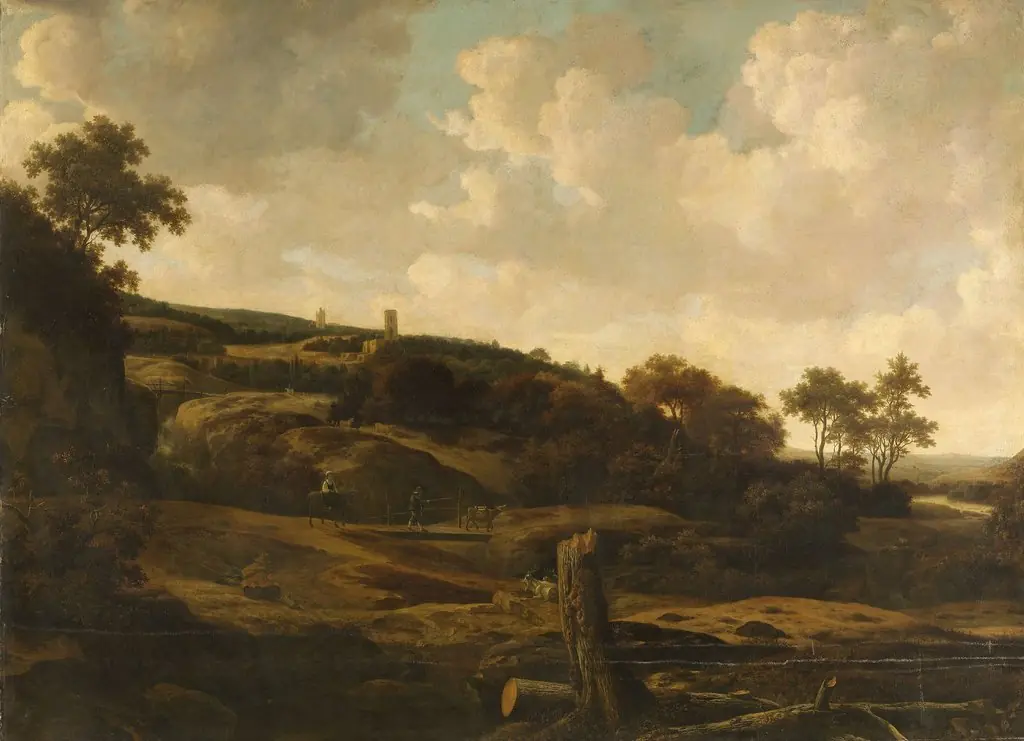 Mountainous landscape, possibly the St Pietersberg, with Lichtenberg castle, near Maastricht
- Landscape with fisherman with a square net
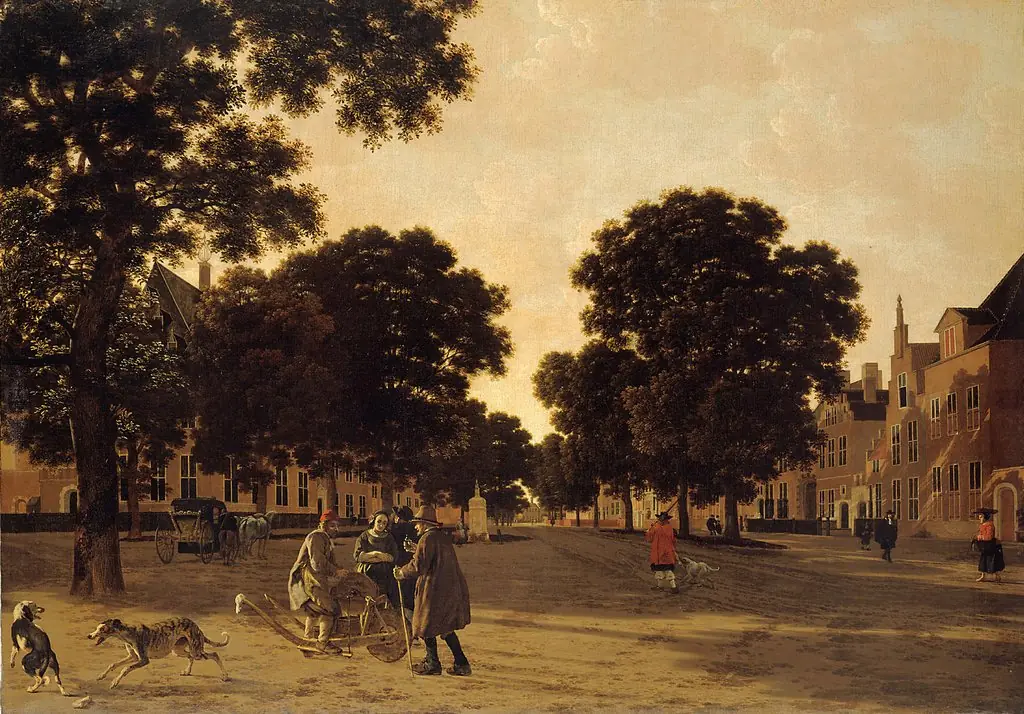 Ansicht des Kneuterdijk im Haag
 River Landscape
 The Oak Avenue
 Extensive Landscape Seen from the Edge of a Forest
 Woods at Night with Travelers