Artwork
La campana de Huesca
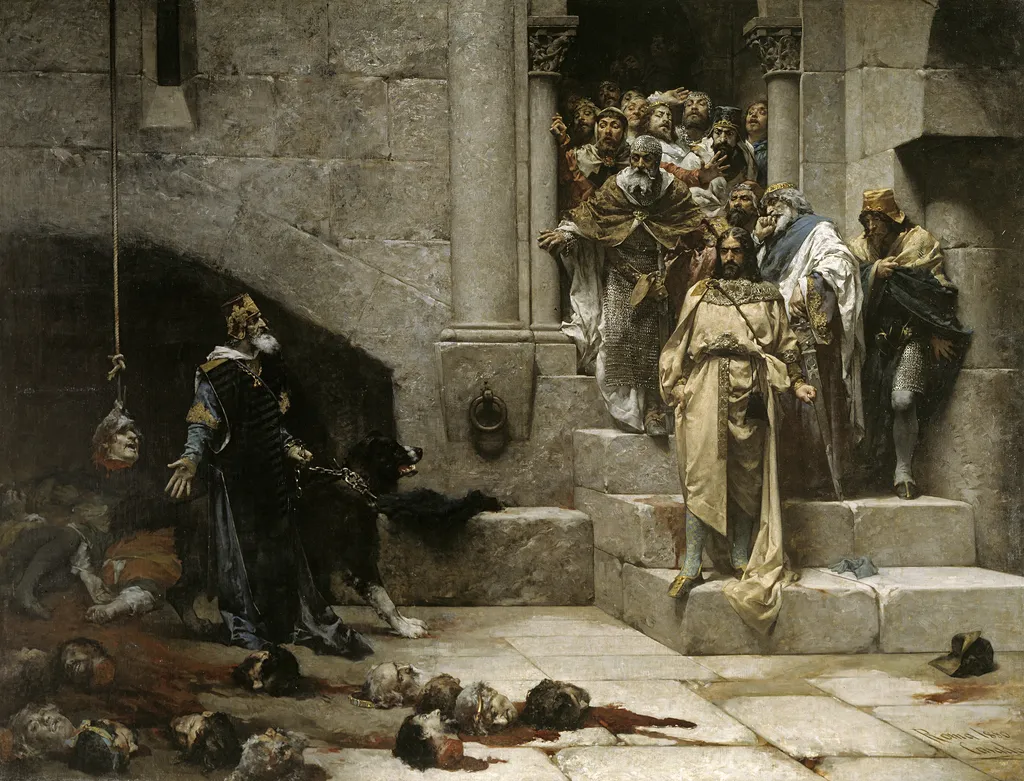
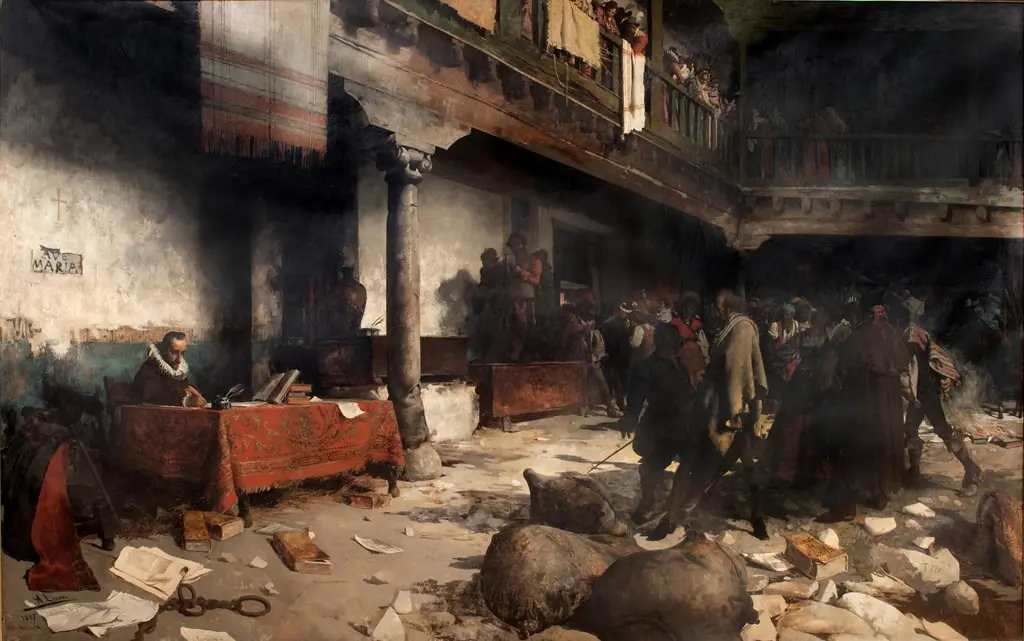
La campana de Huesca is an oil painting by the Post-Impressionist artist José Casado del Alisal. It is held in the collection of the Museo del Prado.
About this work
Subject & Meaning
The painting depicts the final moment of the medieval legend of the Bell of Huesca in which King Ramiro II of Aragon displays the severed heads of rebellious nobles arranged in the shape of a bell as a warning to his court. This iconography symbolizes royal authority and the punishment of treason, a theme drawn from the 1851 historical novel La campana de Huesca by Antonio Cánovas del Castillo and the 1837 drama El rey monje. The work was praised for its dramatic rendering of this symbolic scene and earned Casado del Alisal a gold crown from his supporters after receiving only an honorable mention at the 1881 National Exhibition of Fine Arts.
Technique & Style
The artist even retained the actual beret and tunic used as props for the monarch's depiction in the final work.
La campana de Huesca is an oil on canvas painting executed in 1880, measuring 356 by 474 cm. Prior to the final composition, José Casado del Alisal produced a series of preparatory pencil drawings and oil sketches, including individual head studies such as one for King Ramiro II. The artist even retained the actual beret and tunic used as props for the monarch's depiction in the final work. Stylistically, the painting was criticized for its excessive theatricality, a quality that proved controversial during its exhibition at the 1881 Exposición Nacional de Bellas Artes de España.
History & Provenance
La campana de Huesca fue pintada por José Casado del Alisal entre 1879 y 1880 en su estudio en la Academia Española de Bellas Artes de Roma, donde también se encontraba como primer director hasta octubre de 1881. La obra se inspiró en la leyenda de la Campana de Huesca, recogida en la novela histórica de Antonio Cánovas del Castillo publicada en 1851 y en el drama El rey monje de Antonio García Gutiérrez de 1837. Antes de la pintura, el artista realizó varios dibujos a lápiz y bocetos de cabezas, entre ellas la del rey Ramiro II, y guardó en su estudio el birrete y la túnica que aparecen en la representación. La obra obtuvo una mención honorífica en la Exposición Nacional de Bellas Artes de España de 1881 y le fue concedida la Gran Cruz de la Orden de Isabel la Católica, aunque ya era comendador de número de la Orden de Carlos III. En 1882 el Estado español adquirió la tela mediante una ley de 28 de enero firmada por Alfonso XII, destinando 35.000 pesetas para su compra; fue enviada al Museo del Prado y, posteriormente, expuesta en París en 1889. En 1896 fue depositada en el Museo de Arte Moderno y, en 1921, mediante Real Orden, pasó al Palacio del Senado. Desde 1950 está depositada y expuesta en el Ayuntamiento de Huesca, en el llamado Salón de la Justicia. Tres bocetos de la obra se conservan en el Palacio del Senado, en la Diputación Provincial de Palencia y en el Museo de Huesca.
La campana de Huesca belongs to the collection of the Museo del Prado, where it was sent after the Spanish State acquired the painting in 1882 for 35,000 pesetas. On 8 August 1896 it was transferred to the Museo de Arte Moderno in Madrid, and by royal order of 17 June 1921 it was deposited at the Palacio del Senado de España. Since 30 October 1950 the canvas has been on deposit at the Ayuntamiento de Huesca, where it remains on display in the so-called Salón del Justicia.
The painting's exhibition history began with the Exposición Nacional de Bellas Artes de España of 1881, where it received only an honorary mention. After its acquisition, Casado del Alisal exhibited it across Europe, winning top awards at the state exhibitions in Munich and Vienna, and it was shown at the 1889 Exposition Universelle in Paris.
Context
Painted in Rome between 1879 and 1880, the work draws literary inspiration from Antonio Cánovas del Castillo's 1851 historical novel and potentially an 1837 drama by Antonio García Gutiérrez. Upon its debut at the 1881 National Exhibition of Fine Arts in Spain, the canvas faced sharp criticism for excessive theatricality, preventing it from securing the coveted Medal of Honor despite strong support from admirers like Emilio Castelar.
Although the jury favored a posthumous architectural project instead, the state purchased the painting in 1882 for 35,000 pesetas following a parliamentary proposal. The artist subsequently achieved international acclaim with the piece at exhibitions in Munich, Vienna, and the 1889 Paris Universal Exposition. Originally entering the Museo del Prado collection, the painting was deposited in Huesca in 1950, cementing its status as a definitive visual interpretation of the regional legend.
Legacy
La campana de Huesca became a reference point for historical‑painting practice in late‑19th‑century Spain. Its dramatic portrayal of Ramiro II’s justice inspired contemporary and later artists to explore regal authority through symbolic visual metaphors. The work was praised in exhibitions across Europe, earning Casado del Alisal honors such as the Gran Cruz de la Orden de Isabel la Católica and influencing state acquisition policies for historical subjects. Its public display in Huesca and subsequent reproductions cemented its reputation as a national emblem of legal and moral narrative.
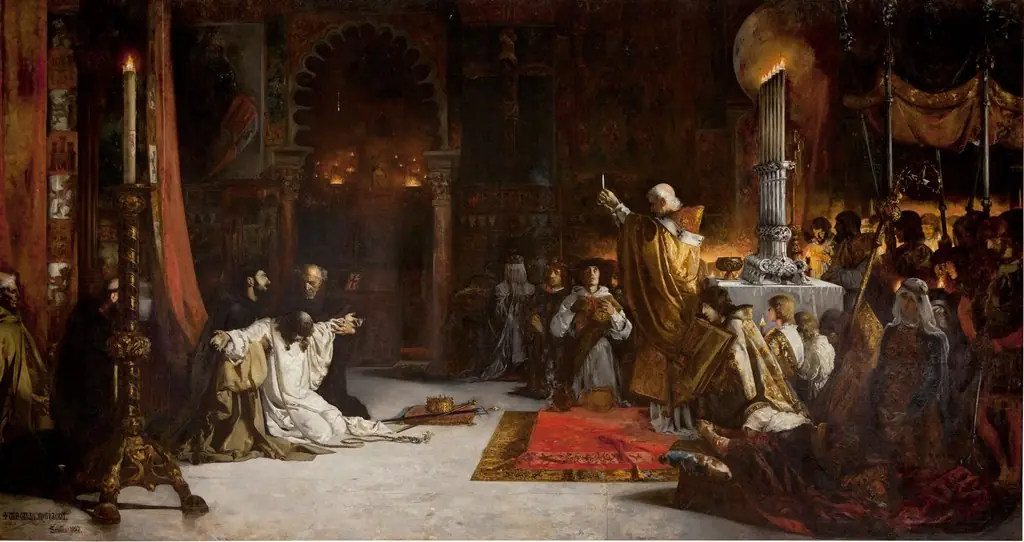
Own this work as a print
Artist & collection

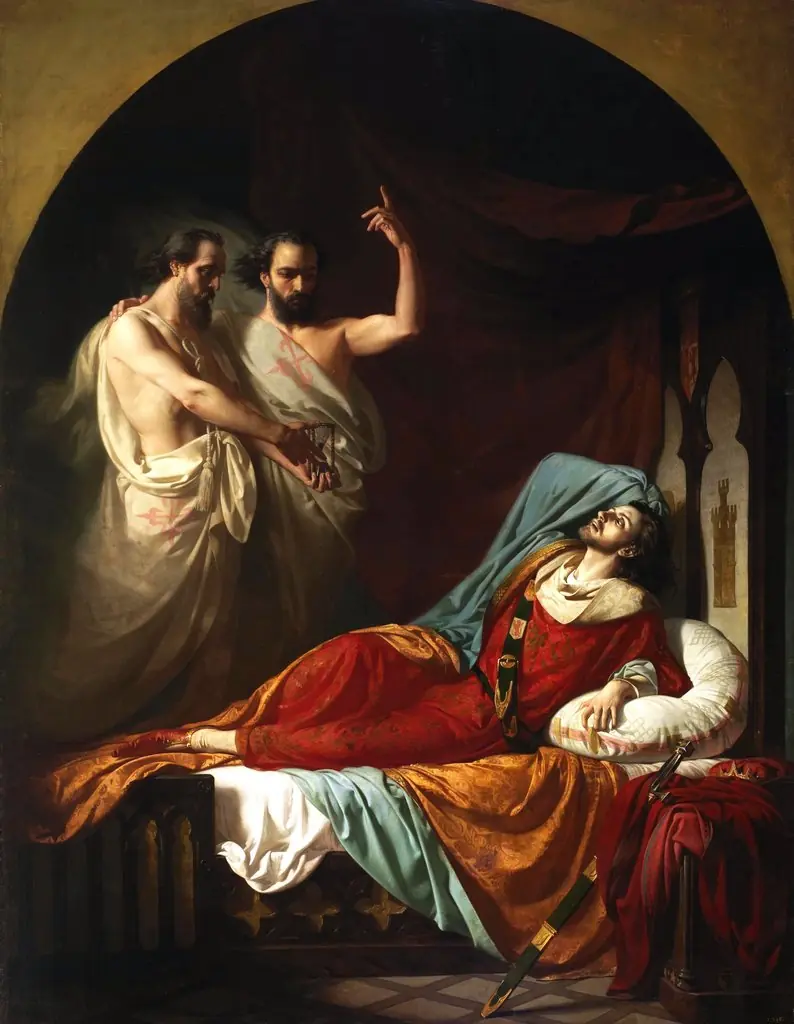
- Las postrimerías de Fernando III el Santo
 Cervantes y sus modelos
 The Baptism of Vajk
 The Sack of Rome
 Good Friday Procession in Seville
 El darrer dia de Numància
 Boleslaw the Brave with Svyatopolk at the Golden Gate in Kiev
 Felipe III de Francia moribundo bendiciendo a sus hijos
 Una escena de la Inquisición
 Feast at Wierzynek's
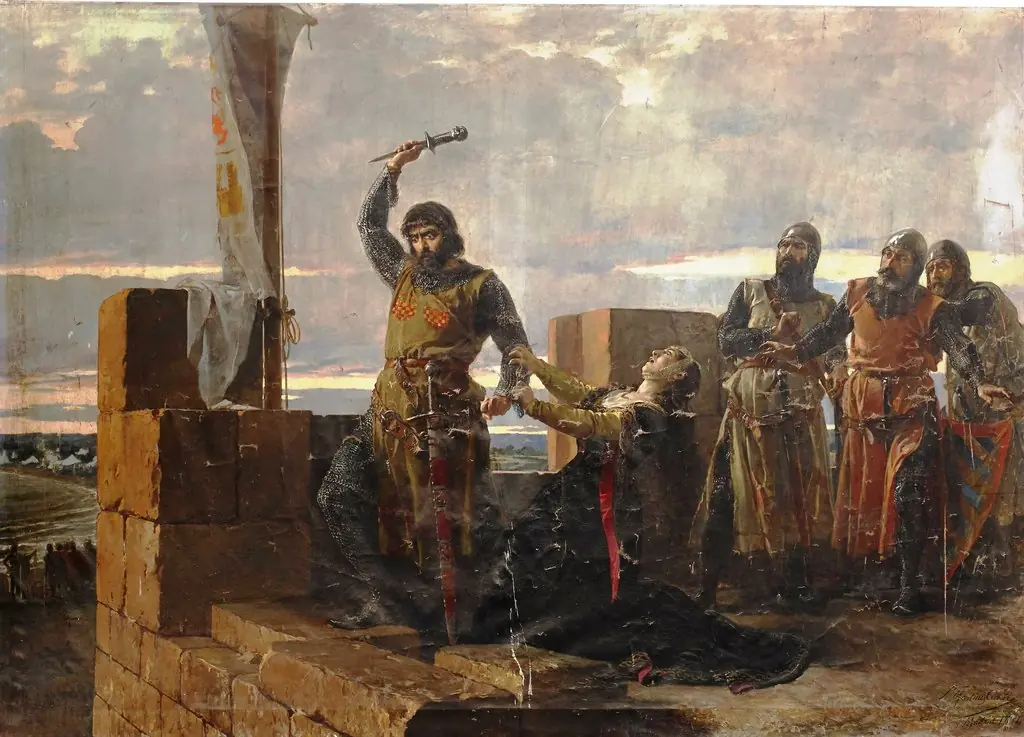 Guzmán el Bueno
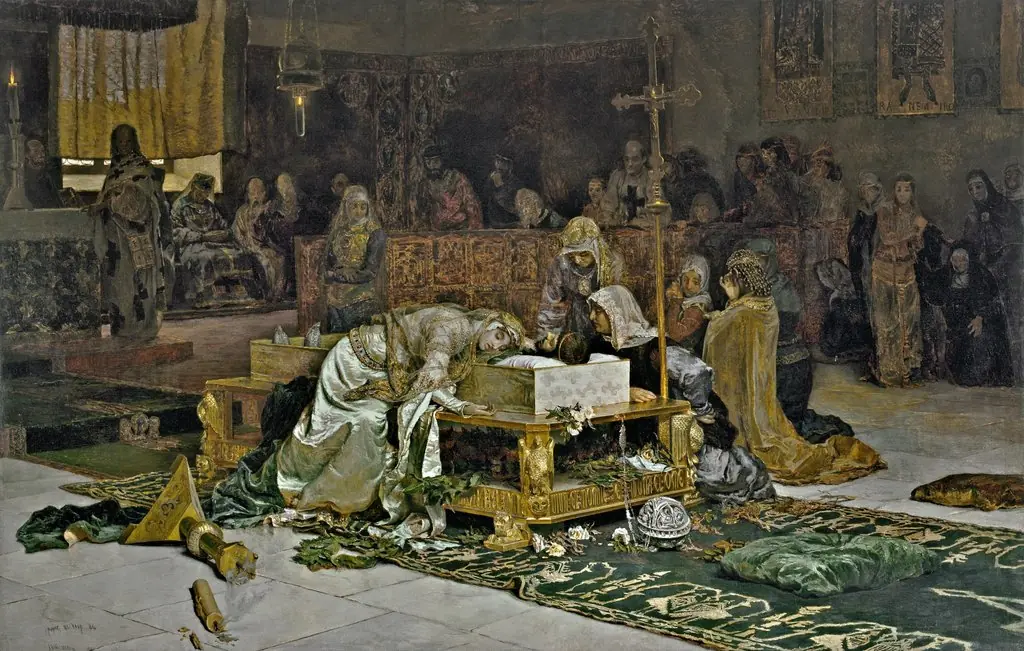 The Lovers of Teruel