Artwork
Portret van een zeeofficier
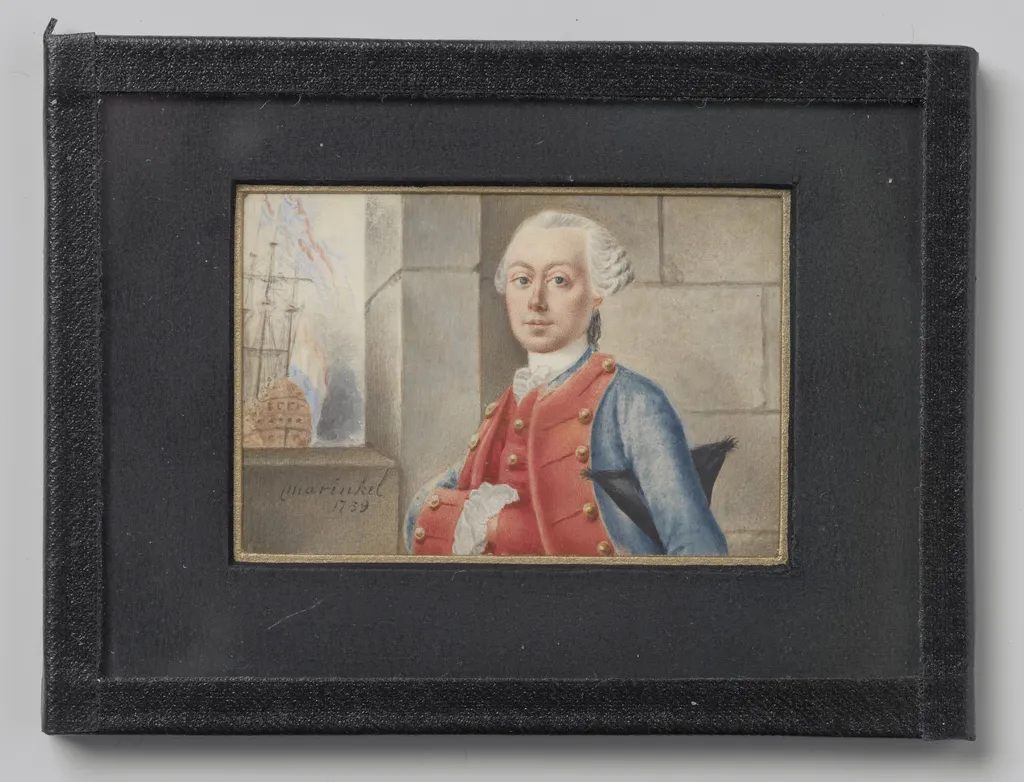
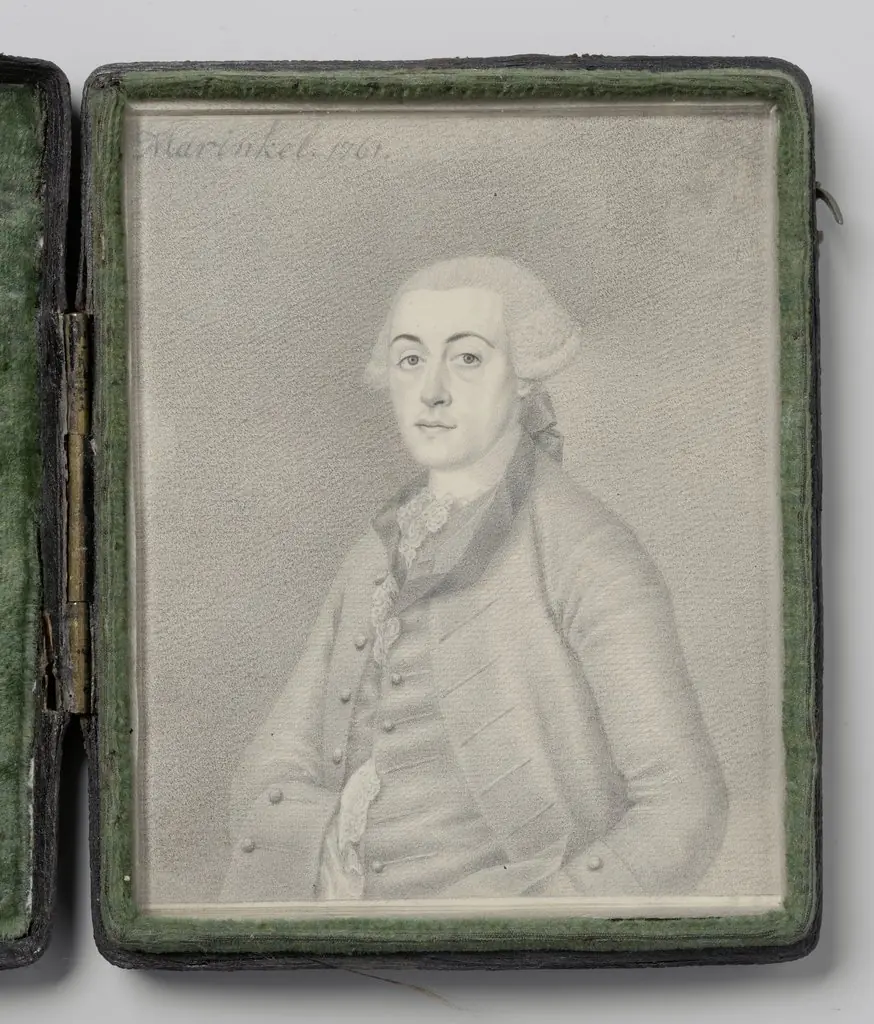
Portret van een zeeofficier is a watercolor painting by the Rococo painting artist Joseph Marinkelle. It dates from 1759 and is held in the collection of the Rijksmuseum.
About this work
The painting is on parchment, not canvas, which makes it look a little different from usual portraits.
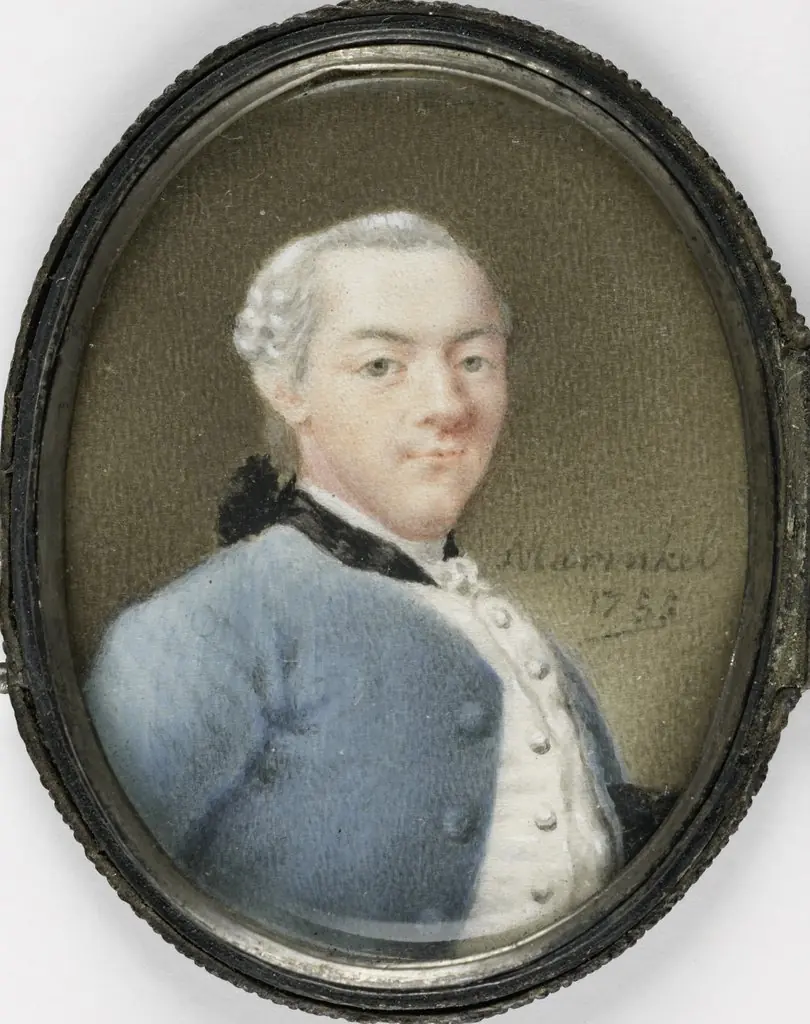
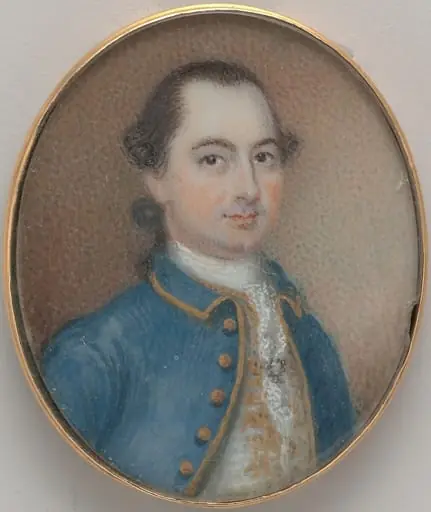
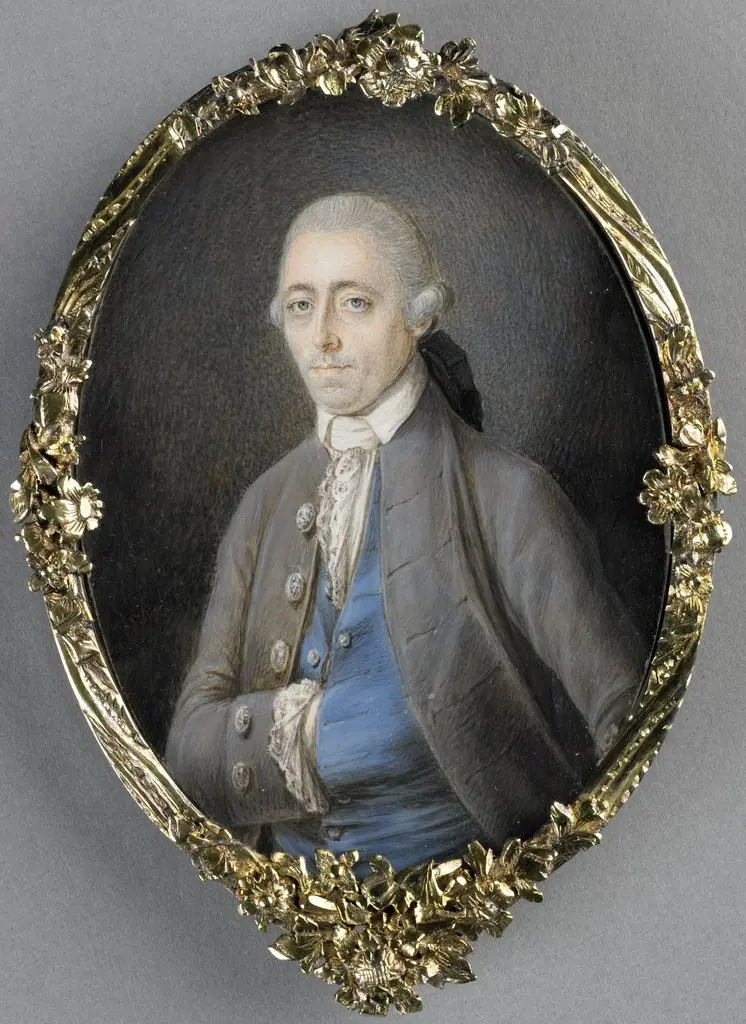
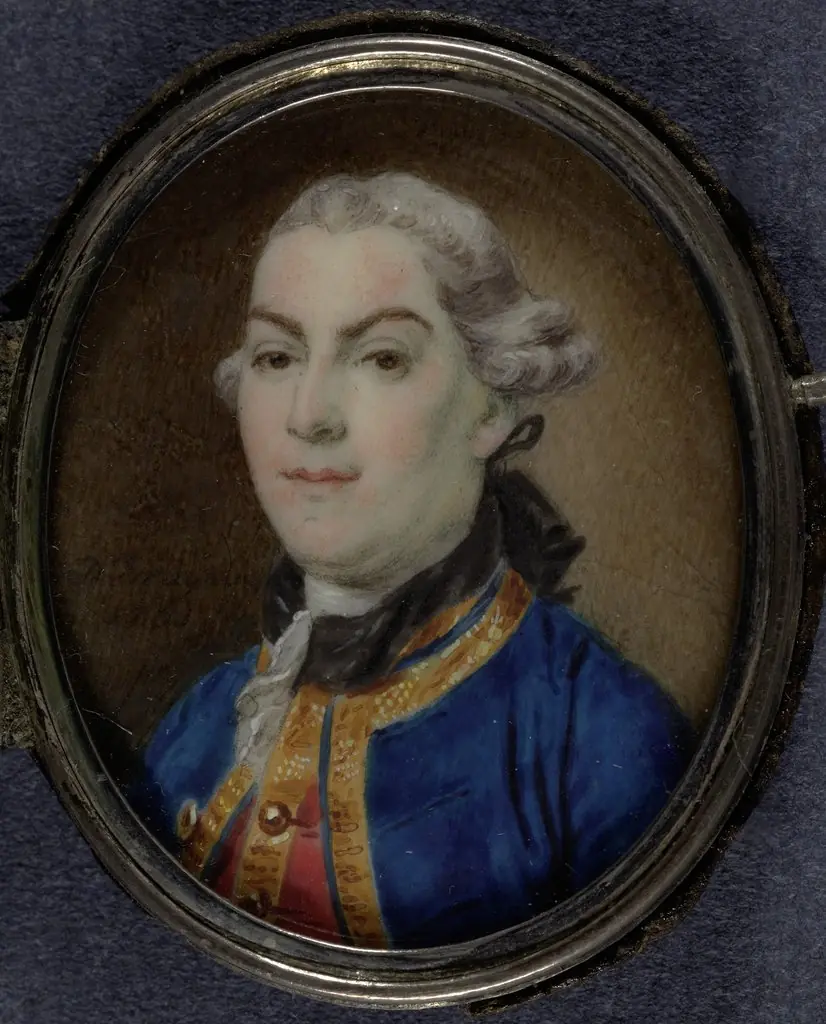
This small painting shows a man in a red coat and blue vest, standing indoors by a window. Behind him, you can see a ship outside, drawn in faint blue and white. The man’s face is pale, with a serious look, and his outfit has gold buttons.
The artist signed it “Marinkelle 1759,” which matches the date. The painting is on parchment, not canvas, which makes it look a little different from usual portraits.
Next, check out Joseph Marinkelle to see what else he painted.
Subject & Meaning
The portrait shows a hand resting in a waistcoat on a man, symbolizing a naval officer's rank and authority in 18th-century Dutch society. Rendered on parchment with watercolor, the work reflects the formal representation of military figures during the period. It is part of the Rijksmuseum's collection in Amsterdam.
The depiction of the hand-in-waistcoat gesture was a conventional indicator of officer status among Dutch naval officers, conveying both rank and disciplined composure. The material choice of parchment and watercolor highlights the medium's use for intimate, high-status portraiture in the mid-1700s. The painting's dimensions of 4.1 by 5.9 units correspond to the measurements recorded for the work at the Rijksmuseum.
Technique & Style
The work is executed on parchment, a prepared animal skin support chosen for its smooth, durable surface suited to fine detail. The medium comprises watercolor applied in thin, translucent layers to build up subtle tonal transitions across the sitter’s face and costume. Handling emphasizes delicate brushwork in rendering facial features and the ruffled lace at the neck, while broader passages of the coat and background use more diluted washes to suggest volume without overworking the support.
Stylistically, the portrait adheres to the restrained conventions of mid-eighteenth-century Dutch portraiture, with a restrained palette and a restrained, upright pose that underscores the officer’s status.
History & Provenance
Joseph Marinkelle created the portrait titled Portret van een zeeofficier in 1759. The work is executed on parchment using watercolor paint, measuring 4.1 cm in height and 5.9 cm in width. It depicts a man in a hand-in-waistcoat pose, a common convention for naval officers of the period. The painting is currently held in the collection of the Rijksmuseum in Amsterdam.
Overview
Portret van een zeeofficier is a 1759 portrait by the Dutch artist Joseph Marinkelle, executed on parchment. The work depicts a naval officer standing indoors, positioned before a window that frames a maritime view. The sitter wears a red coat with gold buttons over a blue vest, presenting a pale complexion and a serious expression.
The composition utilizes the window to integrate the subject's profession into the setting, with a ship rendered in faint blue and white tones visible in the background. Signed and dated "Marinkelle 1759" by the artist, this piece exemplifies Marinkelle's specialization in miniature portraiture during the mid-18th century. Created when the artist was approximately twenty-seven years old, the work reflects the Dutch tradition of capturing naval figures with precise detail and a restrained palette.
The choice of parchment as a support indicates the object's likely function as a portable miniature, intended for personal possession rather than large-scale public display. This painting stands as a representative example of Marinkelle's output, demonstrating his skill in rendering fabric textures and facial features on a small scale while maintaining a formal, dignified tone appropriate for a military subject.
Context
Mid‑18th‑century Dutch portraiture often emphasized the professional identity of its subjects, especially within the maritime community. This work reflects that tradition, combining personal likeness with symbols of the sitter’s naval service, and aligns with contemporary practices of depicting officers in their uniforms against modest interior settings.
Own this work as a print
Artist & collection